*This post may contain affiliate links for which I earn commissions.*
A comfortable chair beside a winter window already has the beginnings of an inviting retreat. Add a substantial knitted blanket, a basket of yarn, a pool of lamplight, and a little evergreen, and it becomes a place that feels made for December afternoons.
This corner draws its charm from contrasts. Snowy glass meets warm wood. Dark green wool rests against cream upholstery. A practical task lamp shares the space with softly glowing garland lights. The decorations are unmistakably seasonal, yet the room still feels calm enough for knitting, reading, or enjoying a hot drink.
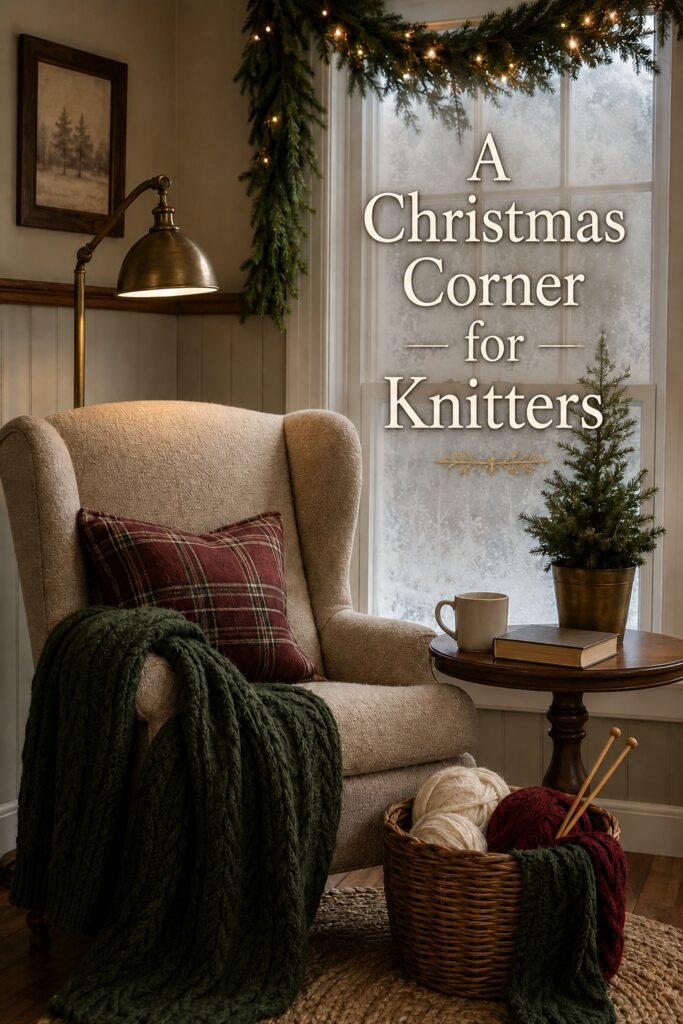
This inspiration image was created using AI and is intended to provide decorating ideas rather than depict products available for purchase.
Make the Window Part of the Setting
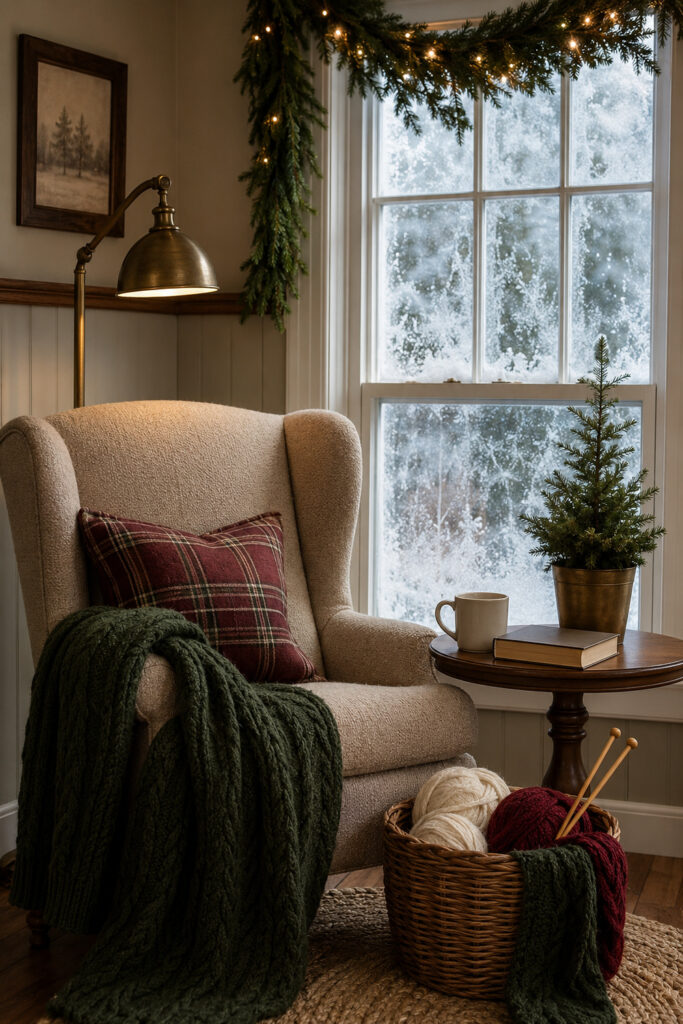
The frosted window acts almost like winter artwork. Its cool gray-white view provides a quiet backdrop for the darker evergreen, burgundy, and brass elements inside.
A genuine snowy landscape is not required to achieve this effect. The important technique is arranging the chair close enough to a window that daylight becomes part of the corner. In a warmer climate, frosted privacy film or removable frost-effect window decoration can suggest a wintry scene without permanently changing the glass.
The garland follows the top and one side of the window instead of surrounding it evenly. That asymmetry keeps it relaxed and allows the outdoor view to remain visible.
Choose a Chair That Feels Protective
The oatmeal-colored wingback chair creates a sense of enclosure. Its high back and curved wings visually shelter the person sitting beneath them, which is particularly appealing in a winter retreat.
A similar chair does not need to match the exact upholstery. Cream, oatmeal, mushroom, or pale taupe will all provide the necessary neutral foundation. A chair with supportive arms is especially practical for knitting because it gives the elbows somewhere to rest.
If replacing a chair is not realistic, a slipcover can soften an existing seat. The goal is to create a quiet backdrop for the darker textiles rather than make the chair itself the strongest design element.
Let the Cable Knit Supply the Main Texture
The forest-green throw is the most visually prominent accessory in the room. Thick cables give it weight and make the nook feel connected to the knitting basket on the floor.
Drape the blanket generously rather than folding it into a small, precise rectangle. Let part of it fall over one arm and continue toward the floor. This creates the sense that it is actively being used and also helps the rich green color occupy enough space to balance the evergreen garland.
The shade of green matters. Forest, pine, spruce, and deep moss will suit the room better than emerald or blue-green. A substantial cable pattern will be more visible in photographs and from across the room.
Find a Similar Forest-Green Cable-Knit Throw
Look for thick, clearly defined cables, a soft matte surface, and enough length to spill naturally over the chair. Cotton offers breathable texture, while acrylic may provide easier care and greater affordability.
Add One Tailored Tartan Accent
A burgundy tartan pillow supplies just enough pattern. It introduces traditional Christmas red while retaining the subdued, heritage-inspired mood.
The pillow works because it contains colors already used elsewhere: burgundy from the yarn, green from the throw and evergreen, cream from the chair, and fine tan lines that relate to the wood and brass.
One plaid pillow is enough for this compact corner. Several competing plaids could distract from the cable-knit texture and make the chair feel overly arranged.
Find a Similar Burgundy Tartan Pillow
Choose a muted wine or brick-red ground with narrow green, cream, and tan lines. A woven or linen-like finish will feel more natural than a glossy printed surface.
Treat the Yarn Basket as Functional Decor
The basket is what makes this specifically a knitting corner. Cream, burgundy, and green yarn repeat the room’s palette while wooden needles rise above the rim as a recognizable handmade detail.
Choose a wide, stable basket that can sit beside the chair without tipping. A low oval or rectangular design makes it easier to reach the yarn while seated. Smooth interior surfaces are preferable because rough wicker can catch delicate fibers.
Keep only the current project and a few attractive skeins visible. Extra tools, patterns, and supplies can be stored in smaller pouches inside the basket. This preserves the welcoming effect without sacrificing practicality.
Find a Similar Wicker Yarn Basket
Look for sturdy handles, a broad base, smooth weaving, and sufficient depth for several skeins. An open basket resembles the inspiration most closely, while one with a removable liner may offer better protection for the yarn.
Place Task Lighting Where It Is Useful
The aged-brass floor lamp is more than a decorative accent. Its curved arm brings direct light over the chair, making the nook usable for detailed handwork in the evening.
A dome or pharmacy-style shade directs illumination downward without filling the entire room with harsh light. An adjustable arm is especially helpful because it can be positioned over a knitting project and moved aside when the chair is used for reading.
Place the lamp slightly behind one shoulder. This keeps its base out of the main walking path while allowing light to fall across the lap. Right-handed knitters may prefer the lamp behind the left shoulder, with the position reversed for left-handed work.
Find a Similar Antique-Brass Task Lamp
Look for an adjustable arm, metal dome shade, weighted base, and aged or brushed brass finish. A warm-white bulb will complement the garland lights more convincingly than a cool daylight bulb.
Outline the Window With Soft Evergreen
The window garland introduces Christmas at eye level while framing the winter view. Its natural-looking branches are loosely draped, and tiny warm lights provide gentle sparkle.
Use a long garland with flexible construction so it can follow the window frame without appearing stiff. Secure it above the trim with appropriate removable hooks, checking their weight rating before installation.
The inspiration does not add ornaments, ribbon, berries, or large bows to the garland. That restraint allows its deep greenery and small lights to support the corner rather than dominate it.
Find a Similar Lighted Evergreen Garland
Compare the branch shape and number of tips before choosing one. Mixed cedar, spruce, or pine textures will generally look softer and more natural than evenly cut plastic needles.
Keep the Side Table Small and Uncomplicated
A round wood pedestal table provides a surface for a mug, book, and miniature tree without crowding the chair. Its dark finish relates to the picture frame and floor, helping it blend into the room.
The tabletop arrangement is intentionally sparse. A cream mug repeats the upholstery, the book reinforces the quiet activity, and the little tree adds vertical interest against the window.
Leave enough open surface to set down knitting notions, glasses, or a phone. A retreat feels more convincing when it remains useful.
Use a Miniature Tree as a Quiet Christmas Marker
The small potted evergreen adds seasonal character without requiring a fully decorated tree. Its sparse shape suits the restrained room and repeats the larger garland above.
A tree between 18 and 24 inches tall should fit comfortably on many side tables. Place it in a simple aged-brass, bronze, terracotta, or dark metal container. If the original base is unattractive, slip the entire pot inside a decorative cachepot.
The tree can remain undecorated or carry a very small strand of warm lights. Avoid oversized ornaments, which would compete with the garland and make the arrangement feel top-heavy.
Find a Similar Potted Tabletop Tree
Look for a realistic trunk, irregular branching, natural green variation, and a modest container. A slightly sparse silhouette is more appropriate here than a dense miniature cone.
Repeat a Limited Christmas Palette
This corner relies on four principal colors: cream, forest green, burgundy, and warm brown. Brass appears as a small metallic accent rather than a separate dominant color.
Repeat each darker shade in at least two places. Green appears in the blanket, garland, tree, and yarn. Burgundy appears in the pillow and yarn basket. Cream appears in the chair, mug, and pale skeins.
This repetition creates cohesion without requiring matching sets. It also makes it easy to adapt the idea with pieces already owned.
Preserve Enough Room for the Craft
Decorating a knitting retreat should not make it more difficult to knit. Keep the basket close to the chair, direct the lamp toward the lap, and avoid placing loose garland or breakable decorations near moving yarn.
A small rug can define the corner and soften the floor, but its edges should remain flat. Position the side table within easy reach without narrowing the path around the chair.
The loveliest quality of this room is that its practical objects participate in the decorating. Yarn supplies the color, the lamp supplies the glow, and the handmade blanket supplies the most memorable texture.