*This post may contain affiliate links for which I earn commissions.*
An old corncrib may not be the first place that comes to mind for a Halloween gathering, but this setting makes a wonderful case for taking supper out to the barn. Weathered boards filter the afternoon light, antique farm equipment provides a striking backdrop, and a long harvest table stretches toward the open fields.
The Halloween details are deliberately small. Tiny cream ghosts peek from abundant grain arrangements, black candles rise between the place settings, and little pumpkin shapes rest on the plates. The result feels seasonal and playful without losing the warmth of an autumn farm supper.
Although the setting is unusual, the table itself is surprisingly approachable. A checked runner, amber glasses, neutral dishes, burgundy napkins, dried stems, apples, and ornamental corn can create a similar atmosphere in a dining room, on a covered porch, or beneath a backyard pergola.
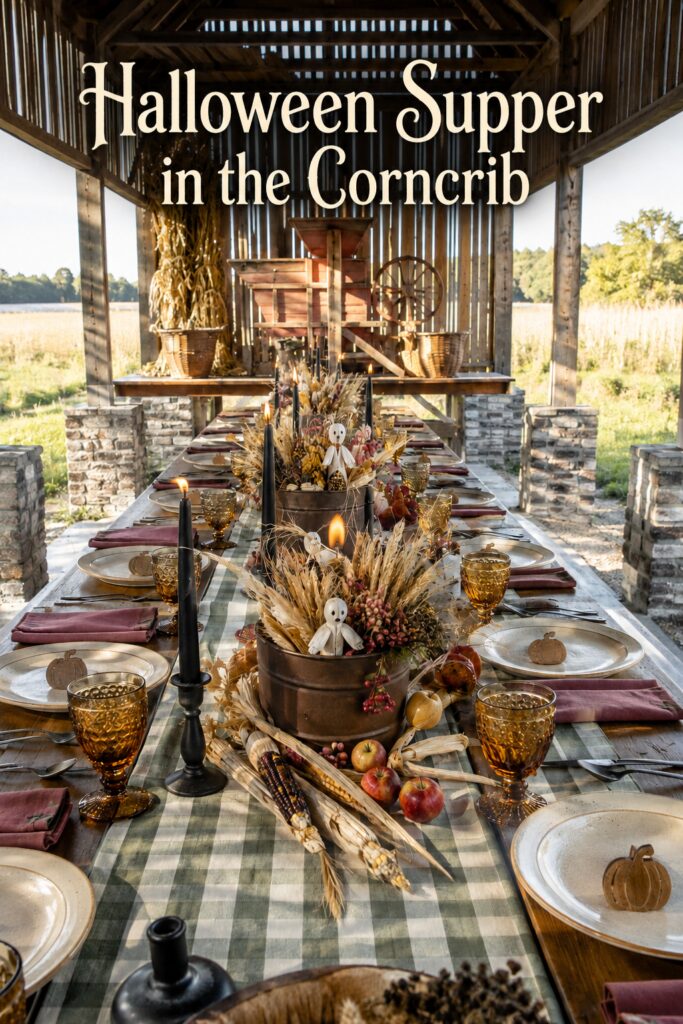
This inspiration image is AI generated, but its decorating ideas can be recreated with similar pieces and simple handmade elements.
Let the Setting Establish the Story
Much of the charm comes from the relationship between the table and its surroundings. Slatted wood, baskets, corn stalks, stone pillars, and old machinery make the dinner feel tied to the harvest.
You can suggest the same story without access to a historic farm building. Use a weathered wooden table, leave some of its surface exposed, and bring in materials associated with the season. Woven baskets, old crocks, galvanized containers, wooden boards, and dried corn husks will give an ordinary space more agricultural character.
Avoid filling every nearby surface. The original scene feels expansive because the table is elaborate while the surrounding structure remains largely undecorated.
Create a Long Checked Foundation
The sage-and-cream runner is one of the most important visual choices. It lightens the weathered table and introduces a soft pattern that can be seen between every place setting.
A narrow runner is preferable to a full tablecloth because the exposed wood contributes warmth and texture. For a long table, place two matching runners end to end and conceal the meeting point beneath a centerpiece.
Sage green works especially well because it complements wheat, apples, burgundy napkins, amber glass, and faded wood. Olive, muted moss, or charcoal checks could create a similar effect.
Build a Procession of Harvest Arrangements
Instead of one oversized centerpiece, the table uses several arrangements that repeat down its center. This repetition makes the setting feel abundant while maintaining a clear visual path from one end to the other.
Start with two or three aged metal vessels. Fill each one with wheat, dried grasses, seed heads, small berry sprays, and fragments of corn husk. Keep the arrangements loosely rounded rather than perfectly symmetrical.
Vary their heights slightly. The closest vessel may be fuller and broader, while the arrangements farther down the table can be narrower. This creates natural perspective and prevents the center from looking like a row of identical bouquets.
Keep the stems low enough that seated guests can see one another. If a few taller pieces are needed, use airy grasses that do not form a solid visual barrier.
Add Apples and Ornamental Corn
Loose produce makes the arrangements feel connected to the surrounding fields. Red and golden apples introduce rich color, while ears of multicolored corn supply the deep brown, cream, burgundy, and black tones associated with Halloween.
Allow several pieces to spill beyond the containers. An apple resting beside a goblet or an ear of corn laid diagonally across the runner feels more natural than produce carefully confined to a tray.
Faux apples and ornamental corn can be used if the table will remain decorated for several weeks. For a single supper, fresh apples provide beautiful color and can become part of the menu or a take-home treat.
Tuck Tiny Ghosts Into the Centerpieces
The miniature ghosts are what turn this from a general fall table into a Halloween setting. Because they are small and placed among the dried stems, guests discover them gradually.
Look for simple cream fabric ornaments, or make them with small wooden beads, fabric squares, and thread. Keep their forms uncomplicated so they resemble tiny harvest spirits rather than cartoon characters.
One ghost in each major arrangement is enough. Repeating them at intervals creates a playful theme without making the table feel crowded with Halloween figurines.
If the table will be outdoors, secure each figure to a floral pick so it does not shift in a breeze.
Use Black Tapers for Height and Contrast
Tall black candles give the table its strongest Halloween accent. They draw the eye upward and stand out against the golden fields and pale dried stems.
Use holders with simple silhouettes and aged or matte finishes. Different heights will make the candlelight feel more relaxed, but the holders should share a color or material.
Place candles between the arrangements rather than directly behind them. This distributes the glow along the table and reduces the chance of flames reaching dried material. Battery-operated tapers are the safest choice when arrangements include wheat, husks, fabric, or berries.
Warm the Place Settings With Amber Glass
The amber goblets catch the sunlight and cast a honey-colored glow across the table. Their embossed texture also suits the vintage farm setting better than sleek modern glassware would.
Pair them with warm cream or oatmeal-colored plates. Slight speckles, uneven rims, and softly aged finishes will reinforce the collected appearance.
Burgundy napkins add depth beside the pale dishes. Fold them into simple rectangles rather than elaborate shapes. The table already has plenty of texture, so uncomplicated napkins keep each setting calm.
Give Each Plate a Small Harvest Detail
A tiny wooden pumpkin rests on each plate, functioning as both decoration and a possible place marker. This is an easy detail to personalize.
Write a guest’s name on each pumpkin, attach a small paper tag, or leave the pieces unmarked as seasonal favors. Their natural wood color connects them to the table and avoids introducing another competing accent.
Small leaves, miniature gourds, or tied bundles of wheat could serve the same purpose if wooden pumpkins are unavailable.
Adapt the Look to a Smaller Table
On a six-person table, use one narrow runner, two low arrangements, four or six candles, and a few apples or ears of corn. Add one miniature ghost to each arrangement and one small pumpkin marker to each plate.
Allow some empty runner to remain visible. The pattern helps connect the separate decorations, so it should not disappear beneath flowers and produce.
For a round table, create one central arrangement surrounded by a loose ring of apples and corn. Use three candle holders at staggered heights and tuck two ghosts into opposite sides of the bouquet.
A Final Styling Tip
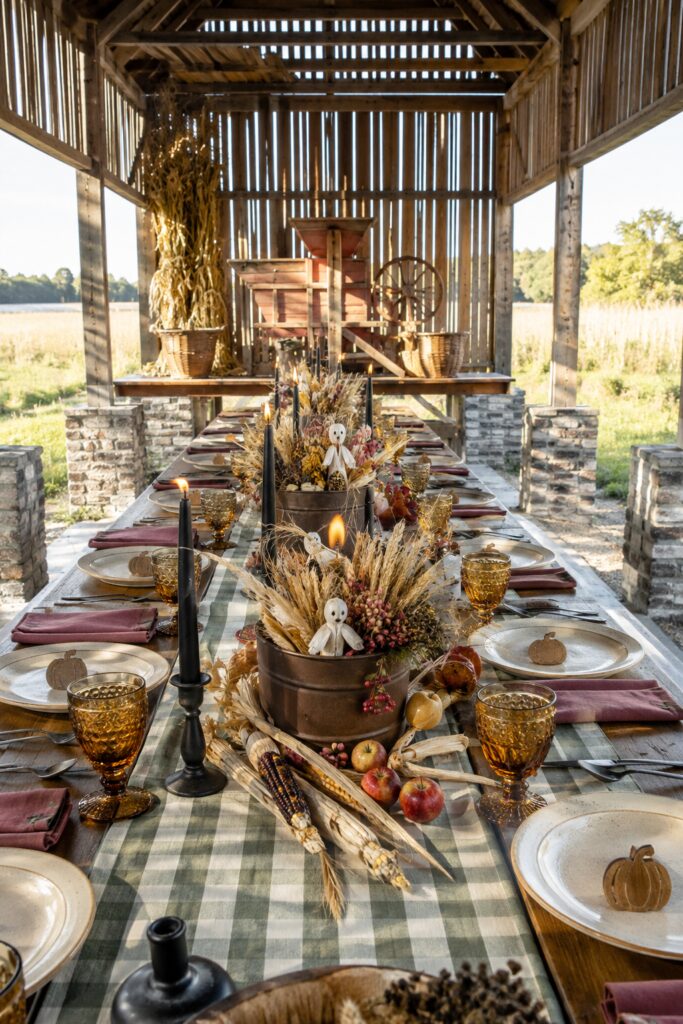
Photograph or view the table from its entrance before guests arrive. The runner, arrangements, and candles should form a strong path through the scene. If one area feels noticeably heavier, move a few apples, stems, or candles rather than adding another large decoration. The goal is an abundant harvest table that still leaves guests comfortable room to dine.