*This post may contain affiliate links for which I earn commissions.*
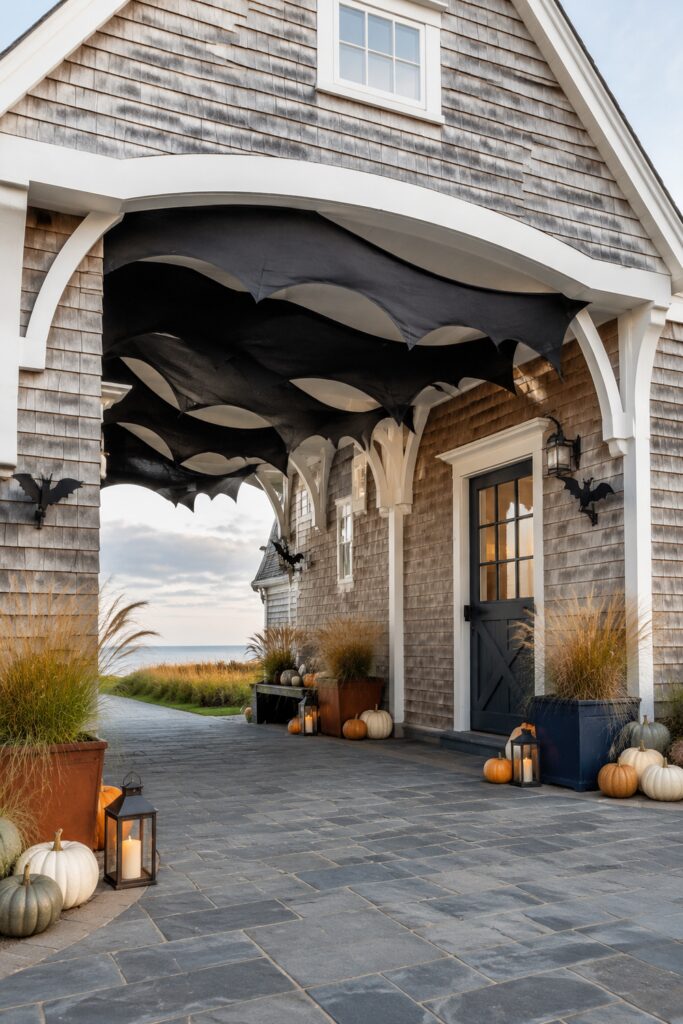
A procession of enormous black bat wings transforms this open coastal porte-cochere into a dramatic Halloween passage. The overlapping fabric panels stretch between the white arches, creating sweeping curves and pointed wing tips that guide visitors toward the door.
What makes the display especially memorable is its setting. Weathered cedar shingles, white coastal trim, gray stone paving, dune grasses, and a distant view of the water form a relaxed backdrop for the theatrical canopy. Black metal bats mounted near the doorway repeat the overhead motif on a smaller scale.
Below the canopy, flickering lanterns and modest clusters of orange, cream, and gray-green pumpkins soften the darker elements. The result is spooky enough for Halloween but still welcoming, elegant, and well suited to the natural character of the house.
A reader does not need a seaside porte-cochere to adapt the concept. A covered walkway, breezeway, deep porch, pergola, or sheltered carport could support a smaller interpretation, provided the fabric is lightweight, the attachment points are structurally appropriate, and the display can be removed quickly when weather conditions change.
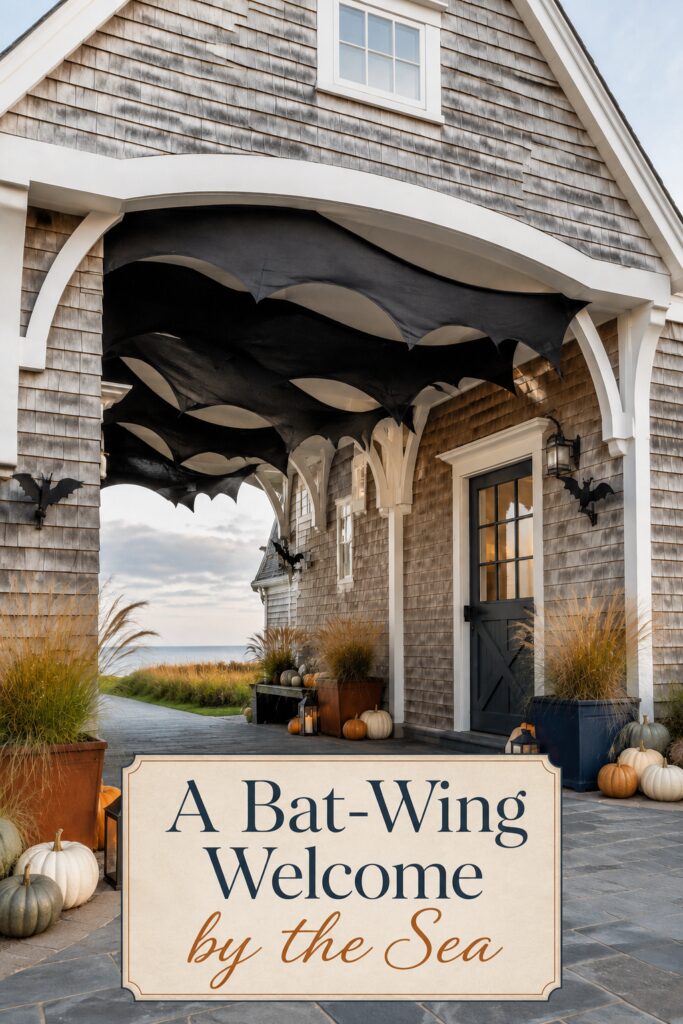
Image disclosure: This decorating concept was visualized with AI.
Why the Overhead Canopy Commands Attention
Most Halloween entry displays concentrate decorations around the door or along the steps. This one uses the ceiling plane instead, turning the entire approach into part of the experience.
Each panel resembles an abstract bat wing rather than a literal cutout. Broad black fabric spans the structure, while curved scallops form the lower edges. Pointed sections dip downward at intervals, creating a recognizable wing profile without printed graphics or elaborate embellishment.
The wings overlap from front to back. That layering gives the canopy depth and allows glimpses of the white ceiling between the black shapes. It also creates a rhythmic progression that encourages the eye to travel through the passage.
Let the Architecture Shape the Display
The canopy follows the length and curve of the porte-cochere rather than fighting it. White arches act almost like a frame around the black panels, while the cedar shingles lend softness and age to the scene.
In another setting, identify the strongest architectural lines before selecting the fabric size. A long covered porch may look best with several narrow panels installed in sequence. A square pergola could support two broad wings crossed at slightly different angles.
Avoid extending fabric below door height or across any required access route. The canopy should make the entry feel immersive without creating a collision, visibility, or accessibility hazard.
Interpret the Wings With Outdoor Fabric
The material needs enough body to hold broad curves but should not be so heavy that it places unnecessary stress on the structure. Black outdoor polyester, water-resistant canvas, or another fabric intended for temporary exterior use can provide the right opacity.
Instead of cutting every wing identically, vary the depth of the scallops and the placement of the pointed tips. Repeating the same general shape while changing its proportions will make the canopy feel more organic.
Raw cut edges may fray or weaken, particularly in wind. Hem the edges, bind them with outdoor tape, or use a fabric that can be safely heat sealed according to its manufacturer’s instructions.
Look for Black Outdoor Fabric
Choose matte black fabric rather than shiny plastic. The material should be wide enough to minimize seams and light enough to remove and store after the season.
Reinforce Every Attachment Point
The dramatic appearance depends on controlled tension. Each wing is pulled outward at several points, allowing the fabric to span the ceiling without drooping into the passage.
Grommets can reinforce attachment holes, while short outdoor-rated cords or ball bungees can provide a small amount of flexibility. That flexibility may reduce sudden strain on the fabric, but it does not make an unsafe installation secure.
Never screw hooks into shingles, decorative trim, gutters, electrical fixtures, or an unknown structural surface. Ask a qualified professional to identify appropriate attachment points when there is any uncertainty.
A large overhead fabric installation can catch wind like a sail. It should be treated as temporary decor, inspected regularly, and removed before wind, rain, or a storm. This is especially important near the coast, where gusts can develop quickly.
Add Grommets and Removable Tension Fasteners
Use corrosion-resistant components suitable for outdoor exposure. Black hardware will visually disappear against the canopy.
Repeat the Bat Shape Near the Door
Several small black bats appear on the shingled walls beneath the canopy. They make the large overhead wings feel intentional and carry the theme all the way to the entrance.
Rigid metal silhouettes are particularly effective against textured shingles because their edges remain crisp. A mixture of wing positions adds movement, but the bats should share a similar finish.
Use only attachment methods suitable for the exterior surface. Adhesive products may fail outdoors or damage wood finishes, while screws can penetrate siding improperly. Freestanding stakes or bats mounted to removable planter inserts can offer a less permanent alternative.
Shop Similar Black Bat Silhouettes
Look for matte black metal, several sizes, and both open-wing and angled-wing shapes. Avoid glossy plastic pieces if you want the display to retain its tailored coastal character.
Create a Lantern Path Without Crowding the Walkway
Black lanterns are spaced along both sides of the passage. Their warm candlelight makes the canopy feel inviting after sunset and repeats the black accents found in the door, wall fixtures, and bat decorations.
Use flameless candles with automatic timers so the display illuminates at the same time each evening. Lanterns should be heavy or stable enough for a protected outdoor location, but they still need to be brought inside during severe weather.
Keep every lantern outside the walking route. Position them against planters, beside the doorway, or within the edges of a pumpkin cluster rather than allowing them to drift into the center of the path.
Add Black Lanterns With Timer Candles
Choose simple rectangular lanterns with clear panels and warm flickering lights. A set containing more than one size will make the arrangement look less repetitive.
Use Muted Pumpkins to Soften the Black
Pumpkins appear in small groups around the planters, doorway, and lanterns. Their subdued palette helps the display transition naturally into fall.
Cream and gray-green pumpkins are especially successful against the weathered shingles and gray paving. A few orange pumpkins introduce warmth without turning the entry into a conventional orange-and-black display.
Vary the sizes within each cluster. One medium pumpkin, one smaller round pumpkin, and one low or elongated shape will look more natural than three identical pieces.
Look for Cream, Sage, and Soft Orange Pumpkins
Prioritize matte finishes, believable stems, deep ribbing, and slightly irregular shapes. Faux versions will be easier to reuse and can be secured discreetly in exposed areas.
Frame the Passage With Tall Grasses
Large planters filled with ornamental grasses create a soft border at both ends of the porte-cochere. Their tawny plumes echo the dunes beyond the house and introduce movement beneath the heavy black canopy.
Terracotta and navy containers add restrained color. The finishes are different, but the planters share a generous scale and straightforward shape, keeping the arrangement cohesive.
If live ornamental grasses are not practical, use high-quality faux stems or a mixture of dried grasses in a weighted container. Keep the foliage away from lanterns, wall lights, doors, and the edge of the walking route.
Add Generous Outdoor Planters
Choose substantial containers that will not appear undersized beneath the canopy. Navy, charcoal, weathered terracotta, or dark bronze can all work with the coastal palette.
Preserve the Calm Coastal Color Story
The display succeeds partly because the rest of the entry remains restrained. There are no vivid signs, multicolored lights, oversized characters, or competing garlands.
Black forms the Halloween layer. Cream, gray-green, faded orange, terracotta, navy, cedar brown, and warm candlelight connect that layer to the house and landscape.
If your exterior already includes several colors, repeat only two or three of them in the seasonal accents. The canopy should remain the dominant feature, while the pumpkins, lanterns, and planters quietly connect it to the setting.
Scale the Idea for a Smaller Porch
A compact porch can capture the same effect with one or two wing-shaped panels instead of a full procession. Stretch a single lightweight panel beneath a covered ceiling, then repeat the motif with several small bats near the door.
Place one lantern and a three-pumpkin grouping on each side of the entrance. Add one tall grass planter if space permits. This edited version will preserve the dramatic overhead idea without making a narrow porch feel crowded.
A Final Styling Thought
Let one expansive black silhouette define the Halloween experience, then use lantern light, natural grasses, and muted harvest colors to make the entrance feel at home beside the sea.