*This post may contain affiliate links for which I earn commissions.*
A pumpkin display becomes much more dramatic when color is treated as part of the arrangement rather than scattered randomly. This fall mantel begins with soft ivory pumpkins, passes through peach and terracotta, and deepens into cranberry, burgundy, and plum as it cascades toward the floor.
The gradual color transition is the feature that makes this image distinctive. Instead of placing a few pumpkins evenly across the mantel, the arrangement behaves almost like a waterfall, traveling horizontally before spilling down one side of the fireplace.
Smoky glass vases and airy rust-colored branches balance the abundance of pumpkins with height and open space. The result feels artistic, warm, and unexpected while remaining unmistakably fall.
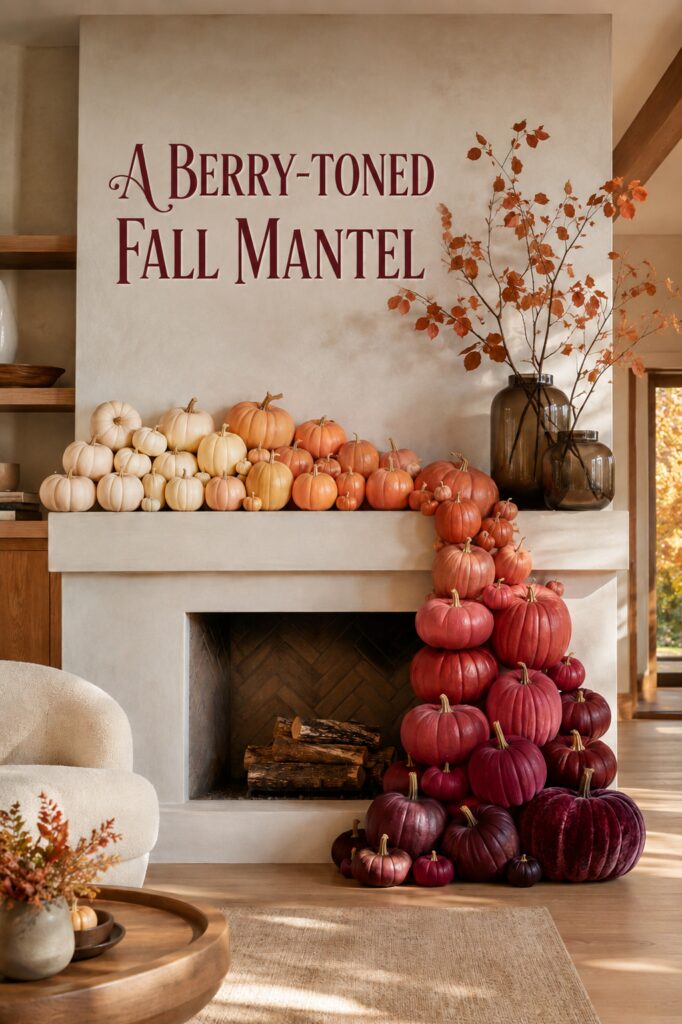
This inspiration image was created with AI.
Why This Pumpkin Mantel Works
Color Creates the Visual Movement
The gradient begins with the palest pumpkins on the left. Cream, ivory, and soft butterscotch shades transition into apricot and muted orange near the middle.
As the display approaches the right side of the mantel, the colors deepen into terracotta and red. The cascade then continues toward the floor through cranberry, wine, mulberry, and dark plum.
This sequence leads the eye through the arrangement. Without the gradient, such a large number of pumpkins could feel visually busy. The controlled progression organizes them into one cohesive installation.
The Cascade Breaks the Expected Mantel Shape
Most seasonal mantel displays stay safely within the width of the shelf. This arrangement deliberately moves beyond it.
The pumpkins gather at the right edge, descend beside the firebox, and spread into a broad cluster on the floor. Larger pumpkins near the base give the cascade visual weight and help it look grounded.
The asymmetry is important. One side remains lower and lighter, while the other becomes taller, darker, and more abundant. The arrangement feels dynamic without making the room look off balance because the large chair and surrounding woodwork provide weight on the opposite side.
Many Sizes Create a Natural Rhythm
The pumpkins range from tiny decorative pieces to substantial floor-size forms. Small pumpkins fill gaps between larger ones and help the color changes appear gradual.
Repeated medium-size pumpkins create continuity along the mantel. The largest pieces are reserved for the bottom of the cascade, where their scale feels believable and stable.
Variations in shape also matter. Round, squat, tall, deeply ribbed, and softly gathered pumpkins prevent the installation from looking like a collection of identical decorations in different colors.
Texture Becomes More Luxurious Near the Floor
Most of the mantel pumpkins have matte or gently painted finishes. As the colors deepen, velvet pumpkins appear among them.
Velvet intensifies berry and plum tones because its surface changes with the light. It also distinguishes the darker base from the smoother upper portion of the display.
A reader does not need every pumpkin to be velvet. A few carefully placed fabric pieces can add enough softness and richness to change the character of the entire arrangement.
Branches Balance the Abundance
The tall fall branches above the right side provide height without adding much visual weight. Their sparse leaves repeat the orange and rust tones found in the middle of the gradient.
Two smoky brown glass vases support the branches. Their transparent finish relates to the warm wood and dark fireplace interior while remaining quieter than opaque pottery would be.
The open wall on the left is equally important. It gives the eye a place to rest and allows the gradient to remain the focal point.
Key Pieces for Recreating the Gradient
Ivory and Cream Pumpkins
Begin with a generous selection of pale pumpkins. Mix warm white, cream, ivory, and light beige rather than using one exact shade.
Use several sizes so the light section feels layered. A few larger pumpkins can form the back row, while miniature pieces fill the spaces along the mantel edge.
Peach and Terracotta Pumpkins
The middle of the display should bridge the pale beginning and berry-colored ending. Look for peach, apricot, butterscotch, cinnamon, muted orange, and terracotta.
Avoid placing one strongly orange pumpkin between cream and burgundy. Several intermediate shades will create a smoother transition.
Cranberry, Burgundy, and Plum Pumpkins
The darkest colors belong in the descending portion and floor cluster. Burgundy and mulberry pumpkins provide the main transition, while a few deep plum pieces define the base.
Velvet is especially useful here because it is readily available in rich jewel tones and looks convincing in a large indoor display.
Paintable Faux Pumpkins
Finding finished pumpkins in every transitional shade may be difficult. Lightweight paintable pumpkins allow you to fill the missing colors.
Choose several related paint colors and mix small amounts together to create custom shades. A matte finish will blend more naturally with foam pumpkins than a high-gloss coating.
Hidden Risers and Stabilizing Supplies
The image creates the impression of pumpkins piled directly on one another, but a real arrangement needs discreet support.
Clear acrylic risers, small sturdy boxes, blocks of floral foam, or another hidden structure can provide height without requiring an unstable stack. Removable display putty may help keep lightweight pieces from shifting.
Any floor arrangement should remain outside the fireplace manufacturer’s required clearance area. Remove every pumpkin and decorative support before using the fireplace if there is any possibility that heat, sparks, or flame could reach them.
Smoky Vases and Rust-Colored Branches
Use one tall vase and one shorter companion vessel. The unequal heights will look more relaxed than a perfectly matched pair.
Choose branches with widely spaced leaves and visible twig structure. They should rise above the pumpkins without forming a dense floral bouquet.
How to Build the Gradient at Home
Sort all pumpkins by color before styling. Arrange them on the floor in a line from lightest to darkest. This makes it easier to see whether any transitional shades are missing.
Next, separate each color group by size. Reserve the largest dark pumpkins for the floor and the largest pale pumpkins for the back of the mantel.
Begin at the left end of the shelf with ivory and cream. Build a low mound using larger pieces behind smaller ones. Introduce peach gradually, allowing a few pale pumpkins to continue into the warmer section.
Move through apricot, terracotta, and muted red as you approach the edge. Overlap adjacent color groups instead of ending one shade abruptly before beginning another.
Build a secure hidden support beside the fireplace before creating the downward portion. Place the first pumpkins around the structure, using larger forms as visual anchors. Add medium pumpkins through the center and fill narrow spaces with miniature pieces.
Deepen the colors as the cascade descends. Finish with burgundy, wine, and plum pumpkins at the floor, distributing the darkest pieces across the base rather than concentrating them in one spot.
Position the smoky vases behind the terracotta section. Angle the tallest branches slightly toward the center of the wall so they remain connected to the display.
Step back and look for accidental stripes. If the gradient appears divided into rigid blocks, move one or two pumpkins from each shade into the neighboring color group.
Keep the fireplace opening visually clear even when it is not in use. The dark interior provides valuable contrast and prevents the display from becoming one uninterrupted mass of color.
Shop Similar Gradient Mantel Pieces
Begin with Ivory Pumpkins
Choose assorted shapes and sizes in warm white, cream, and beige to create the lightest portion of the mantel.
Blend in Rust and Terracotta Pumpkins
Use matte or velvet pieces in peach, cinnamon, muted orange, and rust to form the middle transition.
Deepen the Display with Berry Velvet Pumpkins
Look for cranberry, burgundy, mulberry, and plum shades in several sizes.
Customize Paintable Pumpkins
Paint lightweight craft pumpkins when the exact transitional colors are difficult to find.
Support the Cascade Discreetly
Use hidden risers and stabilizing materials to create height without balancing pumpkins in an unsafe pile.
Add Smoky Glass and Airy Fall Branches
Finish the installation with brown glass vases and sparse rust-colored stems that echo the warmer pumpkin tones.
Final Styling Tip
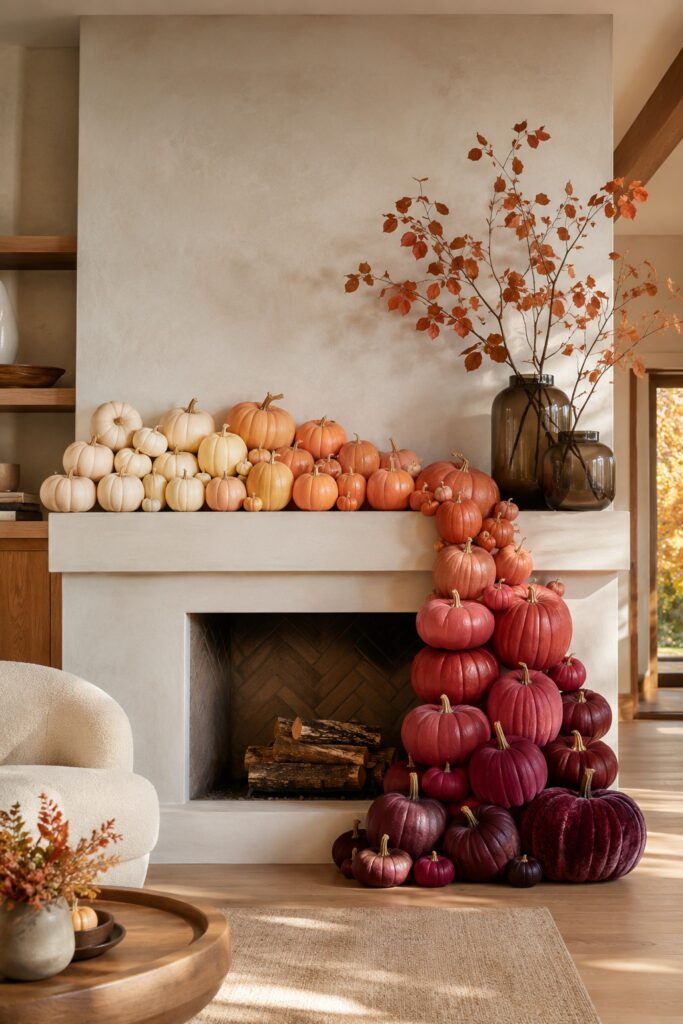
Think of the arrangement as one continuous color story. Overlap neighboring shades, vary the scale, and save the darkest, richest pumpkins for the base of the cascade.