*This post may contain affiliate links for which I earn commissions.*
A long walnut table becomes an inviting Thanksgiving gathering place through a rich combination of burgundy flowers, copper details, plum glassware, and cream pumpkins. Rather than filling the center with one continuous arrangement, the table uses three distinct centerpiece islands spaced along a patterned runner.
This segmented approach gives every section of the table something beautiful to enjoy while leaving visual breaks between the arrangements. Guests can see and speak to one another, serving dishes have natural places to land, and the table still feels generously decorated.
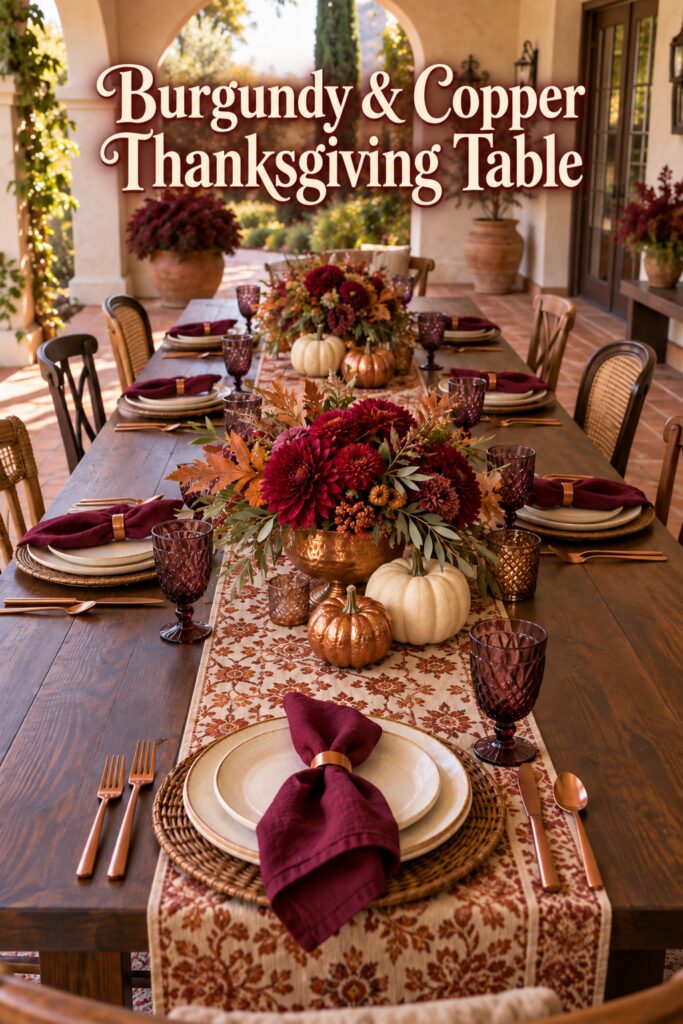
This inspiration image was created with AI.
Three Centerpiece Islands Create the Rhythm
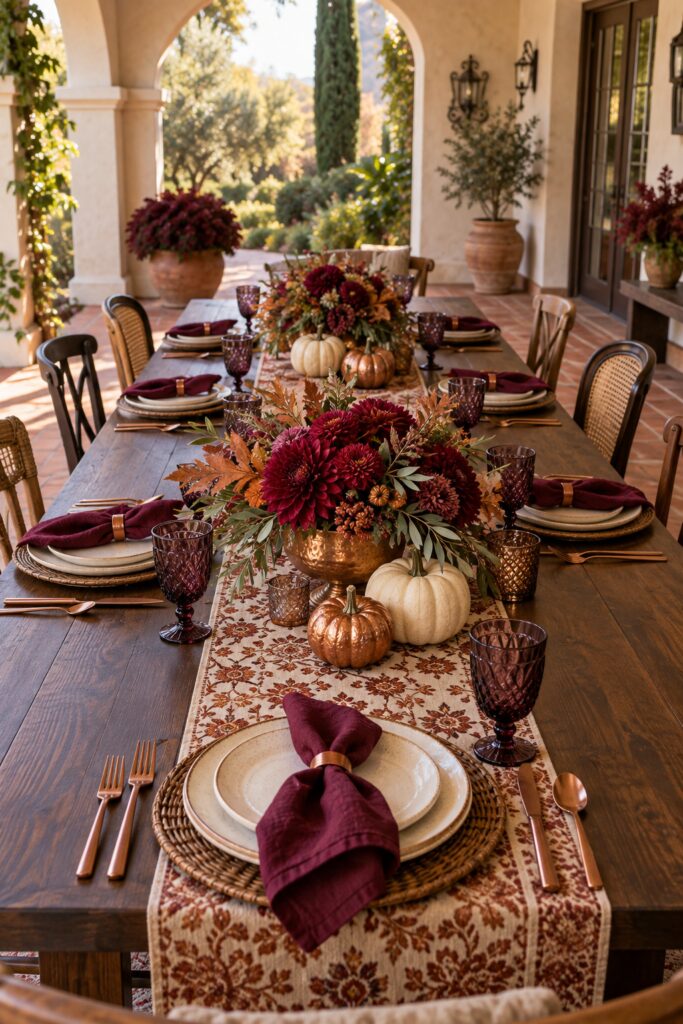
The centerpiece plan is the most useful idea in this setting. Three low arrangements are distributed along the length of the table, with the largest one positioned closer to the foreground and two smaller groupings extending toward the far end.
Each island repeats several elements from the others. Burgundy flowers, copper leaves, greenery, pumpkins, and metallic vessels appear more than once, which makes the arrangements feel like parts of one design.
The open spaces between them are just as important. Those gaps keep the table from becoming a solid corridor of flowers and allow the patterned runner to remain visible.
For a shorter table, two centerpiece islands may be enough. A particularly long table could support three or four, provided the spaces between them remain useful and intentional.
Burgundy Dahlias Set the Color Story
Large burgundy dahlias give the table its deepest color and strongest floral shape. Their layered petals look substantial even in relatively low arrangements.
Start With Beautiful Dahlias
Browse current Amazon options that can help you recreate this look.
Browse Faux Dahlias on Amazon →As an Amazon Associate I earn from qualifying purchases.
The main centerpiece contains several large dahlias clustered near the center, with smaller rust, wine, and brown flowers filling the surrounding space. This variation keeps the arrangement from looking like one solid mound of burgundy.
A similar effect can be achieved with any combination of large burgundy focal flowers and smaller autumn blooms. The exact flowers matter less than maintaining the low, broad shape and tonal palette.
Burgundy napkins repeat the flowers at every place setting. That repetition allows the centerpieces to feel connected to the entire table rather than isolated along the middle.
Copper Leaves Add Warmth and Structure
Copper-toned leaves extend beyond the flowers and create the wide silhouette of each centerpiece. Their pointed shapes contrast with the round dahlias, pumpkins, glasses, and bowls.
Metallic foliage also catches the angled patio light. It provides some of the gleam associated with a formal holiday table while remaining connected to autumn leaves.
Copper leaf sprays can be mixed with muted green stems so the arrangement retains a natural foundation. Concentrate the metallic pieces near the outer edges, where their shapes and finish will be easy to see.
A few smaller copper details appear elsewhere through the flatware, napkin rings, pumpkins, and centerpiece vessels. These repetitions make the metallic leaves feel intentional.
Cream and Copper Pumpkins Ground Each Arrangement
Cream pumpkins sit beside the floral vessels and create calm areas between the darker burgundy elements. Their pale surfaces relate to the stoneware and the background of the table runner.
Copper pumpkins introduce another finish without adding a new color. Their warm metallic surfaces coordinate with the centerpiece bowls and flatware.
Varying the pumpkin sizes helps each island develop its own shape. The foreground arrangement uses a larger cream pumpkin with a smaller copper pumpkin, while the farther arrangement contains a different grouping.
Keep the pumpkins low enough that they support the flowers rather than blocking guests’ views. They can be positioned slightly off center to prevent the arrangements from appearing overly formal or symmetrical.
A Patterned Runner Connects the Islands
The cream runner is decorated with repeating rust, burgundy, and brown motifs. It visually connects the three centerpiece groups even though they are physically separated.
Because the pattern is relatively small, it adds detail without competing with the flowers. The light background also creates contrast against the walnut table.
When choosing a runner for this approach, look for one that works with the table rather than covering most of it. Leaving a broad border of exposed wood on both sides preserves warmth and gives the place settings a clear foundation.
The runner should extend beyond the table edge, but it should not hang so low that it interferes with a guest seated at the end.
Plum Goblets Deepen the Palette
Plum-colored goblets provide a transparent version of the burgundy color used in the flowers and napkins. Their cut or pressed texture reflects the outdoor light and adds detail without requiring additional tabletop decorations.
The goblets are dark enough to stand out beside the ivory dishes, yet transparent enough to avoid looking visually heavy.
A complete matching set is not essential. Glasses with similar color and scale can create a collected effect, particularly on an outdoor table with mixed chair styles.
If plum glassware feels too dark for a particular setting, smoky rose or muted cranberry glass could provide a similar connection to the burgundy palette.
Ivory Stoneware Keeps the Table Relaxed
The layered ivory plates have a softly handmade appearance that suits the patio setting. Their simple color prevents the place settings from competing with the patterned runner and floral centerpieces.
Each stack sits on a woven charger, which creates a natural transition between the pale stoneware and dark walnut tabletop. The woven texture also relates to the cane-backed chairs.
Subtle variations in cream and ivory can make the place settings feel collected. The plates do not need to be perfectly matched as long as their shapes, scale, and general tone coordinate.
Keep the plate stacks practical. Two layers are enough to produce a finished look without creating unnecessary pieces that guests must move.
Burgundy Napkins with Copper Rings
The napkins are folded lengthwise and drawn through simple copper-toned rings. Their relaxed folds soften the round plates and structured flatware.
Placing each napkin across the center of the plate gives every setting a strong burgundy accent. This repetition helps balance the concentration of burgundy flowers along the runner.
The copper rings provide a small metallic detail close to each guest. They also connect the linens to the flatware and centerpiece bowls.
For a less formal variation, napkins could be loosely folded beside the plates while retaining the same copper rings.
Copper Flatware Completes the Setting
Copper-toned flatware extends the metallic palette to the outer edges of the table. Its warm finish is particularly effective against dark wood.
The utensils are arranged simply, without extra pieces that would make the outdoor setting feel overly formal. Their clean lines provide a quiet contrast to the patterned runner and abundant flowers.
Copper finishes can vary from rosy and polished to aged and muted. A softer finish will generally coordinate more naturally with walnut, woven chargers, terracotta flooring, and autumn foliage.
Candlelight Without Tall Obstructions
Small amber and copper-toned candleholders are tucked around the centerpieces. Their low height preserves the view across the table and adds a layer of warmth near the runner.
Flameless votives would be especially practical outdoors, where wind can make traditional candle flames unreliable. They can also be placed near foliage with fewer concerns.
Instead of arranging the holders in a continuous line, group one or two with each centerpiece island. This reinforces the segmented design and prevents the runner from feeling crowded.
Recreating the Table at Home
Begin by placing the runner and marking the locations of the centerpiece islands. Leave enough room between them for shared dishes, serving boards, or simply a visual pause.
Position the floral vessels next. Keep them low and use the largest arrangement closest to the table’s visual foreground or central seating area. Add smaller arrangements farther down the table.
Place cream and copper pumpkins beside each floral vessel. Vary their positions so the three groups feel related but not duplicated.
Set the woven chargers and ivory plates before adding glasses and flatware. This confirms that every guest has adequate elbow room and that the centerpieces do not extend too far into the place settings.
Finish with burgundy napkins, plum goblets, and small candleholders. Step back and check the table from seated height. If a floral branch interrupts the view across the table, trim or reposition it.
Shop Similar Burgundy Floral Stems
Look for large burgundy focal flowers supported by smaller rust, wine, and brown blooms for low, rounded arrangements.
Find Copper Leaf Sprays
Metallic autumn foliage can widen each centerpiece and repeat the warm finish used throughout the table.
Add Cream and Copper Pumpkins
Mix pale pumpkins with smaller metallic versions to anchor each centerpiece island without adding excessive height.
Look for Plum Textured Goblets
Deep plum or smoky cranberry glasses can repeat the burgundy palette while catching natural light.
Shop Similar Copper Flatware and Napkin Rings
These smaller metallic elements distribute copper around the entire table instead of concentrating it only in the centerpieces.
Add a Patterned Thanksgiving Table Runner
Choose a runner with a light background and small burgundy, rust, or brown motifs to connect the separated arrangements.
Final Styling Tip
Treat each centerpiece island as part of the same family, not an exact copy. Repeat the colors and materials while changing the flower placement, pumpkin sizes, and outer silhouette.