*This post may contain affiliate links for which I earn commissions.*
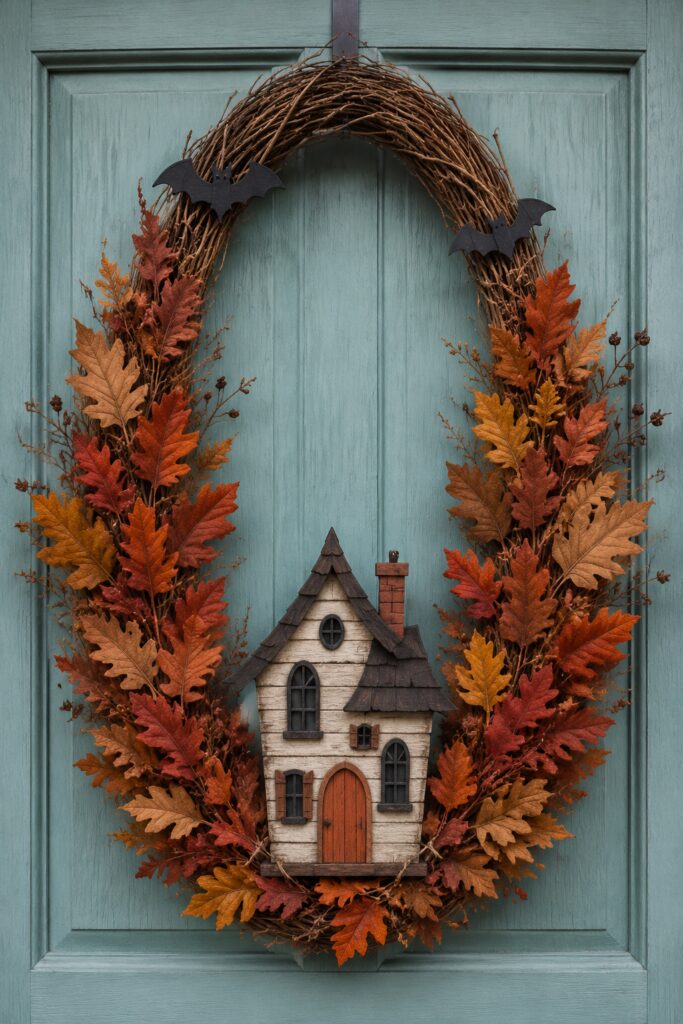
A little cottage with a crooked roof and an orange front door sits tucked among autumn leaves, as though it belongs at the end of a woodland path. Above it, two black bats perch against an arch of tangled grapevine. This Halloween wreath tells a small story before anyone even reaches the doorstep.
The house is the detail that invites a closer look. Weathered cream siding, tall dark windows, and uneven shingles give it character, while the surrounding rust and gold foliage keeps the scene warm. It feels mysterious enough for October without losing the comfort of traditional fall decorating.
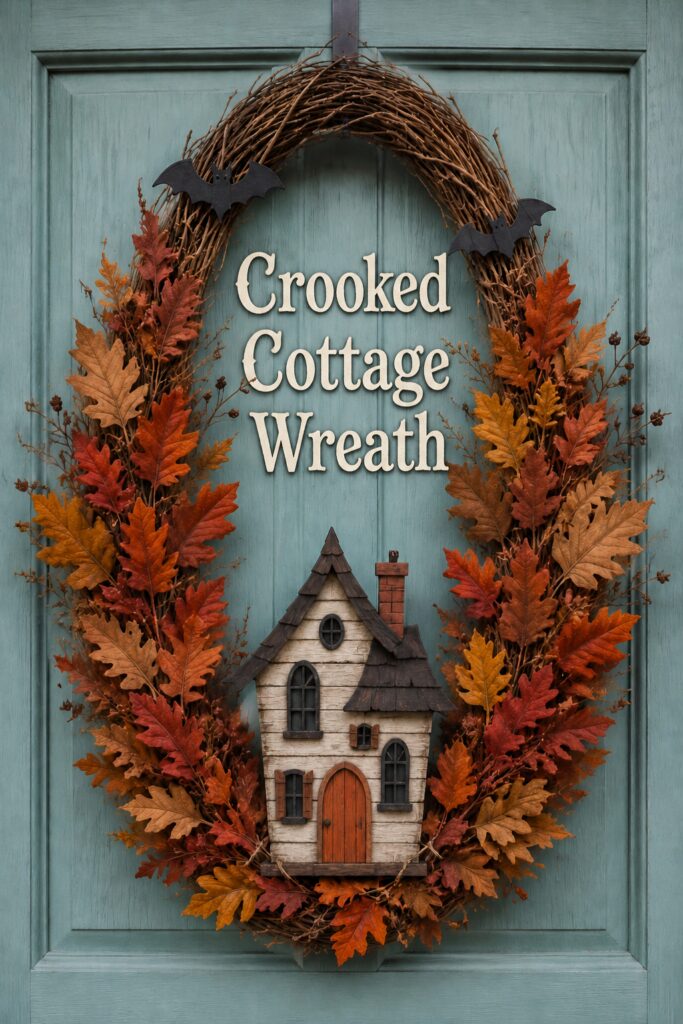
The inspiration image is AI generated. Use it as a decorating concept for combining similar pieces rather than as a photograph of an available finished wreath.
The open space becomes part of the scene
The tall oval shape gives this design a different rhythm from a compact round wreath. Its sides create room for layered leaves, while the opening above the cottage makes the house appear nestled beneath a woodland arch.
That empty area is essential. Filling it with additional ornaments would reduce the sense of a little building sitting within a larger landscape.
The foliage is fullest around the lower half, where it seems to gather beside the cottage walls. Farther up, leaves become more scattered until the upper curve is mostly exposed vine.
Two bats finish that progression. Their simple dark silhouettes echo the roof and windows below, connecting the top and bottom without needing a ribbon or bow.
Find a cottage with character before choosing the base
A lightweight house ornament or plaque
Start with the house, because its proportions will determine the rest of the arrangement. A lightweight, flat-backed cottage decoration is easier to incorporate than a heavy miniature building.
Look for a steep roof, an uneven outline, or tall windows. Those features contribute more to the storybook effect than an exact match to every shutter and shingle.
A plain wooden house cutout can also work. Cream walls, charcoal roofing, dark window shapes, and a burnt-orange door will suggest the same character. Painted horizontal lines can imitate siding without requiring separate wood strips.
If you enjoy adding dimension, small craft-wood pieces can become shutters or a chimney. Keep them restrained so the cottage remains light enough to mount securely.
An elongated grapevine wreath
Choose an oval base with enough room to hold the cottage near its bottom and still leave a generous opening above the roof.
Lay the house against the base before attaching anything. Its lower edge should overlap the vine, while the roof rises into the opening. Avoid a combination that wedges the house tightly between both sides.
The exposed upper arc is part of the finished design, so choose grapevine with an appealing natural texture. A few irregular twigs help it feel like woodland rather than a perfectly smooth frame.
Autumn oak leaves in several related shades
The leaves provide most of the color. Rust, reddish brown, ochre, and pale tan create variation without making the wreath look scattered.
Oak-shaped foliage is particularly effective here because the long, lobed leaves follow the vertical sides. Mix larger leaves with smaller ones so you can build fullness around the house without covering its windows.
Faux foliage offers control over placement. Clip larger sprays into manageable sections and arrange them in small groups rather than attaching an entire bush at once.
Fine brown seed stems
Slender branching stems with tiny seed heads extend beyond the main leaf layer. They add a slightly wild edge that suits the cottage.
Choose sparse picks with small details. Large berries or thick floral sprays would change the scale and could make the house look less convincing within the scene.
These stems work best when partly hidden. Let only a few branches emerge between the oak leaves, especially along the outer sides.
Two simple black bats
Flat wooden or felt bat shapes can recreate the small silhouettes near the top. Their wings should be readable against the vine without spreading across the entire opening.
Position one a little higher than the other. In the inspiration, that slight difference keeps the upper section from looking too formal.
A matte black finish will relate naturally to the cottage windows. Elaborate faces or glitter are unnecessary when the wing outlines already communicate Halloween.
Build a woodland border around the house
Place the wreath flat and temporarily set the cottage at the bottom center. Mark its position with a removable tie, then lift it away while arranging the foliage.
Begin beside the future house location. Layer larger leaves along the lower sides, directing their tips upward and outward. Work toward the top with gradually smaller clusters.
Pause before reaching the upper curve. Leave enough exposed vine to give the bats a clear setting.
Next, tuck fine seed stems behind the leaves. View the arrangement from a few feet away and remove any branches that look disproportionately long or distract from the oval outline.
Return the cottage to its place and adjust the nearby foliage. Leaves can overlap the outer walls slightly, but the orange door, tall windows, and distinctive roofline should remain visible.
Secure the house directly to the wreath structure using suitable attachment points. Existing hanging loops, discreet ties, or mounting hardware appropriate to the plaque can help distribute its weight. Do not rely on leaves or thin decorative stems to support it.
Add the bats after the cottage is stable. Lift the wreath upright to check the balance and confirm that nothing shifts forward.
Let the door supply the backdrop
The muted teal door in the inspiration makes the orange foliage and cream cottage especially noticeable. It also serves as the “sky” within the wreath opening.
A dusty blue or soft gray door could produce a similar contrast. Against stained wood, include enough pale tan foliage near the cottage to distinguish the dark roof from the background.
Check the wreath’s full height before choosing a hanging position. The elongated form needs clearance above the handle and enough room for the lowest leaves to hang freely.
An interior entry wall is another attractive setting, particularly for a cottage plaque with delicate painted details. For outdoor display, use a sheltered location and materials suited to the conditions.
Nearby decorations can stay simple. A plain basket or a small grouping of unadorned pumpkins will support the harvest mood while leaving the miniature house as the discovery.
Shop similar pieces for a cottage wreath scene
Look for lightweight house plaques with steep roofs
Focus on silhouette, weight, and attachment options. A simpler house in the right proportions can work better than a detailed ornament that is too bulky for the base.
Shop oval grapevine wreaths and mixed oak foliage
Compare the base dimensions with your chosen cottage. Select leaf sprays in a few related autumn shades, using larger pieces near the bottom.
Add small bat shapes and delicate seed picks
These accents complete the setting. Keep them smaller than the cottage so they support the scene instead of becoming competing focal points.
Keep a little sky above the roof
The most useful finishing step is to leave the upper opening alone. That breathing room makes the cottage feel tucked into an autumn landscape and allows its crooked roof to remain the detail everyone notices.