*This post may contain affiliate links for which I earn commissions.*
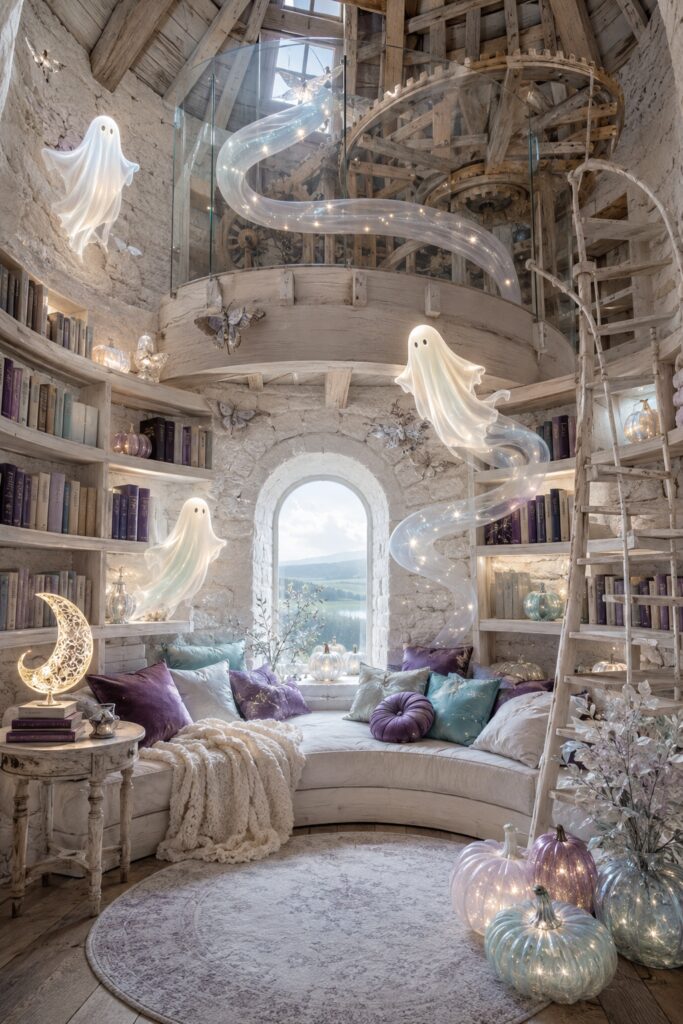
An old whitewashed windmill becomes an enchanting Halloween retreat in this imaginative reading corner. Glowing ghosts float between built-in bookshelves while ribbons of translucent light curl through the preserved wooden machinery overhead.
At floor level, a curved window seat wraps around an arched opening with a distant view of rolling countryside. Plum, lavender, aqua, and ivory pillows create an inviting place to read, while a chunky cream throw adds softness against the aged stone and timber.
A filigree crescent lamp, pearl-toned pumpkins, shimmering foliage, moth decorations, softly lit shelves, and color-coordinated books complete the scene. Instead of covering the historic architecture, the Halloween decorations appear to move through it.
You do not need a converted windmill to recreate the overall feeling. A window seat, reading chair, daybed, or cozy corner can support the same combination of ghostly light, layered textiles, celestial accents, iridescent pumpkins, books, and pale natural materials.
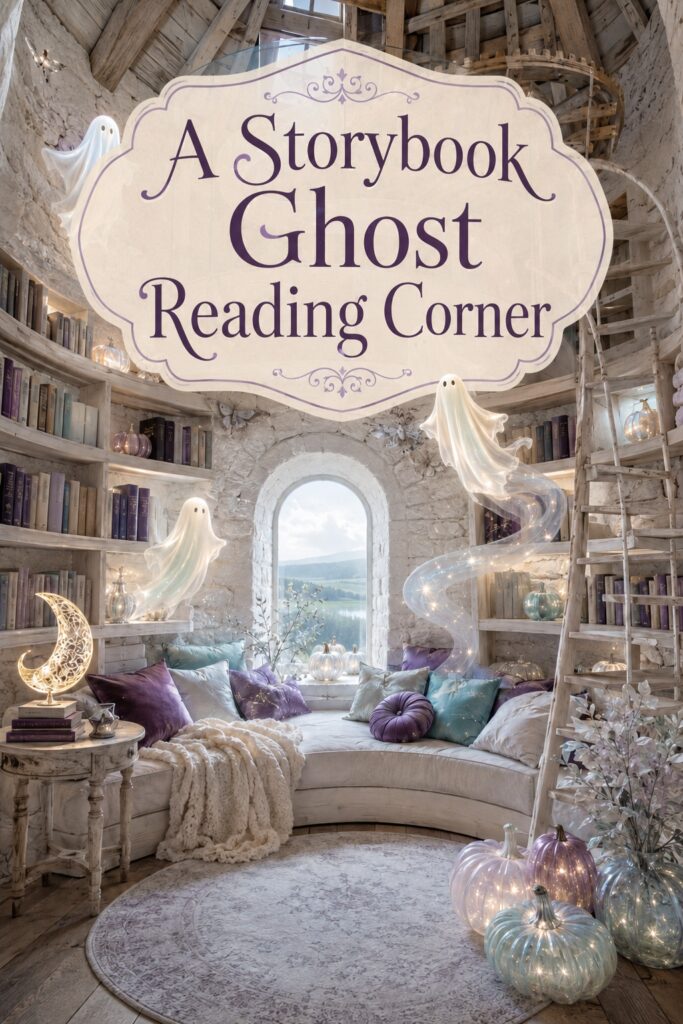
The inspiration image for this post was created with AI.
What Makes This Windmill Reading Corner So Enchanting
The setting feels magical because it allows the architecture and decorations to tell one story.
The windmill’s ancient gears, ladders, beams, stone walls, and curved interior already suggest mystery. Rather than hiding those features, the decorations wind around them. The flowing trails behind the ghosts echo the circular movement of the old machinery and guide the eye from the seat to the highest rafters.
The room’s palette is unusual for Halloween. Weathered white and natural wood form the foundation. Deep plum provides shadow and depth, while pale aqua reflects the landscape beyond the arched window. Pearl, silver, and lavender accents catch the light without making the space feel glittery or overly glamorous.
The display also protects the cozy purpose of the corner. The seat remains comfortable, books stay within reach, and the side table still holds a reading lamp. Halloween has transformed the atmosphere without making the nook unusable.
Begin With an Inviting Reading Seat
The curved built-in seat is the practical center of the scene. Its generous depth creates enough space for reclining with a book, while the fitted ivory cushion keeps the irregular stone architecture comfortable.
You can interpret this idea with a window seat, chaise lounge, daybed, deep armchair, or small loveseat. Choose a piece that provides genuine support rather than selecting furniture only for its decorative shape.
A pale ivory or light warm-gray foundation will capture the airy quality of the inspiration. It also allows plum, lavender, and aqua pillows to show clearly.
If replacing upholstery is not practical, cover the seat with a washable ivory quilt or fitted daybed cover. A lighter foundation can change the entire mood of an existing reading corner without requiring new furniture.
Preserve Room for Reading
Avoid filling every inch with seasonal pillows and decorations. Leave enough open seat space for someone to sit comfortably, stretch out, and reach the side table.
Layer Plum, Lavender, Aqua, and Ivory Pillows
The textile palette is one of the image’s most achievable ideas. Dark plum cushions anchor the pale seat, while aqua pillows pull color from the distant landscape. Ivory cushions connect the nook to the stone walls, and a round lavender pillow adds an unexpected shape.
Use three or four colors, but vary the textures. Velvet works beautifully for plum and lavender. Washed linen or slub cotton can soften the aqua, while embroidered or quilted ivory pillows add quiet detail.
A round pleated pillow is especially useful because it interrupts a row of conventional squares. Place it toward the front where its sculptural shape remains visible.
Keep the darkest cushions near the outer ends or back corners. They will frame the lighter pillows and make the seating area feel deeper.
Repeat Colors Across the Room
Aqua and lavender also appear in the pumpkins and book spines. Repeating each accent in two or three areas keeps the palette intentional without making every object match.
Add a Thick Cream Throw
The oversized cream throw spills across the seat and onto the floor in loose folds. It makes the stone room feel welcoming and gives the refined color scheme a relaxed, lived-in quality.
Choose a chunky knit, cable-knit, or heavily textured blanket in ivory rather than stark white. A warm cream will harmonize more naturally with aged stone and weathered wood.
Fold the blanket loosely and let one end fall over the seat. Avoid arranging it too precisely. The softness should contrast with the rigid beams, gears, shelves, and ladder.
If the blanket rests near decorative lights, select LEDs that remain cool during operation. Keep all cords, battery compartments, and heat-producing devices away from loose textiles.
Let Illuminated Ghosts Float Through the Nook
Three softly glowing ghosts appear at different heights around the reading corner. Their pale bodies remain clearly visible against the stone and bookshelves, while simple oval eyes preserve a sweet, traditional expression.
Use one medium or large hanging ghost as the primary figure, then add one or two smaller versions. Suspend them so they seem to move diagonally through the room rather than forming a straight row.
In a standard-height room, keep all figures well above seated head level and away from ceiling fans, lamps, vents, fireplaces, and doorways. Lightweight figures with built-in hanging loops are easier to position securely.
Warm white illumination is particularly effective here. It gives the ivory fabric dimension and relates to the moon lamp, pumpkin lights, and shelf lighting.
Choose Graceful Rather Than Frightening Ghosts
Look for white flowing fabric, softly outstretched arms, uncomplicated faces, and warm LEDs. Avoid strongly distressed fabric, grimacing expressions, and harsh flashing modes when recreating this gentle reading-room mood.
Recreate the Flowing Trails With Fabric and Fairy Lights
The ghosts in the inspiration appear to travel on curling ribbons of translucent light. This fantastical effect would be difficult to reproduce exactly, but a simplified version can suggest the same motion.
Begin with a length of sheer white organza, iridescent mesh, or narrow tulle. Loosely shape it into a broad curve along a wall, bookcase edge, or secure overhead support. Weave battery-operated warm micro lights through the material.
Use transparent removable hooks only on surfaces approved for them, and test the material before committing to the full installation. Antique plaster, rough stone, whitewash, and fragile paint can be damaged by adhesive products.
Keep the ribbon of light away from ladders, stairs, book access, and walkways. The effect should create visual movement without turning the room into an obstacle course.
Allow Plenty of Open Space
One or two illuminated curves will be more convincing than a web of fabric covering the room. The stone, books, and windmill mechanisms need open areas to remain part of the composition.
Illuminate the Bookshelves From Below
Warm shelf lighting outlines the books and keeps the recessed areas from becoming dark. It also makes the ghosts appear to glow throughout the room rather than only near the ceiling.
Battery-operated light bars or low-profile LED strips can create a similar effect. Position the light toward the front or underside of each shelf so it washes gently across the book spines.
Choose warm white bulbs with dimming capability if possible. The shelves should contribute a background glow rather than compete with the celestial lamp.
If you style books by color, avoid making the arrangement look unnaturally perfect. Mix ivory, gray-blue, aqua, plum, and charcoal spines while leaving some neutral or aged volumes in place.
Books can be turned with their page edges outward when a few vivid covers disrupt the palette, but preserving readable spines will make the corner feel more authentic and useful.
Add a Celestial Reading Lamp
The illuminated crescent moon on the side table gives the reading area a clear focal point at seated height. Its filigree texture creates a lace-like glow that feels both celestial and slightly antique.
A crescent-shaped table lamp, perforated metal lantern, or warm-white moon light can provide a similar effect. Look for a design substantial enough to serve as a lamp rather than a tiny novelty light.
Place it beside a short stack of books to raise it slightly and reinforce the purpose of the corner. A small hourglass, silver bookmark dish, or vintage-style magnifying glass can complete the arrangement without creating clutter.
Keep the Light Warm and Gentle
The lamp should feel like moonlight interpreted through warm candlelight. An intensely blue or multicolored bulb would compete with the room’s pearl and ivory surfaces.
Gather Pearlescent Pumpkins Around the Nook
Large aqua, lavender, silver, and pearl-white pumpkins glow at the edge of the rug. Smaller versions appear on the shelves and windowsill, carrying the seasonal theme through the full height of the room.
Choose pumpkins with translucent glass, crackle finishes, mercury-style surfaces, or built-in lights. Mix several sizes so the floor grouping rises and falls naturally.
Place the largest pumpkin at the back and stagger smaller ones around it. Three to five pieces are enough for most reading corners. Leave breathing room between the grouping, seat, ladder, and walking path.
A few unlit pumpkins can be mixed with illuminated versions. This creates depth and prevents the display from looking like a cluster of identical lamps.
Use a Cool Pearlescent Palette
Pale aqua, lavender, ivory, and silver preserve the room’s ethereal quality. Even one saturated orange pumpkin would substantially change the visual story.
Introduce Moths and Frosted Foliage
Large moths rest near the bookshelves and curved balcony, contributing a nocturnal detail that feels more delicate than bats. Silver foliage beside the ladder and on the windowsill adds movement and catches the surrounding lights.
Use decorative moths in ivory, lavender-gray, or muted metallic finishes. Place them sparingly at different heights so they appear to be traveling through the nook.
A few frosted or silver stems can fill an unused corner without hiding the architecture. Arrange them in a reflective glass, pale ceramic, or antiqued metal vase.
Keep glittered foliage away from upholstery and books if it sheds. A pearlized or lightly metallic finish will be easier to live with in a functional reading area.
Let the Architecture Remain Visible
The windmill’s preserved mechanisms make this corner unforgettable. In a conventional home, exposed beams, brick, stone, paneled ceilings, unusual windows, or built-in shelves can provide a similarly strong backdrop.
Avoid covering those features with heavy garlands. Instead, use lighting and a few suspended elements to draw attention toward the room’s natural lines.
If your reading nook has little architectural character, create depth with one textural element. A limewashed wall, removable stone-look mural, weathered shelf, or arched mirror can suggest an older setting without attempting to imitate an entire windmill.
The goal is not to reproduce the building. It is to combine a cozy place to read with a pale, timeworn background that makes the luminous decorations feel as though they have wandered in from a story.
Soften the Floor With a Faded Round Rug
A pale round rug defines the seating zone while repeating the circular forms of the windmill machinery, curved bench, window, pumpkin bodies, and moon lamp.
Choose an ivory, faded lavender, or warm-gray rug with a distressed medallion pattern. A low-pile surface will be easier to maintain around bookshelves and decorative pieces than a deep shag.
The rug should extend beyond the front of the seat without covering every visible floorboard. Leaving some wood exposed preserves the old-world warmth of the room.
Make sure the edges lie flat and do not interfere with a ladder, doorway, or frequently used path.
Adapt the Idea to a Small Reading Corner
A modest nook can capture this atmosphere with one lighted ghost, one crescent lamp, and three pearlescent pumpkins.
Start with an ivory chair or bench. Add a plum velvet pillow, an aqua pillow, and a cream knit throw. Place the moon lamp on a small table with two or three old books.
Hang the ghost above and slightly behind the chair, then trail a short length of lighted organza along the wall. Finish with a lavender glass pumpkin, an aqua pumpkin, one silver branch arrangement, and a decorative moth near the books.
This smaller version retains the storybook feeling without requiring built-in shelves, a window seat, or a soaring circular room.
A Final Styling Tip
Decorate from the seat outward. Begin with the cushions and blanket, then add the side table and lamp. Position the largest ghost next, followed by any trailing fabric and shelf lights. Finish with pumpkins, moths, and foliage.
Sit in the finished nook before considering it complete. Confirm that every book, lamp switch, blanket, and table remains easy to reach. The most successful seasonal reading corner should feel even more inviting after it is decorated.