*This post may contain affiliate links for which I earn commissions.*
Oversized fabric candies, little black ribbon ties, and a generous cream ruffle give this Halloween wreath the charm of an old-fashioned sweet shop. Orange gingham does most of the decorating, with two red checked candies adding an unexpected accent and one plain cream wrapper offering a softer pause.
Hanging against a powder blue door, the wreath feels welcoming and playful. It is a lovely fit for a cottage entry, a farmhouse kitchen door, or an indoor spot where you want a nod to trick-or-treat season without a spooky scene.
The appeal comes from the familiar shape of wrapped sweets made wonderfully oversized. You can capture that effect with fabric, lightweight filling, and a few well-placed ribbon ties.
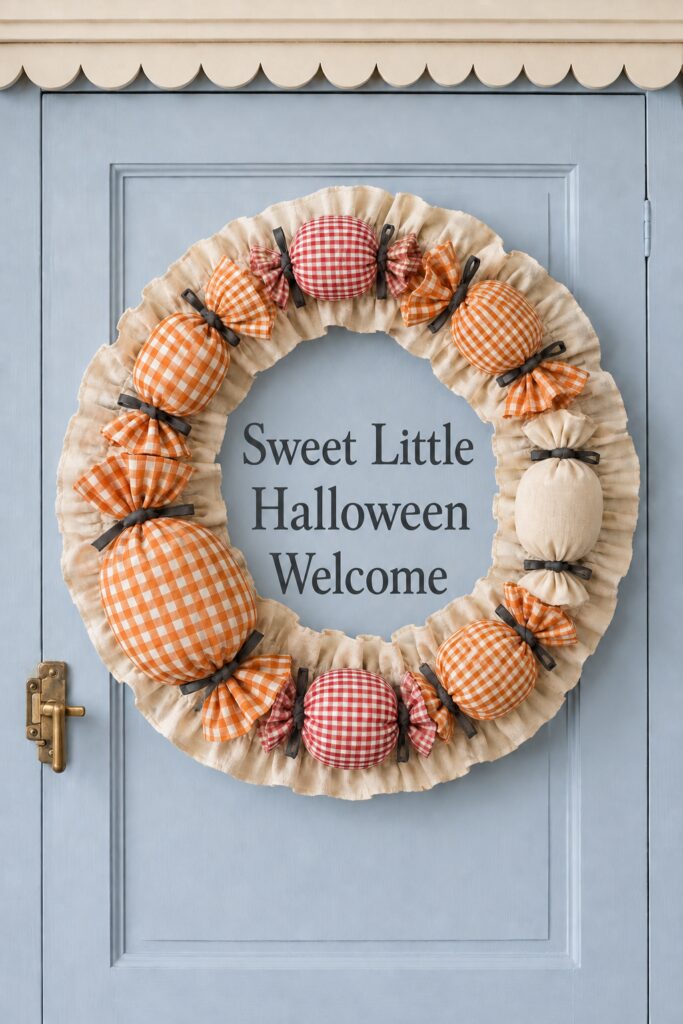
The inspiration image is AI generated. Use it as a styling reference for recreating a similar look with fabric and decorative components rather than an exact finished product.
Start with the Candy Shapes
The candy decorations are the main attraction, so their proportions matter more than extra embellishments. Each has a plump center, gathered ends, and enough loose fabric beyond the ties to resemble a wrapper.
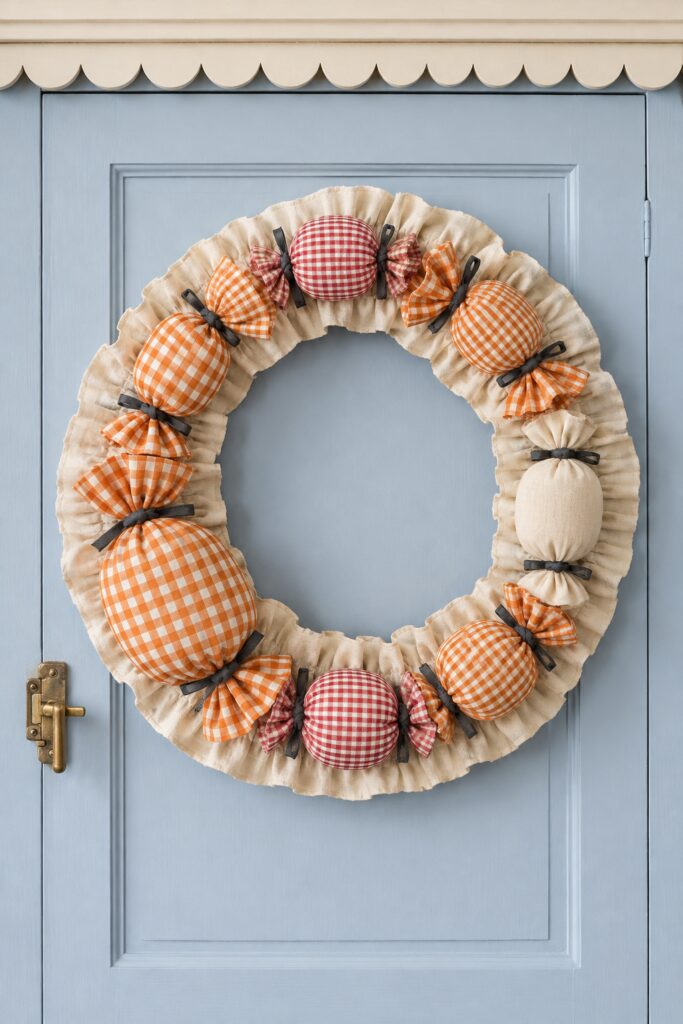
The largest orange piece sits at the lower left. It gives the arrangement a focal point without needing a separate bow or sign. Smaller candies follow the curve of the wreath, with their wrapper ends helping bridge the spaces between them.
You do not need every candy to match. A mixture of round and slightly oval centers makes the collection feel more natural. Keep the wrapper treatment consistent, however, so they still look like variations on the same idea.
For a smaller wreath, reduce the number of pieces before shrinking everything. A few generously sized candies will communicate the theme more clearly than many tiny ones.
Choose Fabrics That Work Together
Orange Gingham for the Main Decorations
Orange-and-cream or orange-and-white gingham establishes the Halloween palette. A woven cotton with enough body to hold a gathered shape is a useful starting point.
Notice how the checks vary in scale. The largest candy has a more open pattern, while some smaller pieces use tighter checks. That variation adds interest without introducing a completely different print.
If you already have orange checked fabric, use it as the starting point and choose the other materials around it. The finished wreath does not depend on matching every shade in the inspiration.
Red Checks for a Small Surprise
The red gingham candies sit near the top and bottom of the ring. Their placement distributes the accent rather than concentrating it in one area.
Keep red secondary to orange if you want the wreath to retain its Halloween character. Two modest pieces can provide the effect; there is no need to repeat red in the ribbon or background.
A softened brick red would create a more muted version, while a clearer red would emphasize the sweet-shop mood.
Plain Cream Fabric for Breathing Room
The solid cream candy on the right is easy to overlook, but it gives the eye a break from all the checks. Its texture connects it to the ruffled base.
Use a similar cream for both elements, even if the fabrics are not identical. Cotton, muslin, or a lightweight linen-like material can suggest the soft, slightly rustic finish.
Give the Ring a Ruffled Foundation
The cream border should remain visible around and between the candies. It acts like a gathered collar, framing the decorations and softening the edge of the wreath.
Begin with a lightweight wreath form and cover any exposed surface. Add gathered fabric strips around the front, adjusting the fullness until the folds look generous without swallowing the center opening.
A long running stitch along one edge of a fabric strip allows you to gather it by gently pulling the thread. If you prefer less sewing, suitable gathered trim can suggest the same effect.
Secure the gathers to the base rather than relying on the candies to hold them in place. Leave the back relatively flat so the wreath can rest neatly against a door.
Recreate the Wrapped Candy Effect
A simple fabric tube with a filled center can suggest a wrapped sweet. Close the long seam, gather one end, add lightweight stuffing to the middle, and gather the other end. Leave unfilled fabric extending beyond both ties.
Aim for a softly rounded center rather than a tightly packed ball. Overstuffing can distort the checks and make the ends difficult to gather.
Tie the gathered sections securely with thread or cord, then cover those fastenings with narrow black ribbon. This lets the ribbon serve as a decorative finish without doing all the structural work.
Spread the loose ends into small fans. Some can point along the ring while others angle slightly outward. That change in direction helps the pieces feel arranged rather than lined up.
These are decorative fabric sweets, so there is no need to use real candy inside them.
Arrange the Largest Piece First
Lay the wreath flat and position the largest orange candy at the lower left. Place the cream piece on the right, then distribute the remaining checked shapes around the ring.
Set the red candies apart from one another. Fill the remaining spaces with orange, turning each piece so its wrapper ends follow the circular arrangement.
Before attaching anything, check that cream ruffles remain visible. If the decorations cover the entire foundation, spread them out or remove one.
Fasten each candy to the underlying wreath structure using concealed ties or stitching appropriate to the base. Avoid attaching heavier pieces only to the loose ruffle. Lift the wreath upright to check that the candies stay in position and the hanging point holds it level.
Similar Pieces to Look For
Look for Cotton Gingham in Two Check Sizes
Fabric remnants may be enough for several candies. Choose orange first, then add a smaller amount of red and a plain cream fabric.
Shop Similar Narrow Black Ribbon
A simple matte ribbon suits the homespun finish. Keep the bows small so the fabric wrapper ends remain visible.
Look for Lightweight Wreath Forms and Gathering Supplies
Choose a base that supports the finished decorations without unnecessary weight. Matching thread, lightweight filling, and cream fabric will do more for this look than additional seasonal ornaments.
Make the Setting Part of the Welcome
The blue door provides a cool backdrop for the orange checks. A cream door or pale wood surface would also suit the warm fabric palette.
Keep nearby decorations simple, and display the wreath indoors or somewhere reliably dry and sheltered. Its final touch is the space you leave: visible ruffles and an open center let those oversized sweets feel generous without becoming crowded.