*This post may contain affiliate links for which I earn commissions.*
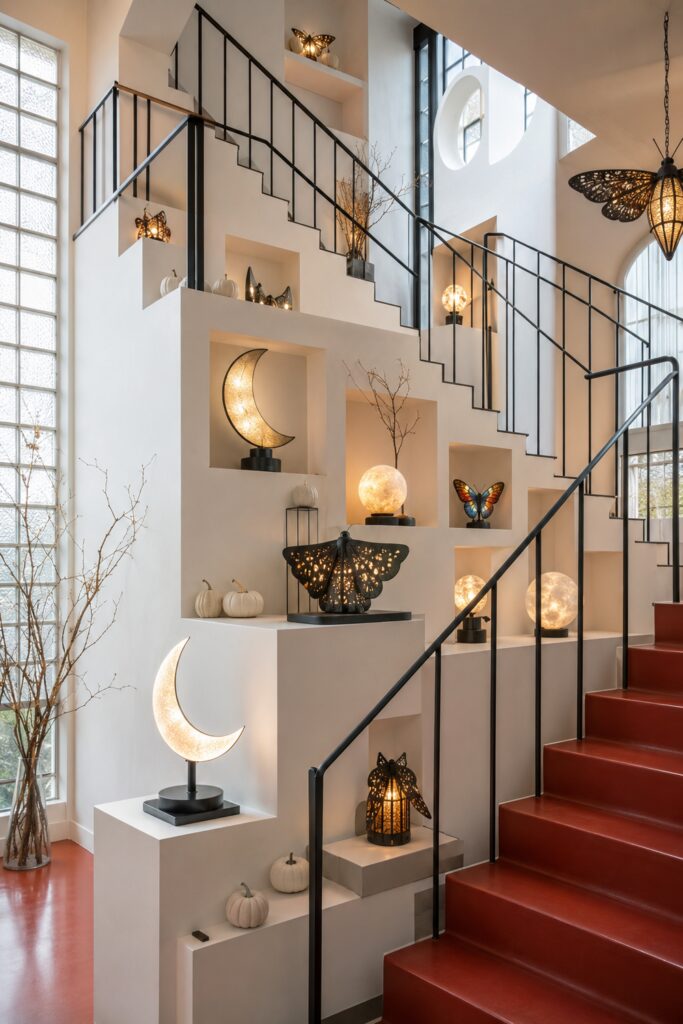
This striking stairwell approaches Halloween decorating like an art exhibition. Illuminated crescent moons, glowing lunar spheres, and sculptural moth and butterfly lamps occupy a series of geometric wall niches, ledges, and platforms beneath the stairs.
Warm amber light glows against crisp white walls, while slim black railings trace strong diagonal lines through the space. Deep rust-red stairs add an unexpected block of autumn color. A few white pumpkins and arrangements of bare branches hint at the season without distracting from the luminous collection.
The result feels imaginative and slightly mysterious, but it never becomes dark or cluttered. It is a wonderful example of Halloween decor that works with modern architecture rather than hiding it.
You do not need a large Bauhaus stairwell or built-in display niches to interpret the idea. Floating shelves, a console table, staggered wall ledges, or a bookcase can become a smaller moon-and-moth gallery when the lighting, shapes, spacing, and colors are handled thoughtfully.
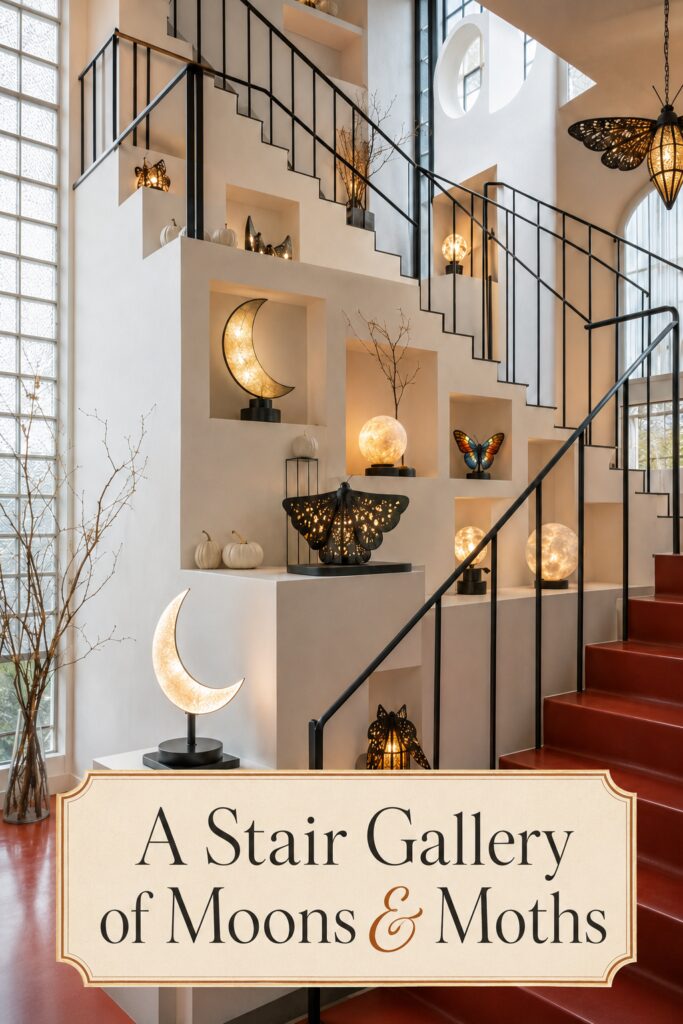
Image disclosure: This decorating concept was visualized with AI.
What Gives This Stair Gallery Its Magic
The defining feature is not one lamp. It is the repetition of light in several related forms.
Large crescent lamps establish the celestial theme. Round moon lights introduce a contrasting full-circle shape. Black moth fixtures bring intricacy and movement, while one stained-glass butterfly contributes a small flash of jewel color.
Every piece is different, but the collection remains cohesive because most of the lights share a warm amber glow and a black base or frame.
The architecture also plays an active role. Rectangular niches form a grid behind the stairs, while railings and steps create diagonal movement. Round moons, winged insects, and curved crescents soften all those straight lines.
Start With a Controlled Palette
The stairwell uses relatively few colors: warm white, black, amber, rust red, and a small amount of ivory. That restraint allows the unusual lamp shapes to receive attention without making the room feel like a themed store display.
In another home, begin with the existing colors of the stairway or hallway. Black accents are helpful because they connect moon lights, insect decorations, shelf brackets, and picture frames. Warm white light keeps the black from becoming severe.
If your stairs are wood or neutral carpet rather than red, introduce rust through one small rug, runner, planter, or piece of art. The color should support the lighting collection rather than compete with it.
Use Crescent Lamps as Visual Anchors
Two large crescent lamps appear at different heights on the left side of the stairwell. Their repeated shape leads the eye upward while establishing the celestial story immediately.
A similar arrangement could be created with one larger crescent lamp on a console or sturdy pedestal and a smaller version on a shelf. The pieces do not need to match exactly. In fact, slight differences in surface texture or scale can make the collection feel more curated.
Look for a crescent with a defined black outline or base. The contrast will help the silhouette remain recognizable when the lamp is switched off.
Shop Similar Crescent Moon Lights
Choose warm illumination instead of blue or multicolor effects. A dimmable lamp is particularly useful because it can be adjusted to complement the other lights in the grouping.
Add Full-Moon Spheres at Varied Heights
Glowing spheres appear throughout the niches, repeating the full moon at several points along the stairs. Their textured surfaces diffuse the light and prevent the individual bulbs from appearing harsh.
Use no more than two or three sizes in a home display. Position one sphere low, one at eye level, and another higher on a shelf if the space allows. This staggered placement will create movement without requiring a perfectly symmetrical arrangement.
Many readily available moon lamps have wooden bases. A wood base can be painted black or set on a thin black riser to bring it closer to the Bauhaus palette.
Look for Warm White Moon Globe Lamps
Prioritize a believable lunar texture, warm-white mode, adjustable brightness, and a stable base. Avoid leaving every color-changing light in a different hue, since that would weaken the calm gallery effect.
Introduce Moths Through Shadow and Perforation
The large black moth lamp at the center is the most theatrical object in the collection. Its perforated wings allow pinpoints of amber light to shine through, producing an intricate silhouette against the plain white architecture.
An exact match may be difficult to find, but the effect can be recreated with a black butterfly accent lamp, a perforated insect lantern, or a black metal butterfly sculpture placed in front of a small warm light.
Keep the insect forms mostly black. Their dark wings provide necessary contrast between the pale walls and golden moons.
Add a Sculptural Butterfly or Moth Lamp
Look for open metalwork, pierced details, a compact black base, and warm illumination. A tabletop accent light will be easier to arrange in a stair display than a large floor lamp.
Look for a Perforated Insect Lantern
A small lantern with butterfly or moth cutouts can reproduce the patterned glow seen in the lower niches. Use a flameless light source and follow the fixture’s safety instructions.
Make the Display Feel Collected, Not Matched
A successful collection needs relationships, but it should not look as though every object came from one boxed set. This gallery mixes crescents, spheres, upright insects, low lanterns, and a suspended winged fixture.
To recreate that variety, choose three main categories and repeat each category at least once. For example, use two crescent lamps, two spherical moon lights, and two insect-shaped accents. The objects can differ in size as long as the black and amber palette connects them.
One stained-glass butterfly can serve as the exception. Its red, blue, and amber wings create a small moment of color without changing the overall direction.
Build Height With Niches, Shelves, and Risers
The stepped architecture turns the lamps into individual exhibits. Each light has room around it, which makes even small pieces seem important.
In a conventional hallway, staggered floating shelves can create a similar rhythm. On a console or wide stair landing, use low black risers to vary the height of the lamps. Risers are also useful for hiding battery boxes and giving smaller pieces a stronger presence.
Do not place anything directly on stair treads if it could interfere with foot placement. Use wall-mounted shelves, enclosed niches, a landing, or furniture outside the walking path.
Add Simple Black Display Risers
Choose matte black risers with clean rectangular profiles. One or two are enough to lift smaller moon lights or butterfly decorations without creating visual clutter.
Add Halloween Details With Restraint
The small white pumpkins are intentionally quiet. They establish the season without introducing another strong color. Their round forms also echo the moon spheres.
Group two or three pumpkins in a niche or on one end of a shelf. Matte ivory and warm white will blend with the walls while remaining visible against black stands and railings.
Bare branches supply another subtle Halloween note. Their irregular lines contrast with the precise stair geometry and suggest a late-autumn landscape. Place tall branches in a clear or black vessel where they will not snag clothing or obstruct the railing.
Shop Similar Matte White Pumpkins
Look for several small sizes, realistic ribbing, and subdued stems. Avoid glitter or strongly distressed finishes if you want to preserve the clean architectural mood.
Choose One Consistent Light Temperature
The collection looks unified because the illuminated pieces share a soft golden tone. Even very different lamps can feel related when their light temperatures are close.
When possible, select warm-white settings in approximately the same visual range. Turn off saturated color modes and avoid mixing icy white light with deep amber unless you deliberately want stronger contrast.
Dimmers and timers can make the collection easier to manage. If several battery-operated lights are used, timer functions will prevent the display from becoming a nightly chore.
Adapt the Idea to a Smaller Home
A full stair wall is dramatic, but the concept scales down easily. Begin with one crescent light, one moon globe, and one butterfly or moth lamp. Arrange them at different heights on a bookcase, console, or three staggered shelves.
Add two white pumpkins and one arrangement of bare branches. Keep enough empty space around each light for its silhouette to remain clear.
The collection should feel like a group of illuminated curiosities rather than a crowded assortment of Halloween decorations. When every piece has room to glow, a small display can capture the same sense of discovery as this expansive stair gallery.
A Final Styling Thought
Treat each light as a small sculpture, then use repeated shapes, black accents, and one warm glow to connect the collection. The result can feel distinctly Halloween while remaining polished enough to suit a modern home.