*This post may contain affiliate links for which I earn commissions.*
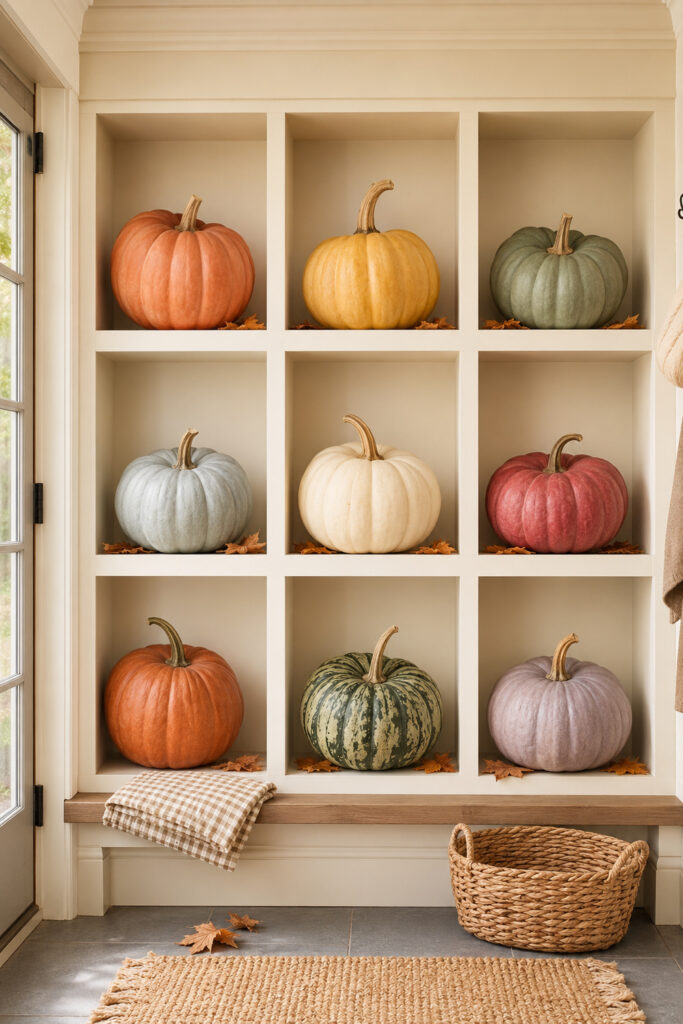
Fall decorating does not have to stay within the familiar orange, brown, and cream palette. This cheerful cubby display celebrates the varied colors of heirloom pumpkins, including coral, golden yellow, sage green, misty blue, creamy white, berry red, burnt orange, variegated green, and dusty lavender.
Each compartment holds one generously sized pumpkin, turning a simple wall of shelves into a beautifully ordered fall feature. Scattered autumn leaves, a neutral gingham throw, a woven basket, and a natural textured rug soften the structured grid and give the entryway a warm, collected feeling.
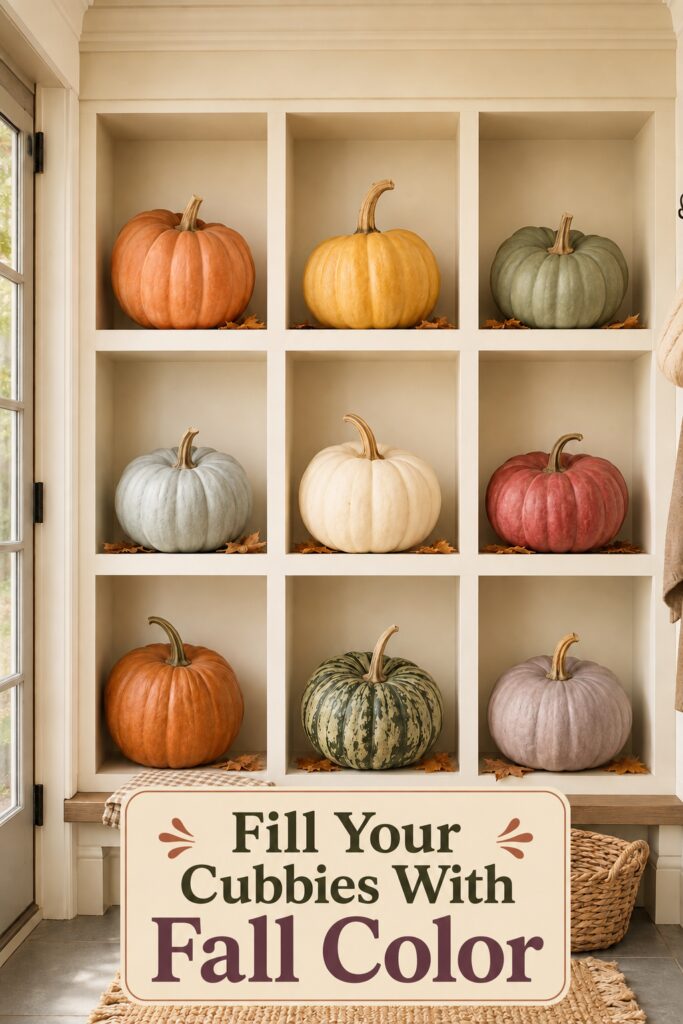
This inspiration image was created with AI to help visualize the decorating idea. You can recreate the overall effect with similar pumpkins, colors, and natural textures.
What Makes This Colorful Pumpkin Display Work
One pumpkin becomes one complete vignette
The restraint is what makes this arrangement so striking. Each cubby contains one large pumpkin rather than a collection of small decorations.
Giving every pumpkin its own compartment makes its color, shape, and stem easy to appreciate. The empty space surrounding it acts almost like a picture frame.
The result feels cleaner and more intentional than filling every opening with several seasonal objects.
The colors resemble a softened rainbow
The pumpkins do not follow a literal rainbow of bright primary colors. Instead, the display uses complex, nature-inspired shades that might appear among real heirloom varieties.
Warm coral and burnt orange sit alongside mustard yellow. Sage and variegated green provide earthy contrast, while misty blue and muted lavender bring in unexpected cooler tones. Cream and berry red complete the collection.
Because every shade is slightly subdued, the pumpkins look coordinated even though none of them match.
Similar scale creates order
Most of the pumpkins are approximately the same visual size. Their shapes and stems vary, but each one fills a comparable amount of its compartment.
This consistency keeps the colorful arrangement from feeling random. If you recreate the idea, exact measurements are not necessary. Try to choose pumpkins that leave a similar amount of open space around them.
Cream shelving provides a calm backdrop
The warm cream cubbies allow every pumpkin color to stand out without creating harsh contrast. The neutral background also connects the display to the adjacent wall, trim, and built-in bench.
White, cream, pale greige, light natural wood, or another quiet neutral could all work. Dark shelving would produce a moodier result and may make the deeper pumpkin colors less visible.
Small leaves break up the rigid lines
A few scattered maple leaves rest beneath the pumpkins. Their irregular shapes soften the straight edges of the shelving and introduce another recognizable sign of fall.
The leaves are used sparingly. They provide a finishing detail without distracting from the pumpkins or making the individual compartments look cluttered.
Natural textures warm the lower half
The woven basket, gingham textile, wooden bench, and fringed natural rug balance the smooth painted shelves. These pieces prevent the space from feeling like a formal display case.
They also make the decorating idea more practical for an entryway or mudroom. A basket can hold everyday items, while a folded throw adds softness without interfering with the pumpkin arrangement.
Key Pieces to Recreate the Look
Large faux heirloom pumpkins
A collection of faux pumpkins makes it possible to build the display before real pumpkins are widely available and reuse it in future years.
Look for deeply ribbed shapes, curved stems, lightly mottled surfaces, and colors associated with heirloom varieties. Avoid buying nine identical pumpkins in nine colors. Slight differences in shape will make the collection feel more natural.
Paintable craft pumpkins
Finding large finished pumpkins in every shade shown may be difficult. Paintable foam pumpkins offer more control over both color and scale.
Choose several white or pale pumpkins with realistic ribbing. Paint them in muted coral, ochre, sage, blue-gray, cream, berry, terracotta, variegated green, and dusty lavender.
A matte or chalky finish will look more natural than a glossy craft finish. Lightly layering two nearby shades can also give the surface more dimension.
Muted craft paints
You do not need nine completely separate paint colors. A smaller collection can be mixed with cream, warm gray, brown, or black to create several subdued variations.
For example, orange mixed with cream can become coral. Green mixed with gray can produce sage. Red softened with cream and a small amount of brown can become muted berry.
Test every mixture on paper before painting the pumpkins.
Artificial autumn leaves
Use a small handful of maple or oak leaves around the pumpkin bases. Choose mostly orange and brown leaves rather than a highly varied red-and-yellow mixture.
Bend or crumple perfectly flat fabric leaves slightly so they do not look newly removed from a package. A few small acorns could also work, but the display should remain uncluttered.
Neutral gingham textile
A beige-and-cream gingham throw or tablecloth introduces a gentle pattern without competing with the pumpkin colors.
Fold it casually over the edge of a nearby bench, shelf, or chair. Only a small section needs to be visible for the pattern to add interest.
Woven basket and natural rug
A honey-colored seagrass or wicker basket repeats the warmth of the pumpkin stems and wooden bench. A small jute or woven natural-fiber rug continues that texture across the floor.
These supporting elements are not required for the pumpkin display itself, but they help create the relaxed entryway atmosphere shown in the image.
How to Arrange Pumpkins in Cubbies
Measure the height, width, and depth of each opening before shopping. The pumpkin should fit comfortably without touching the sides or shelf above it.
Arrange the colors on the floor before placing them into the compartments. Separate similar colors so the two orange pumpkins do not sit beside one another. Distribute the cooler blue, green, and lavender shades across the grid.
Place the visually lightest pumpkin near the middle. In the inspiration image, the cream pumpkin creates a quiet central point while the stronger colors surround it.
Turn each pumpkin until its most attractive side faces forward. Angle some stems slightly left and others right to prevent the arrangement from looking overly uniform.
Add only a few leaves after the pumpkins are positioned. Keep them close to the bases rather than scattering them throughout the entire shelf.
If your shelving also serves a practical purpose, decorate only the upper compartments and reserve the lower ones for baskets or storage. The same idea can work with six pumpkins, four pumpkins, or even three wide shelves.
Use lightweight faux pumpkins on elevated shelves, particularly in a frequently used entryway. Make sure each one sits securely and cannot easily roll or fall when a nearby door closes.
Shop Similar Pieces
Shop Similar Faux Heirloom Pumpkins
Look for large artificial pumpkins in muted orange, cream, sage, blue, berry, and variegated green. Mix individual pumpkins with coordinated sets to create a collected assortment.
Add Paintable Pumpkins for Custom Colors
White foam pumpkins can be painted when a finished product is unavailable in the color or scale you need.
Choose Muted Paint Colors
Select matte paints in warm, earthy shades. Mixing your own variations can produce a more natural heirloom palette than using bright colors directly from the container.
Scatter a Few Fall Leaves
Artificial leaves fill the small gaps below the pumpkins and soften the square compartments.
Add a Neutral Gingham Textile
A beige gingham throw or folded tablecloth brings subtle pattern into the display without introducing another strong color.
Finish With Woven Entryway Accents
A handled basket and natural-fiber rug add practical texture around the base of the shelving.
Final Styling Tip
The display does not depend on owning nine cubbies or nine pumpkins. Repeat one generously sized pumpkin per shelf opening, vary the colors, and preserve plenty of empty space around each one.