*This post may contain affiliate links for which I earn commissions.*
A cabbage makes an unexpected wrapper for Thanksgiving flowers. In this inspiration, its pale green leaves surround a rounded arrangement of cream and rust mums, golden wheat, and smaller yellow-green stems. Three little ivory pumpkins gather on the tray below, while amber glasses and turkey napkin rings carry the harvest colors around the table.
The cabbage is the detail that gives the centerpiece its character. You can borrow the leafy shape without treating the vegetable as a watertight vase. A separate container hidden inside or behind the leaves is the practical starting point, and a modest flower height makes the idea easier to use during dinner.
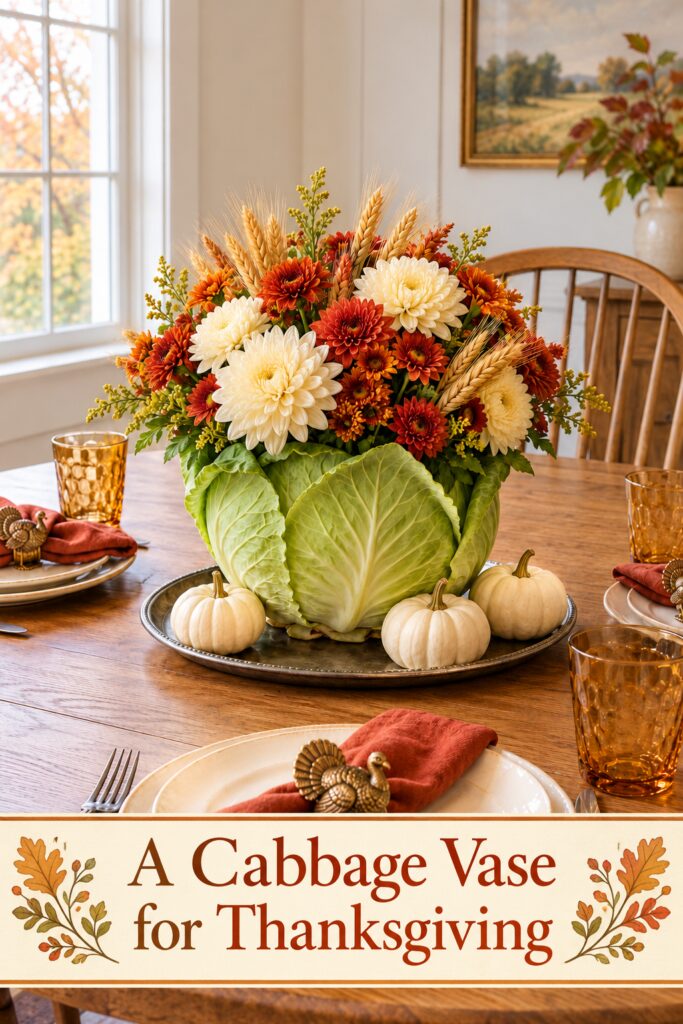
This image was generated with AI as decorating inspiration. Similar pieces can recreate the overall effect.
Start with the leafy container effect
The large outer leaves provide a broad green base under the flowers. Their veins and curled edges make the arrangement feel connected to the garden rather than to a polished ceramic vase. Keep enough of that leaf surface visible when planning your version, or the unusual container will disappear beneath a mass of blooms.
For fresh flowers, use a stable watertight vase or floral container within a cabbage-inspired outer arrangement. You can position broad cabbage leaves around a short vessel on a protective tray, using a separate decorative outer pot to hold them where needed. The hidden vessel should support the flowers without depending on the leaves to carry their weight.
If you use a hollowed cabbage, select an insert that fits securely and contains all the water. Cutting the center is a separate preparation task, so work on a board with suitable kitchen tools and keep your hands clear of the cutting path. Check the finished container for rocking and leaks before moving it to the dining table. Treat the cabbage as temporary decoration rather than a long-lasting vase.
Find cabbage vases
Browse current Amazon options that can help you recreate this look.
Browse cabbage vases on Amazon →As an Amazon Associate I earn from qualifying purchases.
Build a rounded bouquet above the green leaves
Place the larger cream flowers first
The cream mums create broad, pale faces among the smaller rust blooms. They also connect with the ivory pumpkins and light plates. Choose a few larger flowers as your starting points, spacing them across the arrangement rather than putting every pale bloom in one cluster.
Cut and arrange stems according to the needs of the actual flowers you choose. Keep fresh stems in water and remove foliage that would sit below its level. Turn the vase as you work, since a centerpiece needs to make sense from several seats rather than only from the camera’s direction.
The image suggests a generous mound, but you can lower the flowers for conversation. Sit at your table before deciding on the final height. If the blooms block the person opposite you, shorten the arrangement or plan to move it to a sideboard when dinner is served.
Fill with rust blooms and a little wheat
Smaller rust-colored flowers link the cream heads without creating one solid cream dome. Their warm color relates to the linen napkins, so the centerpiece and place settings feel like parts of the same meal. Leave some variation in flower height, but keep the overall outline compact enough to reveal the leafy base.
Golden wheat adds narrow lines above and between the rounded flowers. Use it sparingly so the bouquet still reads as a mound rather than a spray of tall stems. If dried wheat sheds, arrange it over a work surface first and remove loose pieces before carrying the display near place settings.
Fresh flowers and dried accents have different care needs. Keep the fresh stems in the insert’s water, and position the wheat so it doesn’t complicate topping up the vessel. You can also use faux wheat for the narrow golden detail if that’s more convenient for a one-day arrangement.
Keep the tray and pumpkins close to the base
The shallow metal tray provides a visible boundary beneath the cabbage. It also groups the small pumpkins so they don’t spread into the dining space. Choose a tray that leaves a little room around the container, with a lip capable of catching minor drips.
Protect the tabletop beneath it, especially if the tray’s underside is rough or moisture could gather. Check the insert separately for leaks; the tray is backup protection, not permission to let water escape. Dry the outside of the container before setting it down.
The pictured pumpkins are small and pale, which keeps them from competing with the flowers. Use fewer if your tray is narrow. Three crowded pumpkins can look less settled than one with a clear space around it.
Arrange the table around the finished centerpiece
- Assemble the leafy container and water-filled insert away from the table. Test its stability, then arrange the flowers while you can turn the whole piece easily. Check that the leaves stay clear of the water opening.
- Put the protected tray at the table’s center and set the arrangement inside it. Add the small pumpkins around the base, keeping all of them fully on the tray rather than perched against its rim.
- Lay the plates, flatware, and glasses before adding any more decorations. Check the actual room needed for elbows and serving dishes. The centerpiece should fit the meal you’re serving, not only the empty table.
- Add rust napkins and turkey-shaped rings if you want that specific Thanksgiving signal. Sit down at more than one place, and make any height adjustments before guests arrive.
On a small round table, use a lower, narrower container and fewer flowers. You can keep the cabbage leaves, cream bloom, and rust accents while moving the pumpkin group to a sideboard. If dinner is served family-style, arrange a clear landing space elsewhere for the centerpiece before the large dishes come out.
Choose the container before buying the stems
This look depends more on the leafy base and harvest colors than on an exact flower variety. Use comparable seasonal blooms if their shapes and care needs suit the arrangement. A faux cabbage-style outer pot is another option, but fresh flowers still need their own watertight container inside it.
Shop Similar Short Floral Containers
Look for a stable base and an opening that supports a compact bouquet. Compare the vessel’s height with the leaves you plan to use so the rim stays discreet without making the arrangement difficult to water.
Look for Cream and Rust Mums
Choose a mixture of larger flower heads and smaller clustered blooms for the pictured contrast. Check the stems in person where possible, and buy for their condition and usable height rather than expecting every bunch to match the image.
Shop Similar Shallow Metal Trays
Choose a tray wide enough for the container and a few small pumpkins without squeezing them together. Check the underside and add suitable table protection so the decorative grouping doesn’t leave marks on the wood.
Look for Small Turkey Napkin Rings
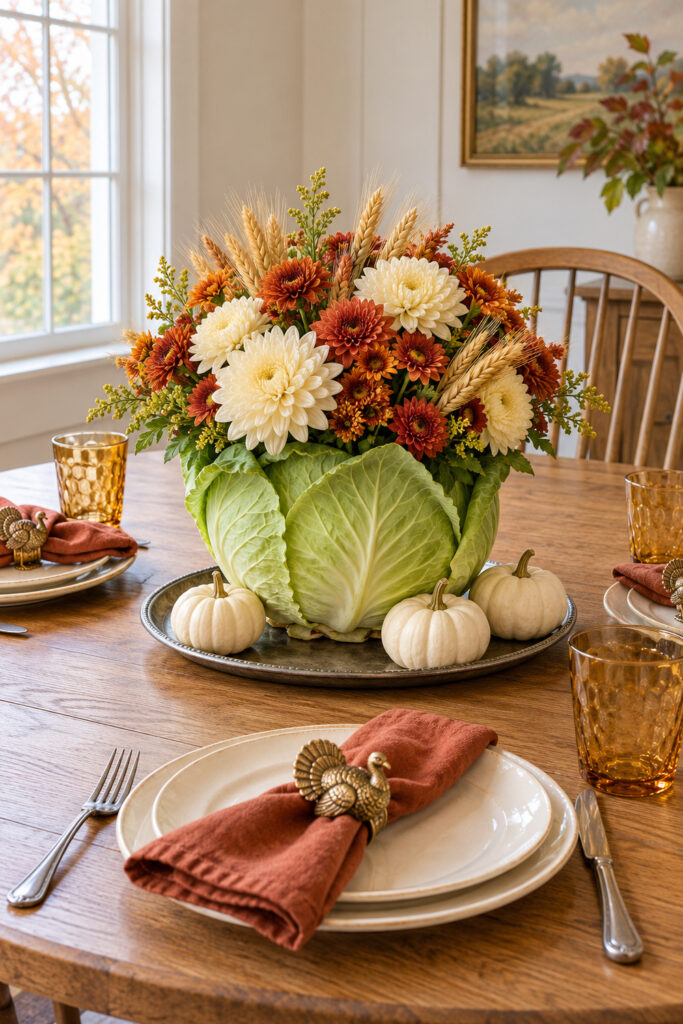
Choose rings that fit the napkins you intend to use and lie comfortably on the plate. A modest brass-colored finish can repeat the warm wheat and amber glass tones without adding another bright color.
Final Styling Tip
Pull back any flower that hides the front cabbage leaf. Showing that one broad, veined surface makes the whole idea understandable at a glance.