*This post may contain affiliate links for which I earn commissions.*
An old wooden washstand becomes a fall tea corner with a copper kettle, blue patterned cups, and a broad arrangement of autumn flowers. The surrounding blue wall, terracotta floor, and wicker chair give it a relaxed veranda setting. There is plenty to look at, but the tea pieces still have a clear place on the tabletop.
What makes this idea worth borrowing is the combination of a useful surface and a few things that feel good together. You can begin with a console or side table you already have, then bring in the copper color, a soft check, and flowers that suit its size.
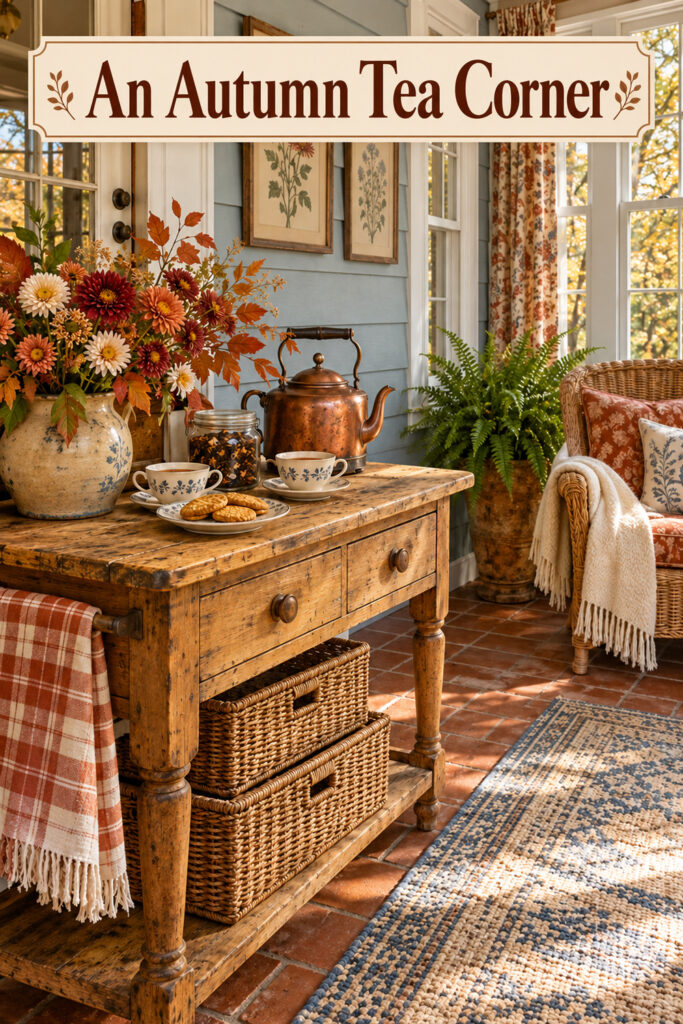
The inspiration image was created with AI and presents a decorating concept rather than a real tea service or identified products.
Copper Gives the Arrangement Its Warm Center
The kettle’s rounded body catches the window light, and its dark handle keeps it from blending into the wall. Its warm finish links the rust flowers to the wood beneath it. Blue patterned cups add contrast at the front, where their pale backgrounds are easy to see against the darker table.
A large flower vessel occupies the left side, while the kettle is nearer the middle. This difference in height creates a gentle slope across the display. The flowers aren’t arranged as a narrow upright bouquet. Their spreading stems help fill the wall area behind the cups without requiring extra ornaments on the table.
The chair and fern continue the composition to the right. In a smaller space, those can stay out of the plan. The main relationship is between the wooden surface, copper kettle, and pale tea pieces. Repeating that relationship is more useful than trying to squeeze a whole veranda into a hallway.
Find Copper Finish Kettles
Browse current Amazon options that can help you recreate this look.
Browse Copper Finish Kettles on Amazon →As an Amazon Associate I earn from qualifying purchases.
Choose the Working Surface Before the Accessories
A Narrow Wooden Washstand
Look for a sound top, steady legs, and enough depth for the kettle and cups without putting them at the edge. The image’s table has drawers and a lower shelf, which makes it feel useful as well as decorative. A small console can give you similar proportions without reproducing the exact turned legs.
Older furniture needs a practical check before it becomes a serving station. Make sure joints are firm, drawers don’t tip the piece when opened, and the finish can be protected from moisture. Use a tray or coasters rather than setting wet cups directly on a worn surface you want to preserve.
A Copper Colored Kettle
Decide whether the kettle will actually serve tea or simply suggest the idea. A vintage or decorative kettle may not be suitable for food use, and its appearance doesn’t establish that it is safe to heat. Keep a display only piece separate from the vessel you use for preparing drinks.
If you want a working kettle, choose one intended for that purpose and follow its care instructions. Heat water in the appropriate location, then bring a safe serving vessel to the table. There is no need to run a heating appliance on a narrow antique washstand just because the image includes a kettle.
Pale Cups With Blue Detail
The cups repeat the blue wall and rug in a much smaller pattern. A simple blue rim, floral design, or even plain cream cup will work. Focus on a comfortable handle and a stable saucer if the arrangement will be used. It is easier to enjoy a tea corner when you aren’t worried about an awkward cup.
Put the cups toward the front with handles accessible and room to lift them. The little plate of biscuits provides a low shape between them. For everyday use, keep the biscuits covered or bring them out when you are ready to sit down rather than treating exposed food as a permanent accessory.
Build a Flower Arrangement That Fits the Table
Rust and Cream Flowers
Use warm orange, rust, and a few pale flowers to connect the copper to the cream pottery. The source arrangement also has redder flowers and autumn leaves, which add depth. You can get the same effect with a smaller bouquet if the colors are grouped rather than scattered among many unrelated shades.
Choose a vessel with a broad stable base. Keep the water in an appropriate liner if you use a decorative crock. Arrange the heavier flower heads lower and let a few lighter stems reach outward. This helps create the generous outline without loading all the weight high above a narrow vase.
Branches That Leave the Cups Clear
Look at the bouquet from the chair as well as from the doorway. Low branches can be lovely in a photograph and irritating when they brush your sleeve. Cut or turn any stem that crosses the place where you reach for a cup. The flowers should make a backdrop, not an obstacle.
If the tabletop is very shallow, use a taller narrow arrangement at one back corner and reduce its spread. Keep the kettle on the other side. You will preserve the warm botanical character while giving each piece enough room to sit securely.
Add Fabric and Storage Without Filling Every Gap
The rust checked textile hangs over the left side of the washstand. It connects to the flowers and the chair cushion, while the fringe softens the straight furniture edge. Fold a throw into a narrow band or use a tea towel if a full blanket would be too bulky.
Keep the fabric away from any heated vessel and above the floor. On furniture with drawers, check that the folded edge doesn’t interfere with opening them. A small practical adjustment is better than a drape you have to move every time you need a teaspoon.
The woven baskets on the shelf provide a second texture beneath the tabletop. Store light serving supplies there if the furniture can support them. Choose baskets you can remove without knocking your knees against them, and leave enough clearance around the legs for cleaning.
A blue rug and a pale throw on the chair continue the room’s colors, but they are supporting choices. If your floor already has plenty of pattern, skip the rug. A plain chair cushion can repeat the rust just as effectively without making the whole corner visually busy.
Shop Similar Pieces for an Autumn Tea Corner
Look for a Food Suitable Copper Finish Kettle
Read the intended use carefully. Decide between a decorative accent and a functional vessel before comparing details such as the handle shape. The right choice depends on how you will use the table, not how closely a photograph resembles the inspiration.
Shop Similar Blue and Cream Teacups
Start with what you own, including mixed pieces. A repeated pale background will help different blue patterns sit together. One small serving plate can tie them into a group and give you a place for biscuits without requiring a complete matching service.
Add Rust Checks and a Stable Flower Vessel
Choose the textile and vase after arranging the larger pieces. Their sizes should fit the space left on the table. A shorter fabric drop and a modest jug of flowers can still communicate the same warm fall idea on a compact console.
Final Styling Tip
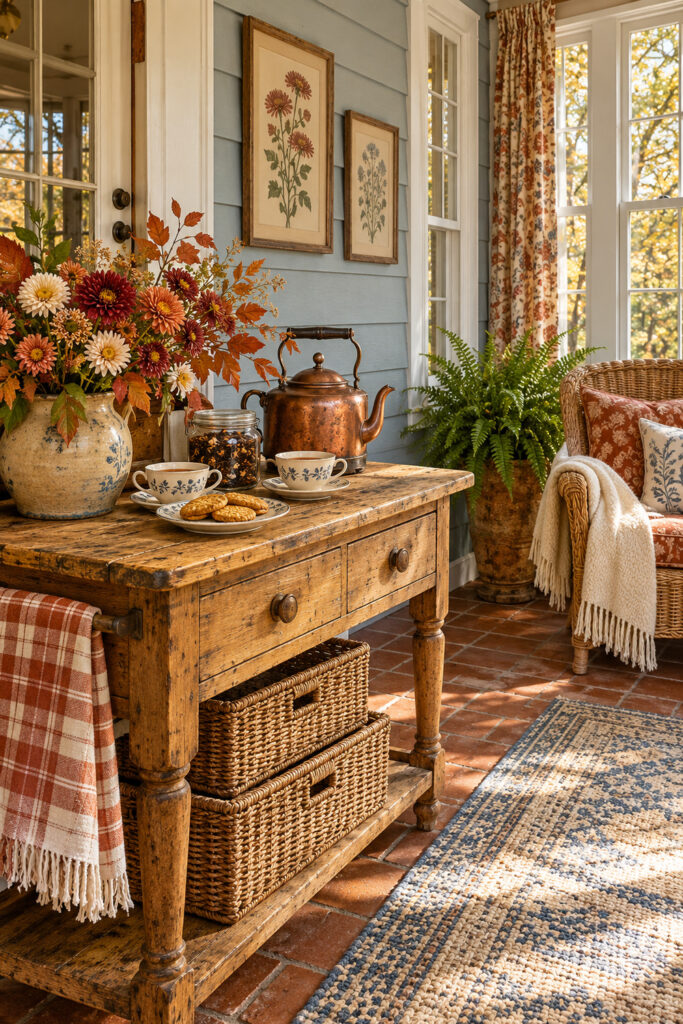
Set down an empty cup where you would actually sit, then reach for the kettle. If the flowers or fabric get in the way, move them before adding anything else. A tea corner feels welcoming when it is comfortable to use.