*This post may contain affiliate links for which I earn commissions.*
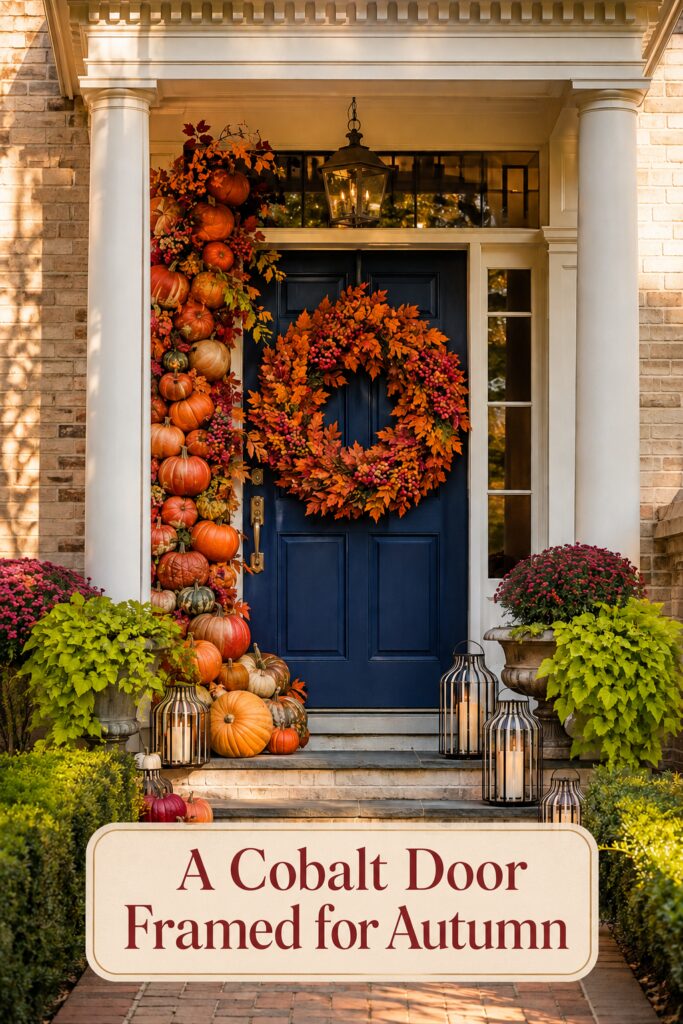
A deep cobalt door gives this fall entryway an unexpected foundation for layers of orange foliage, burgundy berries, cascading pumpkins, and glowing lanterns. The cooler blue backdrop makes every warm autumn shade appear richer, turning a classic front porch into a dramatic seasonal focal point.
The most memorable feature is the asymmetrical pumpkin installation climbing one side of the doorway. Instead of limiting pumpkins to the steps, the arrangement rises from the ground to the transom and blends into arching branches overhead. An oversized wreath repeats the same foliage and berry textures across the center of the door.
The inspiration image featured in this post was created with AI.
Why This Fall Entryway Feels So Abundant
The porch is decorated vertically as well as horizontally. Pumpkins begin near the walkway, continue across the landing, and climb the left side of the door. This creates a sweeping line that draws the eye toward the transom and hanging lantern.
The cobalt door provides strong contrast. Orange sits opposite blue on the color wheel, so the pumpkins and foliage appear especially vivid against it. Cream trim and pale brick keep the combination from feeling too heavy.
Repetition creates harmony. Orange leaves, coral pumpkins, dark berries, and muted gourds appear in both the doorway installation and the wreath. Lanterns then lead the arrangement outward and down the steps.
Use the Door Color as a Dramatic Backdrop
You do not need to repaint a door to adapt this idea, but a saturated backdrop will strengthen the effect. Navy, cobalt, forest green, charcoal, and deep plum can all provide striking contrast for autumn oranges.
If the door is white or pale wood, introduce contrast through a darker wreath ribbon, lanterns, planters, or a removable decorative panel. The goal is to give the fall elements a strong background rather than allowing them to blend into the architecture.
Keep the trim relatively quiet. The cream columns and brickwork in the image frame the entrance without competing with the seasonal display.
Build the Pumpkin Cascade From the Ground Up
The doorway installation appears elaborate, but its shape can be recreated in smaller sections. Begin with a stable cluster of large pumpkins at floor level. Add medium pumpkins above them, then taper toward smaller pieces near the top.
For a vertical arrangement, lightweight artificial pumpkins are more practical than real ones. Foam pumpkins can be pierced with floral picks or secured to a supporting frame without adding excessive weight.
A narrow freestanding trellis, decorative ladder, metal garden arch section, or sturdy wooden frame can provide the hidden structure. Attach it to a stable base and place it beside the doorway rather than fastening a heavy installation directly to delicate trim.
Use floral wire, cable ties, or another outdoor-rated fastener to secure each piece. The display should not interfere with the door swing, handle, walkway, lighting, or emergency access.
Look for Assorted Artificial Pumpkins
Choose a combination of classic orange, pale peach, cream, muted green, and deeply ribbed pumpkins. Several sizes and shapes will create a more natural cascade than identical round pieces.
Weave Foliage Between the Pumpkins
The pumpkins establish the structure, but the leaves make the arrangement feel full and flowing. Orange maple garlands wind between the larger shapes and extend beyond the edges.
Begin with a flexible fall garland attached vertically to the support. Position pumpkins over and around it, then add individual leaf stems wherever the framework remains visible.
Allow a few branches to project outward near the top. This loose canopy helps the display transition from a dense pumpkin column into the lighter arrangement above the door.
Choose foliage containing more than one orange tone. Copper, rust, amber, burgundy, and ochre will produce greater depth than a single flat shade.
Add Autumn Leaf Garlands and Stems
Look for flexible garlands that can be bent around pumpkins and attached in short sections. Individual maple sprays are useful for concealing gaps and creating the arching upper branches.
Layer in Berries for Finer Texture
Clusters of coral, burgundy, and pink berries appear throughout the display. Their small rounded shapes provide contrast against the broad leaves and large pumpkins.
Berry sprays also help connect the porch planting to the doorway. The burgundy mums repeat the same deeper red tones, making the entire entry feel coordinated.
Insert berries after the main pumpkins and foliage are secure. Concentrate them in several visible clusters rather than scattering individual sprigs everywhere. A few dense groupings will have more impact from the street.
Outdoor-rated artificial stems are preferable for an exposed porch. Covered entries offer more flexibility, but materials should still be checked regularly for fading or moisture damage.
Choose an Oversized Wreath for the Cobalt Door
The wreath needs generous scale to hold its own beside the tall pumpkin cascade. A small wreath would be overwhelmed by the surrounding decorations.
Look for a diameter that suits the door and leaves comfortable clearance around the handle, frame, and opening. Measure the door rather than estimating from product photographs.
The wreath should repeat the doorway’s primary materials. Orange maple leaves form its base, while red and pink berries add texture and depth. A few yellow leaves keep the orange from becoming too uniform.
Fluff the foliage after hanging and gently pull selected stems beyond the wreath’s circular outline. This produces the abundant, loosely gathered shape visible in the image.
Shop Similar Fall Foliage Wreaths
Prioritize generous diameter, mixed leaf colors, dense construction, and berry clusters. A wreath without pumpkins may be the better match because the doorway already contains so many of them.
Guide the Eye With Lanterns
Black metal lanterns descend along the right side of the steps, balancing the heavy pumpkin installation on the left. Their open frames provide height and structure without adding another block of solid color.
Use at least two or three heights. Place the tallest lantern near the landing, a medium one on the next step, and the smallest closer to the walkway.
Maintain plenty of walking space. Lanterns should sit near the step edges without creating a tripping hazard or narrowing the main route to the door.
Battery-operated candles are the safest and easiest choice for an unattended seasonal display. Outdoor-rated versions can provide a warm glow without an exposed flame.
Add Graduated Black Porch Lanterns
Look for slim metal frames with simple vertical bars. A matte black or dark bronze finish will connect naturally with the door hardware and overhead light.
Use Outdoor Flameless Pillar Candles
Warm white flickering candles with timers can illuminate the porch automatically each evening. Select waterproof or weather-resistant models when the lanterns are not fully protected.
Frame the Steps With Planted Urns
The matching urns on either side of the landing introduce symmetry beneath the intentionally uneven doorway display. Each planter combines burgundy flowers with chartreuse trailing foliage.
The lime green leaves may seem unexpected in a fall arrangement, but they create a lively bridge between the orange pumpkins and cobalt door. Their trailing shape also softens the hard edges of the steps and planters.
Real mums and sweet potato vine can recreate this combination where the climate and porch exposure are suitable. Artificial stems offer an alternative for areas with harsh weather or limited plant care.
Choose substantial urns that visually balance the columns and tall doorway. Lightweight resin versions can provide the appearance of stone while remaining easier to move.
Look for Classical Outdoor Urn Planters
A weathered gray, aged stone, or muted bronze finish will blend with brick, concrete, and traditional architecture.
Balance an Asymmetrical Display
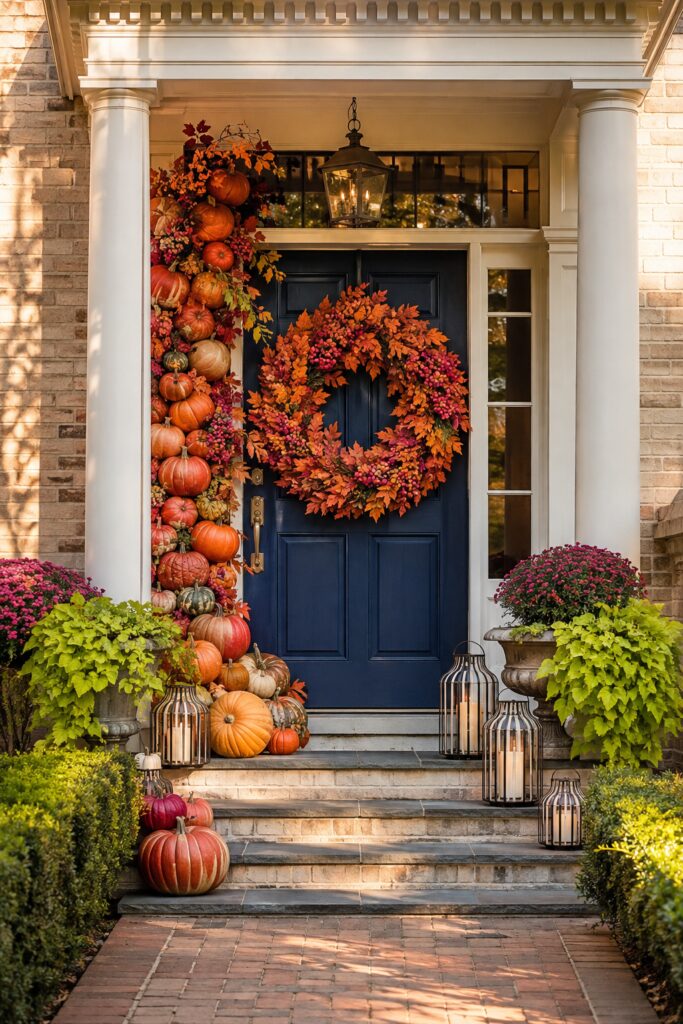
A one-sided doorway installation needs visual weight elsewhere. Here, the lanterns on the opposite steps, matching urns, and centered wreath provide that balance.
You can recreate the same principle on a smaller porch. Place a tall pumpkin arrangement on one side of the door, then use two lanterns and a planted container on the other.
Avoid matching every object from side to side. The porch should feel balanced in overall weight rather than perfectly mirrored.
Final Styling Tip
Start with three strong layers: the vertical pumpkin cascade, the oversized wreath, and the lantern-lined steps. Once those elements are balanced, add berries, small gourds, and loose foliage only where they improve the shape.