*This post may contain affiliate links for which I earn commissions.*
An oversized orange bow and a jeweled spider turn this purple front door into a Halloween focal point. Black lace runs over the satin, giving the broad loops and long tails a second layer of pattern. Orange flowers beside the steps repeat the color lower down, while the cream surround keeps the whole entrance clearly outlined.
The combination is worth borrowing even if your door is a different color. A full ribbon bow, contrasting lace, and an ornamental spider can suggest the same effect. The exact illustrated clasp isn’t necessary, and the display shouldn’t depend on finding an identical finished decoration.
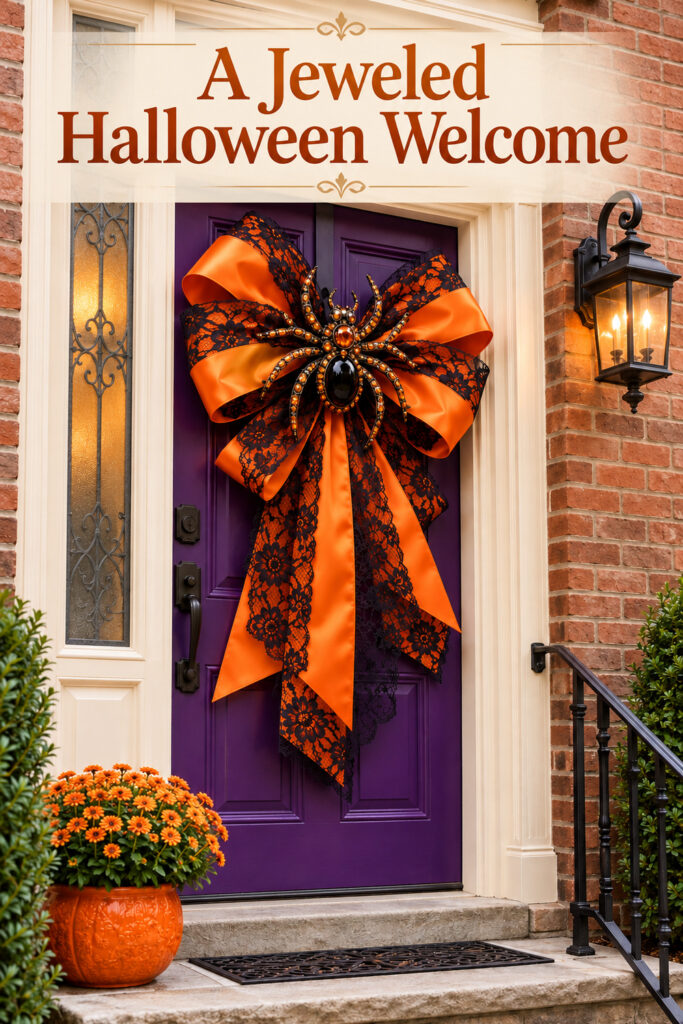
This inspiration image was created with AI and does not depict a verified door decoration or purchasable product collection.
What Makes the Bow Stand Out
The satin supplies broad, smooth areas of orange. The lace breaks those areas into smaller patterns without hiding the color underneath. Because the two layers share the same general route through the bow, they look connected rather than like separate decorations competing for attention.
The spider sits exactly where the ribbon loops gather. Its dark center gives the eye a place to land, and its orange toned stones repeat the satin in a smaller scale. That placement is more important than the particular jewel arrangement. A simpler spider ornament with a strong outline can anchor the middle just as effectively.
Purple makes an especially clear background for orange and black, but the cream frame also contributes. It separates the dark door from the brick and provides a lighter edge around the whole composition. If your door is dark, keep the orange generous enough that the bow remains visible from the path or, perhaps, wrap the door in purple so that you get this same, dramatic backdrop.
Key Pieces for the Halloween Entrance
Wide Orange Ribbon With Body
Choose ribbon that can hold a rounded loop rather than collapsing into a thin strip. Wired edges can help with shaping, provided their cut ends are finished and tucked away. The pictured satin has a sheen that catches daylight across each fold. A matte ribbon will look softer but can preserve the same bold orange shape.
Check the ribbon’s suitability for your entrance. A sheltered porch gives fabric more protection than a door exposed directly to rain and wind. Don’t assume that an indoor decorative ribbon will keep its finish outdoors. If the material is indoor only, use it on the inside of the door or choose an outdoor suitable alternative.
Find Orange Wired Ribbon
Browse current Amazon options that can help you recreate this look.
Browse Orange Wired Ribbon on Amazon →As an Amazon Associate I earn from qualifying purchases.
Black Lace With a Visible Pattern
The lace needs enough contrast to show against orange without swallowing it. Hold the two materials together and step back before choosing. A dense lace may read as a solid black band from a distance, while a very fine open pattern may disappear. The middle ground gives the most visible layered effect.
Use the lace as an overlay within the bow rather than adding unrelated strips around the frame. Keep its ends controlled so they don’t catch in the latch or brush across the handle. If you buy a finished bow, look closely at how the separate layers are held together before planning the final placement.
A Decorative Spider Centerpiece
Look for an ornament with a clear body and leg outline, secure embellishments, and a practical attachment point. A flat backed piece is easier to position against gathered ribbon than a rounded object that rolls to one side. Check its weight before choosing the bow support. A heavy centerpiece needs its own reliable fastening.
You can suggest the jeweled look with a simpler black spider that has reflective details. There is no need to imitate the exact arrangement of orange stones or the unusually large dark body in the image. Keep the centerpiece in proportion to the ribbon loops so the bow still reads as a bow.
Long Tails With Clean Separation
The tails extend the orange down the door and make the arrangement feel more substantial than a compact wreath. They work best when the separate layers can be distinguished. Before hanging the bow, lay the tails flat and decide which parts should show satin and which should show lace.
Adapt the length to your handle and door movement. The illustration is a visual starting point, not a reason to let fabric drag over a lock or catch under the door. Trim or gather the tails so you can grasp the handle and operate the latch normally. A slightly shorter arrangement can look just as deliberate.
Orange Flowers in a Grounded Container
The flowers repeat the bow’s color at step level without adding another tall decoration. One substantial pot gives the entrance a base. Choose a stable container that suits the available landing space, and leave the full walking route and stair edges visible. A narrow entrance may work better with flowers beside the steps rather than on them.
The flower shape can differ from the illustration. What matters is the contained orange mass and its relationship to the bow. If your existing planter already has warm flowers, use that. There is no need to add black accessories around it merely to make every object explicitly Halloween themed.
Fit the Arrangement to Your Door
Start with the door in its fully open and fully closed positions. Check the space between the top edge and the frame before choosing a hanger. Use a support suited to the door material and the decoration’s weight. Follow its instructions, particularly if the finish is painted or the entrance receives strong sun.
Position the bow so its center sits comfortably within the upper part of the door. Avoid covering a peephole, camera, knocker, or any essential hardware. You can shift the bow slightly if the panel layout calls for it. A useful entrance takes priority over a perfectly centered photograph.
Shape the largest loops first and arrange the smaller folds around the spider. Step back to check both sides rather than making every loop identical by hand. The overall outline should feel balanced, but a little variation keeps the fabric from looking rigid. Keep the centerpiece secure while adjusting so its weight doesn’t pull the knot downward.
Separate the tails and check how they move when the door opens. If wind pushes them across the handle, shorten them or add suitable discreet retention that doesn’t interfere with operation. In an exposed entrance, a more compact bow may be the better interpretation of the idea.
Place the flowers last and view the entrance from the approaching path. If they compete with the bow, move the container farther to one side or choose a quieter pot. The bow already supplies plenty of pattern. Let the brick, door surround, and normal entrance hardware remain part of the setting rather than hiding them behind additional decorations.
Shop Similar Pieces
Look for Wide Orange Wired Ribbon
Compare body, width, and intended exposure before selecting a finish. A ribbon that holds a comfortable loop will contribute more to this idea than a particularly shiny surface that collapses after shaping.
Shop Black Lace and Spider Ornaments
Choose these pieces together so the spider remains distinct against the layered ribbon. Check attachment points and weight rather than assuming a decorative brooch or ornament can be fastened in the same way as the illustration.
Add a Suitable Door Hanger
Match the support to the door and the complete decoration. Test it with the door moving normally before adding the final tail arrangement or placing flowers near the landing.
Final Styling Tip
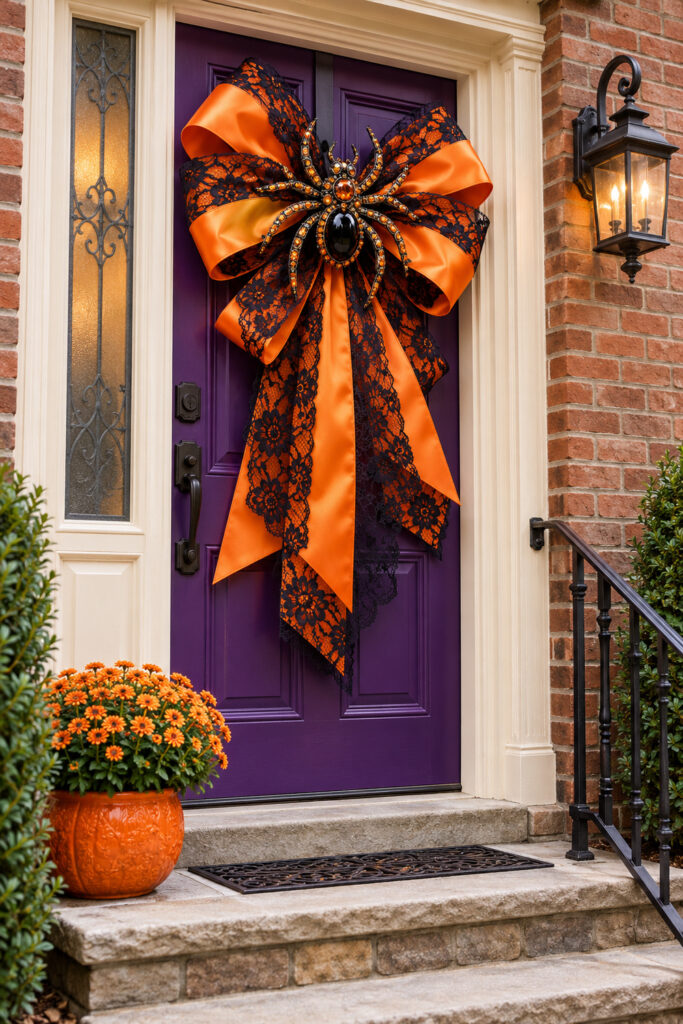
Photograph the entrance from the path once the bow is hung. If the spider disappears into the lace, adjust the surrounding orange folds to give its dark body a clearer outline.