*This post may contain affiliate links for which I earn commissions.*
Some Thanksgiving tables feel festive because of their abundance. Others make an impression through a carefully chosen pattern or unexpected seasonal detail. This setting does both, pairing a richly colored tartan runner with glossy red apples, creamy pumpkins, dark green napkins, and amber candlelight.
The result feels warm and traditional without relying on the usual orange-and-brown combination. Tartan lends the table a tailored country-house character, while apples make the centerpiece feel fresh, familiar, and closely tied to the late-autumn season.
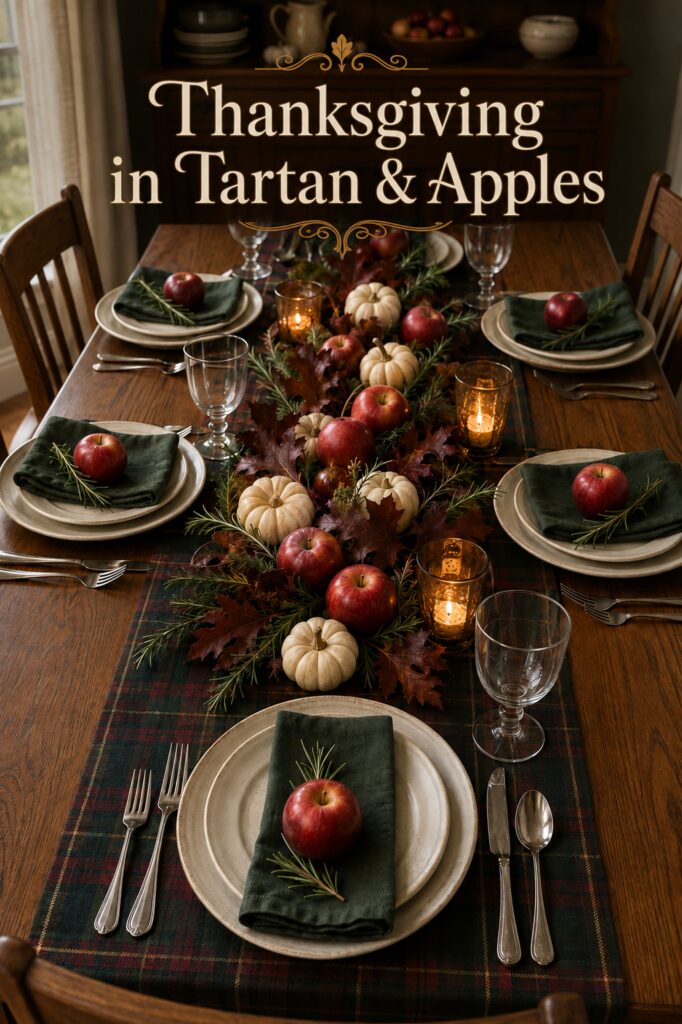
This inspiration image was created using AI and is intended to provide decorating ideas rather than depict products available for purchase.
Let Tartan Establish the Mood
The runner is the design’s visual anchor. Its forest green ground, burgundy stripes, and fine gold lines introduce nearly every color repeated elsewhere on the table.
A runner also allows the wood surface to remain visible. That matters here because the natural grain adds warmth and prevents the darker plaid from making the setting feel heavy. Choose a width that can hold the centerpiece while leaving enough uncovered table for the place settings.
The plaid does not need to be marketed specifically for Thanksgiving. Traditional tartan, Scottish plaid, and heritage-style Christmas runners often use the same green and wine-red combination. Avoid patterns dominated by vivid scarlet or pure white, which can push the arrangement too far toward Christmas.
Find a Similar Tartan Table Runner
Look for deep green, burgundy, muted red, and fine tan or gold lines. A woven or cotton texture will feel more natural than a shiny printed fabric.
Build a Centerpiece With Repeated Clusters
Instead of using one large floral arrangement, this table creates a continuous centerpiece from smaller objects. Apples, pumpkins, foliage, and candleholders travel down the center in an irregular sequence.
Begin with burgundy oak leaves or a pliable foliage garland. Let the leaves spread across the runner rather than forming a narrow, perfectly straight line. Tuck rosemary stems through the leaves to introduce a finer green texture.
Next, distribute apples and small cream pumpkins in loose clusters. Some can stand alone, while others can be grouped in pairs or trios. Varying the spacing keeps the arrangement from looking like a row of identical decorations.
Keep the finished centerpiece low enough for seated guests to see one another comfortably. The apples and miniature pumpkins are particularly useful because they create fullness without height.
Make Red Apples the Signature Detail
The apples give this table its distinctive personality. Their deep red color echoes the burgundy stripes and leaves, yet their reflective surface keeps the darker palette from becoming dull.
Fresh apples are ideal when the table will be assembled shortly before dinner. Choose fruits with a deep crimson finish and relatively consistent size. They can be eaten or used in recipes afterward.
Realistic artificial apples are a practical alternative for photography, early decorating, or a centerpiece that needs to remain in place for several weeks. Compare the stem shape, color variation, and scale carefully. Very shiny, lightweight fruit may look less convincing beside natural foliage.
Find Similar Deep Red Apples
Whether fresh or artificial, select apples with rich wine-red coloring rather than a vivid candy-apple finish. A few subtle variations will make the display look more natural.
Add Cream Pumpkins for Contrast
Small ivory pumpkins break up the red and green while introducing an unmistakable harvest element. Their pale coloring also connects visually with the cream stoneware at each place setting.
Use pumpkins in more than one size, but keep them small enough to nestle among the apples. Squat, ribbed silhouettes are especially effective because they provide texture without creating unnecessary height.
A matte finish is important. The apples are already the polished element, so the pumpkins look most convincing when their surfaces are softly textured or lightly mottled.
Find Similar Miniature Cream Pumpkins
Look for warm ivory rather than stark white. Natural-looking stems, varied ribbing, and several coordinated sizes will make a reusable set more versatile.
Layer Burgundy Leaves With Rosemary Greenery
The greenery gives structure to the centerpiece and prevents the individual objects from appearing scattered. Fine rosemary-like stems add movement, while broad burgundy leaves provide fullness and carry the darker red tones through the arrangement.
This is an ideal place to think in terms of components. A burgundy oak or maple garland can form the base, with separate rosemary picks woven through it. Combining the two will usually resemble the inspiration more closely than searching for one finished garland containing every element.
Fresh rosemary can also be used at the individual place settings. Its fragrance is appropriate for a holiday meal, and the sprigs are small enough to rest comfortably on a napkin.
Repeat the Palette at Every Seat
Each place setting is intentionally simple. Two softly glazed cream plates sit beneath a folded dark green napkin. A single apple and rosemary sprig provide the decoration.
This repetition is what makes the long centerpiece feel connected to the individual seats. Guests see the same red, green, and cream combination in front of them without needing elaborate napkin rings or decorative chargers.
Fold each napkin into a relaxed rectangle and center it on the plate. Place the apple near the middle, then angle a rosemary sprig beside it. The presentation should feel natural rather than rigid.
Find Similar Forest Green Cloth Napkins
Choose a deep, muted green with a soft matte texture. Cotton, linen blends, and washed fabrics will complement rustic stoneware and a woven runner more convincingly than glossy satin.
Use Candlelight as a Warm Accent
Amber glass candleholders create small areas of golden light along the centerpiece. Their coloring works especially well with tartan because it picks up the fine tan and gold lines in the fabric.
Position the holders between the fruit clusters rather than at equal intervals. This produces a softer, less formal rhythm. Three to five holders may be enough for an average dining table, depending on its length.
Battery-operated tea lights can create a similar glow when open flames are not practical. If real candles are used, keep dried and artificial foliage safely away from the flame and never leave them unattended.
Find Similar Amber Votive Holders
Look for warm amber glass with a lightly textured, ribbed, or speckled surface. Small holders will disappear into the arrangement while still producing a noticeable glow.
Adapt the Arrangement to Your Table
A smaller table does not need the full quantity of fruit and foliage shown here. Use one central cluster of three apples and two cream pumpkins, then extend rosemary sprigs and burgundy leaves toward either end.
For a longer table, repeat loose clusters instead of making one dense mass. Leaving glimpses of plaid visible between the elements helps the eye read both the centerpiece and the runner.
If the setting feels too dark, add more cream pumpkins or use oatmeal-colored napkins at a few seats. If it needs greater depth, introduce another cluster of burgundy leaves rather than adding unrelated decorations.
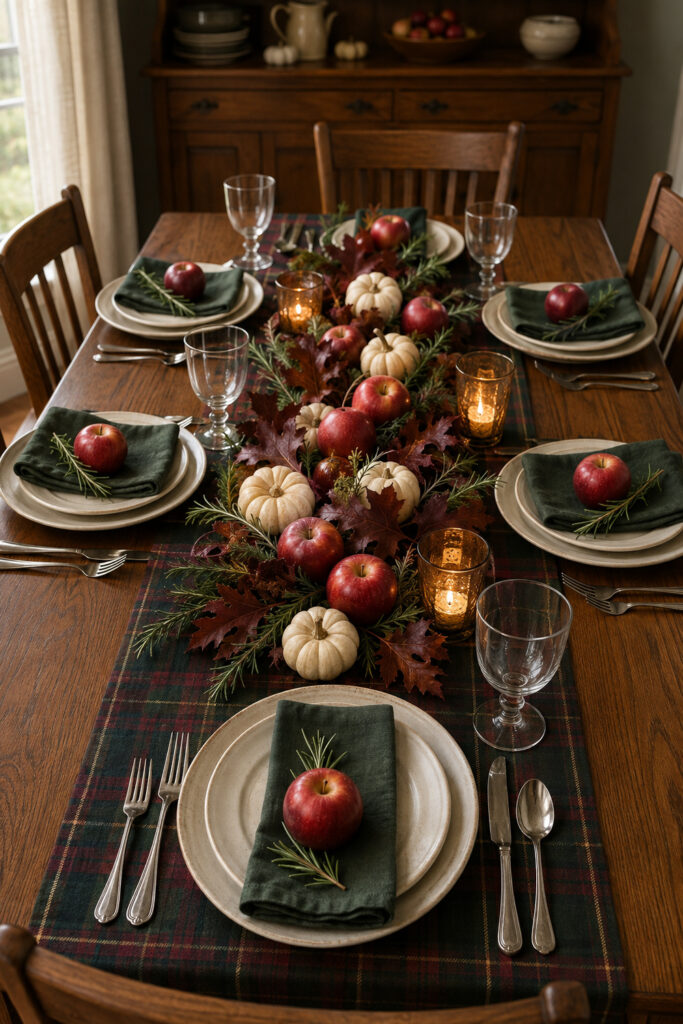
The most important principle is color repetition. Let each dominant shade appear in at least two places. The runner introduces burgundy and green, the centerpiece repeats them, and the place settings complete the pattern.
A Final Styling Note
Assemble the table in layers and pause after each one. Begin with the runner, place the dishes, build the foliage line, and then add the fruit and candleholders. This makes it easier to see where the arrangement needs fullness and where it needs breathing room.
Allow a few leaves and rosemary tips to extend beyond the runner’s edges, but keep food-serving areas and place settings clear. The finished table should look generous and welcoming while remaining comfortable for the people gathered around it.