*This post may contain affiliate links for which I earn commissions.*
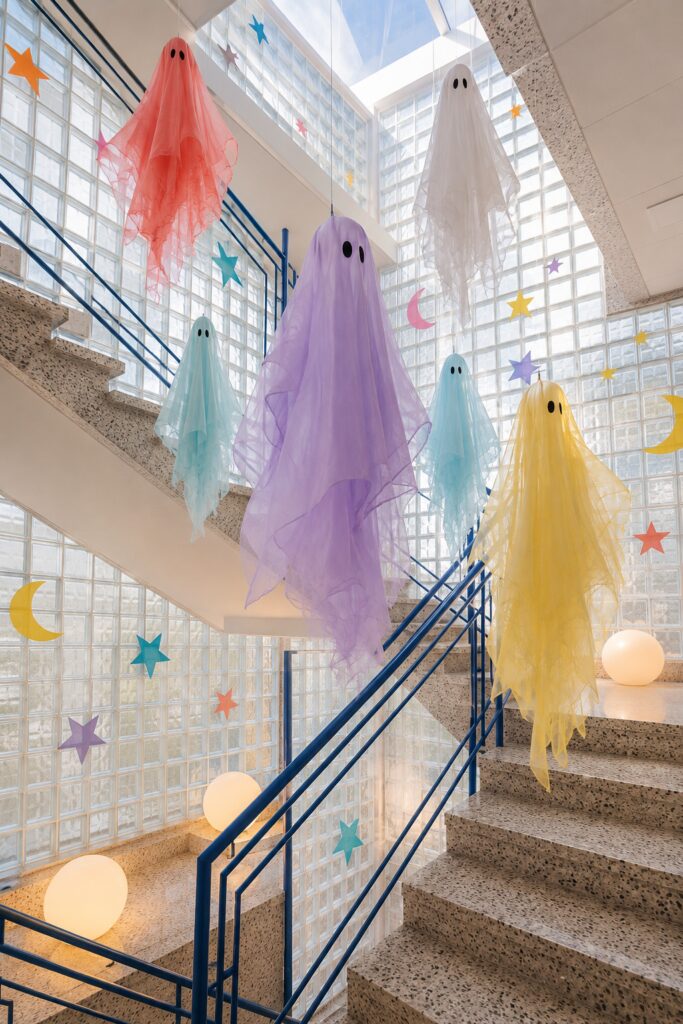
A soaring stairwell becomes an unexpected Halloween gallery when gauzy ghosts float between the landings. Instead of relying on a traditional orange-and-black palette, this display uses coral pink, lavender, pale aqua, butter yellow, and soft white. The translucent layers glow beautifully against the glass-block walls, giving the entire space an airy, enchanted feeling.
The ghosts are unquestionably the focal point, but the surrounding details make the installation feel complete. Scattered stars and crescent moons extend the display across the walls, while glowing globe lights add warmth near the steps. Deep blue railings provide just enough contrast to keep the pastels from disappearing into the sunlit architecture.
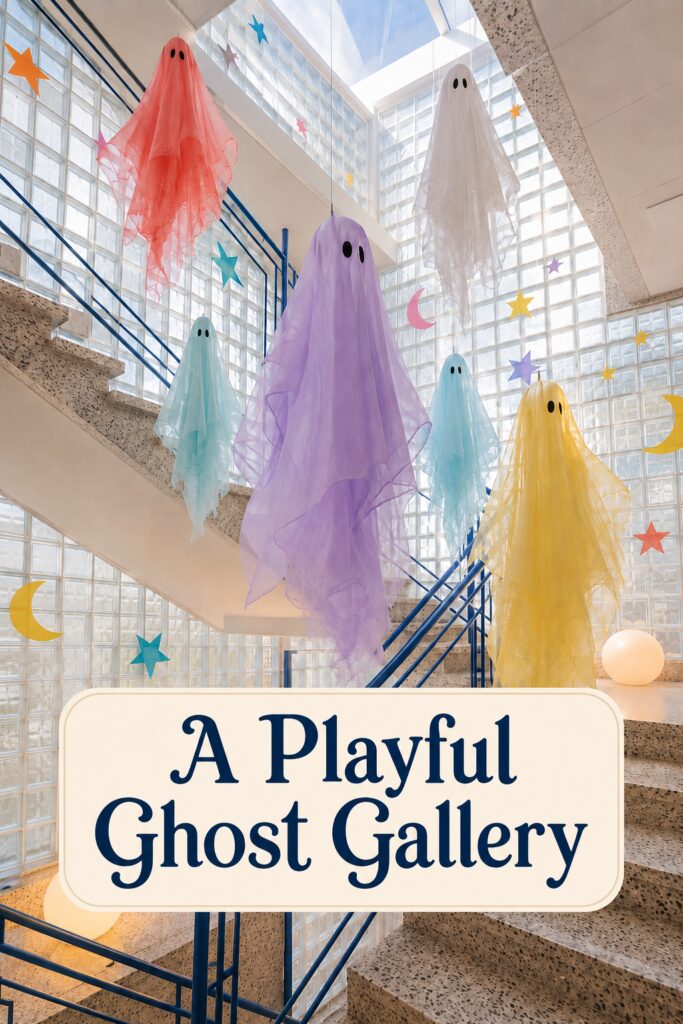
This inspiration image was created with AI, but its decorating ideas can be recreated with similar materials and readily available pieces.
Why This Floating Halloween Display Works
The most memorable feature is its dramatic use of vertical space. Ghosts hang at several heights, beginning near the upper windows and continuing down through the stairwell. This creates the impression of a gentle procession drifting between floors.
Their size also matters. The lavender and yellow ghosts are substantially larger than the aqua figures, while the coral and white ghosts occupy the highest points. Varying the scale keeps the arrangement from looking like a row of identical decorations.
Lightweight, translucent material gives the figures their ethereal quality. Multiple sheer layers form soft, irregular edges that catch the light without making the ghosts look heavy. Simple black oval eyes provide all the facial detail they need.
The glass blocks act almost like a luminous backdrop. Natural light travels through the walls and reveals every overlapping fold in the fabric. At night, nearby globe lamps could provide a softer version of the same effect.
Build the Palette Around Pastel Ghosts
Choose four or five related colors rather than trying to make every ghost different. Lavender, aqua, coral, yellow, and white work especially well because they remain easy to distinguish while sharing a gentle pastel quality.
Give one color the starring role. Here, the oversized lavender ghost anchors the center of the composition. The yellow figure balances it from the right, and smaller aqua ghosts bridge the distance between them.
If these colors do not suit your home, the same strategy could work with muted jewel tones, candy-inspired pink and orange, or moonlit shades of blue and silver. What matters most is combining a controlled palette with one dark accent for the eyes and hanging hardware.
Shape the Ghosts With Wispy Layers
These ghosts look more like floating fabric sculptures than ordinary sheet ghosts. A lightweight base form can support layers of sheer fabric, tulle, chiffon, organza, or gauze. Combining two related materials will produce richer movement than using a single flat layer.
Cut or tear some lower edges unevenly so they form narrow, trailing points. Keep other layers softly rounded and ruffled. The mixture creates an interesting silhouette while allowing the ghosts to move slightly in circulating air.
For the faces, use small ovals cut from black felt, cardstock, or removable adhesive vinyl. Keeping the features minimal preserves the installation’s graceful appearance.
Turn the Stairwell Into a Gallery
A tall open stairwell is ideal for this treatment, but a double-height entry, vaulted living room, upstairs landing, or covered porch could also work. In a smaller area, use fewer ghosts and reduce their scale while retaining the staggered arrangement.
Begin with the largest figure and suspend it where it can be seen from the main approach to the stairs. Place a second substantial ghost to one side, slightly higher or lower. Fill the remaining open areas with smaller figures.
Avoid positioning every ghost at the same distance from the wall. Some can float close to the glass or painted surface, while others hang farther into the open space. That variation creates depth when the installation is viewed from below.
Always keep decorations away from walking paths, handrails, doors, ceiling fans, sprinklers, and light fixtures. Use hanging hardware rated for the finished weight and suited to the ceiling material.
Scatter Stars and Moons Across the Background
The celestial shapes make this scene feel like an installation rather than a collection of separate ghosts. Coral, turquoise, lavender, yellow, orange, and blue stars appear across the glass blocks, with several crescent moons tucked between them.
Recreate the effect with lightweight cardstock, craft foam, removable decals, or a hanging celestial garland. Vary the shapes and sizes, leaving plenty of open wall around them. A few pieces placed on the upper walls will visually connect the highest ghosts with those near the stairs.
The irregular spacing is important. A rigid grid would feel too formal for the floating figures. Let some shapes sit alone while others gather loosely around a ghost.
Add a Low Layer of Warm Light
Round glowing lamps placed near the steps soften the modern architecture and keep the scene welcoming. Their simple shape echoes the circles and curves found in the ghost heads and crescent moons.
Battery-operated lighted orbs are particularly helpful where cords could become a tripping hazard. Place them only on wide, stable landings where they cannot roll, block the stairs, or interfere with the handrail.
In another room, a warm globe table lamp or a cluster of small LED spheres could provide a similar glow. Warm white lighting will gently illuminate the pastel fabric without changing its colors too dramatically.
Keep the Architecture Visible
The installation feels impressive partly because it works with the stairwell rather than hiding it. The angular blue rails, speckled concrete steps, geometric blocks, and skylight remain visible around the soft decorations.
Leave generous space between the ghosts so viewers can still appreciate the room. A crowded arrangement could obscure the fabric silhouettes and make the stairs feel smaller.
This is also why the simple faces are effective. Elaborate hats, signs, bows, or accessories would compete with the clean architectural background. The movement, color, and changing scale provide enough visual interest.
Shop Similar Sheer Fabric
Look for lightweight fabric with transparency and a soft drape. Organza holds a little more shape, while chiffon and tulle tend to produce looser folds. Layering them can create the irregular, feathery edges seen in the inspiration.
Look for Pastel Hanging Ghost Decorations
Ready-made pastel ghosts can help establish the theme, especially in areas where oversized handmade figures would be impractical. Compare the fabric length and translucency rather than focusing only on the color.
Add Lightweight Ghost Forms
Paper lanterns, foam spheres, or lightweight craft forms can give each ghost a rounded head. Select forms that will remain secure once suspended and that are large enough to support several fabric layers.
Shop Similar Celestial Decorations
Choose stars and crescent moons in colors that repeat the ghost palette. Lightweight hanging swirls, garlands, cardstock cutouts, or removable wall decals can all provide the scattered gallery effect.
Look for Discreet Hanging Supplies
Clear line, removable ceiling hooks, and small fasteners help the figures appear to float. Every hanging component should be selected according to the ceiling surface and the weight it must support.
Add Warm Globe Lighting
Look for softly glowing spheres rather than exposed string-light wires if you want to echo the image closely. A timer or remote control can make lights placed on upper landings easier to operate.
Final Styling Tip
Start with one large ghost, two smaller companions, and a handful of celestial shapes. Once those pieces feel balanced from both the top and bottom of the stairs, add more only where the composition genuinely needs them.