*This post may contain affiliate links for which I earn commissions.*
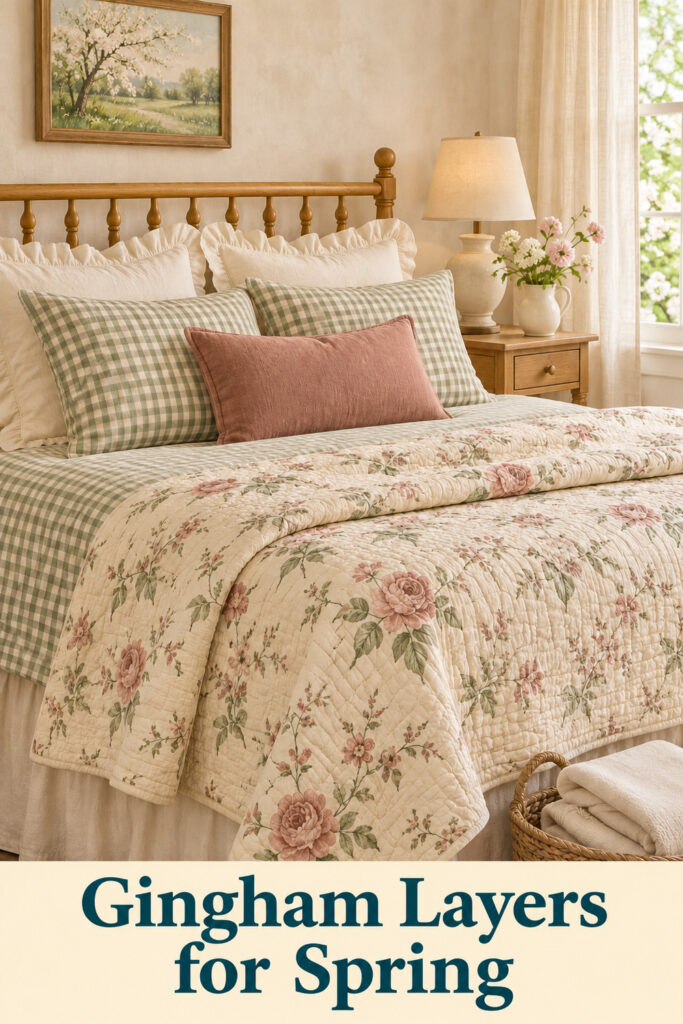
Sage gingham, a faded floral quilt, and ruffled cream shams give this farmhouse bed its spring character. The oak headboard keeps the palette warm, while a plain rose cushion repeats the flowers without adding another pattern. Soft daylight lets the stitching and woven fabrics show.
The room feels layered because the textiles do different jobs. Checks provide a tidy base, flowers add a looser pattern, and cream creates quieter spaces between them. You can borrow that relationship with bedding you already own rather than searching for a complete matching collection.
This image was created with AI as decorating inspiration.
What Makes These Spring Bedding Layers Work
The gingham has a smaller, more regular repeat than the floral quilt. That contrast helps you distinguish the fabrics even though both contain green and cream. If the patterns were equally busy at the same scale, they would compete more directly.
The quilt lies across the lower part of the bed with a broad fold near the middle. You can see its flower motifs and quilting without losing the gingham underneath. The fold also introduces thickness and shadow, which make the bed look comfortable rather than flat.
Ruffled shams frame the upper pillows in a soft pale border. A single plain cushion rests in front, giving the patterned bedding a quieter companion. The wood headboard and simple bedside furniture keep the room grounded in ordinary farmhouse materials.
Find Botanical cotton quilts
Browse current Amazon options that can help you recreate this look.
Browse Botanical cotton quilts on Amazon →As an Amazon Associate I earn from qualifying purchases.
Key Pieces for a Spring Farmhouse Bed
A Botanical Cotton Quilt
Choose a floral or leafy design with some breathing room around the motifs. The cream background in the inspiration helps the flowers remain gentle rather than becoming a solid field of color. Look at the full quilt image, not only a close fabric swatch, to understand how the pattern spreads across a bed.
Gingham Sheets or Pillow Covers
A small check offers structure beside the botanical print. You can introduce it through sheets, pillowcases, or a lighter cover rather than replacing every layer. Compare the green with the quilt’s leaves in daylight. The shades can differ slightly while still sharing a similar warmth.
Cream Ruffled Shams
The ruffles create texture without another printed motif. Keep their size in proportion to the pillows and headboard. An oversized border can hide the gingham layer or make a smaller bed feel crowded. Plain cream shams would offer a quieter version of the same color balance.
One Solid Rose Accent
The rectangular cushion repeats a color from the flowers. Its simple shape gives the upper part of the bed a place to rest visually. Choose a useful size for your bed rather than copying the photographed proportions exactly. It should be easy to move when you want to use the pillows behind it.
Warm Wood and Natural Weaves
The oak furniture and woven basket add another kind of texture beside the fabric. Existing wood pieces can provide this grounding detail even if their finishes don’t match. Look for a shared warm character rather than trying to make every surface identical.
Simple Bedside Lighting
A shaded lamp supports the cozy feeling without changing the spring palette. Keep enough table space for whatever you normally use beside the bed. A small flower vessel can be a finishing detail, but it shouldn’t crowd the lamp or leave nowhere for a book.
Build the Layers Around Your Sleeping Habits
Start with the bedding that feels comfortable for the season where you live. A quilt can be the main cover, an extra layer, or a folded decorative accent depending on the room temperature. The image suggests a textile relationship, not a required number of blankets.
Arrange the gingham where enough of it will remain visible. If you use patterned sheets, fold the top edge so the check appears above the quilt. If your sheets are plain, gingham pillow covers can create the same connection with less fabric to change.
Lay the botanical quilt across the bed and test the fold. A deeper fold shows more of its thickness, while a shallower one leaves more of the gingham visible. Keep the fold relaxed rather than pressing it into a stiff line that fights the quilt’s natural drape.
Set the pale shams at the back and the checked pillows in front where both layers can be seen. Add the solid cushion last. If it hides most of the check, reduce its size or leave one fewer pillow in the group.
Now consider the daily routine. If the arrangement requires a pile of cushions to be moved onto the floor every night, simplify it. A botanical quilt, a little gingham, and pale pillow edges can communicate the whole idea without extra pieces.
Adjust the Pattern Balance for Your Room
A small bedroom may benefit from more visible cream and a smaller floral area. Fold the quilt lower on the bed or use fewer patterned pillows. That keeps the fabric interest concentrated instead of carrying it across every surface.
For a room with patterned wallpaper, compare the quilt against the wall before choosing the supporting checks. A quieter gingham can act as a bridge between the two patterns. If the wallpaper is already strongly floral, a more restrained quilt may make the bed easier to read.
On a darker wood bed, light shams can separate the pillow grouping from the headboard. On painted cream furniture, the sage check may provide more of the contrast. The materials can change while the pattern hierarchy stays the same.
You can also shift the mood through the supporting solid color. More rose makes the combination softer; more green makes it feel fresher and quieter. Keep that accent in a limited area so the quilt remains the main decorative layer.
Check the care requirements of every textile before combining them for regular use. A bed that looks relaxed should also fit your washing and storage routine. Similar colors don’t guarantee similar care instructions, especially when trims and different fillings are involved.
Shop Similar Pieces
Look for Botanical Cotton Quilts
Compare the pattern scale, background color, and actual dimensions for your bed. Check the drop at the sides rather than relying only on a standard size label. Visible quilting can provide texture even when the floral print is restrained.
Shop Similar Sage Gingham Bedding
Choose a check size that differs clearly from the flowers. Look at the green in more than one product image if possible. Decide whether you need a full bedding layer or only pillow covers before buying a larger set.
Add Cream Ruffled Pillow Shams
Check whether the listed size includes the decorative border and whether inserts are included. A modest ruffle gives a different result from a broad gathered edge. Match the scale to the pillows and headboard you already have.
Look for a Plain Rose Lumbar Cushion
Choose a matte woven texture that sits comfortably beside cotton and linen. A quiet solid color will repeat the quilt without introducing another motif. Confirm the cover and filling details so the cushion holds the shape you want.
Final Styling Tip
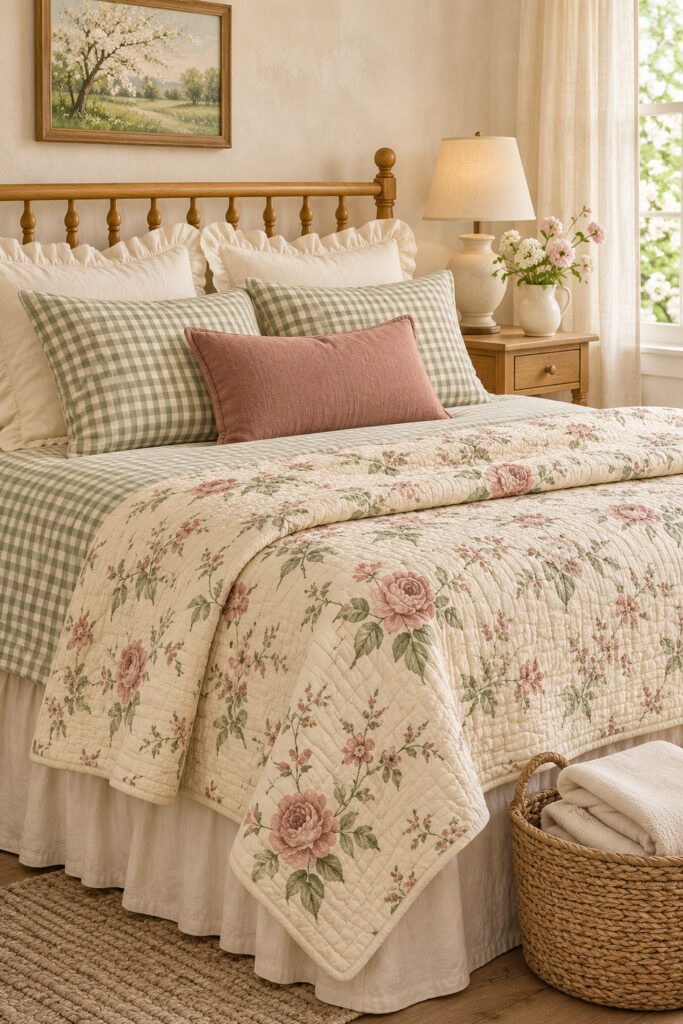
Pull the quilt back slightly and look at the three main areas: floral, check, and cream. If you can see each one clearly, the bed has enough layering. Add texture only where it improves that balance or your comfort.