*This post may contain affiliate links for which I earn commissions.*
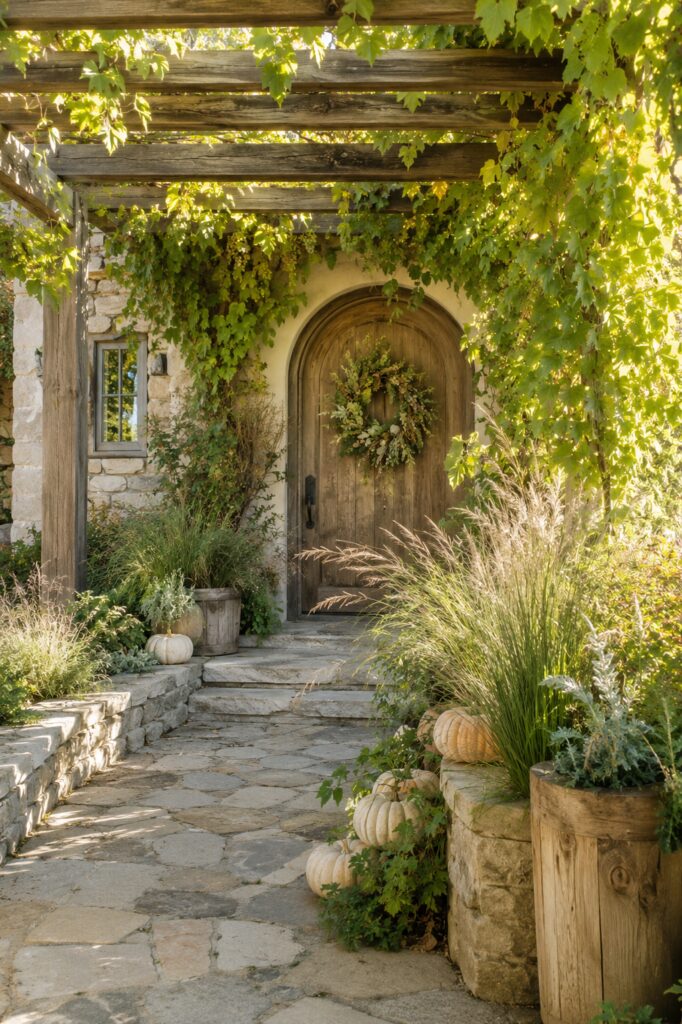
A leafy pergola can make the walk to the front door feel like a little garden passage. In this fall entry, vines spill between weathered beams, sunlight catches the tips of tall grasses, and pale pumpkins nestle beside the stone path. The decorations feel gathered into the landscape rather than placed in a separate seasonal display.
At the end of the walkway, an arched wooden door wears a loose wreath of green and golden foliage. It gives the eye somewhere to settle beneath all that overhead growth. The effect is welcoming, slightly untamed, and full of texture.
You can recreate that feeling with an existing porch, a garden arbor, or simply a planted corner beside your entrance. The useful ingredients are flowing greenery, soft harvest colors, and decorations that follow the shape of the space.
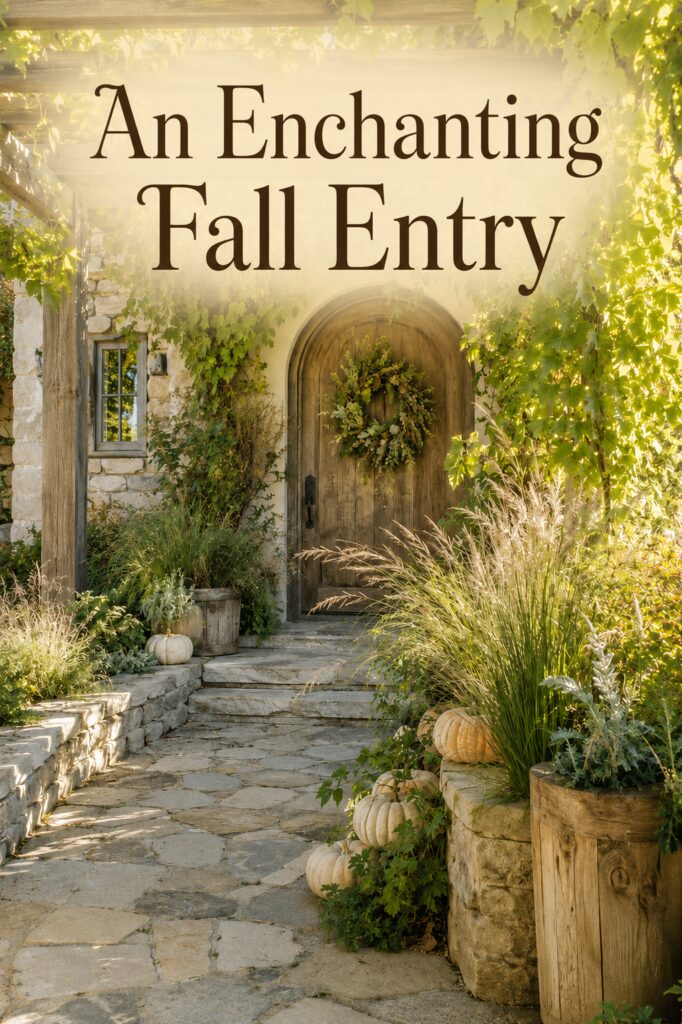
This inspiration image is AI generated. The ideas below explain ways to recreate its overall decorating effect with similar materials and pieces.
Let the Garden Set the Fall Palette
The greenery does most of the decorating here. Some leaves remain richly green, while others have a yellow cast that suggests the season beginning to turn. Cream pumpkins and feathery tan grasses introduce autumn without covering up the garden’s character.
That restrained palette also suits the architecture. Pale pumpkin skins echo the limestone, and rustic wooden containers repeat the tones of the pergola and door.
Look at what already surrounds your entrance before choosing decorations. Against warm brick, cream pumpkins and straw-colored stems can create a gentle contrast. Beside pale siding, weathered wood and deeper green foliage give the arrangement more definition. Choose a few shades from the setting and repeat them.
Four Layers Give This Entrance Its Depth
Vines Frame the Approach
The pergola’s horizontal beams remain visible through the foliage, so the canopy feels leafy without losing its structure. Vines also descend along the sides, connecting the overhead greenery to the planting below.
Find Outdoor Vine Decor
Browse current Amazon options for vines you can use outdoors that can help you recreate this look.
Browse Decorative Vines on Amazon →As an Amazon Associate I earn from qualifying purchases.
If you already have a planted arbor or pergola, work with its existing shape. On a covered porch, a few lengths of suitable decorative vine can suggest a similar frame along one beam or post. Let the ends vary in length while keeping them clear of faces and the walking route.
A Loose Wreath Marks the Destination
The door wreath is substantial enough to register from the beginning of the path. Its irregular outline echoes the surrounding vines, while its darker green and muted gold tones stand out against the wood.
Look for a botanical wreath with projecting stems and a visible center. A tightly packed ring of identical leaves would give a different effect. You can also start with a simple twig wreath and add foliage in small, uneven bundles.
Grasses Soften the Stone Edges
The tallest grasses occupy the right side of the image, where their fine seed heads catch the sunlight. Their arching lines soften the solid wall and balance the heavy timber overhead.
For a seasonal arrangement, use a planter of ornamental grass suited to your setting or an outdoor-appropriate decorative alternative. Look for fine blades and airy plumes rather than a dense, bulky silhouette. Keep enough room for the stems to move without brushing visitors.
Pumpkins Appear in Small Discoveries
The pumpkins are not lined up at equal intervals. Several pale ones descend beside the right-hand wall, while a smaller grouping sits near the door on the opposite side.
That placement makes the walk feel interesting from more than one viewpoint. Choose cream, ivory, and a little muted peach, then vary the sizes and ribbing. Let each pumpkin rest securely on a flat surface instead of balancing it on a narrow edge.
Place the Largest Pieces Before the Little Accents
Begin with the approach to the door. Notice the door swing, step edges, handrails, and the places where someone might pause with shopping bags. Keep those areas open.
Position your largest planter off to one side. In the inspiration, the foreground container helps establish the garden setting before the visitor reaches the steps. A second, smaller container closer to the entrance repeats the material without creating a matching pair.
Add the tallest grasses next. Step back to the point where someone first sees your home and check that the door and wreath remain visible.
Then arrange the pumpkins. Put one larger pumpkin near the planting and two smaller ones at a lower level, if your space allows. On the opposite side, a single pumpkin may provide enough repetition. You are looking for a visual connection, not identical displays.
Finish by adjusting trailing foliage around the containers. A few leaves overlapping the base can make a pot look settled into its surroundings. Keep loose stems off the walking surface.
Keep the Containers Rough and Simple
The wooden planters contribute almost as much atmosphere as the pumpkins. Their vertical boards and weathered surfaces belong with the timber beams above.
Barrel-style planters or plain wooden tubs can suggest this texture. Check their proportions before choosing them: the container should have enough visual weight to support tall planting without overwhelming the doorway.
An existing planter can work just as well. If using a wooden outer container, keep watering needs in mind and use an appropriate inner pot and drainage arrangement. For a temporary display, avoid letting collected water sit against the decorative wood.
Silvery foliage near the foreground container adds another quiet contrast. A little of that lighter leaf color can help separate the planting from the darker vines.
Borrow the Feeling for a Smaller Porch
For a shallow entrance, reduce the idea to one textured planter, a loose wreath, and two pale pumpkins. Place the planter beside the door and arrange the pumpkins close to its base, outside the main route.
Without an overhead structure, bring the flowing line into the wreath or use trailing foliage within the planter. There is no need to reproduce the pergola to capture the garden mood.
A rectangular door works equally well. The connection between the wreath, planting, and harvest accents matters more than copying the architecture.
Find the Pieces That Carry the Look
Look for Cream and Soft Peach Pumpkins
Choose varied shapes with a matte appearance. If using faux pumpkins, check whether they suit the exposure at your entrance.
Choose Weathered Wood Planters and Airy Grasses
Compare the container and planting heights together. The grasses should extend naturally beyond the rim without hiding the surrounding accents.
Shop Loose Botanical Wreaths and Trailing Foliage
Favor irregular outlines and mixed leaf sizes. For exposed locations, check the intended use of decorative materials before placing them outdoors.
Leave Some Stone Showing
Resist filling every ledge and corner. Visible path, wall, and doorstep give the foliage room to stand out. A few pale pumpkins beside flowing plants can make the entrance feel ready for fall while preserving the garden that makes it special.