*This post may contain affiliate links for which I earn commissions.*
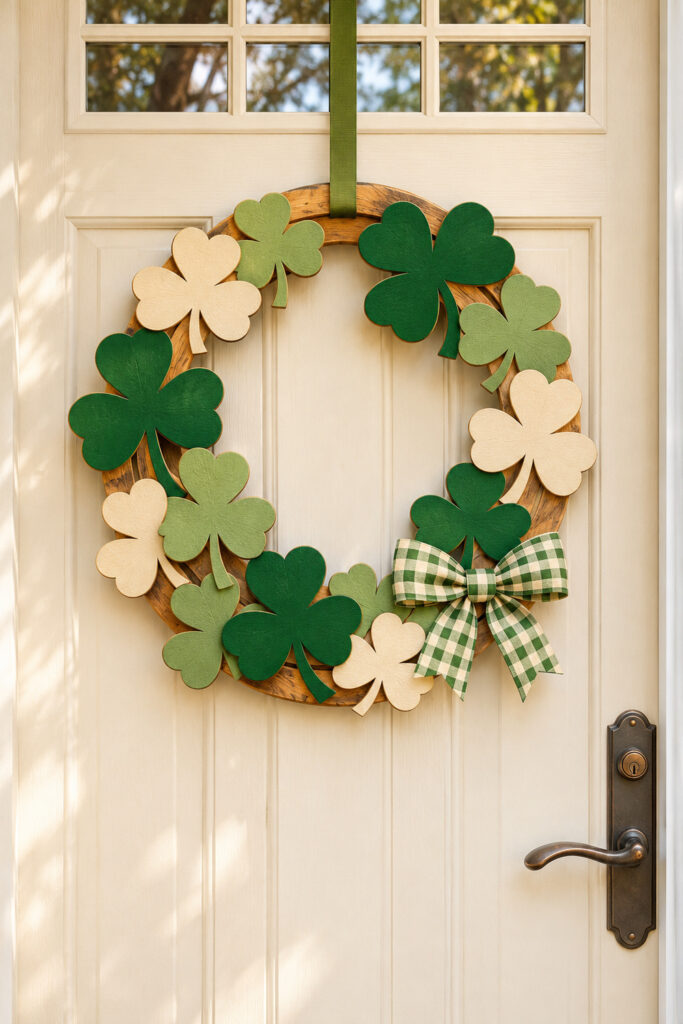
Emerald, sage, and cream shamrocks overlap around a wooden ring in this St. Patrick’s Day door inspiration. The flat shapes have visible edges, so the wreath gets its depth from layering rather than a thick covering of greenery. A small gingham bow finishes one side.
The natural wood still shows between some of the cutouts. That gives the arrangement a warmer, slightly collected look and makes the individual shamrocks easier to follow. You could borrow the effect with a finished wreath or use the image to guide your choice of compatible decorative components.
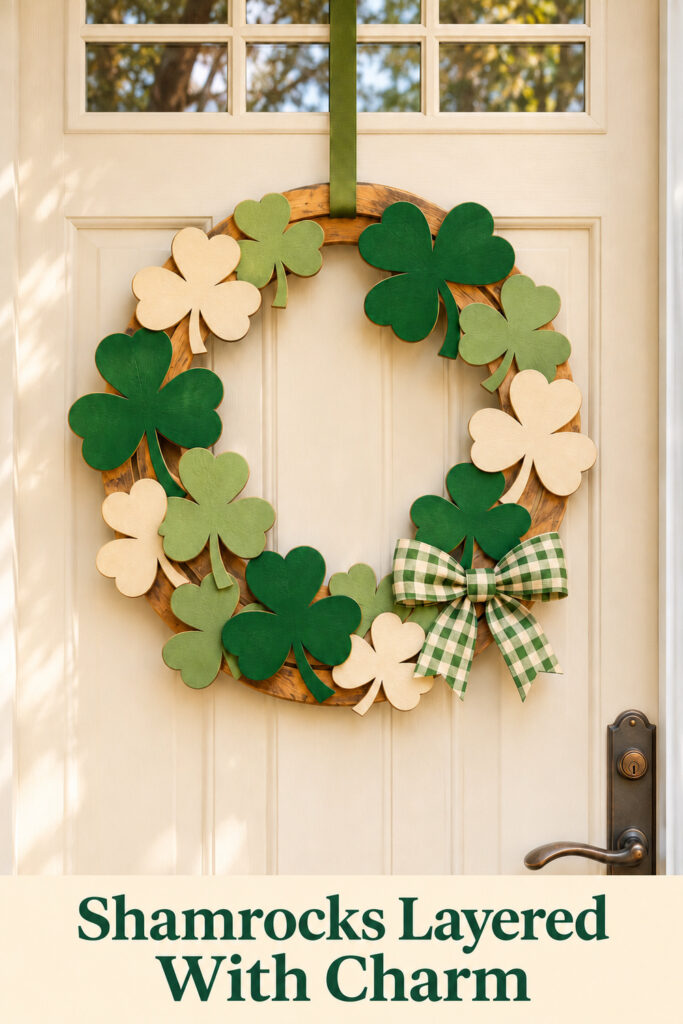
This image was created with AI as decorating inspiration.
What Makes the Layered Shamrocks Work
Each cutout repeats a recognizable three-leaf form. The shapes vary in size and angle, but they belong to the same family. That repetition makes the holiday clear without needing a sign or a cluster of unrelated lucky symbols.
The color placement creates a useful rhythm around the ring. Dark green pieces carry more contrast against the cream door, while lighter ones keep the outline from becoming a solid dark circle. Sage connects the strongest green with the pale cutouts and natural wood.
Visible gaps preserve the ring structure. You can see that the leaves are attached to a base rather than floating in a circle. The bow sits near the lower side, where it interrupts the repeated shapes without covering the open center.
Find Wooden shamrock cutouts
Browse current Amazon options that can help you recreate this look.
Browse Wooden shamrock cutouts on Amazon →As an Amazon Associate I earn from qualifying purchases.
Key Pieces for This Door Wreath
A Sturdy Circular Base
The exposed wood ring is part of the appearance, so its finish deserves attention. Choose a base with enough width for the cutouts to attach securely. A very narrow hoop may create a lighter version, but it won’t offer the same visible band of wood between the shamrocks.
Three-Leaf Wooden Shamrocks
Look closely at the silhouettes. Shamrocks have three leaves; a four-leaf clover gives a different motif. For this particular look, choose a small range of related shapes rather than mixing many cutting styles. Visible wood thickness adds the dimensional edge shown in the inspiration.
Several Coordinating Finishes
Emerald, sage, and cream create contrast without needing more colors. The finish can be matte or softly satin, depending on the style you prefer. Strong gloss on every piece would change how the wreath catches daylight and may make the wood texture less noticeable.
Controlled Overlap
The cutouts overlap enough to connect the ring, but their leaves remain recognizable. A finished wreath should show secure attachment rather than pieces balanced on one another. If you are comparing components, consider where the solid parts can meet the base without covering every outer leaf.
A Modest Gingham Bow
The check adds a different kind of detail from the solid shamrock shapes. Keep the bow small enough to leave the circle readable. Short tails work well on a door because they are less likely to reach the handle or catch against nearby trim.
A Suitable Door Hanger
The wreath needs a fixing that suits its weight, the door finish, and the available clearance. A ribbon can be part of the visual treatment, but it still needs a secure connection. Don’t assume a decorative ribbon alone establishes a safe hanging arrangement.
Check the Door Before Choosing the Wreath Size
Measure the clear area of the door and note the handle position. The wreath’s outermost leaves and bow tails count toward its width, not just the circular base. A shape that fits inside a panel may still strike a storm door or nearby wall when the main door opens.
Consider the depth as well. Flat wood pieces can create a relatively shallow arrangement, but a large bow or layered stack may project farther than expected. If there is an outer door, check the space between the doors before selecting a bulky design.
Look at the door color in ordinary daylight. Cream shamrocks stand out well on darker paint, while deep green shapes provide more contrast on a pale door. You can change the balance of the colors without changing the layered wooden idea.
A sheltered entrance is a sensible setting for this inspiration. Check the actual materials and finish for the exposure they will receive. Painted wood, adhesives, and ribbon can have different weather limits, even when they appear together in one decorative object.
Give the Shapes Room to Read
If you’re choosing or arranging a wreath, look at it from several steps away. You should see a circle of recognizable shamrocks rather than an unclear band of leaves. Varying the angles can add movement, but rotating every piece differently may make the design feel unsettled.
Keep the largest shapes spread around the ring. One large piece beside several much smaller ones can create a useful focal area, especially near the bow. Too many large cutouts together may pull the whole wreath visually toward one side.
Let some of the natural ring remain visible. Those wood areas provide pauses between the painted shapes. They also help the wreath relate to ordinary porch materials such as wicker, timber, and warm metal hardware.
If you already have a green or cream ribbon, compare it with the shamrock finishes before replacing it. A slightly different green can work when it shares the same warmth. A small gingham pattern is one option, not a requirement for a successful display.
Keep neighboring door decorations restrained. The repeated shamrocks explain the occasion clearly. A simple mat or an existing planter can remain in place without needing matching motifs on every surface.
For storage, keep the wreath flat or supported by its base so the projecting shamrocks do not carry the weight. Loosen ribbon tails before packing them, and protect the painted faces from rubbing against hard decorations. A little care with the edges will make the layered shapes easier to display neatly next time.
Shop Similar Pieces
Look for Wooden Shamrock Cutouts
Compare leaf count, overall shape, thickness, and edge finish. Check actual measurements because a close product photo can make a small embellishment look like a full wreath component. Related silhouettes are easier to combine than a mixture of very different styles.
Shop Similar Wooden Wreath Rings
Choose a base compatible with the intended display and attachment method. A broad ring lets some wood remain visible between the cutouts. Check whether the finish is suitable for the location where you plan to hang it.
Add Green Gingham Ribbon
Look for a check size that reads as a small accent beside the shamrocks. The ribbon’s stiffness will affect how full the bow looks. A simpler tied bow can work if you prefer softer loops to a wired finish.
Look for Door-Compatible Wreath Hangers
Check the supported weight and the required clearance at the top of the door. Follow the hanger’s instructions for the actual door material. Protecting the finish and keeping the door usable matter more than hiding every part of the fixing.
Final Styling Tip
Leave the open center visible and keep the bow out of the handle area. Those two clear spaces help the wreath look intentional while allowing the front door to keep doing its ordinary job.