*This post may contain affiliate links for which I earn commissions.*
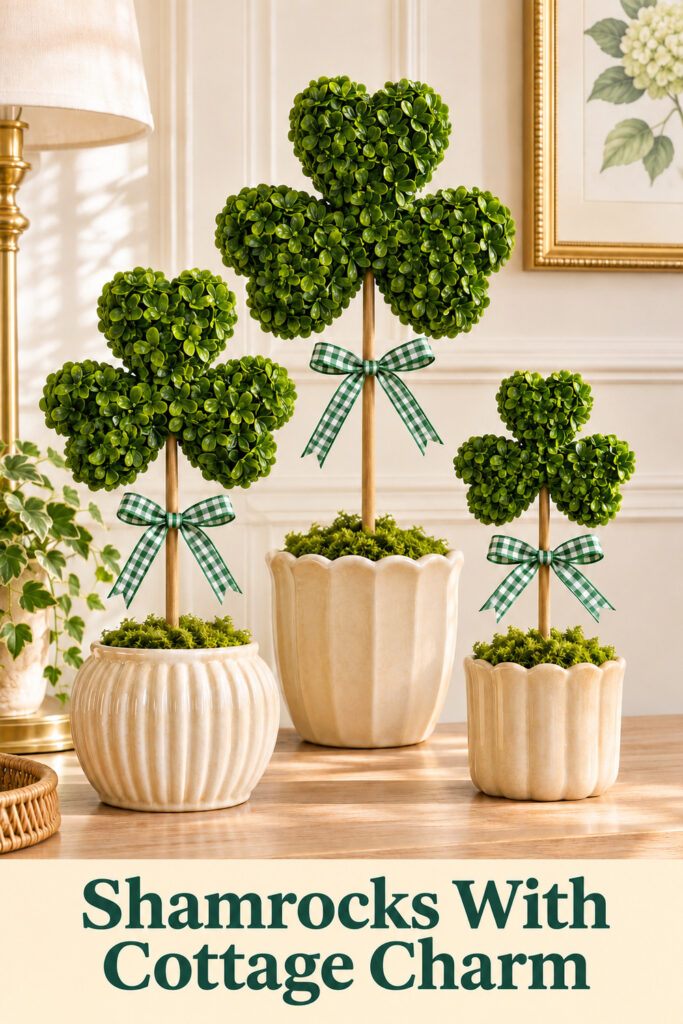
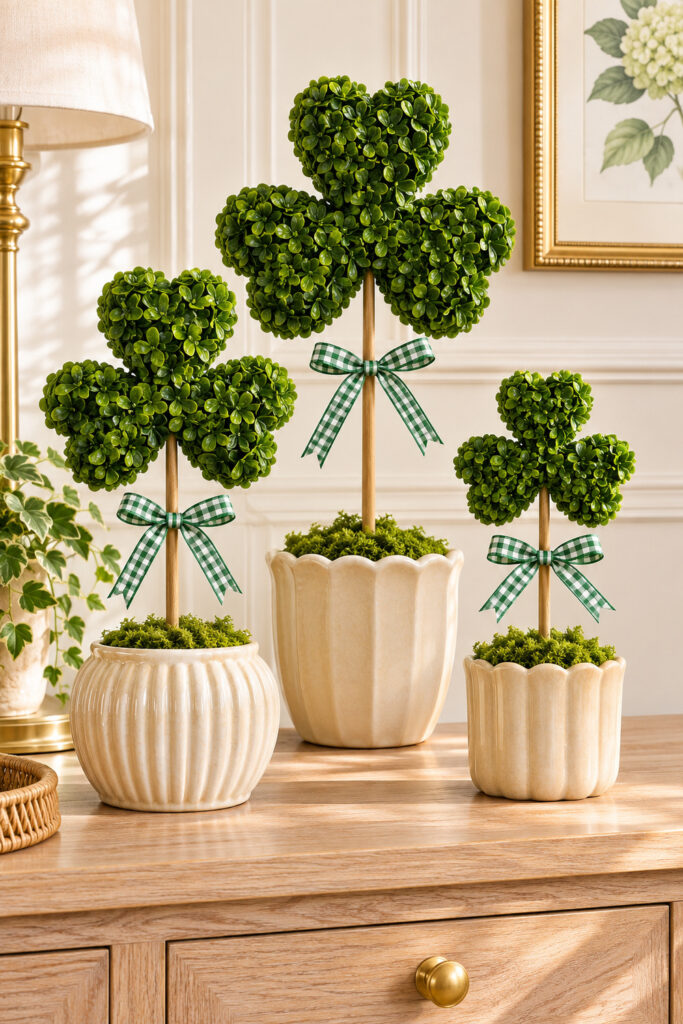
Three shamrock-shaped topiaries stand in cream ceramic pots in this St. Patrick’s Day inspiration. Their green crowns have clear three-leaf outlines, while different stem heights keep the group from looking like three copies placed in a row.
The gingham bows give the display a playful finish, but the pale pottery and wood furniture keep it suitable for an ordinary dining room. You could borrow the arrangement for a sideboard, entry table, or a shelf with enough height above it. The shamrock shapes should remain the main attraction.
This image was created with AI as decorating inspiration.
What Makes This Shamrock Display Work
The crowns repeat one recognizable shape. That repetition establishes the holiday before you notice the small details. Green alone could suggest any season, but the three-leaf silhouettes make this arrangement specifically suited to St. Patrick’s Day.
The pots are related rather than identical. Rounded ribs on one and longer scallops on another create changes in texture without introducing a competing color. Their cream finish also separates the green crowns from the wood surface.
A taller center piece creates a simple peak, with shorter pieces to either side. The visible stems leave space between the leafy shapes and the pots. That space matters. If the crowns sat directly on the moss, the arrangement would feel heavier and the individual shamrocks would be harder to read.
Find Cream ceramic plant pots
Browse current Amazon options that can help you recreate this look.
Browse Cream ceramic plant pots on Amazon →As an Amazon Associate I earn from qualifying purchases.
Key Pieces for Shamrock Topiary Styling
Recognizable Three-Leaf Crowns
Look for an outline with three distinct lobes and a short connection to the stem. A four-leaf clover is a different motif, so check the shape if you want to reproduce this particular inspiration. Small foliage gives the crowns their texture, but the outside silhouette needs to remain clear.
Stable Topiary Stems
Each stem should connect visibly from the leafy crown into its pot. A finished decorative topiary is the simplest route if you find a suitable form. If you’re considering components, check how the crown and stem are supported rather than assuming a soft leafy shape can stand on its own.
Cream Pots With Related Finishes
The ribbed and scalloped pots give the arrangement a collected feel. Similar color and gloss level help them belong together even when their shapes differ. Check the proportions from crown to pot. A very small container under a large shamrock can look top-heavy and may be unstable.
Concealed Weighted Inserts
The moss in the image covers the inside of each pot. In a real arrangement, something beneath that covering must hold the stem securely. Decorative moss is a finishing layer, not ballast. Use an appropriate supported insert or a finished product with a stable base.
Green Gingham Ribbon
The bows repeat the green in a lighter, more graphic way. Their small checks are easy to distinguish from the leaf texture. Keep the bows below the crowns so they don’t obscure the shamrock outline. Short tails also help keep the stems visible.
A Quiet Supporting Background
Cream wall panels, a botanical print, and warm metal details frame the group in the inspiration. You can use a plain painted wall instead. The useful feature is enough contrast behind the foliage for the leaf shapes to stand out.
Arrange the Heights Before Adding Accessories
Begin with the pots alone on your chosen surface. Try the tallest container slightly behind the others, then check the group from the main doorway. The front pots can overlap the rear pot a little, but keep their full bases supported on the furniture.
Add the topiaries and look at the crowns as one group. Leave a visible gap between neighboring shamrocks. If the edges touch, their outlines may merge into a single green shape. Moving one pot forward can create separation without spreading the whole display wider.
Next, adjust the height relationships. You can use different finished topiary heights, different pot heights, or a combination. Avoid balancing a pot on an improvised narrow object just to make it taller. The back piece should be secure before you worry about its position in a photograph.
Tie or straighten the bows after the main arrangement is settled. Let the loops sit naturally, and keep their size in proportion to the stems. A bow that is almost as wide as the crown introduces a second focal shape where you don’t need one.
Finish by checking the moss. Cover the insert, but keep material inside the pot rim so it doesn’t scatter across the sideboard. A small amount of irregular texture is appealing. A spreading mound can make the pot look overfilled.
Make the Group Work in a Smaller Home
One well-shaped topiary can carry the idea on a narrow shelf. Choose a pot with enough weight and width to support it, then add a small bow. You still have the important combination of shamrock silhouette, cream pottery, and checked ribbon.
For a pair, vary the heights clearly rather than choosing two almost identical pieces. A small difference can look accidental, while a more definite change reads as an arrangement. Keep enough space around both crowns to see the complete outlines.
If your furniture is dark, the cream pots will provide useful contrast. If the wall is green, place the topiaries in front of a pale framed print or move them to another surface. Their distinctive shapes deserve a background that lets you see them.
This display is also a good place to reuse existing planters. Remove unrelated seasonal accents and compare the pots together before shopping. A shared finish can connect pieces that were never sold as a set.
If the sideboard is used for serving, keep the group toward one end and leave a clear working area. Move it before setting out dishes rather than trying to serve around the stems. A contained group is easier to relocate when each pot has its own stable base and there are no trailing ribbons joining the pieces.
Shop Similar Pieces
Shop Similar Shamrock Topiaries
Check the crown shape, stem connection, and stated overall height. Photographs can make a small tabletop piece appear much larger. Look for a clear three-leaf silhouette if that is the feature you want to preserve.
Look for Cream Ceramic Plant Pots
Compare rim width, base stability, and interior capacity. Related ribbed or scalloped textures can add interest without another color. A decorative outer pot may still need an inner support appropriate to the topiary you choose.
Add Small-Check Green Ribbon
A modest ribbon width suits the exposed stems better than a large wreath ribbon. Choose a material that ties neatly and holds the amount of shape you want. Soft tails should fall naturally rather than sticking straight out.
Look for Decorative Moss Covering
Choose a tidy covering that works with the supported insert beneath it. Check whether the material is loose or supplied as a sheet, since they behave differently around a stem. Keep it as a finishing detail rather than expecting it to secure the topiary.
Final Styling Tip
Stand back until the small leaves blur slightly. You should still recognize three separate shamrock shapes. If you can’t, simplify the background or increase the gaps between the crowns before adding any more holiday decorations.