*This post may contain affiliate links for which I earn commissions.*
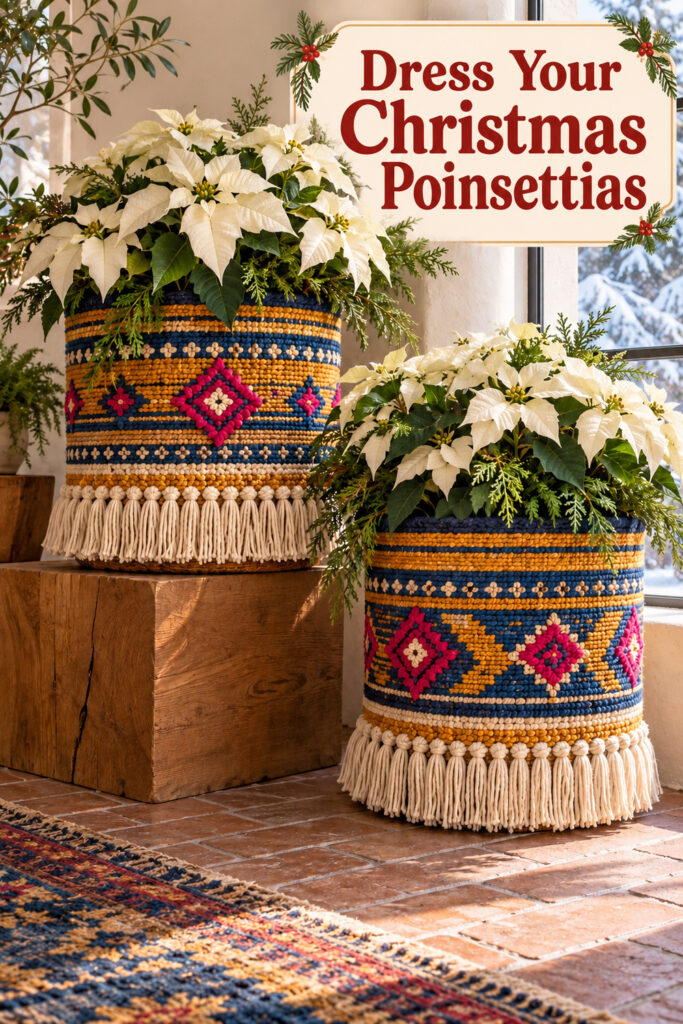
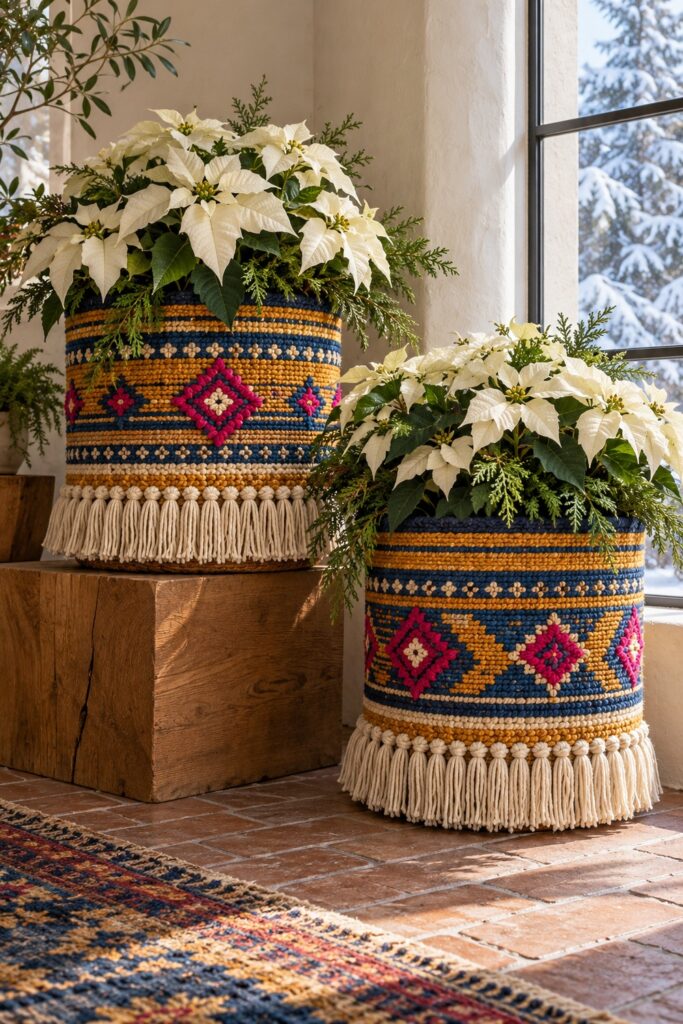
White poinsettias make the woven covers in this Christmas display easier to appreciate. The pale bracts sit above cobalt and saffron stripes, with fuchsia stitched shapes and a thick cream fringe around the lower edges. One basket stands on a solid wooden block, while the other rests on the brick floor.
This is a useful idea when you’d like the plant container to contribute as much to the seasonal display as the plant itself. You can borrow the relationship between a pale plant and a richly patterned cover without finding these exact baskets. A simpler textile around an existing container could carry much of the same effect.
This inspiration image was created with AI.
What Makes These Christmas Plant Baskets Work
The covers use strong colors, but their horizontal bands give the pattern an orderly direction. Cobalt forms the darker background, saffron supplies the warm stripes, and the fuchsia details appear in smaller repeated shapes. Cream stitches and fringe connect the containers to the white plants above them.
The two heights help separate the baskets. If they stood side by side at the same level, their broad plant tops might merge into one large shape. Raising the left basket lets you see more of each cover and creates a clear space between the plant crowns. The wood also adds a plain surface beside all those fibers.
Greenery spills gently over the rims rather than hiding the fronts. It links the poinsettias to the Christmas season and softens the line where plants meet containers. The pale wall and winter view stay quiet enough that the striped sleeves remain noticeable. You don’t need a whole room of matching textiles to make this pair work.
Key Pieces to Recreate the Look
Woven Baskets Sized for Your Plants
Find woven plant baskets
Browse current Amazon options that can help you recreate this look.
Browse woven plant baskets on Amazon →As an Amazon Associate I earn from qualifying purchases.
Start with baskets that fit the actual plant pots. Check both the opening and the usable interior depth, especially if the basket narrows toward the bottom. The pot should sit securely inside without leaning, and you should be able to lift it out when needed.
The basket can be plain because the textile is the most visible part here. Use a container you already have if its shape supports a neat cover. Look for a relatively straight or gently tapered side; a heavily bulging basket would make the fabric harder to position evenly. A similar weave is enough.
Patterned Textile Sleeves or Wraps
The covers appear to follow the baskets closely, with their upper edges sitting beneath the foliage. A finished decorative plant basket cover could offer a similar effect, but it isn’t necessary to find the exact blue, gold, and pink pattern. A removable fabric wrap with related stripes or geometric stitching is a practical substitute.
Choose a textile with enough body to stay in place without thick folds gathering at the bottom. It should be removable for cleaning and for watering the plant. If you’re adapting an existing fabric piece, arrange its join toward the wall and check the top edge before adding greenery. Keep the material outside the plant pot, away from wet soil.
Cream Fringe Trim
The fringe makes a noticeable boundary near the floor. Its pale color repeats the plants and gives the darker fabric a softer ending. A shorter cream trim would keep that relationship in a smaller basket. Very long strands could bunch beneath the container, so judge length against the actual basket height.
Keep the fringe clear of damp surfaces. On a basket that sits directly on the floor, place the hem high enough that the strands don’t get trapped underneath. If your textile already has tassels, turn it so those ends sit where you want the visible border. There’s no reason to add another full layer of trim just to duplicate the inspiration.
White Poinsettias or a Similar Pale Arrangement
The white plants are an important part of the palette. Their broad pale bracts make the saturated container colors seem deliberate rather than overwhelming. Choose a plant arrangement with enough fullness to balance the width of the basket, but don’t assume more stems will always improve it. You still want to see the decorated rim.
A faux poinsettia arrangement is an option if that suits the location better. Keep the same pale upper shape and dark green leaves. If you already have red poinsettias, simplify the cover to blue, cream, and one warm accent so the plants and fabric aren’t both demanding attention in several strong colors.
Separate Protective Inner Containers
The decorative basket and textile should stay separate from the practical plant container. For living plants, use a watertight outer container or appropriate saucer inside, and remove the plant for watering when necessary. Check for trapped water before putting it back. A woven basket isn’t a substitute for drainage management.
For faux plants, use an inner container that keeps the stems stable and the weight centered. A removable plant also simplifies seasonal storage.
A Solid Low Display Block
The raised basket sits on a broad wooden block with a flat top. That substantial support is part of why the height difference looks convincing. Choose a platform capable of carrying the full arrangement, including the plant and any water container. Keep the basket fully supported rather than hanging its base over an edge.
If you don’t have room for a block, use two baskets of different heights on the floor. You can also arrange one basket beside an existing low cabinet, provided its surface suits the load and can be protected. The aim is to separate the plant tops, not to introduce a pedestal that crowds the corner.
How to Arrange the Pair at Home
Set up the supports and empty baskets first. Look at them from the doorway and check that their fronts are visible. Put the taller arrangement slightly behind or to one side, leaving room for the lower plant’s leaves. Avoid pushing both containers tightly into a corner where their fringe disappears.
Add the textile covers before placing the plants. Check that the stripes look reasonably level across the fronts and that neither hem drags. If the fabric shifts when you lift the basket, adjust its removable fastening before continuing. A tidy wrap is easier to correct while the container is empty.
Place the plants, then tuck a little greenery around the rims. Keep the stems clear of the cover’s most interesting stitched shapes. For living plants, arrange the display where their care needs can be met rather than choosing a window solely for how it looks. The winter view in the image is a backdrop, not a care instruction.
Finish with a check at floor level. Make sure the lower fringe is free, the block sits flat, and the baskets aren’t in a walking route. The nearby rug in the inspiration repeats some of the colors, but you can leave yours plain if the covers already supply enough pattern.
Shop Similar Pieces
Look for Woven Plant Baskets and Removable Covers
Compare interior measurements as carefully as the exterior pattern. Search for a suitable basket first, then a cover or textile that fits its shape. Use the blue and saffron combination as your guide.
Shop Similar White Poinsettia Arrangements
Choose the plant or faux arrangement for its scale and intended location. Broad pale bracts over dark foliage will preserve the contrast even when your basket pattern differs from the inspiration.
Look for Cream Fringe and Stable Display Supports
Pick trim that clears the floor and a support wide enough for the container. These practical dimensions matter more than matching the photograph’s precise tassel count or wood grain.
Final Styling Tip
Let the cream fringe connect the white plants to the colorful baskets. If the combination feels too busy, simplify the small embroidery accents before giving up that useful light color repeat.