*This post may contain affiliate links for which I earn commissions.*
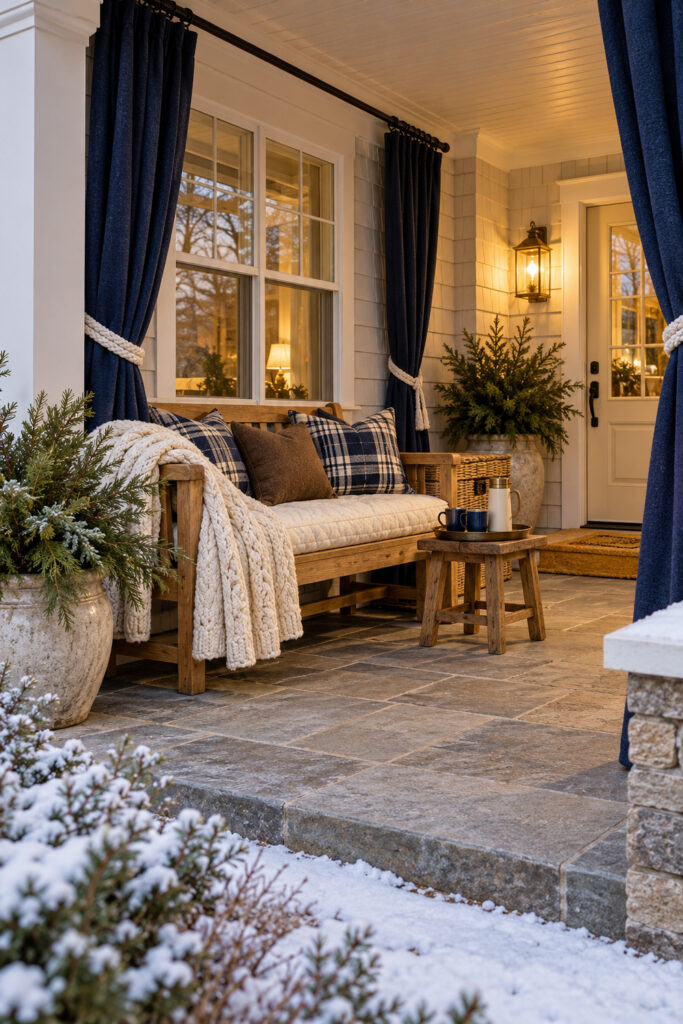
Navy curtains give this covered porch a room-like outline, framing a wooden bench dressed with cream cushioning and plaid pillows. A thick pale throw drapes over one arm, and evergreen branches fill large pots near the seating. The lantern’s warm light makes the sheltered corner look especially inviting beside the snow outside.
The useful idea is the contrast between a defined seating spot and the open winter view. You can borrow the blue, cream, wood, and greenery without copying every textile literally. Outdoor conditions matter here, so the most practical version begins with a covered location and materials chosen for the exposure your porch actually receives.

This image is AI generated inspiration for recreating a similar decorating effect with comparable pieces.
Frame a seat rather than filling the whole porch
The curtains stand at the sides of the seating area, giving the bench a clear setting against pale siding and windows. Dark blue defines that outline, while the cream cushion keeps the seat bright. The plaid pillows repeat both colors and connect the fabric panels to the bench.
Wood and woven wicker add warm texture between those stronger light and dark areas. The evergreens soften the corners without introducing a different flower palette. Even with several materials present, the limited colors keep the view easy to follow.
Find Navy Outdoor Curtain Panels
Browse current Amazon options that can help you recreate this look.
Browse Navy Outdoor Curtain Panels on Amazon →As an Amazon Associate I earn from qualifying purchases.
Choose curtain material for the real exposure
The panels in the inspiration suggest a heavy, wool-like texture. For an actual porch, choose curtains rated for your intended outdoor location, or use decorative indoor fabric only temporarily in a truly protected setting and bring it back inside afterward. A covered roof doesn’t guarantee that wind-driven rain or snow will stay out.
Look for navy fabric with enough body to hold a clear vertical line. Examine the hanging method and panel width before deciding on fullness. You want the fabric to gather at the side without forming a large bundle that blocks a window or presses against the bench.
Use rods and fittings suitable for the mounting surface, curtain weight, and outdoor conditions. Check the full span and support requirements rather than hanging a long rod from whatever hooks happen to be nearby. The curtains should have their own secure support, independent of lighting and electrical fittings.
Tie panels back where they can’t blow into a heater, light, door, or walking path. The pale rope-like ties in the image repeat the cream cushion and throw. A plain weather-suitable tie can give the same contrast, provided it holds the fabric where you need it. These panels create a visual frame; they aren’t a substitute for a weatherproof enclosure.
Make the bench comfortable without crowding it
The wooden bench has a broad cream cushion and a small group of pillows. Start with a seat pad intended for the bench dimensions and the conditions outside. Check that it doesn’t slide forward when someone sits, and keep its ties or fastening method out of the walking route.
Arrange the plaid pillows toward the back, with a plain brown cushion between them if you want the warmer center seen here. Choose a scale that leaves actual sitting room. A bench completely covered in cushions can look inviting until a guest has to decide which pillow is allowed on the floor.
For regular outdoor use, select cushion covers and inserts appropriate to the exposure and follow their care directions. Store them indoors when conditions require it. You can reserve more delicate fabrics for short periods when you’re using the porch, rather than leaving them outside as permanent decoration.
The cream throw supplies a softer, looser shape over the bench arm. Bring a blanket out when you plan to sit, then take it indoors to keep it clean and dry. Fold or drape it so its end stays above the floor. That preserves the soft line without leaving fabric where damp shoes will brush it.
Use evergreens to anchor the ends
Large pale pots hold full evergreen arrangements near the bench and doorway. Their light surfaces relate to the siding and cushion, while the dark branches echo the navy panels. The generous greenery gives the setting its winter character without needing ornaments or a holiday sign.
Choose pots suitable for local winter conditions and the material you place inside them. Fresh cut branches need a method appropriate to their care; living plants need their own suitable growing conditions. If you use artificial greenery, select pieces intended for the proposed outdoor exposure.
Build a simple outline before adding more stems. Let a few branches spread sideways and keep the center a little taller. Turn the pot to make the side facing the walkway tidy, with no stiff branch sticking into the place someone will pass.
A narrow porch may need only one larger pot. Put it at the outer end of the seating group, where it can balance the bench without narrowing the doorway. Another small evergreen accent can sit farther back if it doesn’t compete for floor space.
Give drinks a stable landing place
The small wooden table in front of the bench holds a tray with mugs and a carafe. Its modest size leaves much of the floor visible, and the warm wood connects it to the seating. In a practical version, select a side table designed to hold what you plan to set on it.
Check the legs on the actual porch surface. Stone joints or uneven paving can make a small table rock even when it behaves indoors. Move it to a level spot and test the top before bringing out hot drinks. A decorative stool is suitable only if its construction and surface are appropriate for that use.
Place the table close enough to reach from the seat without leaning far forward. Keep it outside the route to the steps or door. A low tray can organize the service, but its rim shouldn’t hide the mug handles or leave the carafe perched on an uneven seam.
Keep the doorway and light useful
The existing wall lantern provides a warm point of light beside the door. Keep foliage, curtain fabric, and basket edges away from the fitting according to its directions. If you want additional light, choose products suitable for the location rather than running a temporary cord across the floor.
Open the door fully and walk from the interior to the steps before finalizing the arrangement. Move any pot or table that narrows that route. In winter, check the floor for wet or icy areas before using the seat; the picture’s sheltered appearance doesn’t establish how your own porch behaves in bad weather.
Choose the large pieces before the extras
Start with the curtain fabric and comfortable seating, then add one strong greenery group. Small accessories will be easier to judge once those shapes are in place.
Look for Navy Outdoor Curtain Panels
Check the stated exposure rating, hanging method, and care instructions. A substantial weave can suggest the pictured heavy texture while fitting the actual conditions better than indoor wool.
Shop Similar Navy and Cream Plaid Cushion Covers
Choose a pattern scale that remains visible beside the larger plain panels. Match the cover dimensions to your inserts and verify suitability for the intended porch use.
Look for Pale Outdoor Planters
Check stability, drainage needs, and suitability for your climate. A rounded pale surface will give dark evergreen branches a distinct outline beside the wooden bench.
Test the sitting spot before adding more
Sit down, reach toward the table, and check the cushion position. Then stand and use the door. Secure any loose curtain fabric and pull the throw back above the floor.
Final Styling Tip
Repeat cream in the cushion, curtain ties, and one throw. Those small connections soften the navy frame while leaving the greenery and winter view easy to see.