*This post may contain affiliate links for which I earn commissions.*
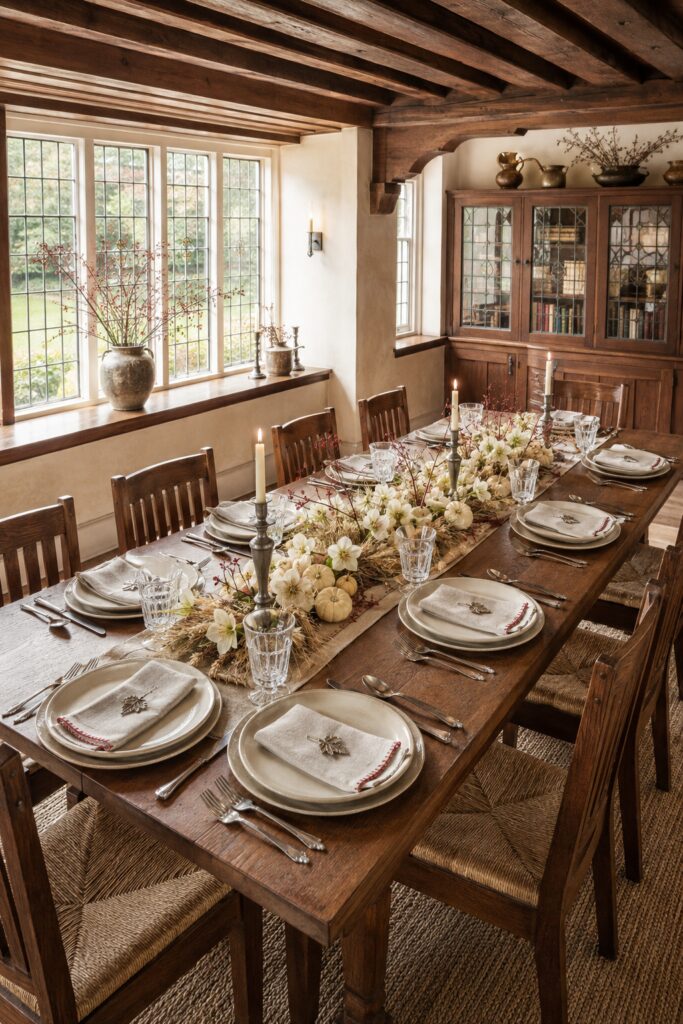
A long procession of red currant branches, cream flowers, ivory pumpkins, dried grasses, and candlelight gives this Thanksgiving table a graceful handmade character. The arrangement stretches nearly the full length of a dark wood refectory table, yet it remains low enough for guests to see and speak comfortably across it.
The surrounding dining room is unmistakably Arts and Crafts inspired. Exposed timber beams, leaded-glass windows, a substantial wood cabinet, rush-seat chairs, simple pottery, and aged metal accents celebrate natural materials and visible craftsmanship.
Instead of filling the table with orange foliage and large gourds, the design relies on warm cream, parchment, wheat, pewter, and dark wood. Fine red details provide contrast through the currant branches and hand-stitched edges of the linen napkins.
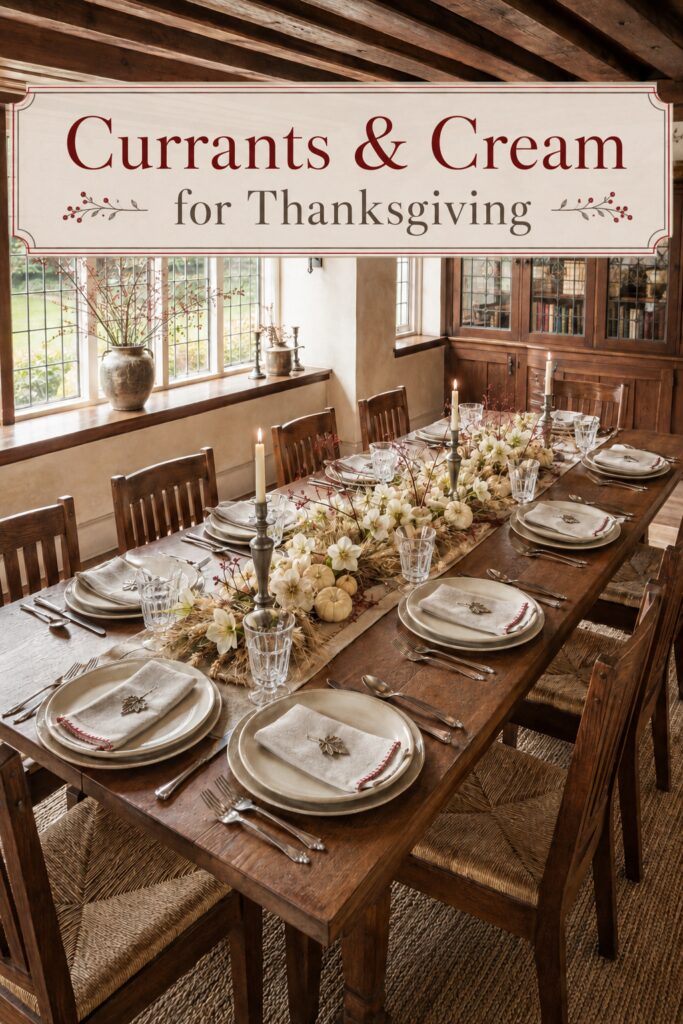
The inspiration image featured in this post was created with AI.
Why This Thanksgiving Table Feels So Inviting
The tablescape respects the character of the room. Nothing feels overly glossy, elaborate, or disconnected from the woodwork and handcrafted furnishings.
The centerpiece uses humble seasonal materials arranged with attention to rhythm and proportion. White flowers repeat along the table, miniature pumpkins gather in small groups, and airy currant branches rise just above the place settings.
Each element has enough room to remain recognizable. That openness prevents the long arrangement from becoming a dense floral barrier.
Red Currants Create a Delicate Linear Accent
The currant stems are the most distinctive part of the centerpiece. Fine brown branches carry tiny red berries through the pale flowers and grasses, introducing color without forming heavy clusters.
Their open branching shapes provide height while allowing guests to see through the arrangement. Several additional stems rise from a large weathered vessel in the window, connecting the table to the rest of the room.
Find Red Currant Stems
Browse current Amazon options for the artificial floral stems that can help you recreate this look.
Browse Currant Stems on Amazon →As an Amazon Associate I earn from qualifying purchases.
Readers could recreate the effect with artificial currant branches, small berry sprays, or other delicate red stems. Avoid berry picks that are very dense or covered in large leaves. The beauty of this look comes from seeing the structure of the branches.
Cream Flowers Soften the Dark Wood
Large open flowers are distributed in small groups along the table. Their warm white petals stand out against the walnut-colored surface while relating to the stoneware plates, linen napkins, candles, and pale walls.
The blooms are not arranged in a traditional vase. Instead, they appear to emerge directly from the grasses and runner, helping the centerpiece feel like a continuous meadow.
Cream hellebore-style flowers, anemones, magnolias, or other open-petaled artificial blooms could achieve a similar result. Using one primary flower shape will maintain the calm repetition seen in the image.
Miniature Pumpkins Form Low Sculptural Clusters
Tiny ivory pumpkins nestle among the flowers and dried materials. Their rounded forms contrast with the fine currant branches and feathery grasses.
Most of the pumpkins are gathered in groups rather than placed at exact intervals. This makes the design feel natural and prevents the long centerpiece from becoming overly symmetrical.
Warm ivory, pale oatmeal, and soft parchment finishes will work better than a stark white. Small differences in shape and tone will also support the room’s handcrafted quality.
Dried Grasses Provide the Foundation
Wheat-like stems and loose dried grasses form a textured bed beneath the flowers and pumpkins. Their golden beige color connects the light centerpiece to the rush seats, woven rug, and natural linen.
These materials also conceal floral mechanics and help the individual decorations read as one continuous arrangement.
A mix of wheat, fine dried grass, raffia-like fibers, and muted seed heads can recreate the layered effect. Keep the tallest pieces away from individual place settings so they do not interfere with glasses or serving dishes.
Pewter and Glass Balance Rustic Materials
Slender pewter-colored candlesticks rise at several points along the table. Their cool finish contrasts with the warm wood and introduces a subtle formality appropriate for Thanksgiving dinner.
Clear faceted goblets contribute sparkle without adding another color. Aged flatware and small metal leaf accents on the napkins repeat the candlesticks’ finish.
This restrained metalwork suits the Arts-and-Crafts setting because it appears useful and well made rather than excessively decorative.
Key Pieces for Recreating the Look
Delicate Red Currant Branches
Choose stems with fine branching and relatively small berry clusters. Bendable wired branches will be easier to weave through a low centerpiece.
Use a few taller stems in a nearby vase to carry the theme beyond the table.
Ivory Miniature Pumpkins
Combine several small sizes and slightly different cream tones. Lightweight faux pumpkins are practical because they can rest safely among flowers and dried grass.
Cream Open-Petal Flowers
Select flowers with simple, natural shapes rather than tightly packed formal blooms. Remove some leaves if needed to preserve the centerpiece’s airy appearance.
Natural Linen Table Runner
A narrow oatmeal or flax-colored runner protects the table and defines the path of the arrangement without concealing the wood grain.
Look for a gently textured fabric rather than a crisp, heavily pressed finish.
Pewter-Tone Candlesticks
Use several candlesticks with slender profiles and varied heights. Ivory taper candles will relate to the pale flowers and pumpkins.
Keep all dried materials safely separated from candle flames. Flameless tapers can provide a similar visual effect with less concern around branches and grasses.
Linen Napkins with Red Stitching
The napkins repeat the centerpiece color through one small handcrafted detail. A blanket-stitched or embroidered red edge is enough to connect each place setting to the currant branches.
Small metal leaf napkin accents can provide the finishing Arts-and-Crafts touch.
Arrange a Low Refectory Table Centerpiece
Begin with a narrow linen runner extending down the middle of the table. Leave generous open space at both ends if serving dishes will be placed there.
Create several small foundations of dried grass rather than one solid unbroken mat. Connect those sections with looser stems so the centerpiece appears continuous.
Place the ivory pumpkins next. Use one slightly larger grouping near the middle and smaller clusters toward either end.
Tuck cream flowers between the pumpkins, turning some blooms toward each side of the table. The centerpiece should look appealing from every seat rather than facing only one direction.
Thread the currant branches through the flowers and grasses. Allow several stems to rise gently, but keep most below eye level for seated guests.
Add the candlesticks at uneven intervals. Step back and make sure no candle is directly behind another when the table is viewed from the entrance.
Finish each place setting with neutral stoneware, a cream linen napkin, and one small metal leaf detail. Clear goblets will keep the table visually open.
For a shorter table, use three small pumpkin-and-flower groupings connected by dried grass. Two or three currant stems and a pair of candlesticks can preserve the original effect without overcrowding the surface.
Shop Similar Pieces for a Currant and Cream Table
Look for Red Currant Branches
Select open, delicate stems that can be woven horizontally or displayed upright in pottery.
Add Ivory Miniature Pumpkins
Mixed sizes will create the low rounded clusters seen throughout the centerpiece.
Shop Similar Cream Floral Stems
Choose open blooms that can be separated and tucked individually among the grasses.
Add a Natural Linen Runner
A quiet flax-colored runner will define the arrangement while allowing the wood table to remain visible.
Look for Pewter-Tone Candlesticks
Simple traditional shapes will support the room’s handmade, historic character.
Add Red-Edged Linen Napkins
Stitched borders provide a small but meaningful connection between the place settings and currant centerpiece.
Final Styling Tip
Keep the red accents fine and linear. When tiny currants and narrow stitched edges are surrounded by cream flowers, ivory pumpkins, natural linen, and dark wood, the entire Thanksgiving table feels warm, thoughtful, and beautifully handcrafted.