*This post may contain affiliate links for which I earn commissions.*
Carved wooden butter molds give this Thanksgiving pantry shelf its character. One opens to reveal repeating geometric cuts, a square piece brings a darker block of pattern to the middle, and a handled round mold finishes the group. Cream dishes, a loaf of bread, and folded striped linen keep the surrounding space connected to the kitchen.
This is an appealing way to decorate for the holiday if you enjoy old kitchen objects more than a shelf full of seasonal figures. The carved faces do the interesting work. You can build a similar arrangement around a few collected pieces without pretending that every object pictured is an available antique.
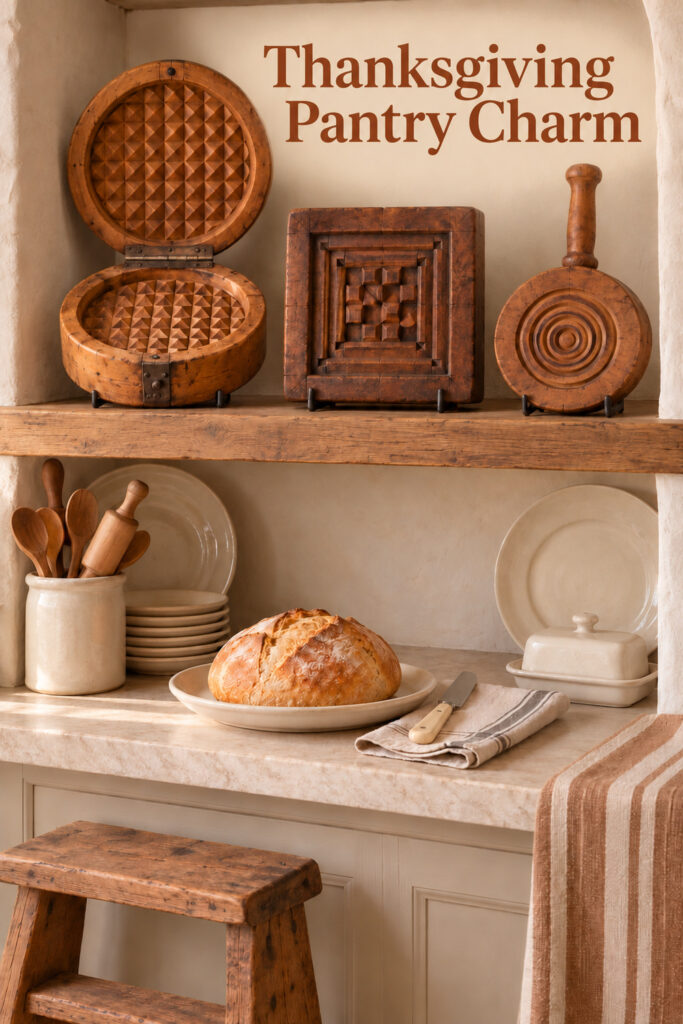
This inspiration image was created with AI and does not depict verified antiques or confirmed purchasable products.
What Makes This Pantry Shelf Work
The three wooden pieces share a warm brown palette, but their outlines are different. The open hinged piece is tall and rounded, the middle mold is square, and the right piece has a handle. That variation keeps the shelf from feeling like a row of duplicates while giving it a clear theme.
Their carved surfaces face forward. This is a small but important choice, because the pattern is the reason to display them. If they lay flat, most of the detail would disappear from the normal standing view. Dark supports hold the lower edges without becoming another noticeable feature.
Below them, the dishes are much quieter. The pale plates and crock give your eye somewhere to rest after the detailed wood. The bread adds a Thanksgiving baking connection, while the striped towels repeat a simple pattern that does not compete with the carvings.
Find sturdy display stands
Browse current Amazon options that can help you recreate this look.
Browse sturdy display stands on Amazon →As an Amazon Associate I earn from qualifying purchases.
(Is it just me or are display stands one of those things I never think to buy and never have on hand but almost always something I need when I’m working to finish the decor on a buffet, shelf, or niche?!?)
Key Pieces for a Collected Kitchen Display
Carved Wooden Molds or Decorative Presses
Look for geometric carving and an interesting outer shape rather than trying to duplicate the imagined objects exactly. A wooden food mold, decorative carved panel, or handled wooden press could produce a related effect. If you use substitutes, describe and enjoy them for what they are.
Inspect condition before displaying older pieces. Loose hinges, deep cracks, or unstable handles affect how something can be supported. Do not force a hinged piece to open farther than it naturally allows. A closed mold shown beside a separate carved panel can be a practical alternative to the tall open example.
Age and appearance do not establish food safety. Keep unknown vintage pieces decorative unless their material, finish, condition, and intended use are suitable for food contact. You can still build the baking theme with modern serving pieces below them.
Display Stands That Fit the Objects
A stand should support the lower edge and keep the object from tipping forward. Check its weight rating, depth, and grip against the actual piece. A lightweight plate easel may not be appropriate for a thick wooden mold with a projecting handle.
Try the stand on the shelf before arranging the remaining objects. The back support needs room, too. If the shelf is shallow, choose a smaller piece or another display location rather than balancing the stand at the front edge.
Cream Plates and a Utensil Crock
The stacked plates create a low horizontal shape under the carvings. A larger plate behind them adds height without introducing another dark object. Use plain dishes from your cupboard first; slight differences in cream glaze can look comfortable beside aged wood.
The crock gathers wooden utensils into one contained group. Leave a little space around their handles so the rolling pin and spoons remain recognizable. Too many tools would make the lower shelf busier than the decorative group above it.
A Bread Platter and Striped Linen
A wide, low platter makes the loaf feel like part of an orderly serving area. The linen beside it introduces a soft surface near the hard pottery and stone. Its narrow brown stripes also relate to the carved geometry without copying the detailed cuts.
For everyday decorating, leave the platter empty between uses or put it away. Real bread belongs in an appropriate food storage routine, not on permanent display. You can set it out when serving and let the carved molds carry the decoration the rest of the time.
Set Up the Shelf from the Back Forward
Begin with the tallest wooden piece and check the space above it. An open mold needs room for its upper half, and its hinge should not carry extra pressure from the wall. Position the stand so the weight rests securely before you add anything beside it.
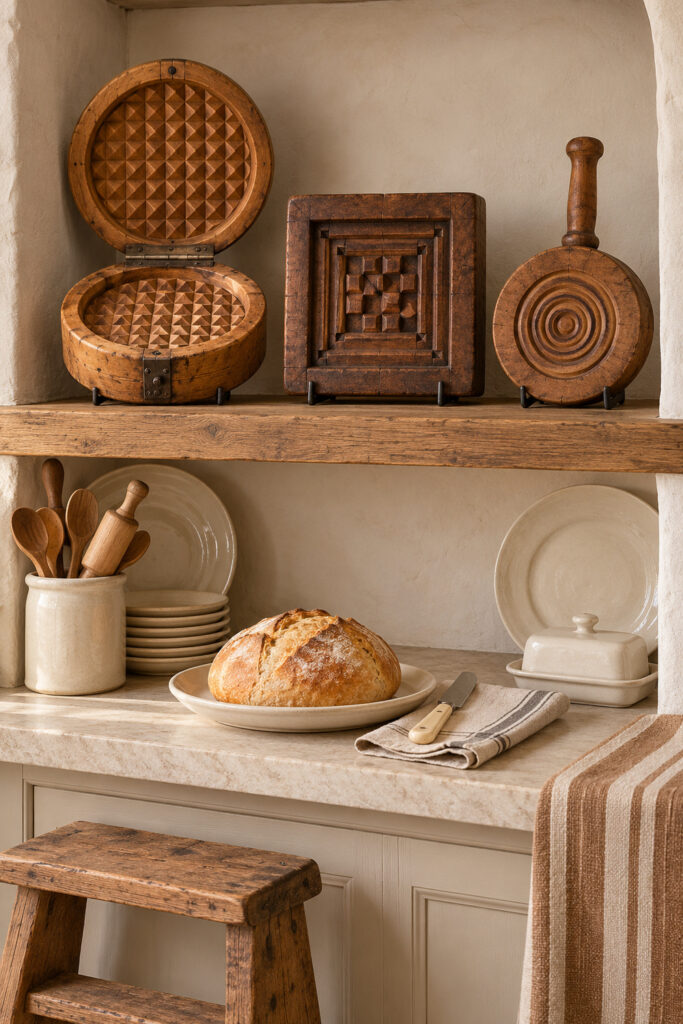
Place the darker square piece next, slightly separated from the first. The image keeps the bottom edges fairly close to a shared line, which helps the different shapes feel related. You can use that principle even when your pieces vary more in size or finish.
Finish with a smaller round or handled object. Turn it until the carving catches enough light to show its depth. A tiny adjustment in angle often reveals more than adding another lamp or pushing it farther forward. Keep all feet and supports completely on the shelf.
Work on the lower surface only after the upper arrangement is stable. Group plates together, put utensils in one crock, and leave a clear working area near the serving platter. This gives the pantry a useful rhythm instead of turning every available inch into a display.
If your kitchen has an open counter rather than a recessed shelf, try one carved piece beside a stack of plates. A single strong object can carry the same collected feeling. Avoid putting decorative wood where splashes, heat, or food preparation will make it inconvenient to keep clean.
Keep the Thanksgiving Connection Practical
The holiday feeling here comes from a kitchen ready for bread, butter, and shared food. You do not need printed holiday signs to explain it. Bringing out a favorite serving platter and folding fresh linen can make the display feel connected to the meal you are actually preparing.
Set frequently used utensils within easy reach, but move fragile decorative pieces away from hands reaching across the shelf. If you cook in this area every day, give the display its own section rather than weaving it through essential supplies.
Wood tones do not need to match exactly. The image includes golden brown and deeper brown surfaces, which make the group feel collected. What matters is keeping the supporting pottery plain enough that those differences remain attractive instead of getting lost among more patterns.
For a smaller pantry, rotate the collection. Show one open mold for Thanksgiving and store the others safely. This can be more satisfying than displaying every piece at once, especially when the carving is detailed enough to deserve a closer look.
Shop Similar Pieces
Look for Geometric Wooden Molds or Carved Panels
Compare the carved face and overall condition. A decorative substitute can work well when a true butter mold is difficult to find, provided it has a clear shape and a stable display method.
Shop Similar Sturdy Display Stands
Match the stand to the thickness and weight of your object. Its support should remain secure without hiding most of the carving.
Add Cream Serving Pieces and Brown Striped Linen
Choose useful pieces that can move between the pantry and the table. A platter, simple crock, or towel can support the display without becoming a purchase made only for a photograph.
Final Styling Tip
Stand where you normally enter the kitchen and check which carved face you notice first. Give that piece the clearest view, then simplify the dishes around it. The wood already has plenty to say.