*This post may contain affiliate links for which I earn commissions.*
A single pear on a folded napkin makes a lovely beginning to a Thanksgiving place setting. Repeat that simple detail along a wooden table, then gather golden stems and russet fruit through the middle, and the whole arrangement starts to feel connected.
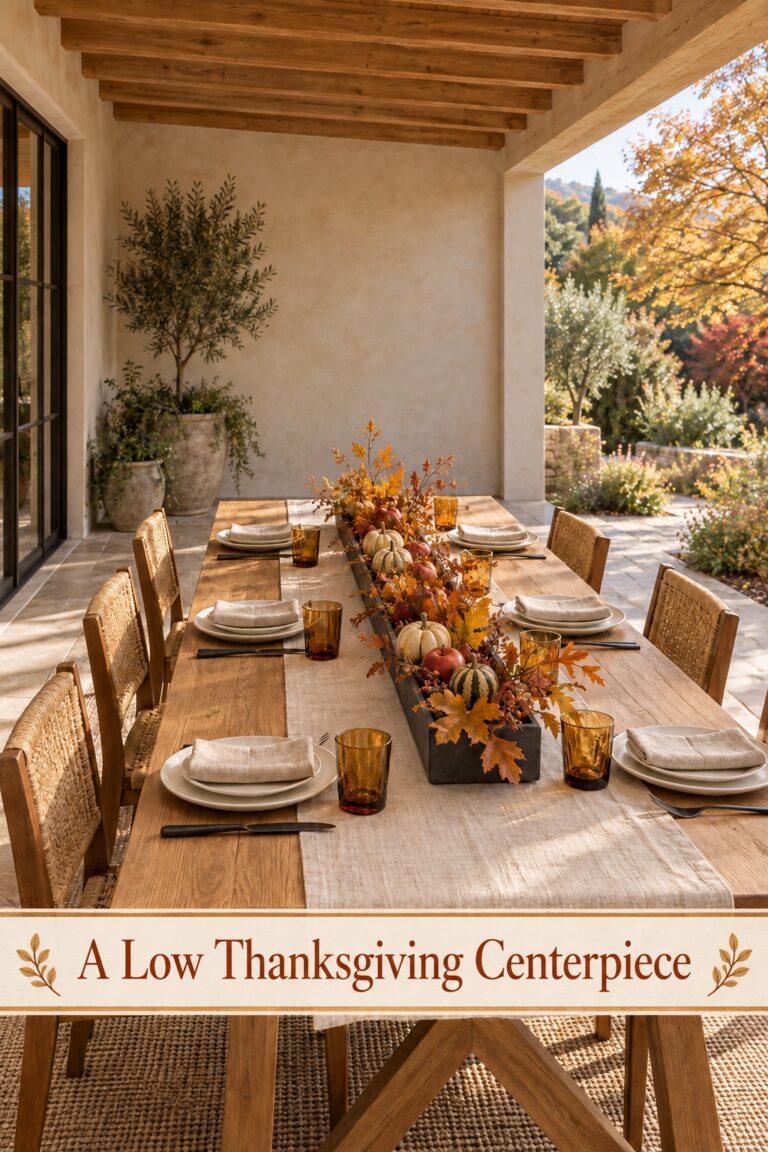
This table pairs harvest abundance with everyday materials: pale dishes, relaxed linens, clear glasses, and wood with visible grain. Slender brass candlesticks add height above the low centerpiece. You can recreate the atmosphere on your own dining table by borrowing its repeated shapes and warm finishes.
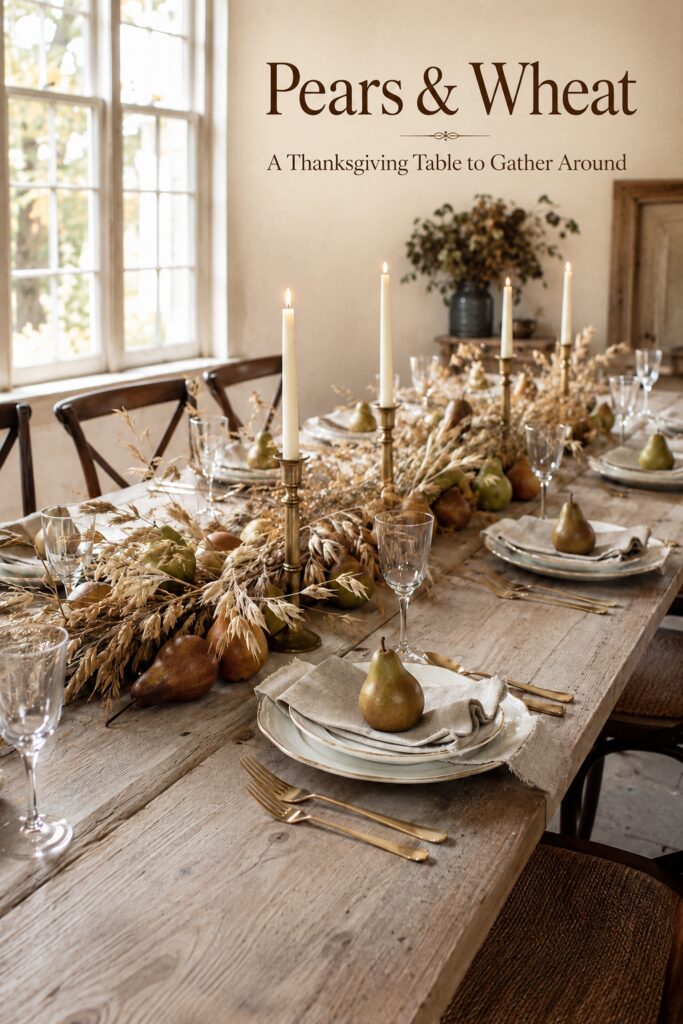
This inspiration image was created with AI. Use it as a decorating concept rather than a photograph of specific products available to purchase.
Let the Harvest Arrangement Follow the Table
The long centerpiece suits the refectory table’s generous proportions. Instead of concentrating everything in one vase, it spreads the decoration along the center, giving guests at either end something to enjoy.
Wheat and finer, drooping stems create a loose horizontal outline. Pears sit among them in small pockets, their solid shapes offering contrast to the delicate seed heads.
The arrangement stays low, while the candlesticks introduce occasional vertical lines. That difference keeps the table from looking flat without requiring a large floral display between guests.
On a shorter table, use a compact version of the same idea. A small central grouping with a few trailing stems can establish the mood without covering the entire dining surface.
Begin with One Complete Place Setting
Before arranging the centerpiece, set out a dinner plate, napkin, glass, and the cutlery needed for your meal. This shows you how much space remains for decoration.
The image uses layered cream plates with gently irregular edges and narrow warm-toned rims. Their pale surfaces stand out against the wood, while the soft napkins keep the setting from feeling overly formal.
Fold each napkin into a relaxed rectangle and place it across the top plate. Then add one clean, dry pear with a stable base. The fruit provides a small sculptural accent without requiring a complicated napkin fold.
Repeat the setting around the table before filling the middle. This simple order helps prevent an oversized centerpiece from crowding the guests.
Choose Materials with Subtle Variation
Green and Russet Pears
The pears give this table much of its character. Their olive, golden-brown, and rusty tones create variation within a restrained palette.
Find Russet Pears
Browse current Amazon options that can help you recreate this look.
Browse artificial pears on Amazon →As an Amazon Associate I earn from qualifying purchases.
Choose fruit in slightly different shapes and colors. For the place settings, select pears that stand securely. Along the centerpiece, some can rest on their sides with their stems turned outward.
Fresh fruit works well for a short-lived display and can be enjoyed afterward. Faux pears are another option for the central arrangement, especially if you plan to leave it assembled. Keep decorative materials separate from food you intend to serve.
Wheat and Airy Harvest Stems
A mixture of upright wheat heads and looser oat-like sprays creates more movement than one densely packed material.
Work with small overlapping bundles laid lengthwise along the table. Turn their cut ends inward and let the finer tips reach outward. The goal is a gently changing outline, with visible spaces between sections.
Choose clean decorative stems that do not shed heavily. Keep them away from plates and glasses, and shake out loose fragments before bringing them to the table.
Brass Candlesticks and Ivory Tapers
The candlesticks introduce height and repeat the warm tone of the flatware. Slight differences in their profiles can suit the collected look, provided their bases sit securely.
For a centerpiece containing dried stems, use ivory flameless tapers. They suggest the pictured candlelight without placing open flames among combustible materials.
Position each holder on a clear, level patch of tabletop. Do not rest its base on loose stalks or tuck it into an unstable pile of fruit.
Oatmeal Napkins and Cream Plates
The napkins provide a soft boundary between the pears and dishes. Look for a visible weave and a warm neutral shade that complements your plates.
Existing white dinnerware can work beautifully. If you want the layered effect, add a smaller plate you already own rather than replacing the whole service.
Keep the layering appropriate to the meal. The table should still be easy to use once guests begin eating.
Clear Glasses and Warm Metal Flatware
Clear stemware leaves the centerpiece visible and adds a little reflected light. Gold-toned flatware echoes the brass holders, but your everyday utensils can achieve a similarly welcoming setting.
The important relationship is between the pale plates, textured napkins, and fruit. Those elements carry the design even when the glassware and cutlery differ from the inspiration.
Assemble the Center in Small Sections
With the settings in place, position the candlesticks first. Space them along the middle without creating a rigidly measured row.
Next, lay short bundles of harvest stems between the holders. Overlap them lightly, leaving breaks where a serving bowl or water carafe might go.
Add pears in small groups, alternating their colors and orientation. Keep them beside the stems rather than burying them beneath a thick layer. Their rounded forms should remain easy to recognize.
Sit down at several places around the table. Remove stems that extend toward faces, glass rims, or sleeves. Check that guests can see one another comfortably and reach what they need.
A long table can hold several separate clusters that appear connected from a distance. This approach is easier to adjust than one continuous, tightly assembled garland.
Reserve Space for Thanksgiving Dinner
Decide where the serving dishes will go before finishing the display. If you serve family style, leave generous openings for platters and bowls, using appropriate trivets beneath hot dishes.
For buffet service, the centerpiece can extend farther, but guests still need room for drinks and bread plates. Move any decorative pear from a place setting to a nearby bowl when the meal begins.
The inspiration’s abundant stems are best treated as a visual starting point. Reducing their volume often makes the arrangement more useful while preserving its harvest character.
Find Similar Pieces to Complete the Table
Look for Mixed Harvest Stems
Combine wheat with finer sprays for a loose outline. Start with a modest quantity and add only where needed.
Shop Similar Brass Taper Holders
Choose stable bases and holders compatible with your flameless candles.
Add Textured Neutral Napkins
Oatmeal or flax shades connect the cream dishes with the weathered wood.
Look for Pears with Natural Color Variation
Use fresh fruit or decorative versions according to the display’s purpose, keeping the individual place settings simple.
Repeat One Thoughtful Detail
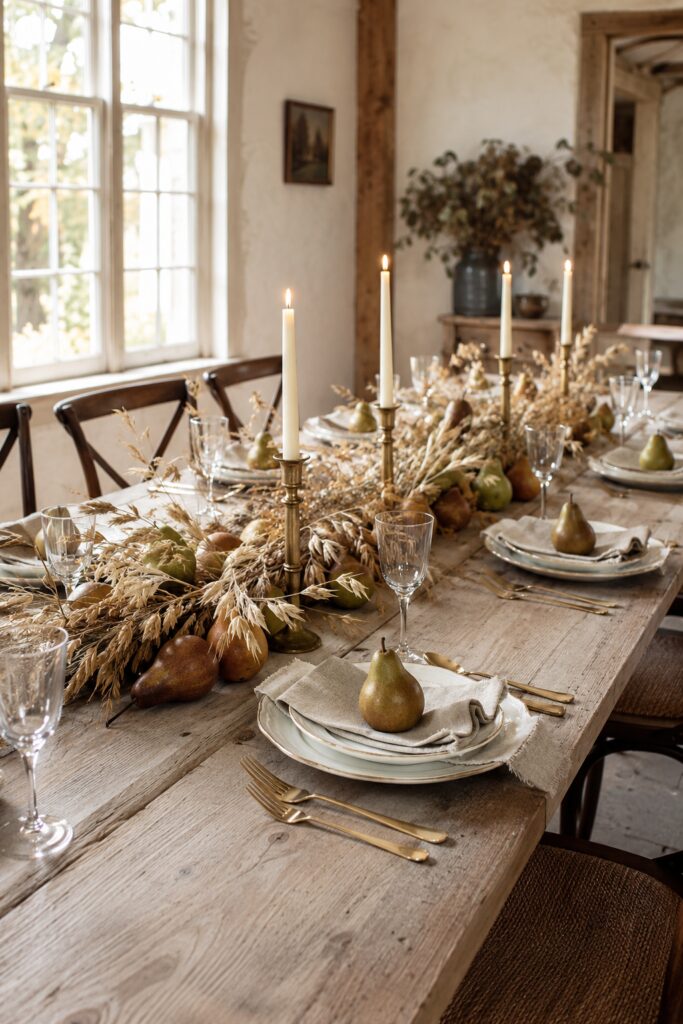
The pear on each napkin is enough to connect every guest to the centerpiece. Let that repetition do the work, and leave the rest of the table comfortable, open, and ready for dinner.