*This post may contain affiliate links for which I earn commissions.*
A Thanksgiving table can use pink checks and mixed plate colors while still feeling connected to autumn. In this garden inspiration, a coral and cream runner crosses an oval wood table beneath a leafy pergola. Scalloped plates, colored napkins, and a low bowl of seasonal flowers give each place setting its own detail.
The setting feels relaxed because the chairs and dishes don’t all match. What holds it together is repeated shape and a limited palette. You can borrow those choices indoors too, using your own table and the dishes you already have as the starting point.
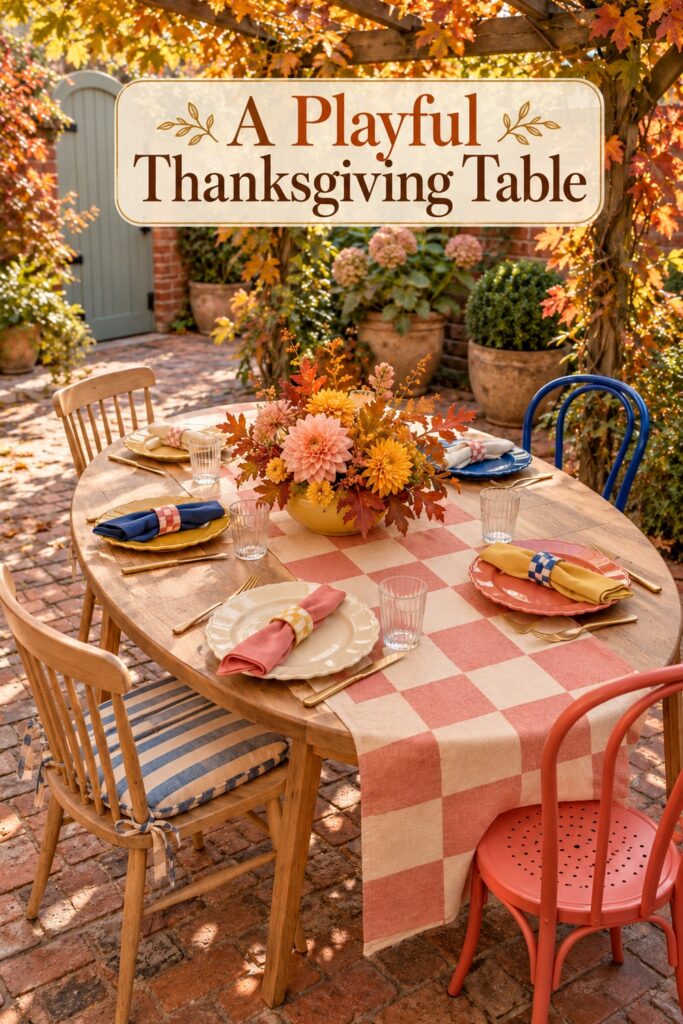
The inspiration image was created with AI and presents a styling concept rather than a photographed real Thanksgiving gathering.
What Makes This Thanksgiving Table Work
The runner introduces the strongest pattern. Its large squares show between the dishes and beneath the flower bowl, while wood remains visible along the sides. That exposed wood connects the tabletop to the pergola and the surrounding brick. A full checked cloth would create a different, more dominant effect.
The plates vary in color but share scalloped edges. Cream, coral, mustard, and blue each get a place at the table without looking like unrelated leftovers. Shape supplies the consistency that matching color usually would. The napkins borrow colors from other settings, which helps the whole table feel connected.
The central flowers repeat pink, gold, and rust. Their rounded heads soften the checks, and the low yellow bowl keeps the arrangement close to the table. Autumn leaves add the seasonal cue without requiring additional large ornaments between every plate. The garden foliage extends that theme beyond the tabletop.
Simple clear tumblers and gold-toned flatware leave the plates and runner easy to see. That’s a helpful balance. With strong checks, scalloped edges, mixed napkins, and a flower arrangement already in place, another patterned glass or elaborate charger could make the settings harder to distinguish.
Find Checkerboard Table Runners
Browse current Amazon options that can help you recreate this look.
Browse Checkerboard Table Runners on Amazon →As an Amazon Associate I earn from qualifying purchases.
Key Pieces to Recreate the Look
A Coral and Cream Checkerboard Runner
Choose checks large enough to remain visible around the place settings. A runner should leave space along the sides for plates and glasses, especially on an oval table. Measure the usable width at the narrow ends as well as the middle before choosing the fabric size.
The image’s runner drops over one end, but your chairs and guests should determine the overhang. Keep fabric from bunching onto laps or catching when chairs move. A shorter runner that stays on the tabletop can still deliver the graphic pattern if your dining area is tight.
Scalloped Plates in Related Colors
Scalloped rims connect the mixed colors. If your dishes have different edges, use another shared feature such as similar size, a cream background, or a repeated charger. The goal is to give the collection a visible relationship rather than force every piece to be identical.
Use dinnerware intended for serving food, checking care and use instructions for unfamiliar pieces. A decorative display plate isn’t automatically suitable for a holiday meal. If you already own plain white dishes, colorful napkins can supply most of the variation while the runner carries the main pattern.
Solid Cloth Napkins
Coral, mustard, blue, and cream napkins repeat the dish palette without adding another large patterned area. Mixing them across the settings makes the combinations more interesting. A yellow napkin on a coral plate links two colors that appear elsewhere on the table.
Fold them simply enough that the rim still shows. The inspiration uses long folded shapes, held with checked rings. You can also fold a napkin beneath part of the plate or lay it loosely across the center. Choose the version that leaves enough room for the meal you plan to serve.
Small Checked Napkin Rings
The rings repeat the runner in a smaller scale. Their colors vary, which continues the mixed approach without turning each setting into a separate theme. A short ribbon tie could offer a similar visual connection if you already have material in the right colors.
A Low Bowl of Autumn Flowers
Pink dahlias, golden chrysanthemums, and rust-colored leaves suggest the image’s arrangement. Similar flower shapes can preserve the effect without matching each stem. Use a broad low container and choose enough color variation to relate to the plates, leaving room between the arrangement and the settings.
Check the height from a seated position, including the tallest leaves. People should be able to see one another across the table. Fresh stems need an appropriate water-holding container; faux stems need a stable arrangement too. Keep foliage clear of food and away from the glasses guests will reach for.
Clear Glasses and Mixed Chairs
Clear tumblers give the table a useful quiet element. Their simple outlines don’t disappear completely, but they avoid adding more color to an already mixed setting. Your everyday drinking glasses can work if their size leaves enough room around the plate and flatware.
Mixed chairs continue the collected look, with blue and coral seats beside natural wood. Use chairs that are stable and comfortable for dining rather than assembling a color combination at the expense of seating. Existing mismatched chairs can look intentional when their colors connect to the tabletop.
How to Style It at Home
Start by setting the table for the actual number of guests. Put out plates, glasses, and flatware before adding the centerpiece. That tells you how much space remains. A photograph can show a roomy table with only a few settings; your Thanksgiving gathering may need more places and serving dishes.
Center the runner along the table and check its alignment from both ends. On an oval surface, leave a similar amount of visible wood at each side of the middle. If the fabric hangs too far into a chair space, fold the excess under or use a shorter piece.
Distribute the plate colors rather than grouping all the warm shades together. A blue plate opposite coral gives the arrangement some balance. Then choose a napkin color that connects each setting to another one. You can repeat this gently without making every pairing follow an exact sequence.
Place the flower bowl in the remaining central space and sit down to check it. Rotate the arrangement if a large flower obscures a guest’s view or a branch leans into a setting. Leave room to place bread, condiments, or other shared items if you plan to keep them on the table.
For outdoor dining, treat the pergola as a setting rather than a guarantee of weather protection. Consider wind, temperature, lighting, and a practical indoor backup. Keep the runner secured appropriately and glasses on stable surfaces. Clear fallen leaves from the dining area before guests sit down.
If you’re recreating the idea inside, let a nearby vase or existing wood furniture supply the surrounding autumn detail. You don’t need to build a leafy backdrop. The runner, mixed scalloped plates, and low flowers already tell the story, and keeping other decorations separate can make serving much easier.
Shop Similar Pieces
Shop Similar Large Check Table Runners
Compare dimensions with the fully set table. The pattern should show without forcing plates toward the edge or leaving fabric in the guests’ seating space.
Look for Scalloped Dinnerware and Solid Napkins
Choose useful food-safe dishes before color. Add variation with napkins if buying several plate colors would be more than you need.
Add a Low Floral Bowl and Checked Rings
These details connect the center to the individual settings. Keep the centerpiece low and the napkin accents simple enough to remove at mealtime.
Final Styling Tip
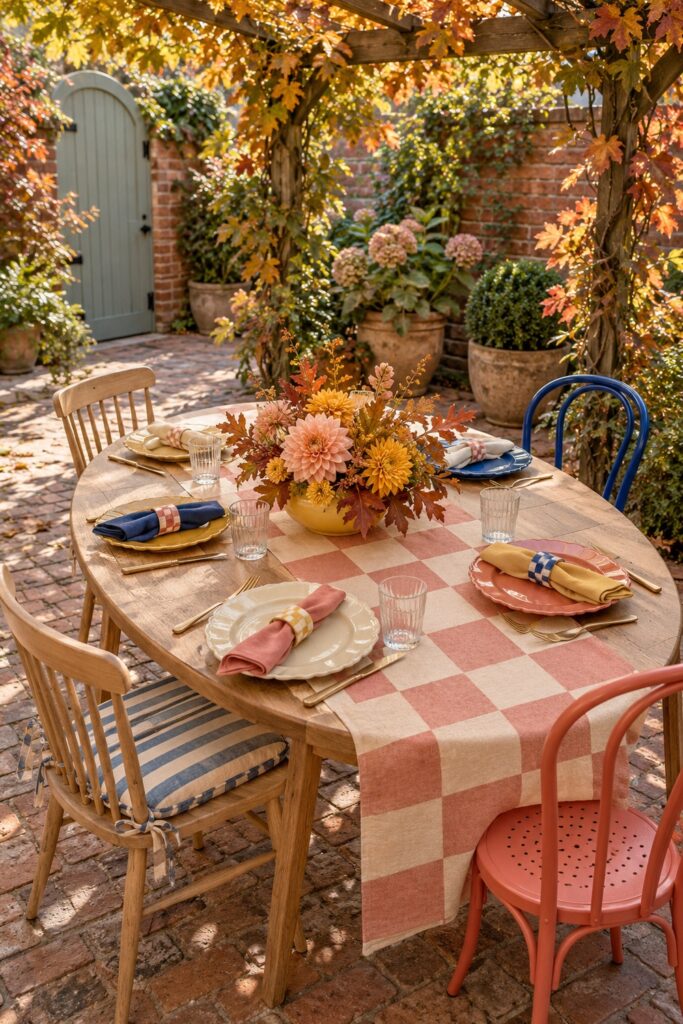
Set one complete place first and test it with the centerpiece in position. When the glass, napkin, and plate are easy to use, repeat that comfortable spacing around the table and let the colors vary within it.