*This post may contain affiliate links for which I earn commissions.*
A cornucopia can be the centerpiece even when there is nothing spilling out of it. In this Thanksgiving table inspiration, three ribbed glass horns rest on a broad pale platter, with their open mouths and curled tails facing different directions. Honey amber, champagne, and soft rose give the collection its color.
The empty forms let you appreciate the curves and ridges. If you want to borrow this look, start with the idea of a small sculptural group on a low base. Similar decorative horns or another coordinated collection can suggest the effect without matching every imagined glass detail.
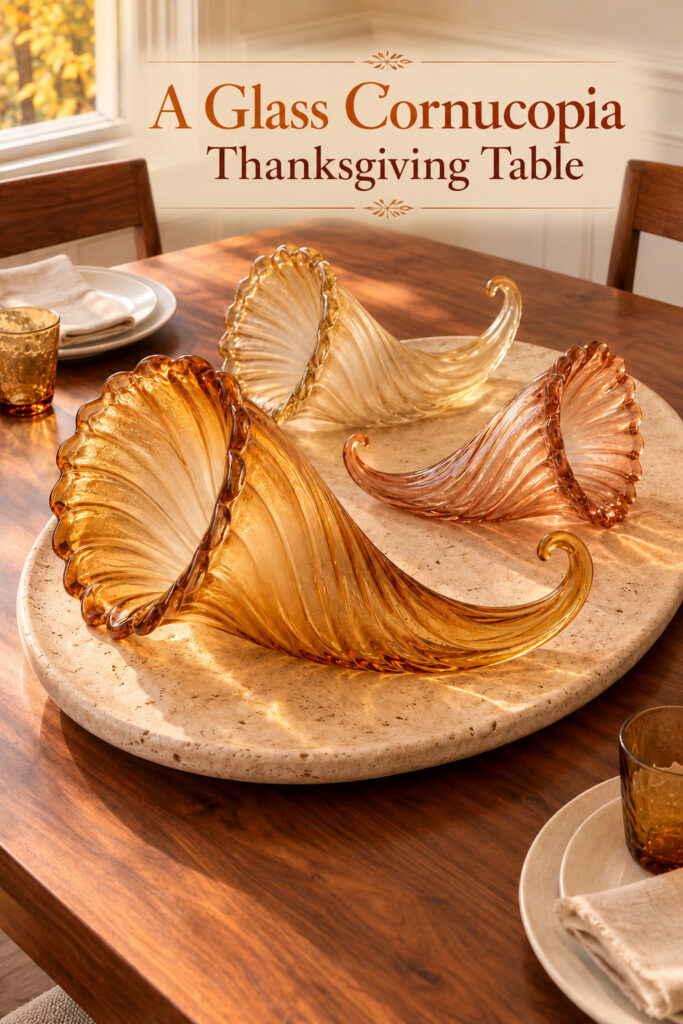
The inspiration image was created with AI.
What Makes the Cornucopia Group Work
The largest amber horn occupies the front of the platter, where its flared mouth and long tail are easy to see. The two smaller forms sit farther back and point in other directions. That variation prevents the repeated shapes from collapsing into a single dense outline.
Find Low Oval Display Platters
Browse current Amazon options that can help you recreate this look.
Browse Low Oval Display Platters on Amazon →As an Amazon Associate I earn from qualifying purchases.
The pale stone base separates warm glass from the walnut table. Without it, some of the amber edges would disappear into the wood. Its low profile also lets the horn shapes remain visible from the sides, which matters when guests will see the centerpiece from several different seats.
The place settings stay simple. Pale plates, neutral napkins, and amber tumblers repeat the collection’s colors without adding a competing pattern. There are no flowers or candles filling the remaining space, so the unusual cornucopia silhouettes remain the reason to look at the center of the table.
Key Pieces for This Thanksgiving Table
Sculptural Cornucopia Forms
Look for a flared opening, tapering body, and curved tail. Those features identify a horn of plenty more clearly than material alone. An actual glass match may be difficult to locate, so compare decorative alternatives by silhouette rather than assuming these AI inspired pieces exist as shown.
A matte ceramic horn would create a different surface effect but could preserve the recognizable shape. If you choose a substitute, keep the other elements quieter so its profile remains clear. Avoid compensating for a simpler object by filling every open area with unrelated harvest decorations.
A Broad Low Platter
The platter needs enough room for complete tails as well as the wide mouths. Measure the objects laid out together before choosing a base. A long horn can fit across a platter while still leaving its curved tip too close to the edge, which makes the whole group feel precarious.
Choose a decorative platter suited to the combined weight. A pale ceramic or stone look version can supply the contrast without requiring heavy natural stone. Keep unknown decorative objects separate from food, and don’t assume an ornamental horn is food safe because its shape resembles a serving vessel.
Related Amber and Champagne Colors
The deepest amber appears in the largest foreground piece, while the paler horns keep the back of the collection lighter. A rose tinted companion adds variation without introducing a strongly different color. You can follow that distribution with whatever related pieces are practical for your table.
If your collection is all one color, use orientation and size to create the variation instead. Turn one mouth toward the room and another slightly across the table. The curves will catch different light, which can be enough to separate matching surfaces without buying another object.
Plain Plates and Soft Napkins
Neutral place settings make it easier to see the sculptural centerpiece. Use existing cream or white plates if their proportions suit the table. A folded linen napkin offers softness against the glass and wood, so you don’t need an elaborate folded shape or extra ornament at each seat.
Amber tumblers can repeat the warm color near the edges of the table. If you don’t own them, plain clear drinking glasses are a useful alternative. The centerpiece already supplies the main amber note, and matching every drink vessel is less important than keeping the table comfortable to use.
Arranging the Centerpiece at Home
Put the empty platter on the table first and sit down before adding the sculptures. Check how much room remains for plates, serving dishes, and elbows. This gives you a realistic footprint, which is much more helpful than arranging an oversized display and trying to squeeze the meal around it afterward.
Place the largest horn toward the front of the group, then rotate it until both its opening and tail are visible. Add the smaller horns one at a time. Leave a patch of pale platter between their edges so guests can understand where one piece ends and another begins.
View the arrangement from the opposite side as well. A centerpiece has more than one front, even if the inspiration photograph has a preferred angle. If all the mouths point away from half the table, turn one smaller piece so those seats have an interesting view too.
Keep fragile tips within the platter’s boundary and away from passing hands. The long tails are part of the appeal, but they shouldn’t extend into the space where a guest will lift a plate. Use fewer objects if the complete shapes can’t fit comfortably on your available base.
Leave the horns empty to preserve the sculptural idea. Loose fruit or greenery could obscure the ribbing and put pressure on delicate openings. If you prefer a filled cornucopia, choose a purpose made vessel suited to that use and treat it as a different arrangement rather than forcing this display to serve both roles.
Check the height from a seated position. The inspiration is relatively low, but actual objects may be taller or have a mouth that blocks conversation. A single horn with a smaller companion can be a better choice for a narrow table than a crowded trio with awkward sightlines.
If the dining table needs its center for family style serving, use the arrangement on a nearby sideboard and repeat the amber color in a drinking glass or small detail at the table. You preserve the Thanksgiving connection while leaving the meal space functional. The display doesn’t lose its purpose because it moves a few feet.
The ribbed surfaces offer enough detail that a patterned table runner may be unnecessary. Try the pale platter directly on your tabletop first. If you need a protective layer beneath it, choose one that lies flat and doesn’t make the base rock. Keeping the broad foundation steady matters more than repeating every texture from the photograph.
Shop Similar Pieces
Look for Decorative Cornucopia Sculptures
Compare the full dimensions and the way each piece rests. A beautiful curved tail won’t help if the object cannot sit securely on your chosen platter. Check the actual material and intended use before considering it for the collection.
Shop Similar Oval Display Platters
A plain low rim will show the horns more clearly than a high sided bowl. Choose the platter around your real table dimensions and the pieces you plan to arrange. Its visible pale border is part of the design, so avoid filling it completely.
Add Neutral Cloth Napkins
A soft neutral napkin can repeat the platter’s light color at each place. Use a straightforward fold that stays within the plate or beside it. The centerpiece already provides the decorative curves, so the surrounding linen can remain simple.
Final Styling Tip
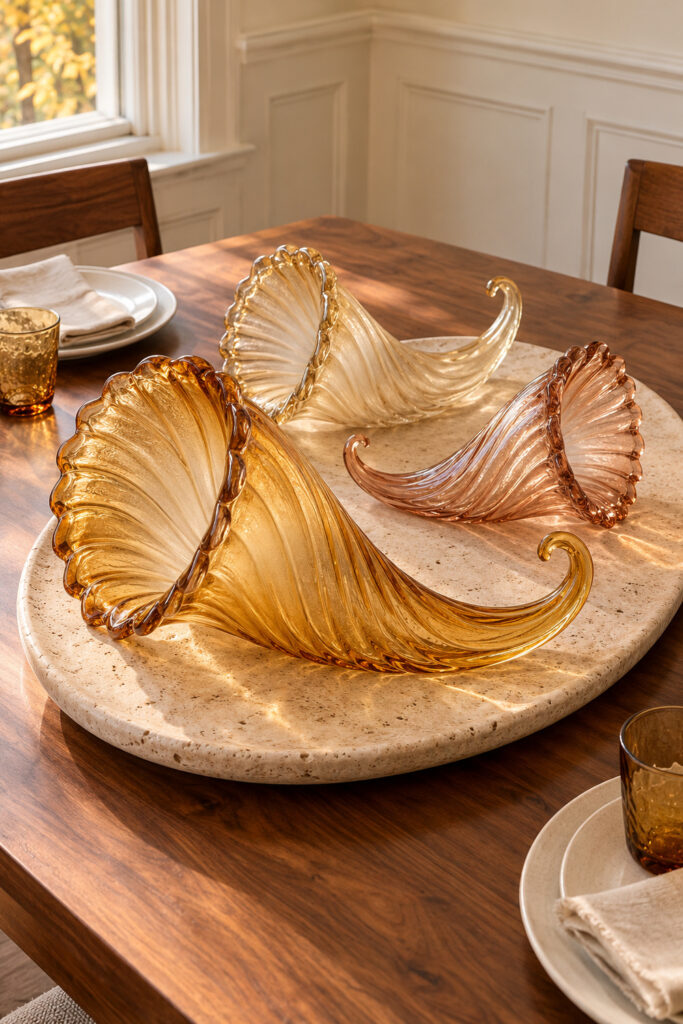
Stop arranging when you can see each horn’s opening and its complete curled tail. Those two details communicate the cornucopia idea, and leaving them visible matters more than filling the last empty spot on the platter.