*This post may contain affiliate links for which I earn commissions.*
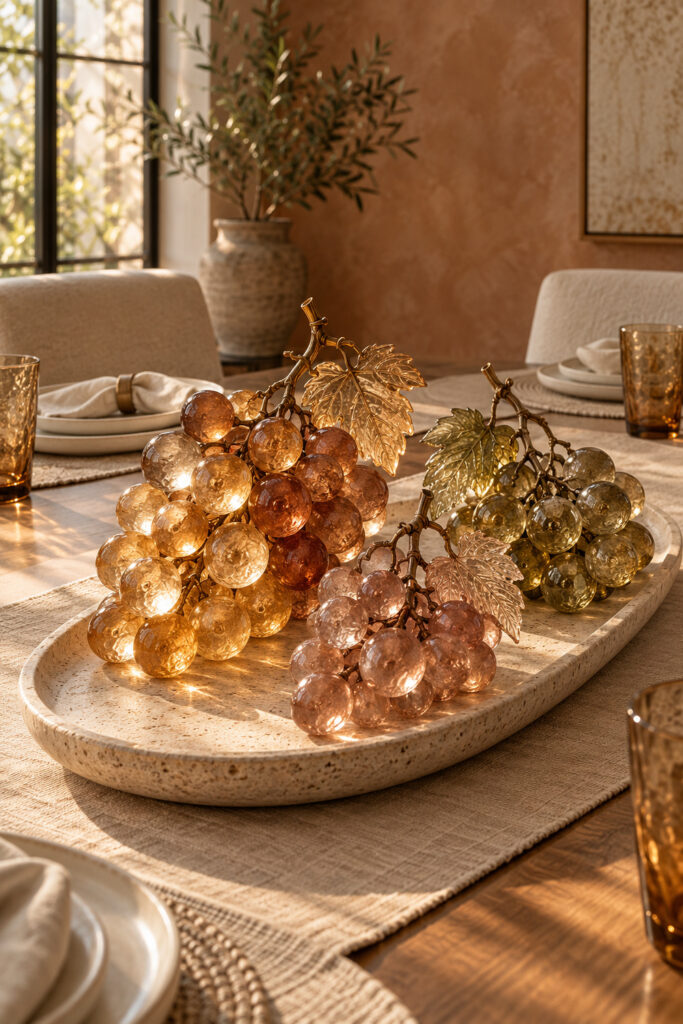
Amber, muted olive, and rosy glass grapes gather on a pale oval platter in this Thanksgiving table inspiration. Their rounded beads, branching stems, and translucent leaves make the fruit shapes easy to recognize. Linen, cream plates, and warm drinking glasses support the centerpiece without adding another competing theme.
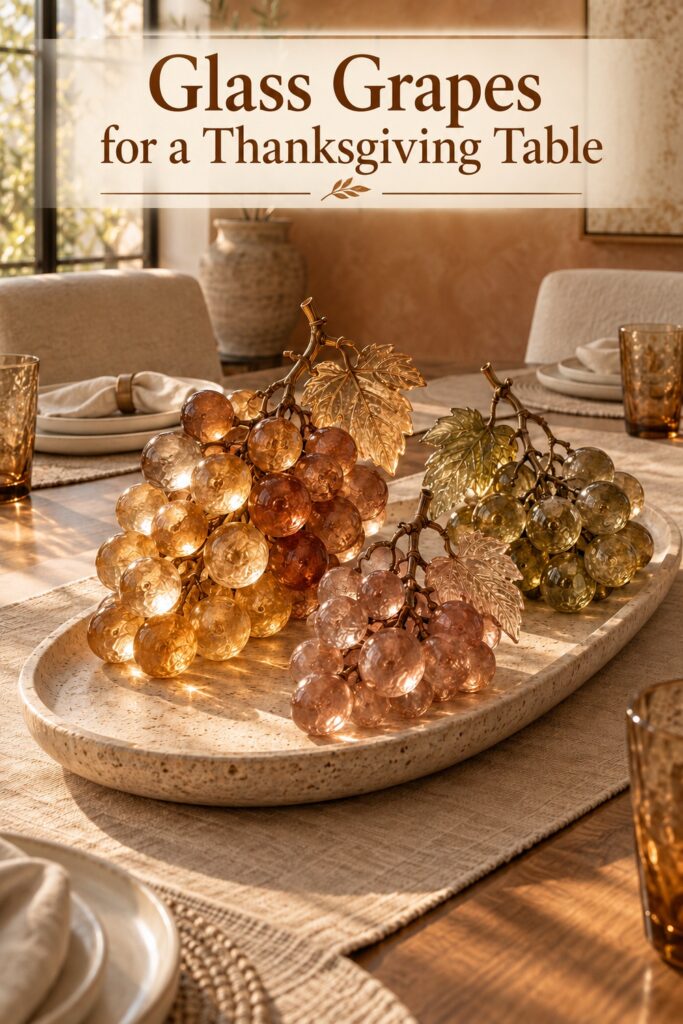
The inspiration image was created with AI and represents a decorative concept rather than verified objects or an actual table setting.
What Makes This Harvest Centerpiece Work
The grapes bring the harvest connection, but their glass-like surfaces give the arrangement a different character from a bowl of fruit. Light catches the round beads and passes through the leaves. The stem structure remains visible above each cluster, so the pieces read as grapes rather than a loose pile of colored spheres.
Scale changes organize the three clusters. The largest honey-toned bunch sits toward the left, the olive group rises at the back right, and the smaller rosy one fills the front. That arrangement gives the platter depth while preserving separate outlines. A little open stone around the fruit keeps the display from feeling packed.
The table’s supporting materials stay fairly plain. Cream crockery and natural linen soften the reflections, while the amber glasses repeat the warm color at the place settings. Repeating one tone in useful objects connects the centerpiece with the meal. You don’t need matching grape details on every napkin or plate.
Key Pieces for the Thanksgiving Table
Find decorative grape clusters
Browse current Amazon options that can help you recreate this look.
Browse decorative grape clusters on Amazon →As an Amazon Associate I earn from qualifying purchases.
Decorative Grape Clusters
Look for sculptural bunches with clearly attached grapes, stems, and leaves. Exact glass versions may be difficult to find, so consider related decorative fruit in glass, acrylic, or another translucent material. Compare the entire silhouette rather than focusing on a single bead that happens to match the inspiration’s color.
Check whether a cluster sits securely on a flat surface. Some ornaments are designed to hang, and their stems may not support tabletop display. A bunch that rolls or tips will be frustrating in the middle of a meal. Choose stable pieces and arrange them without forcing delicate branches into a new position.
A Pale Oval Platter
The long platter gives the clusters a shared boundary and spreads them along the table. A matte or lightly textured surface helps separate the reflective fruit from the background. A plain ceramic platter can provide the same visual contrast if natural stone isn’t something you already own.
Measure the usable width of the table after placing dishes on both sides. The centerpiece should leave room for hands, glasses, and serving utensils. Don’t choose a platter solely because it fills the empty table attractively. It needs to fit when everyone is seated and the meal is actually underway.
Natural Linen and Cream Plates
The linen introduces texture without another strong pattern. You can use a runner, placemats, or folded napkins depending on your table. Choose one main textile treatment and let the platter remain distinct. Several layered fabrics can make the low centerpiece feel lost in a much busier setting.
Cream plates provide a quiet frame around the warmer glass. Use your existing everyday dishes if they serve that purpose. Slight differences between bowls and plates are fine when the centerpiece already supplies the coordinated color. The goal is a table that works, with a decorative focus in the middle.
Warm Glassware and Simple Napkin Rings
Amber drinking glasses repeat the honey tones without copying the grape shapes. Clear glasses can work just as well if the table already has plenty of warm color from the wood and centerpiece. Keep the glassware practical for the meal rather than choosing an awkward shape only for the photograph.
A plain napkin ring or a loosely folded cloth is enough. The little metal details in the grape stems already give the centerpiece a decorative edge. Avoid turning every place setting into a second miniature arrangement, particularly on a table where serving dishes will need to move around.
How to Arrange the Grape Centerpiece
Set the empty platter on the table and place one complete setting on each side. Sit down and check the available space before adding the grapes. This is a useful moment to decide whether the platter belongs in the center or should move to a sideboard once the meal begins.
Place the largest cluster slightly off center, with its stem angled toward the back. Add the second cluster on the opposite side and turn its leaf so it remains visible. Bring the smallest bunch toward the front, leaving a little platter showing between the groups. Avoid letting all the stems cross in one busy knot.
Use the colors to separate the clusters. A rosy bunch in front of amber will be easier to distinguish than two nearly identical tones pressed together. If all your pieces are one color, vary their size and direction instead. Their outlines can still provide the rhythm even without the inspiration’s three-color mix.
Look across the table from a seated position. The inspiration is relatively low, but actual decorative clusters can be taller than they appear in product photos. Make sure stems and leaves don’t block faces. Turn the largest piece or move it toward an end if it interrupts conversation.
Keep decorative fruit separate from food. Unless a maker identifies an item as food-contact safe, don’t rest bread, cheese, or other exposed food against it. A dedicated display platter also helps guests understand that these grapes are decorations. If serving space is tight, move the entire decorative grouping to another surface before bringing out hot dishes.
For a small round table, use one cluster on a modest platter and repeat its color in the napkins or glasses. You don’t need three bunches to communicate the idea. A single detailed piece with a visible stem can be more effective than a broad collection squeezed between everyone’s plates.
Add the final place settings after checking the centerpiece from both ends. Keep napkin folds and glasses out of the grape leaves’ path. During clearing, lift dishes away from the centerpiece instead of sliding them beside projecting stems. The display will be easier to live with when its boundaries are obvious.
Shop Similar Pieces
Look for Sculptural Decorative Grapes
Compare dimensions, material, base stability, and the way the leaves attach. Distinct stems and a recognizable bunch shape are the useful features. A simpler piece with a good outline may suit the table better than an elaborate one that needs a stand or careful propping.
Shop Similar Low Oval Platters
Choose enough length to separate your clusters, but keep the width compatible with seated place settings. Pale finishes generally make warm translucent fruit easier to see. If the platter has a pronounced pattern, try it beneath the grapes before adding any patterned textiles nearby.
Add Amber Glassware or Plain Linen
Repeat one color already present in the centerpiece rather than introducing another seasonal motif. Either the glasses or the napkins can do that job. You can keep the remaining table pieces neutral and still create a clear connection between the center arrangement and the individual settings.
Final Styling Tip
Arrange the grapes after setting out two places, not on a completely empty table. You’ll know immediately whether the centerpiece leaves enough room for the people who are coming to dinner.