*This post may contain affiliate links for which I earn commissions.*
Honey and sage glass artichokes make an unusual Thanksgiving arrangement on this pale serving ledge. The layered leaves give each piece a recognizable shape, while the different sizes keep the group from looking too uniform. Bread, cream serving pieces, and a folded cloth connect the display with a kitchen that’s ready for company.
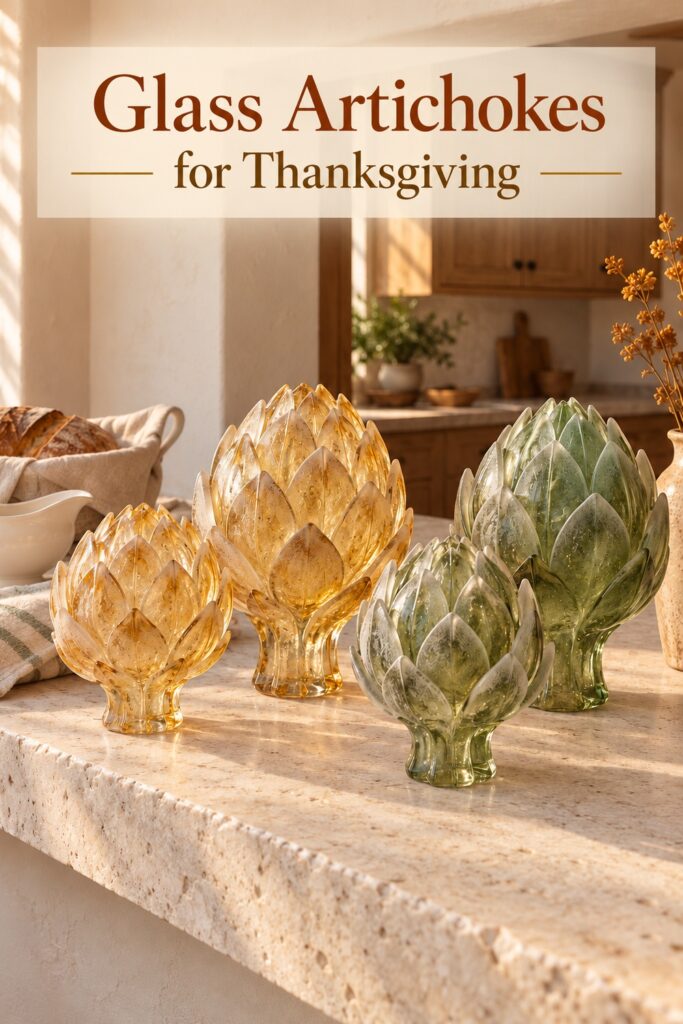
The inspiration image was created with AI and shows a decorating concept rather than verified products or a photographed home.
What Makes the Artichoke Collection Work
The pointed overlapping leaves are the feature worth preserving. Their edges catch the light, so the larger artichokes remain interesting even without a busy pattern around them. The smaller pieces repeat the same form at a different scale. Together, they look related without lining up like identical ornaments.
Color helps organize the four objects. Two honey-toned pieces sit toward the left, while two sage ones carry the group across the ledge. The warm stone and wood support both colors. You could borrow that relationship in a white kitchen by adding a wooden board or a natural linen cloth nearby.
The arrangement also has a useful front and back. Larger pieces rise behind the smaller ones, leaving most of each leafy outline visible. That sense of depth matters on a counter, where setting everything in a straight line can make decorative objects look like items waiting to be put away.
Key Pieces to Recreate the Look
Find decorative artichokes
Browse current Amazon options that can help you recreate this look.
Browse decorative artichokes on Amazon →As an Amazon Associate I earn from qualifying purchases.
Sculptural Artichoke Decorations
Look for decorative artichokes with a defined leafy surface and a base that sits securely. Exact glass versions may be difficult to locate, so a glazed ceramic or resin substitute can still carry the harvest idea. Choose the recognizable layered shape before worrying about a perfect match to the inspiration’s transparency.
Inspect the proportions of the base as well as the top. A tall, narrow decoration needs more room and a quieter location than a broad one. For a working serving ledge, a smaller stable piece may be the better choice, even if the image makes the large versions especially tempting.
A Honey and Sage Color Pairing
The two colors make the collection feel seasonal without adding a conventional holiday motif. Honey supplies warmth, and the grayish green keeps it from becoming one long patch of orange. If you already have green artichokes, place them beside amber glassware rather than repainting or replacing them.
Finish differences can also be useful. A glossy piece next to a softer matte one gives the eye another distinction, especially when both objects are similar in size. Keep the colors fairly close in strength so one intensely saturated piece doesn’t pull attention away from the rest of the collection.
Quiet Serving Pieces and Textiles
Cream pottery and a natural cloth give the reflective shapes somewhere calm to sit visually. The bread basket establishes the kitchen setting, but it remains off to the side. Think of these as useful objects that happen to suit the scene rather than extra decorations you need to buy.
A plain pitcher, folded towel, or pale serving bowl may be enough. Choose one or two pieces with low profiles and put them outside the main group. If the counter is small, keep the serving items in use elsewhere and give the artichokes a separate shallow tray instead.
How to Style a Thanksgiving Serving Ledge
First decide which section of the ledge can stay decorative during the meal. Set aside the area needed for dishes, utensils, and hot serving pieces. A display that occupies the entire counter will quickly become an obstacle, so work backward from the space your guests and helpers actually need.
Place the two larger artichokes toward the back of the chosen area, with a little separation between them. Bring the smaller ones forward and slightly outward. Avoid centering a small piece directly in front of a large one; that can hide the larger object’s stem and turn the pair into one confusing outline.
Try arranging by color, as the inspiration does, then switch one small piece to the opposite side. Either approach can work. Keeping each color together makes the two-part collection more obvious, while alternating them gives a looser rhythm. Choose the version that still reads clearly from the room where guests approach.
Leave some bare ledge visible around the bases. That open stone is part of the arrangement, since it lets the colored edges and shadows show. Filling every gap with leaves or fabric would bury the very detail that makes the idea appealing. A cloth can sit beside the group without running beneath every object.
If you’re using a tray, check that its surface is level and that every base sits fully inside it. A rim can help define the display area, but it shouldn’t press against the decorations. Pick up the objects separately when moving them unless the loaded tray is genuinely easy to carry safely.
Check the view from the kitchen as well as from the dining side. A pass-through display often has two audiences. Put the most detailed faces where they’re visible and avoid hiding something you need behind the tall pieces. The collection should suit the way the ledge works, rather than forcing you to work around it all afternoon.
For a narrow counter, use one large artichoke and one small companion. Keep the height difference and the two-color relationship. That preserves the main idea without squeezing four pieces into a space that can’t accommodate them. A single artichoke on a small sideboard can also work when the leaf shape is especially clear.
Shop Similar Pieces
Look for Decorative Artichokes with Layered Leaves
Search by shape and material, then compare actual dimensions. Product photos can make a small ornament appear substantial, so check whether the scale suits a serving ledge or only a little shelf. A stable base and an easily recognized form matter more than an elaborate finish hidden at the back.
Shop Similar Amber and Sage Accent Pieces
If you find only one artichoke, use a simple colored vessel as a supporting piece rather than substituting another complicated fruit shape. Keep the artichoke in front and let the companion repeat the palette. That makes the adaptation read as one idea instead of a collection of unrelated harvest objects.
Add Natural Linen and Cream Serving Ware
A folded cloth can connect the decorative corner to the rest of the meal. Choose a relatively plain weave if the sculptural leaves already have plenty of texture. Existing cream bowls and pitchers are useful here, particularly when their rounded shapes contrast with the pointed leaves.
Decorative objects should stay separate from exposed food unless their maker identifies them as suitable for food contact. Leave enough space to set down a serving dish without nudging a pointed leaf. Before guests arrive, make one trial pass carrying an empty platter. You’ll notice immediately if the collection needs to move back or lose a piece.
Final Styling Tip
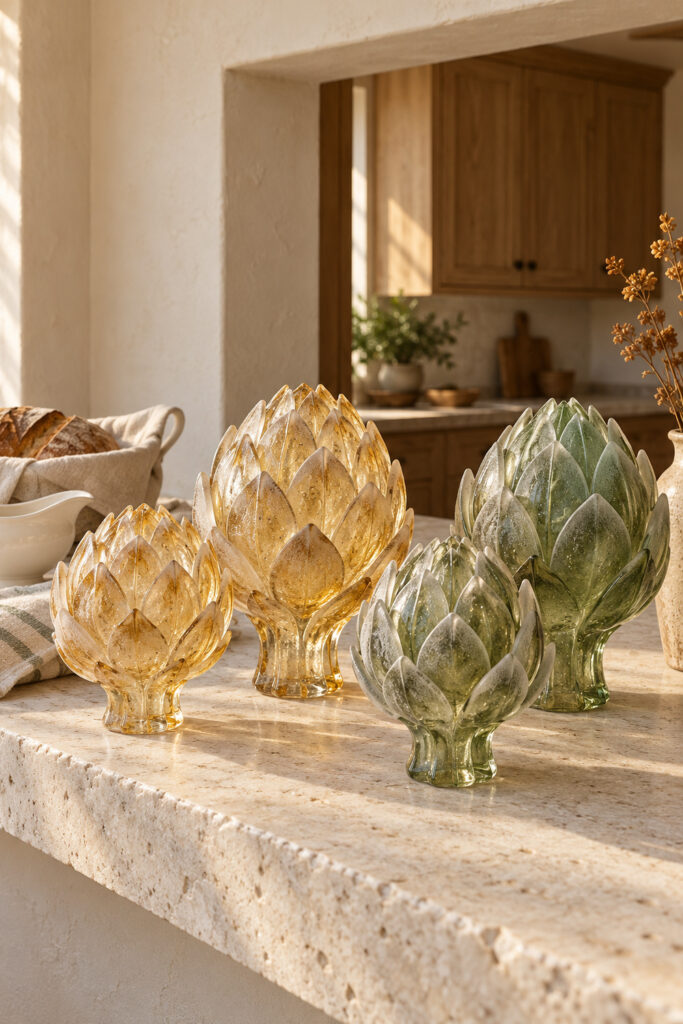
Keep a small artichoke in front of a larger one, with both outlines visible. That simple change in scale gives the collection its rhythm, even when you use only two pieces.