*This post may contain affiliate links for which I earn commissions.*
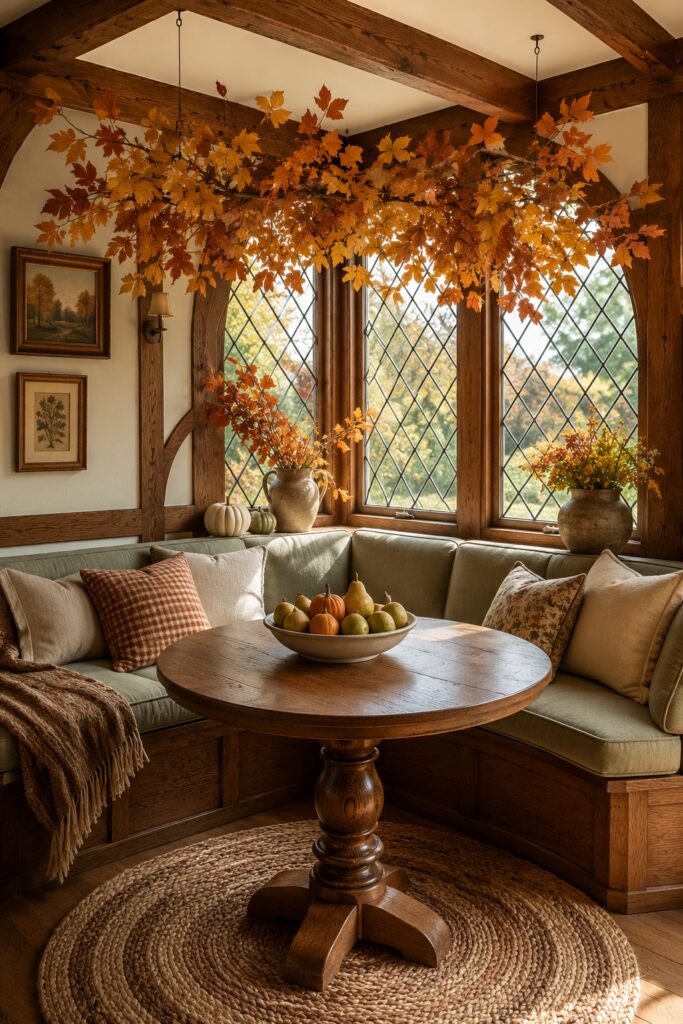
There is something especially inviting about a breakfast corner that feels tucked beneath autumn trees. In this nook, golden leaves stretch across the windows overhead, framing the seating with the colors of a changing woodland. Below them, sage cushions and a round wooden table make a comfortable place for coffee, toast, and a slow start to the day.
The room has plenty of architectural character, from its exposed beams to its diamond pane windows. Yet the seasonal decorating idea is surprisingly adaptable. Leafy branches, soft fabrics, and a bowl of pears can introduce the same feeling to an ordinary kitchen corner without changing the room itself.

The inspiration image is AI generated. Its furnishings and decorations illustrate a styling concept that you can interpret with similar pieces, rather than an exact collection available to purchase.
Why the Leaves Belong Above the Table
The canopy changes where your attention goes. Instead of gathering all the fall decorations on the tabletop, it creates a leafy frame around the upper part of the nook. That leaves the dining surface useful while giving the whole corner a seasonal identity.
Its uneven outline is part of the appeal. Some branches extend sideways, others dip lower, and small openings allow daylight through. The arrangement suggests a tree canopy rather than a straight band of garland.
Below that generous display, the colors become quieter. Sage upholstery connects with the greenery visible outside, cream pillows lighten the seating, and brown wood grounds the orange leaves. A single rust gingham cushion repeats the foliage color without making every surface compete.
Choose Pieces That Feel at Home in the Nook
Airy Autumn Branches
Look for lightweight faux branches with flexible stems and a mixture of gold, ochre, orange, and rusty brown leaves. Visible branching and irregular leaf spacing will help the arrangement feel more natural.
For a dining area, faux foliage offers a practical advantage over brittle dried leaves, which can shed onto food and seating. Check that individual leaves and small parts are firmly attached before placing anything overhead.
A few branching stems can add movement to a simple garland. You do not need an exact replica of the dense canopy to suggest its woodland effect.
Earthy Pottery Vases
Two different vessels sit along the window ledge: a handled pitcher on the left and a rounded vase on the right. Their sandy, weathered surfaces soften the darker wood surrounding them.
Choose substantial, stable vessels in oatmeal, warm gray, or clay tones. Their shapes can differ while their finishes remain related.
Fill one with taller, open branches and the other with a shorter, fuller arrangement. This variation echoes the image without creating a matched pair that feels overly formal.
Rust Gingham and Quiet Botanical Fabrics
The rust checked pillow gives the seating a homespun detail that is easy to introduce through a removable cover. Beside it, plain cream pillows provide a place for the eye to rest.
Across the nook, a botanical print adds another kind of pattern. Its subdued colors keep it connected to the rest of the seating.
Try one check, one small botanical pattern, and mostly solid fabrics. If your chairs or bench already have patterned upholstery, a single rust cushion may be enough.
A Soft Brown Throw
A fringed brown throw draped over the left seat adds a relaxed finish. Its loose texture contrasts with the smooth tabletop and structured bench cushions.
Use a throw you already own in camel, oatmeal, tobacco brown, or muted olive. Fold it over the bench end or a chair back so it remains easy to move when someone sits down.
A Shallow Bowl for Pears and Pumpkins
The centerpiece is low and compact: a neutral bowl filled with green and yellow pears and a few small orange pumpkins. The fruit picks up the sage seating, while the pumpkins repeat the leaves overhead.
Choose a broad, shallow bowl that allows the contents to show without piling them high. Leave plenty of table visible around it.
If using fresh pears, keep the bowl easy to reach and check the fruit regularly. A centerpiece that becomes part of breakfast feels especially appropriate here.
Adapt the Canopy to Your Actual Space
Start by deciding where the foliage can go safely. The inspiration shows a suspended arrangement, but it does not provide reliable information about its weight, supports, or attachment points.
For an overhead version, use a lightweight decorative support system and hardware rated for the complete arrangement and appropriate to the structure. Have a qualified installer assess the attachment if you are unsure. Do not hang branches from light fittings, sprinkler pipes, or an unrated curtain rod.
Keep leaves clear of lighting, heat sources, and moving window treatments. Allow enough clearance for people to stand, sit, and lean across the table comfortably.
A simpler interpretation is to frame the upper corners of the window with lightweight foliage using suitable supports, or place tall branches in stable floor vessels outside the walking route. Either approach can suggest a canopy without suspending a large display above diners.
Preserve the central view through the glass. The daylight is an essential part of this look, so foliage should frame the windows rather than cover them.
Build the Rest of the Corner in Small Layers
Once the branch placement is settled, add the window ledge arrangements. Keep their containers fully supported and away from edges, and make sure windows and handles remain accessible.
Next, bring in the textiles. Work with your existing seating color rather than replacing it. Cream cushions can soften dark furniture, while a rust check introduces the autumn palette to pale or neutral upholstery.
Set the fruit bowl on the table last. Sit down and check the arrangement from that position. Can you see the person opposite you? Is there room for a mug and plate? Does a cushion need moving?
The image includes a round braided rug that echoes the tabletop. Treat that as an optional finishing layer. In a real breakfast area, choose a rug that suits spills, cleaning, and chair movement as well as the room’s appearance.
Shop Similar Pieces for a Leafy Breakfast Corner
Look for Flexible Fall Branches and Garlands
Prioritize lightweight construction, varied leaf color, and stems that can be shaped. Check dimensions carefully before planning an overhead arrangement.
Shop Similar Pottery Pitchers and Rounded Vases
Choose stable bases and openings suited to your stems. Existing neutral vessels can work just as well as newly purchased pieces.
Add Gingham Covers and a Shallow Serving Bowl
These smaller changes carry the palette through the seating and tabletop, making a modest branch arrangement feel connected to the whole nook.
Keep a Place for Everyday Breakfast
Let the leaves provide the abundance, then leave the table simple. A bowl of pears, comfortable seating, and enough room to enjoy your morning are what make this autumn corner worth lingering in.