*This post may contain affiliate links for which I earn commissions.*
Oranges make a lively Christmas centerpiece when you let their own color lead. Here, clove studded pomanders sit in a long wooden bowl with evergreen sprigs tucked low around them. A red velvet bow and two small gold ornaments mark one end of the arrangement without hiding the fruit.
The cream runner, pale plates, and red napkins give the bowl a simple setting. This is an idea you can scale to the table you use, whether that means a long row of oranges or a much smaller group in a favorite bowl.
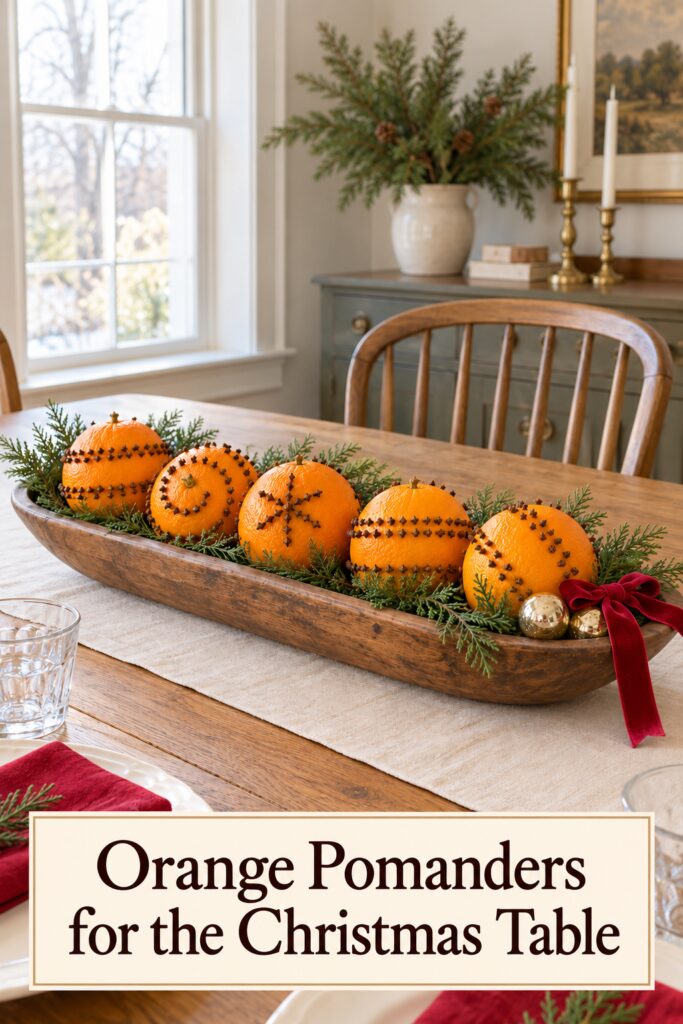
The inspiration image was created with AI and shows a decorating concept rather than a completed real arrangement.
What Makes This Christmas Centerpiece Work
Orange is the warmest and brightest color on the table, so the fruit needs very little help. Dark green sprigs make the peels stand out, while the wood keeps the overall display from looking too shiny. Small gold ornaments add a bit of reflected light without trying to compete with the oranges.
The clove patterns provide detail at a closer distance. Bands, curved lines, and a star like motif make each fruit slightly different, but the repeated brown dots tie the group together. You don’t need a complicated pattern on every orange. In fact, a plain band can be easier to appreciate beside one more detailed piece.
The low, long shape suits a dining table because it carries the seasonal color along the center rather than building a tall obstruction. The cream runner draws a boundary under the bowl, and the red napkins repeat the velvet bow. Those small red accents connect the centerpiece to the place settings without requiring patterned plates or a second decoration at every seat.
Find Shallow wooden centerpiece bowls
Browse current Amazon options that can help you recreate this look.
Browse Shallow wooden centerpiece bowls on Amazon →As an Amazon Associate I earn from qualifying purchases.
When I was young, my mother would make clove oranges every Christmas. She loved the smell and when I was old enough she showed me how to push the long tip of each clove through the peel.
I loved having those moments with her and I, too, enjoyed the scent combination of the spice and the citrus. When I saw this image come up, I was taken right back to those moments in my past and truly puzzled as to why I never did this same thing with my own children when it was such a strong part of my childhood.
My mother is still alive – thank goodness – and we’re headed to her house for Thanksgiving this year. I think I’m going to buy some oranges and cloves while we’re there and get my now adult children to help us make this exact centerpiece.
Key Pieces for the Pomander Bowl
A Long Shallow Wooden Bowl
The bowl needs enough depth to contain the oranges without making them disappear. A shallow oval or dough bowl style gives a similar long outline. Check its actual interior space rather than judging only the outside length, especially if it has thick walls or tapered ends.
Protect a decorative wooden vessel from fresh fruit and damp greenery with a removable liner that won’t show. Follow any care directions for the bowl, and don’t assume an aged or decorative piece is food safe. The oranges here are display materials, so keep them separate from fruit intended for eating.
Oranges with Whole Cloves
Choose firm, sound oranges with peels you can decorate. Whole cloves provide the dark dotted lines. Start with a simple band or a loose spiral rather than trying to reproduce every motif in the image. A few visible patterns will carry the idea even if the rest of the fruit remains plain.
If you make the pomanders yourself, use a blunt skewer or similar suitable tool carefully to start small holes, then insert the cloves. Keep fingers clear of the point and work on a protected surface. Space holes so the peel isn’t crowded or torn. This article borrows the finished decorating effect rather than promising the pictured patterns will be quick to make.
Low Evergreen Sprigs
Short evergreen cuttings or clean faux sprigs create a dark base around the fruit. Keep their tips below most of the orange surfaces so the pomanders remain readable. A few pieces laid along the bowl’s length are more useful than a thick mound that pushes the fruit up and out.
Use materials suitable for an indoor decorative arrangement, and keep loose needles away from plates and food. If fresh cuttings are damp, let surface moisture dry before placing them on a protected bowl. You can get the same color contrast with faux greenery if you prefer not to manage fresh material on the table.
A Red Velvet Bow
The bow adds a soft texture at one end of the bowl. Its deep red relates to the napkins while standing apart from the orange peels. Tie it separately and tuck or secure it to a suitable part of the arrangement without piercing a valuable wooden vessel.
Keep the tails on the table side of the bowl rather than trailing into a place setting. Shorter tails may be more practical at a family meal. The ribbon should remain dry and away from cut fruit or anything damp. A simple bow with clear loops will look more settled than a large bundle of ribbon hiding the bowl’s end.
Small Gold Ornaments and Plain Linens
Two small gold ornaments near the bow bring a little Christmas shine to the arrangement. Use unbreakable pieces where practical and nest them securely so they won’t roll when the table is bumped. Keep ornament hooks and small loose parts out of the dining area.
A cream runner supports the warm colors without adding another image or motif. Red napkins repeat the bow at the place settings, but plain ones you already own can work. The centerpiece has enough character to carry a table set with everyday dishes and ordinary water glasses.
How to Arrange the Centerpiece at Home
Set the empty bowl on the runner first and sit down at the table. Check how much room remains for plates, glasses, and shared dishes. A long bowl can look wonderful but still be the wrong size for a narrow table. Choose a shorter container if it would otherwise squeeze the meal to the edges.
Add a discreet liner if needed, followed by a thin layer of greenery. Place the largest oranges first, then fill the remaining spaces with smaller fruit. Let the bowl support them naturally. Avoid stacking the group into a tower or balancing an orange on a sprig that could shift when someone moves a dish.
Turn the clove designs toward the main viewing sides. You can vary the patterns without pointing every decorated face in exactly the same direction. The idea should feel like a gathered row of pomanders, not a lineup waiting for inspection. Tuck a few sprigs into gaps only after the fruit sits securely.
Finish the end with the bow and ornaments, then check the arrangement from every seat. Keep it away from candles and other heat sources. Inspect the oranges daily and remove any that soften, leak, or show mold; fresh fruit doesn’t come with a fixed display life. Clear the bowl when it stops looking fresh, rather than relying on fragrance to tell you everything is still fine.
Shop Similar Centerpiece Pieces
Shop Similar Shallow Wooden Bowls
Look for a flat stable base and an interior that will comfortably contain your fruit. Consider how the bowl will be protected from moisture. A smaller piece you can move easily may be more useful than an oversized decorative vessel.
Look for Whole Cloves
Choose intact cloves suitable for pressing into peel rather than ground spice. Check the package size against the number and complexity of your planned patterns. Simple bands use the material more sparingly than dense all over coverage.
Add Red Velvet Ribbon
Look for ribbon that ties into clear loops at the scale of your bowl. A rich red will repeat the napkin color without needing an exact match. Check both faces if the tails will twist, so the reverse doesn’t distract from the arrangement.
Shop Similar Small Gold Ornaments
Choose compact pieces that can nest securely at one end of the bowl. A softly reflective finish sits comfortably beside textured wood and fruit. Remove hanging hooks before adding them to a table display.
Final Styling Tip
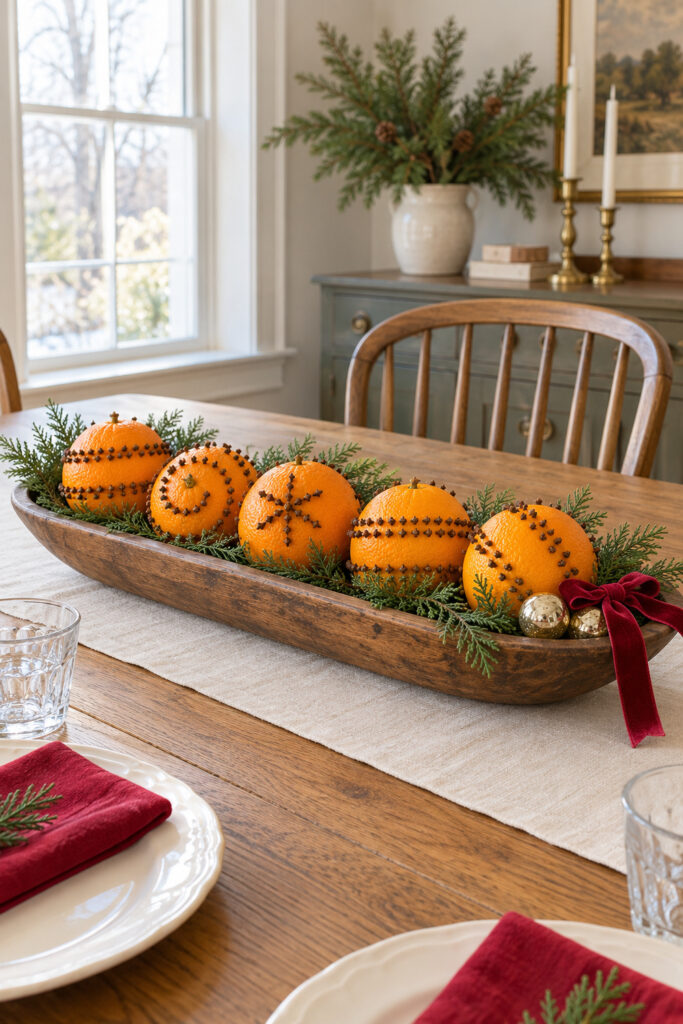
Leave most of each orange visible. Low greenery, a modest bow, and a little gold at one end will let the clove patterns and bright peels carry the Christmas centerpiece.