*This post may contain affiliate links for which I earn commissions.*
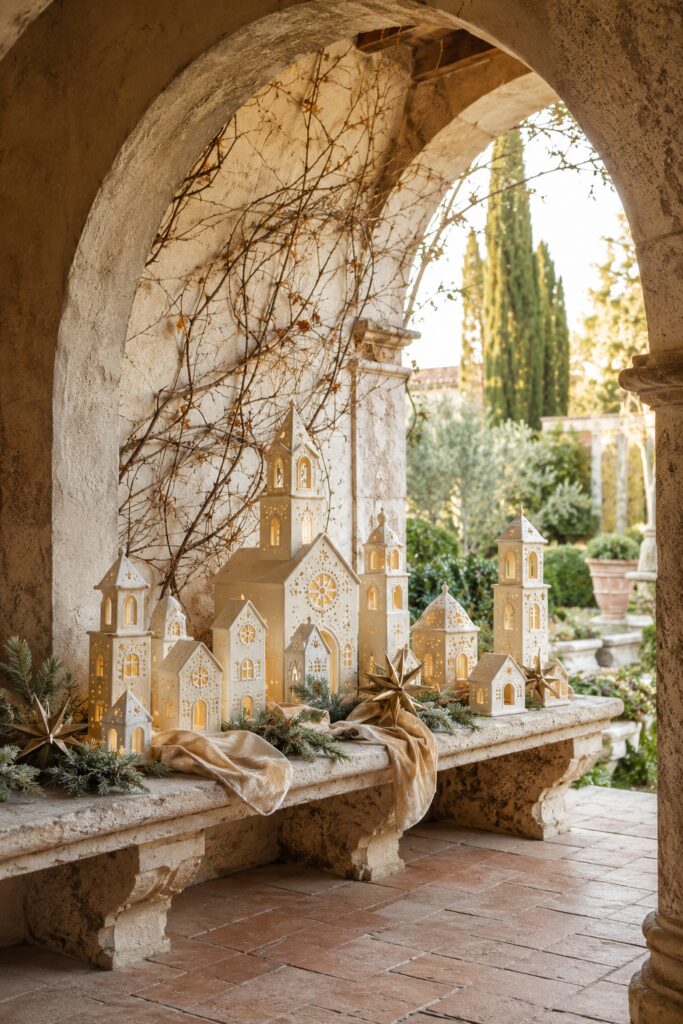
A Christmas village can become far more than a small collection tucked onto a mantel. In this enchanting scene, carved-looking ivory lantern houses stretch across a weathered stone bench beneath the arches of a Tuscan-style loggia.
Tall towers, miniature chapels, narrow houses, and softly glowing windows create an entire architectural landscape. Evergreen clippings run between the buildings, champagne fabric pools around their bases, and sculptural bronze stars introduce a rich metallic note.
The setting gives the display an unmistakable old-world quality, but the idea does not require a Mediterranean loggia. A similar village could transform a long console, covered porch table, dining-room sideboard, deep windowsill, or fireplace mantel.
The secret is to treat the houses as one layered installation rather than a straight row of individual decorations.
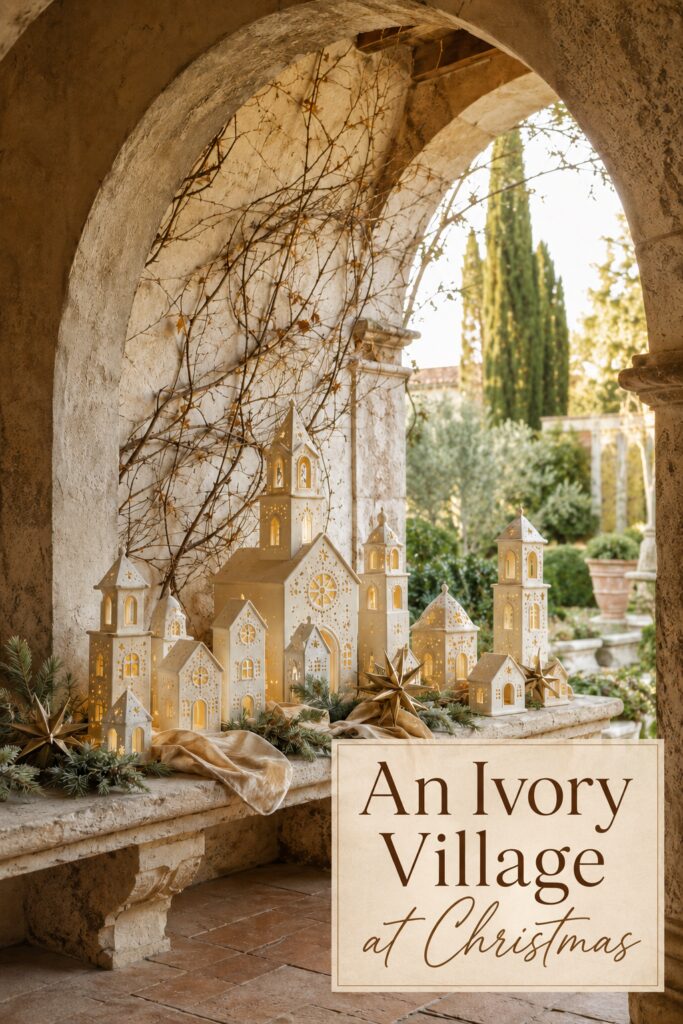
The featured inspiration image was created with AI.
The Ivory Village Creates a Luminous Focal Point
The village buildings share one warm ivory color, but their different shapes make the arrangement interesting. Some resemble small cottages, while others have tall bell towers, steep roofs, arched doors, and rose-window details.
Light shines through their openings, revealing the pierced patterns and making the village visible against the textured stone wall. During the day, the architecture carries the display. As the natural light fades, the illuminated windows would become the main attraction.
A coordinated set of white or cream lantern houses can create a similar effect. The buildings do not need to come from one collection. Pieces with related finishes can be combined successfully when their rooflines, window shapes, or materials share a common character.
Find House Shaped Lanterns
Browse current Amazon options that can help you recreate this look.
Browse Lanterns for This Look on Amazon →As an Amazon Associate I earn from qualifying purchases.
One Tall Building Anchors the Skyline
The largest chapel-like lantern sits slightly left of center rather than directly in the middle. Its high tower establishes the peak of the village, with smaller buildings stepping down around it.
This creates a balanced skyline without looking overly symmetrical. A second tall tower on the right prevents the arrangement from feeling heavy on one side.
When building a village at home, select one substantial piece as the visual anchor. Place it first, then arrange medium and small houses around it. Step back frequently to check that the heights rise and fall rather than forming a flat line.
If the available buildings are too similar in height, hide stable risers beneath the fabric and greenery. Small wood blocks, sturdy boxes, or low display stands can raise selected houses without becoming visible.
Warm Ivory Feels Softer Than Stark White
The lanterns are not brilliant white. Their surfaces lean toward aged ivory, which helps them blend with the limestone and sun-warmed plaster surrounding the bench.
This subtle warmth keeps the village from appearing icy or modern. It also complements the champagne fabric, aged bronze stars, terracotta floor, and dried vines.
For a similar palette, combine cream, bone, parchment, and soft white decorations. Slight differences in tone can enhance the collected appearance. Avoid mixing in pieces with strong blue-white finishes unless the entire arrangement is intended to feel cooler and more wintry.
Pierced Details Make the Light Part of the Decoration
The village buildings contain more than simple window openings. Tiny perforations and ornamental cutouts scatter pinpoints of light across the walls and roofs.
This detail gives the display a lantern-like quality. The buildings remain attractive when unlit, but their patterns become much more noticeable once lights are placed inside.
Ceramic houses, metal lantern houses, carved wood structures, or sturdy paper village lanterns can all produce a related effect. Battery-operated tea lights or compact warm LED lights are the safest and simplest way to illuminate them.
Use a consistent light temperature throughout the village. Warm amber light will flatter the ivory surfaces and coordinate with the golden setting more naturally than cool white bulbs.
Evergreen Clippings Connect the Buildings
Evergreen branches weave through the village at bench level, filling gaps and hiding the bases of the lanterns. Their deep green color provides the strongest contrast in the arrangement.
The greenery is low and loose rather than shaped into a formal garland. This allows it to soften the stone bench without obscuring doors or windows.
To recreate the effect, separate a flexible garland into natural-looking sections or combine individual faux evergreen picks. Place the greenery after the buildings are arranged, tucking it around the bases and between the larger gaps.
Keep branches away from lights that generate heat. Battery-powered LEDs are particularly useful when greenery and fabric are part of the display.
Champagne Fabric Adds Movement and Luxury
Soft champagne fabric snakes through the arrangement and falls over the front edge of the bench. Its folds introduce movement, helping the display feel less rigid.
The fabric also separates the ivory buildings from the similarly colored stone. Although the tones are close, the smooth sheen contrasts with the rough masonry and matte lantern surfaces.
A velvet runner, satin-like textile, or softly crushed fabric can provide this effect. It does not need to cover the entire display surface. A narrow length woven loosely between the buildings will create enough movement and color variation.
Arrange the fabric before adding the smallest houses and greenery. This allows the folds to appear natural while giving each building a stable, level surface.
Bronze Stars Add a Sculptural Accent
Large three-dimensional stars sit low among the village buildings. Their angular silhouettes echo the pointed roofs while their bronze finish introduces depth.
Because only a few stars are used, they feel like special accents rather than a second competing theme. Their darker metallic color also helps define the front edge of the pale village.
Folded metal stars, dimensional paper stars, or carved wooden stars with an antique gold finish could provide a similar accent. Choose one larger star and one or two smaller companions rather than distributing identical stars evenly across the display.
Key Pieces for Recreating the Look
Ivory Lantern Houses
Look for buildings with open windows, pierced designs, or translucent panels that allow light to shine through. Combine cottages, churches, towers, and narrow houses to create architectural variety.
Keep the surface finishes related, but allow the heights and silhouettes to differ.
Warm LED Tea Lights
Small battery-operated lights can illuminate each building without visible cords. Warm amber bulbs will support the aged European atmosphere.
Test each light inside the building before assembling the full village, making sure the glow reaches the windows and decorative perforations.
Faux Evergreen Picks or Garland
Choose greenery with short, flexible stems that can be tucked between the buildings. Fir, cedar, pine, or mixed evergreen textures will all work.
A lightly frosted finish could suit an indoor winter display, but natural green works especially well with the sun-warmed loggia palette.
Champagne Fabric or Table Runner
A soft champagne textile provides gentle shine and helps unify the houses, greenery, and stone-colored surface.
Velvet offers greater richness, while a satin-like runner will create more visible highlights in the folds.
Dimensional Bronze Stars
Use sculptural stars to break up the pale color scheme. Aged brass, antique gold, or bronze finishes will coordinate with the warm lighting.
Avoid placing them directly in front of the most decorative windows. They should complement the village rather than conceal it.
Hidden Display Risers
Stable risers allow some buildings to appear taller and prevent smaller houses from disappearing behind the front row.
Cover them completely with fabric and greenery so the village appears to rise naturally from the display surface.
Arranging an Ivory Village at Home
Begin with the tallest architectural lantern. Set it slightly off center, leaving room for a second tower or medium-height building on the opposite side.
Add the largest supporting buildings next. Turn some pieces slightly rather than pointing every doorway directly forward. This creates the feeling of streets and small plazas within the village.
Place medium houses around the central buildings, then use miniature houses to fill the front edge. Avoid spacing everything evenly. A few tight clusters separated by small open areas will look more natural.
Once the skyline feels balanced, weave champagne fabric through the display. Add greenery around the bases, followed by the bronze stars and any remaining small houses.
Finally, position the lights and view the village from the direction it will most often be seen. Adjust any building whose windows are blocked by greenery, fabric, or another roofline.
Adapting the Display to Different Spaces
A long sideboard can support a full village with multiple towers and several rows of houses. Use a runner to protect the furniture and conceal risers.
For a mantel, limit the collection to one tall centerpiece and four or five smaller buildings. Keep the front edge clear so the decorations remain secure.
On a deep windowsill, arrange the lantern houses in a single irregular row and allow the window glass to reflect their lights after dark.
A covered porch can also provide an appealing setting, but every component should be rated or protected for the conditions. Moisture, wind, and direct exposure can damage paper, untreated wood, electrical components, and indoor-only finishes.
Shop Similar Ivory Lantern Houses
Look for illuminated houses with arched windows, pierced patterns, tall towers, and warm cream finishes. A variety of architectural shapes will produce the most interesting skyline.
Add Warm LED Lights to the Village
Battery-operated tea lights or compact string lights can illuminate the buildings without distracting cords. Choose a consistent warm color.
Look for Mixed Evergreen Picks
Use flexible evergreen stems to fill spaces and soften the bases of the houses. Combining two needle textures can make the greenery appear fuller.
Add Champagne Fabric to Recreate the Look
A narrow velvet or satin-like runner can be folded between the buildings and allowed to spill gently over the display surface.
Shop Dimensional Bronze Stars
Select sculptural stars in two or three sizes. Their darker metallic finish will add contrast to the ivory village.
Look for Small Display Risers
Low blocks and sturdy stands can raise selected houses. Conceal them beneath fabric and greenery to maintain the illusion of a naturally varied village.
One Final Styling Tip
Build the village from the tallest tower outward, then use fabric and greenery to connect the individual buildings. This simple order will make a mixed collection feel like one glowing Christmas scene.