*This post may contain affiliate links for which I earn commissions.*
Golden pears and purple figs make a beautiful Thanksgiving centerpiece when they look loosely gathered rather than carefully stacked. Here, shallow bowls of fruit sit among broad green leaves, with fine stems wandering between them. The arrangement follows the length of a wooden table like a little piece of orchard brought indoors.
Cream plates, oatmeal napkins, and softly tinted glasses leave the fruit and foliage in focus. Nothing feels overly polished. The wood grain remains visible, the napkins fall gently over plate edges, and the centerpiece stays low enough for conversation.
You can recreate this orchard-inspired Thanksgiving table with a few bowls, similar greenery, and everyday dishes. Its appeal comes from the relationships between the materials, so an exact match to every piece is unnecessary.
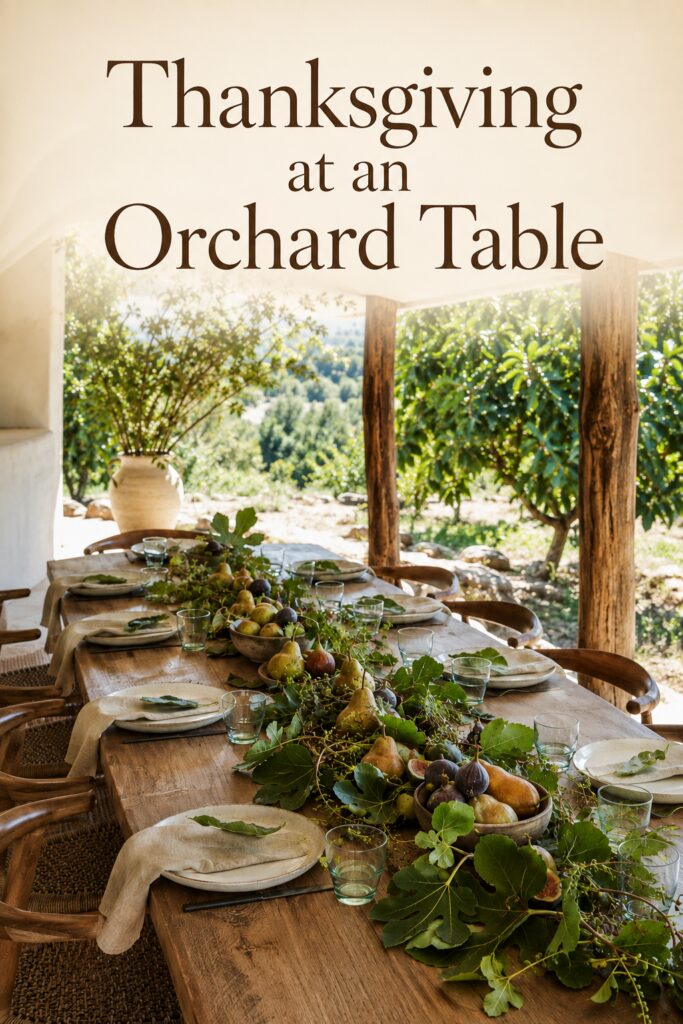
This inspiration image is AI generated. Use it as a styling reference for combining similar pieces rather than a depiction of specific products available to purchase.
A Harvest Palette Built Around Fruit
The pears provide warm yellow and russet tones, while the figs introduce small pockets of deep purple. Those darker accents give the arrangement depth without making the whole table feel heavy.
Green leaves connect the fruit clusters and echo the trees beyond the dining area. Around them, pale ceramics and natural linen create quiet spaces where the eye can rest.
For your version, begin with green, golden yellow, and cream. Add purple figs as an accent rather than distributing equal amounts of every color. Pears with slightly different tones will make the centerpiece feel more collected.
The visible tabletop matters, too. Its warm brown surface acts as the background for everything above it. If you prefer a table covering, choose a plain neutral fabric that allows the leaf shapes and fruit colors to remain distinct.
Shape the Centerpiece with Low Bowls and Open Spaces
Shallow Ceramic Bowls
Several low bowls create gentle changes in height along the table. Their earthy finishes fit the rustic setting, while their rounded shapes echo the fruit.
Use bowls you already own in cream, taupe, or warm gray. They do not need to match, but similar finishes will help them feel related. Avoid tall pedestal arrangements if they interrupt the view between guests.
Position the bowls before adding anything else. On a shorter table, one central bowl and two small fruit groupings may be plenty.
Golden Pears and Purple Figs
Arrange pears in different directions so their curved necks create movement. Some can stand upright while others rest on their sides within the bowls. Tuck figs into the gaps to break up the larger golden shapes.
The inspiration includes a cut fig, which adds a small glimpse of pink. For a simpler display, whole fruit offers the same overall palette without needing that extra detail.
Find Figs & Pears
Browse current Amazon options that can help you recreate this look.
Browse Artificial Pears & Figs on Amazon →As an Amazon Associate I earn from qualifying purchases.
If you plan to serve the fruit, keep it in food-safe bowls and separate from decorative foliage. Faux fruit is another option when you want to arrange the table well ahead of the gathering.
Broad Fig Leaves and Fine Branching Stems
The lobed leaves are a defining feature. Their wide shapes create a generous green foundation, while the thinner stems stop the centerpiece from becoming a solid strip.
Look for leaves with a silhouette similar to the image. Broad, deeply lobed fig foliage will suggest this look more closely than the oval leaves associated with fiddle-leaf fig decor.
Lay short sections between the bowls, turning individual leaves toward different seats. Leave occasional breaks where the wood shows through. Keep stems within the central decorating area rather than extending into glassware or cutlery.
Set a Place That Feels Easy to Join
Ivory Plates with Subtle Texture
The plates have soft, slightly irregular-looking rims that suit the handmade character of the scene. Cream stoneware can recreate that impression, but plain ivory dishes also work.
Let the dishes provide a calm frame for the napkins. Elaborate chargers or strongly patterned plates would add another focal point to an already detailed table.
Oatmeal Napkins with a Loose Fold
Fold each napkin into a relaxed rectangle and place it across the plate, allowing one end to drape naturally. The gentle folds add softness against the wood and ceramic.
A single leaf repeats the centerpiece at each setting. You can suggest that detail with a paper leaf place card laid over the napkin, keeping decorative plant material away from the eating surface.
Pale Green Tumblers and Simple Flatware
The low glasses introduce a faint green tint without competing with the centerpiece. Their modest height helps preserve the open feeling across the table.
Clear tumblers are an easy substitute. Use your existing flatware and align it neatly so each place setting feels ready for a meal, even though the central arrangement is intentionally loose.
Make Room for Thanksgiving Dinner First
Before building the centerpiece, put out the plates, glasses, and serving pieces you expect to use. This shows how much decorating space you actually have.
If dinner will be served family-style, reserve areas for the larger dishes. Instead of one continuous arrangement, create two or three shorter sections with open spaces between them. The repeating fruit and leaves will still connect the table visually.
For buffet service, you can extend the greenery farther, but guests should still have room to set down a glass and move their plates comfortably.
Sit in several chairs before finishing. Check that no large leaf hides a neighboring setting and that the bowls do not block conversation. A centerpiece can look abundant from the end of the table while remaining fairly narrow through the middle.
Suggest the Orchard Setting in Your Own Dining Room
The image’s open terrace, wooden posts, and leafy view reinforce the theme, but the tabletop can carry it on its own.
Indoors, place a large vessel of branches on a sideboard if you have the space. This echoes the background arrangement without adding height where people are eating. Keep nearby decorations restrained so the fruit remains the seasonal focus.
For a small round table, use one shallow fruit bowl with a crescent of leaves around its base. Repeat the oatmeal napkins and pale dishes to preserve the same mood.
Shop the Textures Behind the Table
Look for Lobed Fig Foliage and Low Ceramic Bowls
Prioritize recognizable leaf shapes and shallow vessels. These establish the centerpiece’s outline before the smaller details are added.
Choose Natural Napkins and Cream Dinnerware
Soft fabric and understated ceramics make the setting feel welcoming. Start with what you own and fill only the gaps.
Add Pear Accents and Softly Tinted Glassware
If using decorative fruit, favor subtle color variation and matte finishes. Pale green glasses are a finishing touch rather than a requirement.
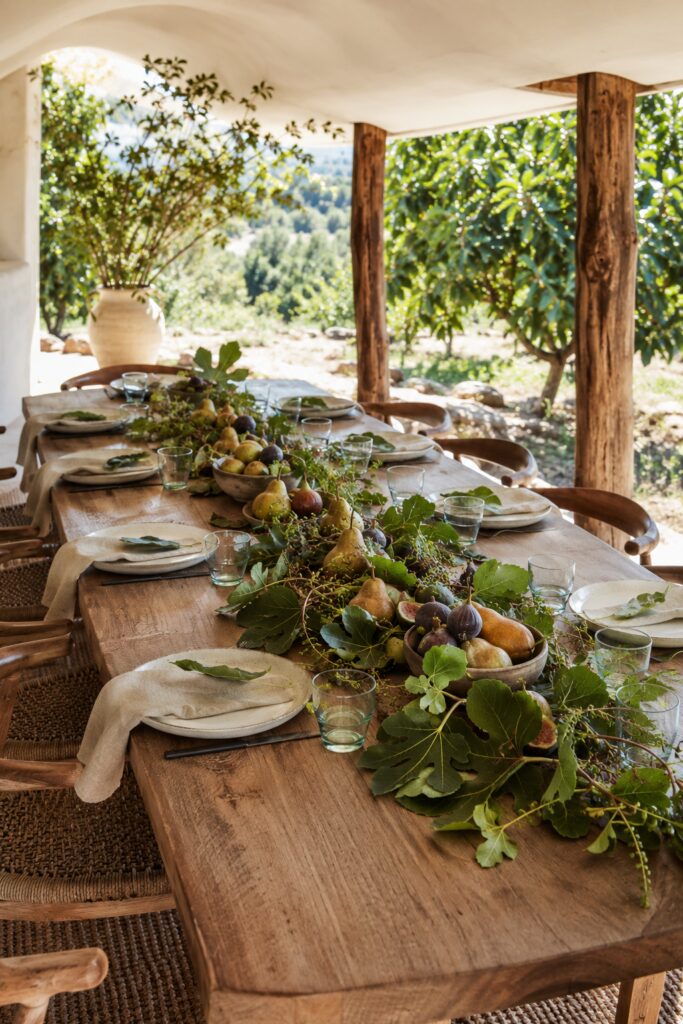
Let the Fruit Remain the Focal Point
Once the pears and figs are arranged, add only enough foliage to connect them. A little exposed wood between the clusters keeps this Thanksgiving table feeling generous, relaxed, and ready for people to gather.