*This post may contain affiliate links for which I earn commissions.*
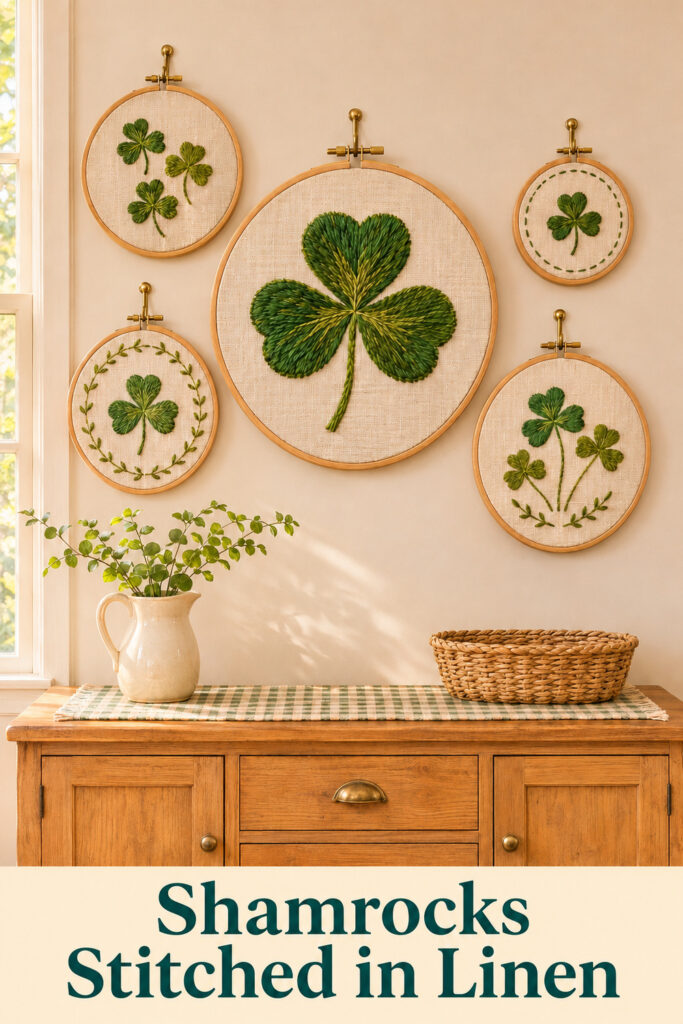
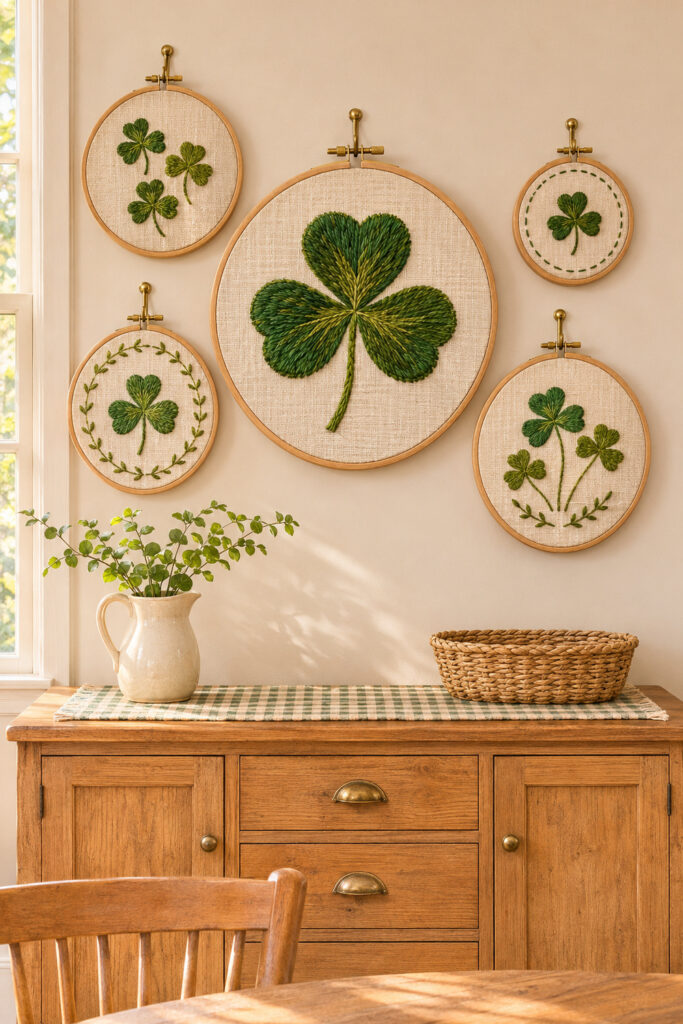
Embroidered shamrocks fill wooden hoops above a farmhouse sideboard in this St. Patrick’s Day inspiration. The largest motif sits near the middle, while smaller hoops repeat green stitches on pale linen. A checked runner, cream pitcher, and woven basket connect the wall display to the furniture below.
The holiday detail comes from the shamrock shapes rather than a large amount of green decor. That makes the arrangement feel focused. You could borrow the idea with a small collection of finished textile pieces, then use the wood and fabric already in your dining room to support them.
This image was created with AI as decorating inspiration.
What Makes the Hoop Collection Work
The round frames repeat, but their sizes and contents change. One large shamrock provides a clear anchor. Smaller motifs and restrained borders add detail around it without asking for equal attention. The gaps between hoops keep their outlines separate.
The linen backgrounds relate to the warm wall while remaining visibly textured. That allows the stitches to stand out. Several greens create depth within the motifs, but the overall palette stays narrow enough for the collection to feel connected.
Below, the checked runner adds straight lines against the circular hoops. The pitcher and basket introduce ceramic and woven surfaces, giving the scene layers without another set of small ornaments. The sideboard looks dressed for the occasion while still leaving useful space.
Find Wooden embroidery hoops
Browse current Amazon options that can help you recreate this look.
Browse Wooden embroidery hoops on Amazon →As an Amazon Associate I earn from qualifying purchases.
Key Pieces for a Shamrock Textile Wall
A Larger Embroidered Focal Piece
Choose a shamrock with a clear three-leaf outline and enough contrast against its fabric. It should remain recognizable from the room entrance, even when the stitch detail is less visible. A large motif with breathing room can provide a stronger anchor than a very busy design filled edge to edge.
Smaller Coordinating Hoop Pieces
Related fabric, thread colors, and frame finishes can connect different designs. You don’t need every hoop to repeat the same shamrock arrangement. A small cluster, a single stem, or a simple stitched border can provide variety while preserving the holiday theme.
Plain Wooden Hoops
The warm wood edges are part of the farmhouse character. Compare their tones with the sideboard rather than trying to match them exactly. Each hoop should hold its textile neatly, with hardware and edges in sound condition. A decorative hoop still needs a suitable hanging connection.
Linen or Linen-Look Backgrounds
A visible weave contributes texture even where there is no stitching. Check that the green motifs remain easy to read against the chosen cloth. A heavily patterned background can compete with the embroidery and make the collection less clear from across the room.
A Quiet Checked Runner
The runner repeats the green in a flatter, simpler pattern. Keep its width in proportion to the furniture top, leaving some wood visible. You can use a plain linen runner if the room already has checks or other patterns nearby.
A Few Low Supporting Objects
The cream pitcher and basket stay beneath the hoops rather than overlapping them. Their simple forms connect the wall arrangement to everyday home materials. Use pieces you own if their height and color allow the stitched motifs to remain the main attraction.
Plan the Wall Grouping as One Arrangement
Lay the hoops out on a protected surface and begin with the largest piece. Place the smaller ones around it with enough space to see each circle. Try changing height as well as distance. A perfectly level row can work, but it creates a more formal effect than the loose grouping shown here.
Compare the visual weight of the designs. A smaller hoop with dense dark stitching can stand out more than a larger one with an airy motif. Move those stronger pieces around until one area no longer feels much heavier than the rest.
Paper circles can help you test the overall outline above the sideboard. Mark the actual hanging positions once you know how each piece will be supported. The decorative screw at the top of a hoop and the point where it hangs may not sit at the same height on every item.
View the planned group from the dining table and doorway. The largest shamrock should read first, followed by the smaller circles. If the collection seems scattered, bring the pieces closer together as a group before deciding that you need more hoops.
Use fixings appropriate to the wall and textile frames, following the relevant instructions. Keep the pieces away from places where they will be knocked when someone reaches over the sideboard. There should be room to use the furniture without brushing the lowest hoop.
Connect the Display With the Room Below
Put the runner in place after the wall grouping is established. Its length can suggest the width of the display, but it doesn’t need to line up with the outermost hoop edges. Leave enough bare wood to keep the surface from feeling covered in unrelated fabric.
Add the pitcher toward one end, where a few green sprigs can rise without obscuring the embroidery. Keep the other side lower. A shallow basket offers a useful contrast in shape and can hold ordinary items when you need the sideboard to work harder.
If your sideboard is dark, pale linen backgrounds can help the hoops stand apart from the furniture. If the wall is green, compare the thread color against it before choosing. A fabric background with more cream may provide the separation the motifs need.
For a small wall, use fewer hoops rather than shrinking every shamrock to a tiny detail. One larger piece and a couple of companions can keep the collected effect. The readable motif matters more than reproducing the exact count in the inspiration.
If you are shopping for embroidered pieces, distinguish raised stitching from a printed stitch effect. Both can be decorative, but they catch the light differently. Choose according to the texture you want rather than assuming a close photograph proves how the design was made.
Shop Similar Pieces
Look for Finished Shamrock Hoop Art
Check the motif, measurements, fabric, and construction details. A clear three-leaf design will preserve the holiday identity. Compare whole-piece photos with close views so you understand the size of the embroidery within the frame.
Shop Similar Wooden Embroidery Hoops
If you are selecting components or reframing suitable textiles, compare the usable diameter and hoop depth. A consistent wood character can connect different sizes. Check how the finished piece can be supported without distorting its fabric.
Add Green Checked Table Linen
Look for a restrained pattern that repeats the thread colors without competing with the wall. Confirm the runner dimensions against your furniture top. A plain woven alternative may be better if checks already appear elsewhere in the room.
Look for a Low Woven Basket
Choose a shape that stays below the artwork and leaves working space beside it. The basket can provide texture without another holiday motif. Its practical size will matter more than finding an exact match to the image.
Final Styling Tip
Step back until the thread detail softens. If the main shamrock and separate hoop circles still read clearly, the display has the structure it needs. Let the close-up stitching be the detail people discover afterward.