*This post may contain affiliate links for which I earn commissions.*
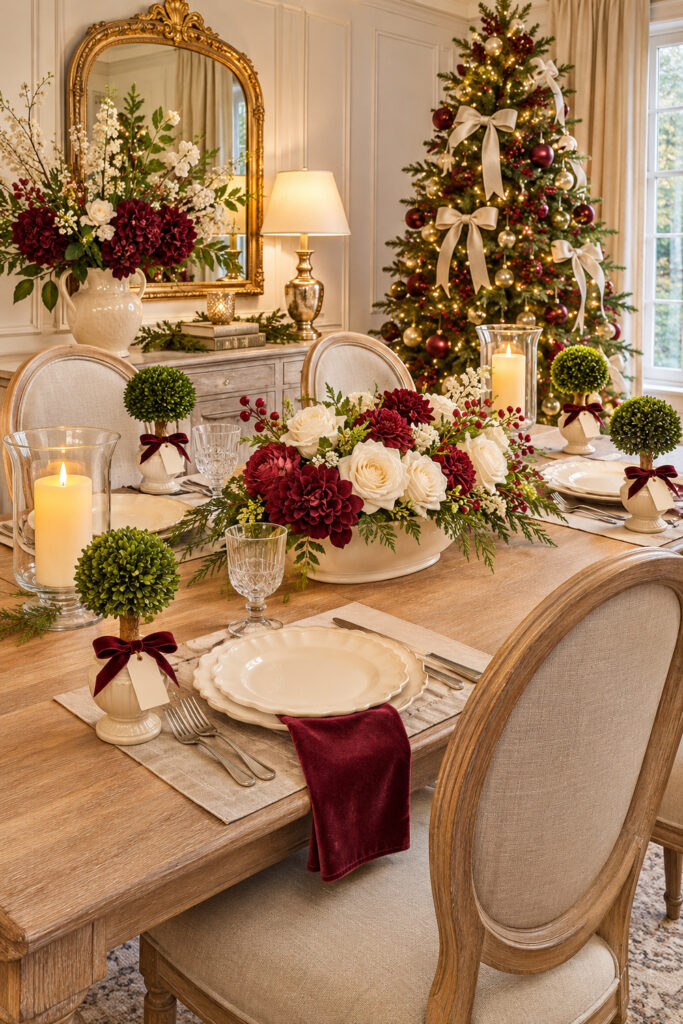
Four little boxwood trees give this Christmas table a garden-like rhythm. Each round crown rises from its own cream urn beside a place setting, with a burgundy bow and small tag below the greenery. Their repeated shapes feel orderly against the loose roses and cedar at the center.
The room is richly dressed, yet the individual settings remain easy to see. Ivory plates, natural linen, and dark red napkins connect the little trees to the larger Christmas tree beyond the table. You can use the same idea for a small supper by choosing markers that fit beside the plates, then keeping the shared flowers low enough for people to see one another.
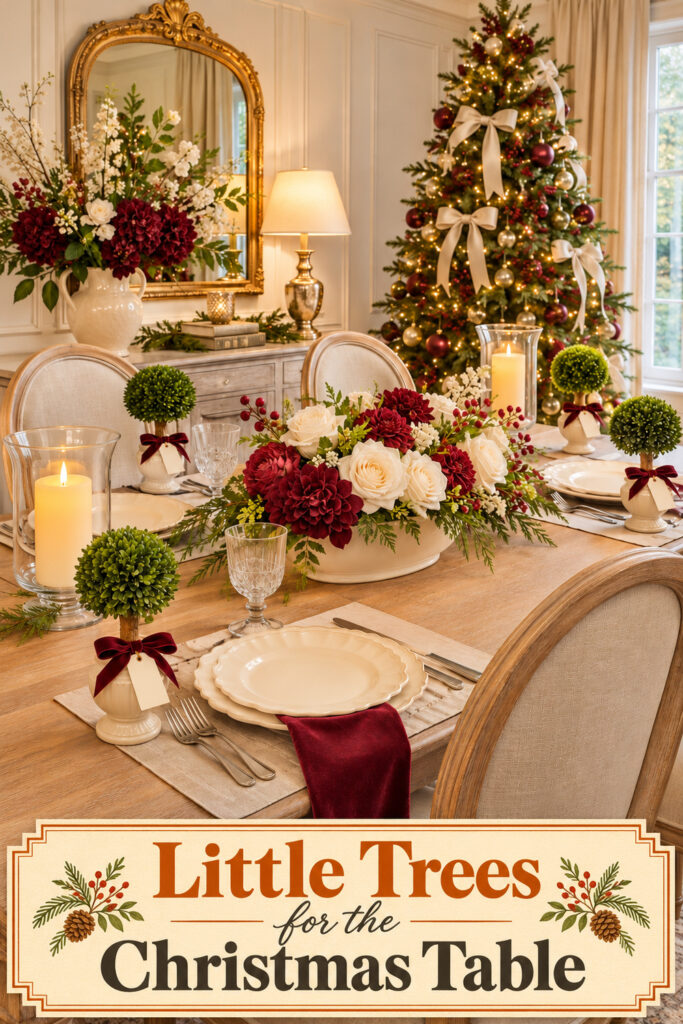
This image was generated with AI as decorating inspiration. Similar pieces can recreate the arrangement when sized for your own table.
Give Each Little Tree Its Own Place
The repeated trees work because each belongs to one guest. They are not a second centerpiece squeezed around the flowers. Set one beside each plate where its urn can stand fully on the table, beyond the cutlery and away from the area used to lift a glass.
Begin with four complete place settings before adding decorations. Pull the chairs out, sit down, and test the ordinary movement of hands and elbows. A small tree can seem modest on an empty table but take up valuable space once the glasses and serving dishes arrive.
Use fewer pieces elsewhere if the markers need more room. A narrow table may work with a single low flower bowl and no extra greenery between the settings. The four distinct crowns will still make the table feel dressed for Christmas.
Choose a Rounded Crown and a Steady Urn
Look for a simple ball-shaped faux boxwood crown on a short stem. Its familiar garden form gives the setting a French country character without requiring a complicated miniature scene. A tightly finished crown will read clearly above the plates and flowers.
Check the proportions in person or through reliable dimensions. The pictured trees are small table decorations, not floor topiaries photographed from a distance. The urn should be wide and stable enough for the stem and crown, with no loose base that rocks when the table is touched.
Cream containers connect the trees to the dinner plates. Their soft color also keeps attention on the green crowns and burgundy bows. If your existing pots are gray or natural clay, repeat that finish in the flower container rather than adding another unrelated cream accent.
Use clean decorative pieces with enclosed bases. Keep loose artificial foliage, exposed wire, and dusty filling away from the food setting. A small protective pad beneath each pot can help protect the table, provided it lies flat and does not make the urn less steady.
Put the Name Where a Guest Can Read It
The inspiration includes small cream tags beneath the crowns. Add guest names to your own tags before tying them in place. A plain, readable name is more useful here than a long holiday message in tiny lettering.
Tie the burgundy ribbon around the stem just below the foliage. Keep the knot snug enough to stay in position without bending the stem or pulling the crown. Trim the tails so they stop above the table setting and cannot trail into a plate.
Attach each tag with a short tie and turn its face toward the person using that setting. Check the far side from the far chairs as well. A symmetrical photograph can hide the fact that a name is facing the wrong person.
If you are setting an informal family supper, leave off the names and keep the bows. The repeated little trees will still mark the settings visually. You can also move a guest’s tree slightly outward when the meal begins, as long as it has another steady place to stand.
Keep the Plate Layers Quiet
Cream scalloped plates provide a pale center under the darker napkins and greenery. The linen mats give them a soft outline against the wood. This is enough pattern around the trees, especially with flowers and a decorated room in view.
Choose mats that fit without touching neighboring settings. A narrow margin of visible wood helps each place feel complete and gives the urn a separate patch of table. If the mats overlap, simplify to one runner or set the plates directly on the finished surface.
Fold the burgundy napkins in a relaxed rectangle. A small drape over the near edge can look graceful, but keep the cloth clear of the chair seat and floor. On a busy family table, a fold beside the plate may be more comfortable than a long drop.
Set glasses on level wood or another firm surface. Make sure a stem is not balancing partly on a thick mat edge. Finish the cutlery placement before deciding that a little tree can move closer to a plate.
Build One Low Flower Center
The central flowers give the repeated boxwood a softer companion. Ivory roses and burgundy blooms sit low among cedar, with the darkest color repeated in the bows and napkins. Their loose outline contrasts with the four clipped-looking crowns.
Choose a container that stays below normal sightlines when everyone is seated. Check from both ends and both long sides of the table. A centerpiece can appear low from one chair while blocking the view from another.
Keep fresh arrangements in a suitable watertight vessel, protecting the wood beneath. Shape cedar so it does not reach into the place settings or rest on a guest’s napkin. Artificial flowers can provide the same color balance if their cut stems and supports are concealed neatly.
The pictured glass hurricanes add warm points of light beside the flowers. Suitable battery pillars keep the glow separate from the foliage without open flames. Give each hurricane a clear footprint and leave enough room to remove it without shifting a topiary.
Let the Room Finish the Christmas Setting
The large tree in the background repeats cream ornaments, greenery, and burgundy ribbon. The gilt mirror and generous flowers continue the French country mood beyond the table. These layers make the supper feel abundant without requiring more small objects beside every plate.
If your dining area opens into another room, use one visible holiday repeat there. A ribbon on the existing tree or a simple sideboard flower group is enough. Keep the route behind the dining chairs clear, particularly where people carry serving dishes.
For two guests, use two topiaries with a smaller flower bowl. For a longer table, repeat the markers at each setting while dividing the flowers into low groups. Test the meal layout with the actual serving pieces before adding another decorative cluster.
Shop by Size Before Finish
Measure the spare space beside a complete place setting first. That limit helps you choose small markers that remain useful through the meal.
Look for Small Faux Boxwood Topiaries
Choose short stems and finished round crowns. Check the complete height and base width rather than relying on a close product photograph.
Look for Stable Cream Urns
Each base needs to stand firmly without loose filler. Choose a finish that looks at home with the plates you already use.
Look for Narrow Burgundy Ribbon
A soft ribbon makes a small bow without crowding the stem. Keep the width in proportion to the tree and its name tag.
Check the Table from Every Chair
Read the tags, lift a glass, and check the view across the flowers. Remove any piece that crowds those simple actions. The four little trees should make the welcome more personal while leaving the table ready for supper.
Final Styling Tip
Turn each bow and tag toward its own chair. That small adjustment makes the repeated trees feel placed for the guests rather than arranged only for a photograph.