*This post may contain affiliate links for which I earn commissions.*
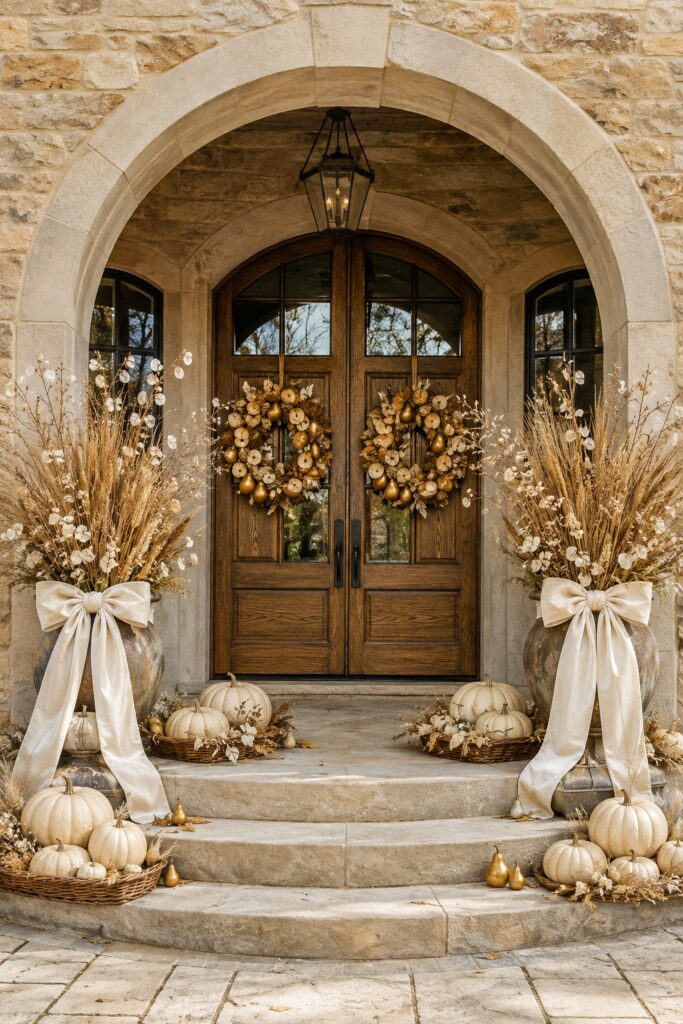
Brass-toned pears give this fall entrance its unexpected detail. Gathered into two wreaths on warm wooden doors, they catch the light among pale fruit slices and golden leaves. Below them, ivory pumpkins and woven baskets carry the harvest theme down toward the steps.
Tall urn arrangements frame the doorway with fine stems and translucent seedpod shapes. Their oversized ivory bows introduce a softer note against the stone arch and weathered containers. The result feels generous and welcoming, with a restrained palette that lets the different materials stand out.
You can adapt this arrangement to a covered porch, a single front door, or a sheltered entry landing. Begin with the pear motif, then choose the surrounding pieces according to the space you actually use.
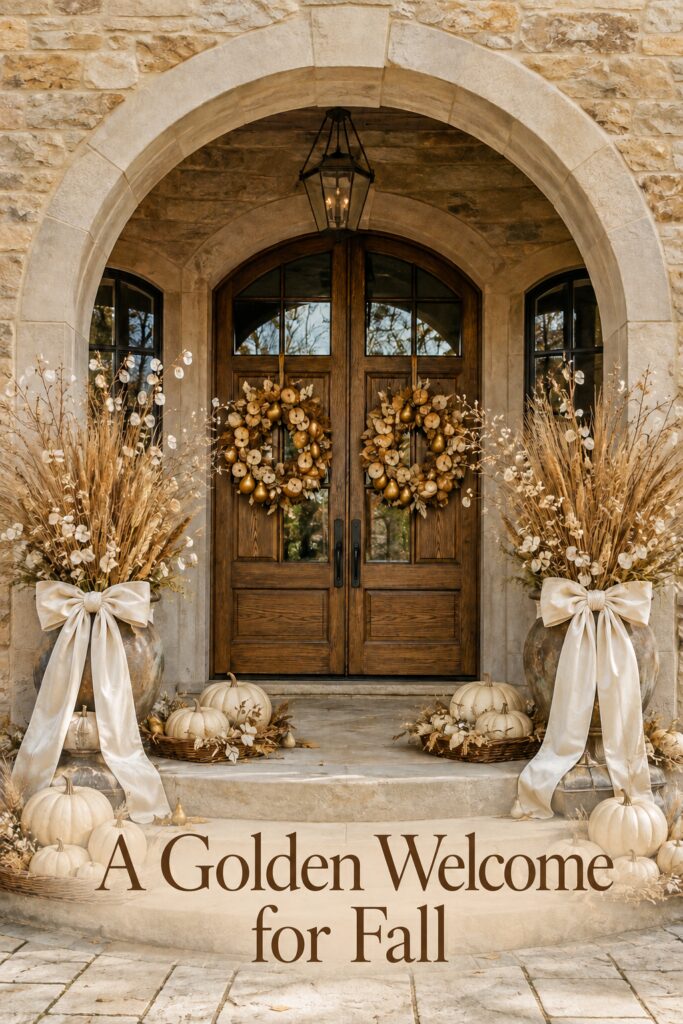
This inspiration image is AI generated. The ideas below suggest ways to recreate its overall decorating effect with similar materials rather than exact products shown in the image.
Start with the Doorway’s Proportions
The entrance has a strong architectural frame: a broad stone arch surrounding a pair of substantial wooden doors. Matching wreaths reinforce that balance, while tall arrangements fill the spaces on either side.
Your own doorway can guide the layout in the same way. Double doors may suit paired wreaths, but a single door needs only one. A narrow porch might accommodate one large container with a smaller pumpkin grouping opposite it.
Measure before choosing decorations. Leave the handles accessible, check the full door swing, and preserve a comfortable route through the entrance.
The photograph uses the stair edges as display space. At home, keep decorations on generous side landings or beside the steps wherever possible, leaving walking surfaces and handrails clear.
Make Pears the Wreath’s Defining Detail
The wreaths stand apart from a typical leaf arrangement because of their rounded, tapered fruit shapes. The brass-like finish also connects them to the warm stone and golden stems nearby.
Find Pear Wreaths for Fall
Browse current Amazon options that can help you recreate this look.
Browse Pear Wreaths on Amazon →As an Amazon Associate I earn from qualifying purchases.
Build from an Open Grapevine Base
A grapevine wreath provides a textured foundation that suits this harvest palette. Add small sprays of muted gold and tan foliage, allowing some of the base to remain visible.
Place the largest accents before adding filler. That makes it easier to judge the balance and avoids burying the pears beneath leaves.
If you are decorating double doors, arrange both wreaths side by side before hanging them. Aim for similar fullness and color distribution without worrying about matching every leaf.
Use Lightweight Faux Pears
Lightweight decorative pears can suggest the metallic fruit in the inspiration. Choose finished gold pieces or apply a compatible brass-toned craft paint to suitable faux fruit.
Test the paint first and follow its preparation and drying instructions. Keep painted fruit strictly decorative.
Attach each piece securely using a method suited to the wreath base and the fruit’s construction. Position several pears with their narrow ends pointing in slightly different directions so the arrangement feels gathered rather than patterned.
Add Pale Fruit and Leaf Accents
The image includes light-colored cut-fruit shapes among the pears. Faux apple or pear slices can provide a similar contrast if you find a suitable version.
You can also use ivory leaves or pale botanical picks. What matters visually is the alternation between reflective fruit and quieter cream details.
For an exposed doorway, choose materials labeled for the conditions they will encounter. Even a covered entrance can receive windblown rain and strong sunlight.
Frame the Wreath with Airy Harvest Stems
The urn arrangements are tall, but their fine branches allow the doorway to remain visible. Wheat-like stalks create a dense center, while longer sprays extend outward.
Translucent coin-shaped seedpods add small pale highlights. Faux lunaria stems can suggest this detail without requiring an exact match to the image.
Build each arrangement in stages. Set the tallest stems first, add the main body of wheat or grass-like material, then introduce the lighter branching pieces around the edges.
Use a suitable internal support and a stable container. Keep the outward-reaching stems away from faces, door handles, and the path guests will follow.
A smaller arrangement can work beautifully. Reduce the number of stems and the overall height together so the vessel still looks substantial beneath them.
Give the Urns a Soft Ivory Bow
The large bows make the containers feel dressed for the season. Their pale surfaces stand out against the mottled finish and echo the pumpkins below.
Choose wide ribbon that can hold generous loops without looking rigid. A wired ribbon may make shaping easier, while a softer version can produce a more relaxed drape.
Secure each bow around the container’s neck or to an appropriate attachment point. Arrange the tails along the vessel rather than letting them trail across a walking surface.
The bows do not need elaborate knots. Two broad loops and neatly arranged tails are enough when the surrounding stems already provide plenty of detail.
Gather Pumpkins into Low Woven Trays
The pumpkin groupings sit much lower than the urns, creating a clear change in height. Their cream surfaces also offer a visual pause after the fine texture of the wreaths and stems.
Use a few different sizes, placing the largest pumpkin toward the back of each grouping. Smaller ones can sit slightly forward without hiding the larger shape completely.
Shallow woven baskets or trays help contain the arrangement. Add only a few short foliage pieces around the bases, keeping the basket edges visible.
For outdoor use, select suitable pumpkins, containers, and finishes. Natural wicker is best protected from prolonged dampness; a weather-resistant woven alternative may be more practical in an exposed location.
Repeat the gold pear detail within a basket rather than leaving small objects loose on steps.
Keep the Palette Warm Rather Than Uniform
The image combines several related shades: ivory pumpkins, cream ribbon, tan stems, brown wicker, weathered metallic containers, and gold fruit.
That variation prevents the neutral scheme from feeling flat. You do not need to paint every object the same cream or match every metal exactly.
If your doors are painted rather than wooden, use the baskets and dried-looking stems to introduce warmth. If the surrounding walls are dark, the ivory details will provide even stronger contrast.
Let the existing entrance remain part of the arrangement. A visible stretch of door, stone, or siding helps the seasonal pieces look intentional.
Find Similar Pieces for a Pear and Pumpkin Entry
Look for Wreath Bases and Decorative Pears
Choose the base diameter first, then compare the fruit size with it. The pears should be recognizable without overwhelming the wreath.
Add Harvest Stems and Substantial Containers
Mix wheat-like sprays with a lighter branching material. Existing planters can work if they are stable and suited to the arrangement.
Shop Wide Ivory Ribbon and Low Woven Trays
These pieces soften and organize the display. Select them for the location’s conditions as well as their appearance.
Finish with a Walk Through the Entrance
Open the doors, walk up the approach, and check the view from outside. Shorten a ribbon tail or move a basket if it interferes with everyday use. A welcoming fall entry should feel as comfortable to pass through as it is pleasing to look at.