*This post may contain affiliate links for which I earn commissions.*
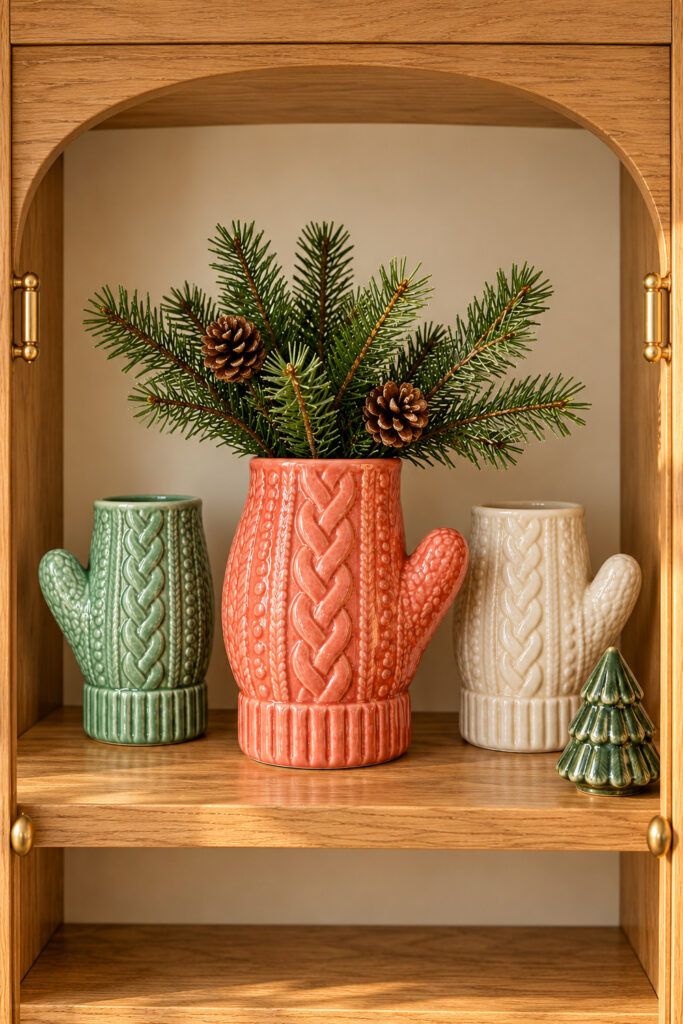
These mitten-shaped vases borrow the surface of a knitted sweater and turn it into glossy Christmas pottery. A tall coral vase sits forward, with smaller sage and ivory versions behind it. Each has a raised cable pattern, a ribbed cuff at the base, and a thumb that makes the silhouette instantly recognizable.
The grouping is playful, but the oak cabinet keeps it grounded. Evergreen branches rise from the coral vessel, while a small ceramic tree sits near the ivory one. You can adapt the arrangement with similar textured vessels and a few seasonal stems, even if the exact mitten forms remain part of the imagined design.
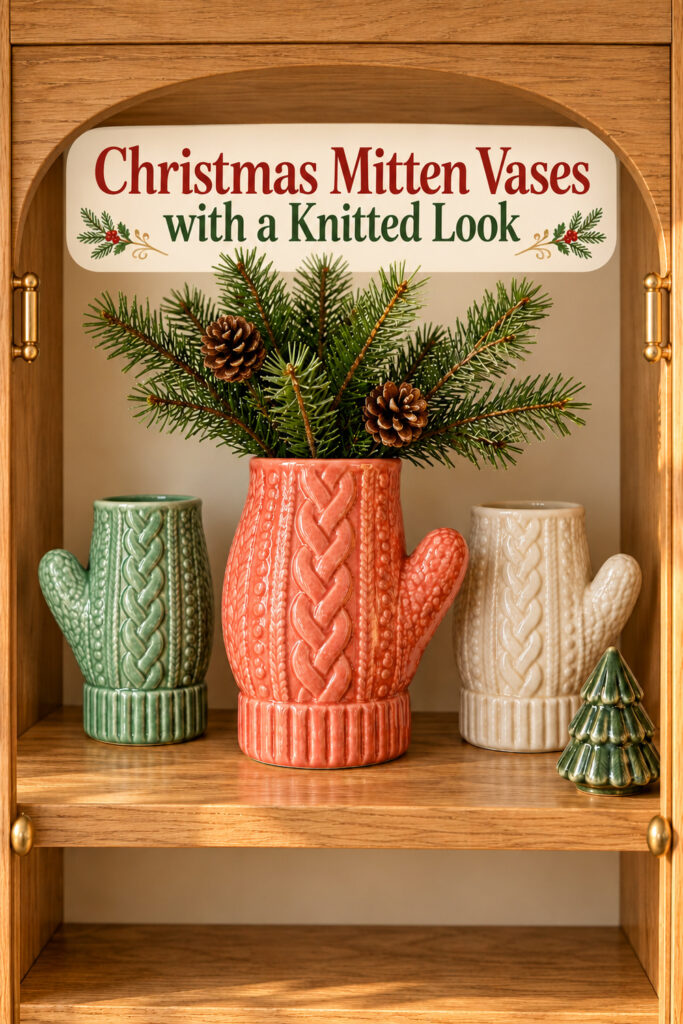
The inspiration image was created with AI and does not establish that these exact ceramic pieces are available to purchase.
Why the Mitten Collection Feels Connected
The same basic shape repeats three times, which gives the display order before you notice the different colors. The taller coral vase leads, and the shorter companions create a backdrop. Their surfaces carry related cable and knitted-stitch patterns, so the collection feels coordinated without making every piece identical.
Find Cable Textured Vases
Browse current Amazon options that can help you recreate this look.
Browse Cable Textured Vases on Amazon →As an Amazon Associate I earn from qualifying purchases.
Gloss is part of the effect. Side light catches the raised edges and makes the knitted texture visible across the shelf. A completely matte vessel could still work, but its pattern might need stronger relief to read as clearly. When comparing similar pottery, look at how the surface behaves in ordinary light rather than judging color alone.
The cabinet arch gives the branches a frame. There is open space around the foliage, and the lower shelf remains quiet. That breathing room prevents the mitten shapes from becoming lost in a cabinet full of Christmas objects. You can borrow the same approach on an open shelf by leaving some of the neighboring surface empty.
Key Pieces for a Knitted Pottery Display
A Textured Main Vase
Choose the main vessel first. A mitten shape is the distinctive idea here, but a cylindrical vase with raised cable texture can carry much of the effect if a suitable novelty form isn’t available. Coral makes the center piece noticeable against warm wood. A dusty pink or warm cream could work with a different room palette.
Check the actual opening as well as the outside shape. Some decorative vessels have narrow necks, irregular interiors, or finishes intended only for dry display. If you want fresh stems, confirm that the piece is designed to hold water. Otherwise, use suitable faux greenery or a properly fitted waterproof insert where the vessel safely accommodates one.
Smaller Companion Vessels
The sage and ivory mittens are lower than the coral one, leaving the main vase and its branches easy to see. Similar companion pieces can differ in shape if they share a raised knitted surface or a compatible glaze. You don’t need three exact matches for the display to feel related.
Try the pieces together before adding foliage. Their bases should sit securely, with enough separation that the thumbs or handles remain readable. If every edge overlaps, the group can become one confusing mass. Turning a companion slightly outward can reveal its shape without spreading the arrangement across the whole shelf.
Evergreen Branches with Clear Outlines
The branches in the coral vase spread upward and outward rather than forming a dense ball. Their finer needles contrast with the broad ceramic shape. A few pinecone details reinforce the seasonal theme without introducing another major color. Use stems that fit the shelf height, allowing for the cabinet arch or the shelf above.
Arrange the tallest branch first, then add shorter stems to broaden the outline. Step back before adding more. If the branches conceal the knitted pattern or touch the cabinet frame on every side, reduce the fullness. The foliage should extend the vase’s shape while leaving the coral body visible.
A Small Ceramic Tree
The little green tree near the ivory mitten repeats the glazed material and connects the lower shelf area to the greenery above. Its compact size matters. A larger tree would compete with the vessels or hide the ivory piece’s thumb. Choose one small supporting ornament rather than filling every open corner with more pottery.
If you already have a simple ceramic ornament, try it before looking for another. A plain tree, star, or small glazed object can perform a similar supporting role. Keep its color related to the main group. The display has enough character without needing several new motifs.
Warm Wood and a Quiet Backing
Oak adds warmth and makes the cooler sage glaze feel less chilly. The cream backing also gives the evergreen branches a clear outline. You can achieve a comparable setting on a wood console or open bookcase. A pale wall behind the arrangement can substitute for the cabinet interior.
For a dark shelf, test the foliage carefully. Deep green branches may disappear against the backing even when the pottery remains visible. A lighter vessel or a less crowded arrangement can help, but don’t add improvised lighting inside a cabinet simply to copy the brightness of the image. Work with a shelf that already has suitable light.
Group the Vases on a Shelf or Cabinet
Begin with the largest vase slightly forward of the other two, keeping every base fully supported. The inspiration has room for this staggered arrangement, but a shallow shelf may not. In that case, group the pieces more nearly in a line and use their different heights to create the relationship. Depth is helpful, not compulsory.
Check the display from the room’s normal approach. You should see the main vase first, then the companions, then the small tree. If the ivory piece disappears, shift it slightly away from the coral thumb. Small changes in overlap make a surprising difference with novelty shapes because their outlines explain what they are.
Add the branches after the ceramic group is settled. This lets you judge their spread against the cabinet opening rather than forcing the pottery around an oversized arrangement. Keep heavier stems low and balanced. Follow the vessel’s actual limitations and avoid a top-heavy arrangement that can tip during everyday use.
Leave the shelf below mostly open if the surrounding cabinet already contains plenty of objects. The empty area gives this one collection a clear place to belong. If you need that shelf for storage, choose quiet items below, such as folded plain linens, instead of adding another equally detailed Christmas display.
You can make a smaller version with one textured vase and one low ornament. Retain the contrast between raised pottery and fine greenery, and let the main color stand out. That preserves the useful design idea without requiring a matching trio or a new cabinet.
Shop Similar Pieces for the Christmas Shelf
Look for Cable Textured Ceramic Vases
Compare the relief pattern, base stability, and intended use. A knitted surface is the closest substitute when a mitten-shaped vessel isn’t confidently available. Check measurements against your shelf before deciding that a piece will fit with branches added.
Shop Similar Faux Evergreen Stems
Choose stems with branches you can arrange individually and lengths suited to the cabinet opening. A restrained spray makes the texture of the pottery easier to appreciate. Pinecone details are optional; the evergreen outline already supplies seasonal context.
Add a Small Glazed Christmas Accent
Use a supporting piece that stays lower than the companion vessels. A tree with a related green glaze is one option, but the arrangement can also stop at the vases. More objects won’t improve it once the main silhouettes begin to disappear.
Final Styling Tip
Arrange the empty vases first. Once every mitten outline is clear, add just enough greenery to extend the central shape without hiding the ceramic knitting underneath.