*This post may contain affiliate links for which I earn commissions.*
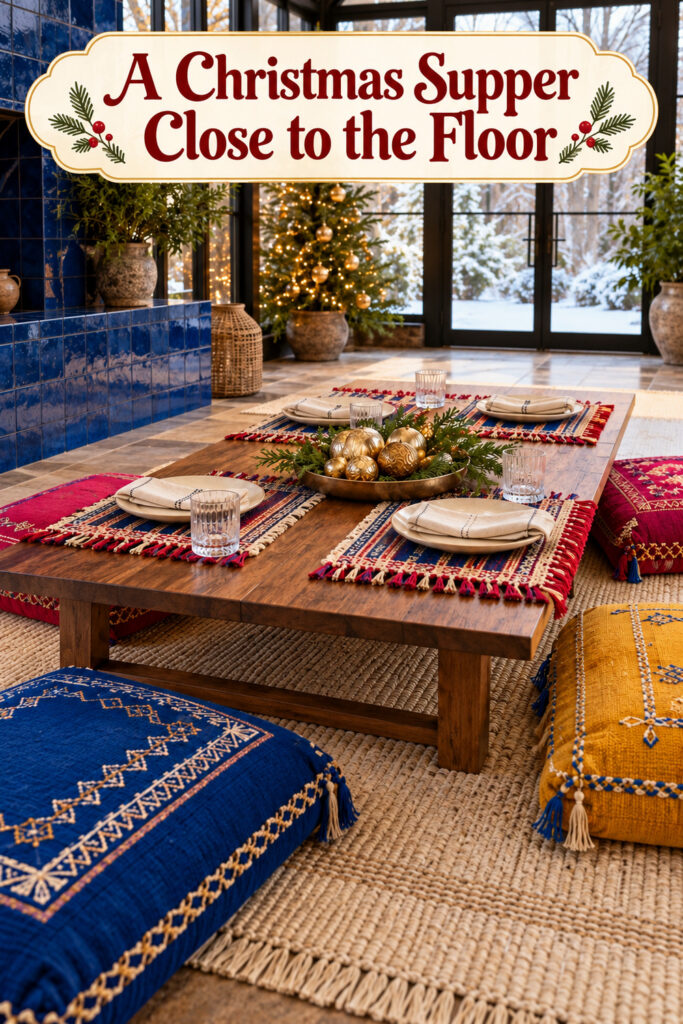
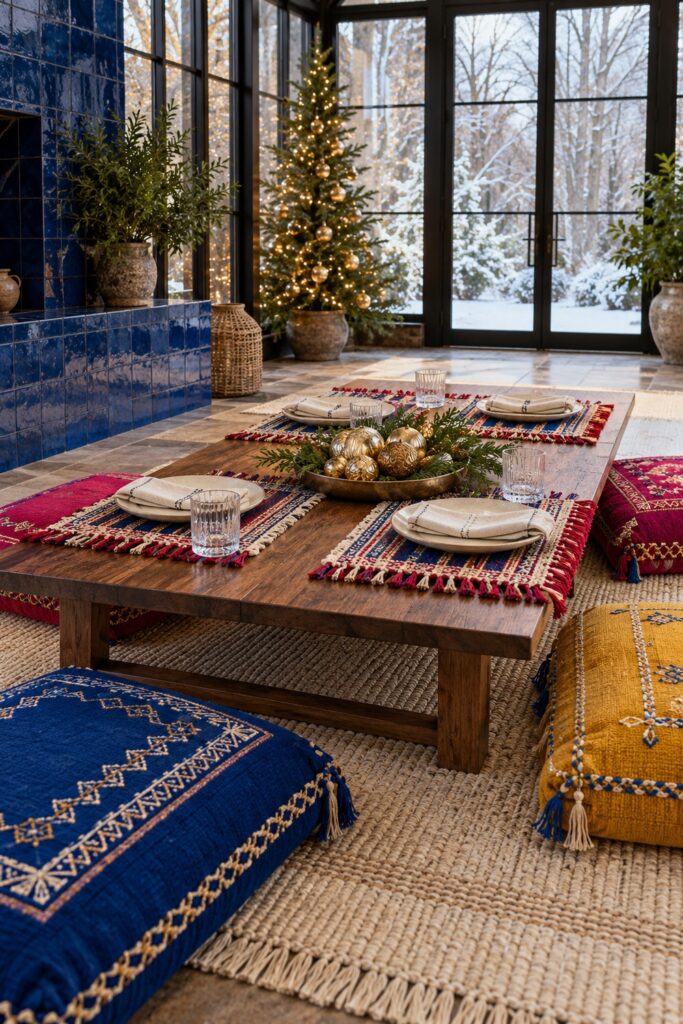
A low wooden table changes the feel of this Christmas setting. Cobalt, saffron, and fuchsia cushions sit around it on a pale woven rug, while fringed striped placemats give each cream place setting its own small patch of pattern. Gold baubles and cedar fill a shallow tray in the middle.
The enclosed garden room supplies winter views and a small decorated tree, but the table itself stays simple. You could borrow the textile colors and low centerpiece for a conventional table too. If floor seating suits your household, the extra planning belongs in comfort and access before it belongs in decorations.
This inspiration image was created with AI.
What Makes This Christmas Table Work
The cushions use different strong colors, yet their cream and gold stitching gives them something in common. The pale rug separates those saturated shapes from the floor. Because it has a relatively simple surface, you can distinguish the cushion patterns from the smaller stripes on the table.
The placemats add texture around the plain plates. Their blue, cream, and red bands connect to the larger room colors without demanding matching dishes. Cream folded napkins repeat the lighter threads and make the center of each setting feel settled. Clear glasses leave the pattern visible rather than introducing another opaque color.
The centerpiece remains low. Its gold baubles repeat the tree ornaments behind the table, and the cedar brings the greenery down to the guests’ level. The shallow brass tray gives those loose decorative pieces a clear boundary. That is useful on a low table where the center arrangement is close to everyone’s hands and glasses.
Key Pieces to Recreate the Look
A Stable Low Wooden Table
Find fringed placemats
Browse current Amazon options that can help you recreate this look.
Browse fringed placemats on Amazon →As an Amazon Associate I earn from qualifying purchases.
Choose a table designed to stand securely at the height you intend to use. The inspiration has a broad rectangular surface and a substantial frame underneath. Don’t improvise a dining surface by balancing a board on decorative boxes. The table needs to cope with normal use before any placemats go on it.
Check the space beneath the top as well as the overall height. A low crosspiece or thick apron may interfere with knees even when the tabletop seems high enough. Try the arrangement with the actual cushions and a place setting before planning a meal. Comfort is much easier to assess that way than from a product photograph alone.
Substantial Floor Cushions
The cushions are thick square shapes with enough surface to make the seating look intentional. Look for floor cushions intended for sitting, rather than small decorative pillows that flatten immediately. Their dimensions should work with the table spacing and the people who will use them.
You can keep the cobalt, saffron, and fuchsia palette without buying three different patterned sets. Plain cushions with one embroidered cover could give a similar mix. Ask guests whether floor seating works for them, and provide a conventional seating option as needed. The decorative idea should adapt to the people at the meal.
A Pale Flatweave Rug
The cream rug supplies a quiet base beneath the table and cushions. Its woven texture belongs with the textiles, but the lack of a large colored motif keeps the floor from becoming another focal point. A rug you already own can work if its size and surface suit the arrangement.
Leave enough rug around the table for the cushions to sit comfortably rather than half on and half off its edges. Use an appropriate nonslip underlay if needed, and check that the table stands level. A fringe folded under one table leg could affect stability, so smooth the surface before setting out glassware.
Fringed Striped Placemats
The mats are the easiest place to borrow this look for an ordinary dining table. Blue and cream stripes with red accents make a clear connection to the cushions and Christmas setting. Their fringe softens the table edges without hiding the warm wood top.
Check that each mat leaves room for a plate and glass without crowding the next setting. A long fringe can catch under tableware, so keep loose ends outside the usable plate area. Choose textiles that can be cleaned after a meal. A decorative wall hanging may resemble the pattern but won’t necessarily make a practical placemat.
Cream Plates and Linen Napkins
Plain cream dishes give the busy mats a calmer center. The napkins carry a small stitched detail, but they don’t add another broad pattern. This is a good place to use your everyday dishes instead of searching for seasonal plates that match every color.
Fold the napkins simply so the cloth and any edge stitching can show. A large sculpted fold would change the relaxed arrangement and take up more room on the plate. If your dishes are white rather than cream, use a light napkin with a little texture to maintain the same relationship.
A Shallow Brass Tray with Baubles and Cedar
The tray holds the whole centerpiece together in one low shape. Start with a few greenery sprigs, then nestle gold decorative ornaments among them. Use lightweight, unbreakable baubles when that suits a table within easy reach of hands. Keep this arrangement separate from anything used to serve food.
Choose a tray small enough to leave practical space around the settings. The greenery should stay inside or close to its rim rather than spreading into glasses and napkins. You can use faux cedar for easier handling or a simple evergreen accent already available, adjusting the arrangement to keep loose debris away from the meal.
How to Set Up a Floor Supper
Place the rug and table before adding any decorations. Set out the cushions and sit at every position. Check knee clearance, reach to the plate, and the room needed to stand up again. A photograph can make a low table look inviting without proving it will be comfortable for your particular guests.
Keep a clear route around the arrangement, especially near the garden doors. The table should sit where people can approach without stepping over cushions or electrical cords. Make sure the room is suitable for dining in the season you’re using it. The snowy view is part of the inspiration, not a reason to choose a room that isn’t comfortable.
Set the placemats first and place the dishes near their centers. Move the cushions slightly if needed so each person faces a setting naturally. Then add the shallow tray. If it makes the table feel crowded, use fewer ornaments or a smaller container rather than squeezing the plates outward.
Let the background tree remain secondary. Its warm lights and gold ornaments already repeat the centerpiece, so you can leave nearby surfaces relatively simple. If you use lights, keep their cord away from the seating and door route. The table’s textures should be the part guests experience most closely.
Shop Similar Pieces
Look for Floor Cushions and Low Tables
Prioritize sitting comfort, table stability, and knee clearance. Compare the listed dimensions with a trial arrangement in your room. The color palette can be adapted after those practical pieces are settled.
Shop Similar Fringed Placemats
Look for washable mats with blue, cream, and warm red stripes or related woven patterns. Their scale should fit your dishes and table. Four coordinated mats can carry the idea even if the cushions stay plain.
Look for Shallow Trays and Gold Ornaments
Choose a low tray that leaves room for tableware and baubles suited to decorative use near a meal. A small contained arrangement will relate to a tree elsewhere in the room without blocking the view across the table.
Final Styling Tip
Try the seating with an empty plate before arranging the centerpiece. Once everyone can sit and reach comfortably, the fringed mats and low gold tray need very little help to make the table feel like Christmas.