*This post may contain affiliate links for which I earn commissions.*
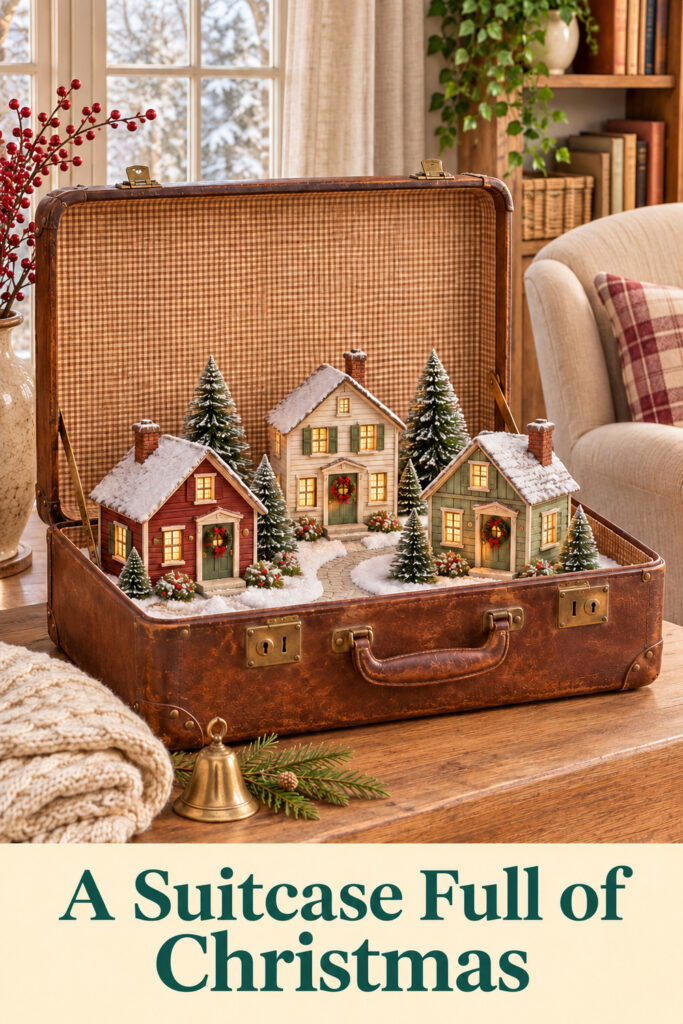
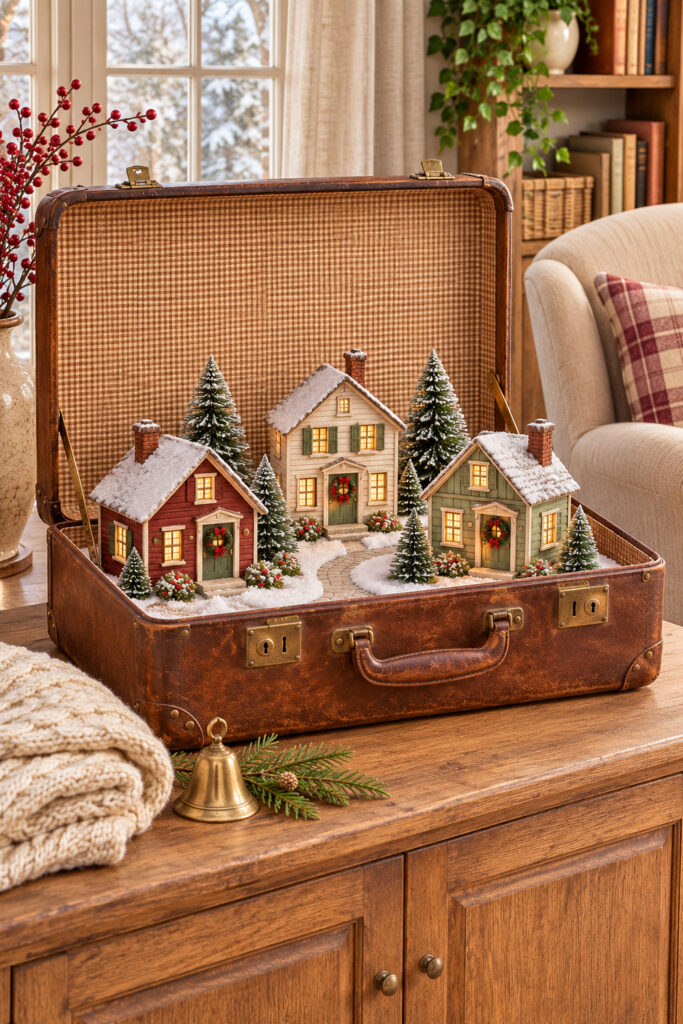
A little Christmas street sits inside an open brown suitcase in this inspiration. Snowy cottages, evergreen trees, and warm windows fill the base, while the checked lining gives the village a quiet backdrop. The old-fashioned handle and metal catches remain visible along the front.
That recognizable container is what makes the display different. It suggests a collection brought out and opened for Christmas, with the miniature scene contained in one place. You can borrow the effect without finding the exact case, but the interior size and a securely supported lid deserve attention before the decorating begins.
This image was created with AI as decorating inspiration.
What Makes the Suitcase Village Work
The suitcase has a broad horizontal base beneath a tall upright lid. Those two areas do different jobs: the base carries the houses, while the lining separates their rooflines from the surrounding room. You can see where the little village begins and ends.
The cottages use different colors but similar proportions. Their doors and windows feel related, so the red house doesn’t look like it belongs to a different scale than the green one. A curved path joins the buildings and keeps the front of the scene open.
Outside the case, a knitted textile, evergreen sprig, and small brass bell repeat textures and colors from the village. They provide room context without extending the miniature landscape across the whole cabinet. The suitcase remains the clear focal object.
Find Vintage style display suitcases
Browse current Amazon options that can help you recreate this look.
Browse Vintage style display suitcases on Amazon →As an Amazon Associate I earn from qualifying purchases.
Key Pieces for This Contained Christmas Scene
A Sound Decorative Suitcase
Look for a clean case with a stable base, enough interior depth, and a lid that can be supported securely in its open position. An aged appearance is appealing, but damaged hinges or loose lining aren’t helpful display features. Check the whole case, including its feet and corners, before adding objects.
A Firm Interior Insert
The houses need a level surface inside the base. A rigid removable insert can bridge uneven lining if it is properly supported, but it should not balance on a few loose objects. Plan the height so the lower suitcase edge doesn’t hide all the cottage doors. The snow treatment comes after the support is resolved.
A Small Coordinated Village
Choose houses according to their actual footprints and heights. Include roof overhangs, attached steps, and lighting connections when checking the fit. Fewer well-spaced buildings will preserve the scene more effectively than a collection squeezed against every corner of the case.
Miniature Trees and a Visible Path
Trees fill selected gaps and establish the Christmas landscape. Keep their scale related to the cottages and leave space around the roofs. A short path at the front gives your eye a route through the arrangement without requiring an elaborate model road system.
Compatible Battery Lighting
Use lighting intended for the miniature buildings and follow its instructions. The gentle window glow shown here is enough. Plan where switches and power packs will remain accessible, and avoid pinching wires beneath the lid or case fittings. Keep open flames out of the fabric-lined display.
A Few Full-Size Supporting Details
The nearby bell and greenery make the cabinet feel dressed for the season. Their larger scale also helps the tiny buildings read as a miniature collection. You can use a short sprig and a folded textile rather than adding more decorative houses outside the case.
Find the Right Position Before Filling the Case
Set the empty suitcase on the furniture where you want to display it. Check that its entire base is supported and the open lid has enough room behind it. A case that looks compact when closed can claim considerably more depth once opened.
Make sure the lid is securely supported by an arrangement suited to the actual case. Decorative objects placed casually behind it aren’t a substitute for a reliable support. If the lid won’t stay safely in position, choose another container rather than building the village underneath it.
View the opening from the room’s main approach. The checked lining should provide a backdrop, and the front edge should allow a useful view into the base. If people normally see the display from a low seat, check that angle as well as a standing view.
Once the case position works, test the firm insert and buildings without scenery. Put the largest cottage in first, then arrange the others so their fronts remain visible. Let the layout follow the usable case interior rather than forcing a perfectly straight row.
Add trees where they frame the buildings without covering the important windows. Keep a few small gaps between the cottages and their neighbors. Those open areas help the village look like a scene rather than a box of ornaments awaiting storage.
Finish the Interior Without Losing the Suitcase
Apply a thin snow effect over and around the stable base. Keep loose scenery away from hinges, electrical connections, and fabric areas you need to lift. The white surface should connect the cottages, not climb so high that it covers their lower details.
Use the path to carry the eye from the front toward the buildings. A narrow change in scenic texture can suggest it without raised borders or extra structures. Keep the house bases level even if the surrounding snow has a little irregularity.
Leave some lining visible above the roofs. That space gives the village room to breathe and preserves the unusual container. If branches or trees cover the entire lid, the suitcase becomes harder to recognize.
For a smaller case, use a simpler village. One main cottage, a smaller building, and a few trees can still produce the same collected feeling. Don’t use larger houses merely because you already own them if they overwhelm the available depth.
After the lights are tested and the scenery is settled, add the cabinet accessories. Keep them away from the handle and front corners so the case outline stays clear. A little surrounding wood surface is a useful pause between the village and the rest of the room.
Shop Similar Pieces
Look for Vintage-Style Display Suitcases
Compare usable interior dimensions and the open-lid footprint. Check whether the case is intended for display and how its lid is supported. A decorative reproduction may be a more practical choice than a fragile older case.
Shop Similar Small Christmas Cottages
Look for a group with compatible doorway and window proportions. Check the measurements and lighting access before choosing by color. The arrangement can work with a different palette when the houses fit well together.
Add Miniature Evergreen Trees
Choose a few heights that remain below the top of the suitcase backdrop. Stable bases help the trees stay upright beneath the scenic covering. Leave the tallest ones at the back or sides where they won’t hide cottage fronts.
Look for Thin Scenic Snow Covering
Choose a material suitable for an indoor model display and compatible with the lighting arrangement. Use it to finish a rigid base rather than expecting it to support the houses. A restrained layer will preserve more of the miniature detail.
Final Styling Tip
Before adding another cottage, step back and look for the suitcase handle, checked lid, and open path. If all three are easy to see, the container and village are working together rather than competing for space.