*This post may contain affiliate links for which I earn commissions.*
The sloping silver buckets give this Christmas candy service its character. Three sugar scuttles hold individually wrapped sweets, with their handles raised above the little striped parcels. Plain linen and cream dishes soften the metal, while burgundy flowers repeat the color of the wrappers.
One vessel sits higher on a broad riser, so the collection has depth without becoming a tall tower. The tree reflected behind it carries the Christmas lights into the display. You can borrow the arrangement with suitable decorative serving pieces, keeping the sweets wrapped and leaving a clear pickup edge for guests.
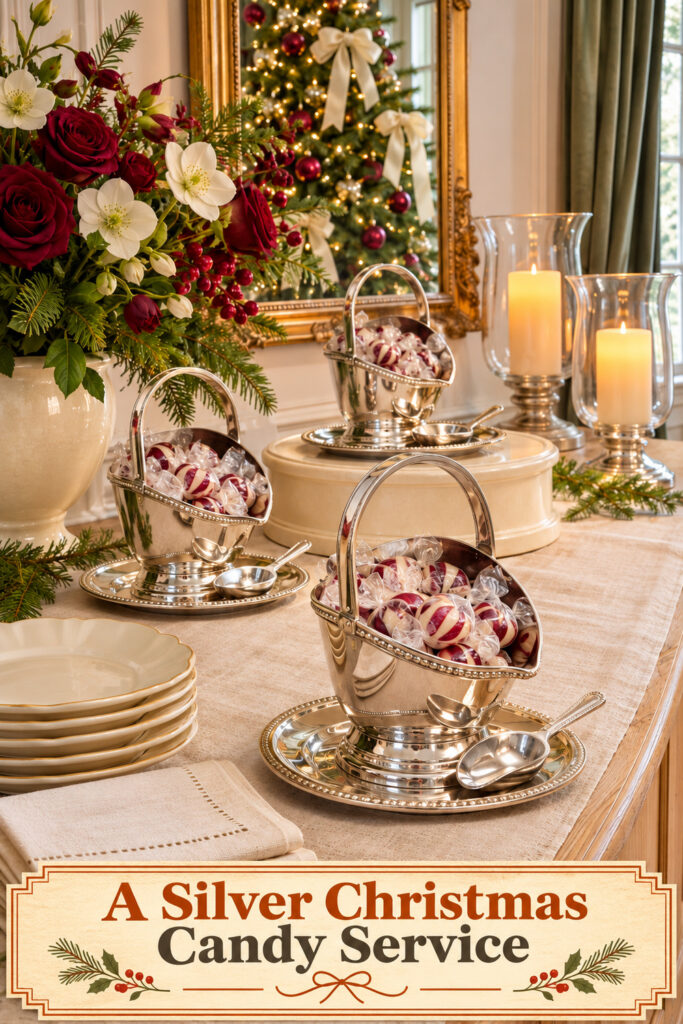
This image was generated with AI as decorating inspiration. Similar pieces can recreate its effect, though the pictured objects are not verified retail matches.
Let the Unusual Serving Shape Lead
A sugar scuttle is a small scoop-shaped vessel traditionally used for serving sugar. Its outline resembles a miniature open coal bucket, often with a handle and a separate scoop. Here, that shape gives wrapped candy a more interesting home than a plain jar.
The repeated sloping openings are the main feature. Keep the contents low enough that the rims and handles remain visible. The collection looks generous because the sweets fill the vessels neatly, not because wrappers spill across the runner.
Use related sizes and finishes when grouping several pieces. They can differ in small details, but one very large bucket could overwhelm the others. Arrange them empty first so you can judge the shapes before the candy adds another pattern.
Check the Actual Pieces Before Filling Them
Older decorative metal needs a careful inspection. Look for rough edges, loose handles, damaged surfaces, and any finish that could mark the fabric beneath it. Clean each piece only by a method suited to its actual material, then dry it fully before setting it on the runner.
The inspiration keeps the sweets individually wrapped. Retain that separation rather than assuming an antique vessel is suitable for direct food contact. A clean, suitable removable liner can add another barrier while leaving the silver rim visible. Choose contents and packaging that fit the actual pieces.
The scoops rest separately beside the vessels. They can remain part of the collection’s shape without being used to handle the candy. If you need a serving utensil, choose one suited to the actual food and container rather than relying on a decorative scoop whose condition is uncertain.
Check the handles in their resting position. They should stay clear of the opening so guests can reach the wrapped sweets without pushing the metal aside. A handle that flops forward may make a lovely object less useful for this particular arrangement.
Arrange the Collection in a Shallow Triangle
The nearest scuttle gives the group its first clear shape. A second sits a little farther back, while the raised piece completes the triangle. That spacing lets all three openings show and gives the display a natural serving direction.
Use a broad, solid riser if one piece needs height. Its top must support the vessel’s entire base, and the combination should remain steady when touched lightly. Keep the riser low enough that a guest can reach the contents without lifting a wrist above the handle.
Leave gaps between the saucers or trays beneath the scuttles. The silver outlines need a little quiet linen around them. When every rim touches its neighbor, the pieces can merge into one shiny patch rather than a clear collection.
Turn the sloping openings toward the pickup side. You can vary the angle slightly for a relaxed look, but the useful side of each vessel should remain obvious. Test the reach from the front edge before adding the flowers and lights behind it.
Keep the Linens and Dishes Orderly
The natural runner gives the silver a soft base and connects the display to the oak sideboard. Its flat weave matters as much as its color. Thick folds beneath a footed vessel can make it rock, especially when someone reaches into the opening.
Smooth the runner and keep its edges within the cabinet’s usable outline. A short overhang can look neat if it stays clear of drawers and doors. Avoid a long loose corner beside the guest route, where a bag or sleeve could catch it.
Cream dessert plates and a folded napkin stack sit together at one end. Keep them modest enough to lift from easily and leave space around their edges. The wrapped candy may not need a plate for every guest, so use only the dishes that suit the way you plan to serve it.
You can choose plain white wrappers or another quiet holiday color if striped sweets aren’t part of your plan. Repeat the chosen color in a flower or ribbon nearby. The vessel shapes and silver reflections will still carry the collection even when the candy changes.
Give Flowers and Light Their Own Space
The large flower arrangement supplies most of the sideboard’s fullness. White blooms, burgundy roses, and fir connect the pale dishes to the Christmas tree behind them. A broad cream container keeps the group grounded beside the smaller silver pieces.
Fresh stems need a watertight inner container and protection for the wood. Keep drips, loose petals, and foliage away from the wrapped sweets. Artificial flowers can provide a similar shape if they are clean and don’t shed material onto the serving area.
The hurricanes add warm reflections beyond the candy collection. Suitable battery pillars can create the candlelit effect while keeping wrappers and fabric away from open flames. Give the lights a separate stable footing, with enough room to reach their controls without moving a scuttle.
Check the mirror from the approach guests will use. A reflected tree gives the display depth, but a slight shift in the flowers may reveal more lights or hide a distracting reflection. The mirror should help frame the collection rather than make it difficult to see where each silver piece ends.
Scale the Service to Your Sideboard
One scuttle can make a complete small display beside a plate stack and a flower vase. Keep the opening accessible and use the surrounding colors to connect it to Christmas. You don’t need three pieces before the idea becomes useful.
For a shallow cabinet, place the collection in a short row instead of a triangle. Remove the riser if it pushes a vessel too close to the wall or mirror. The actual pickup space is more important than matching the picture’s staggered heights.
Choose the Collection Before the Candy
Start with sound vessels and suitable support pieces. Then choose wrapped contents that sit neatly inside them without forcing the handles or crowding the rims.
Look for Decorative Sugar Scuttles
Check condition, base stability, and usable opening size. A related finish will connect a small collection even when the details differ.
Look for Broad Low Display Risers
Choose a full supporting top and a steady base. Keep the extra height modest enough for easy pickup.
Look for Plain Linen Runners
A flat fabric lets the footed pieces sit evenly. Choose care needs that suit a serving area rather than a textile you are afraid to touch.
Try the Pickup Before Adding More
Reach for a wrapped sweet from every vessel and lift a napkin from the stack. Move any handle, scoop, or flower stem that gets in the way. Then view the sideboard from the doorway to check that each opening remains clear.
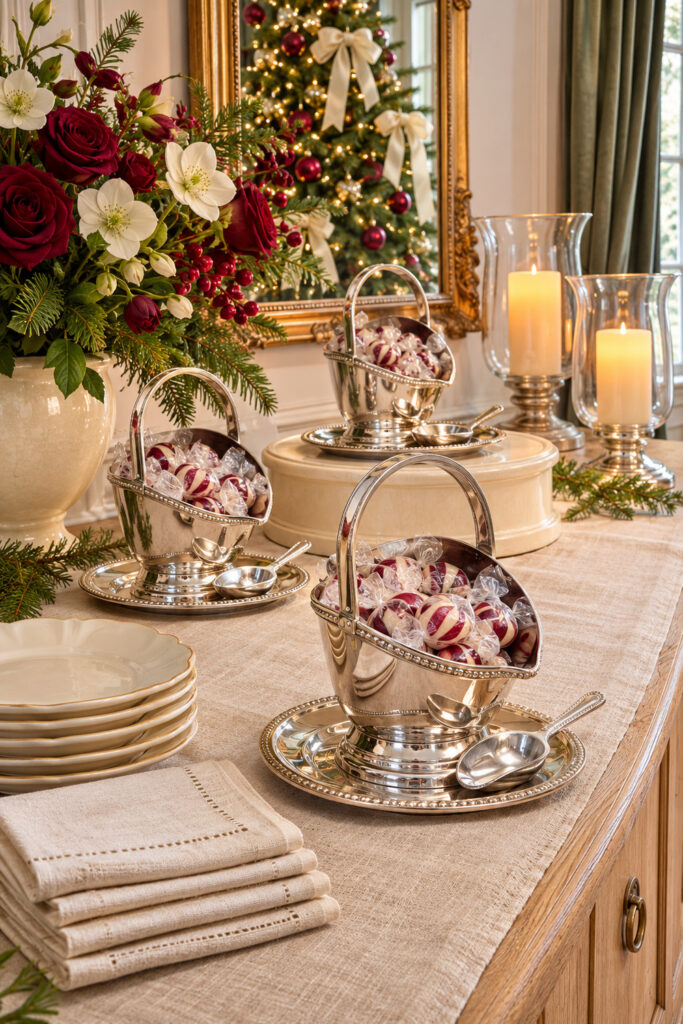
Final Styling Tip
Leave a little silver showing above the wrappers in every scuttle. That small margin keeps the unusual vessel shapes as the main attraction.