*This post may contain affiliate links for which I earn commissions.*
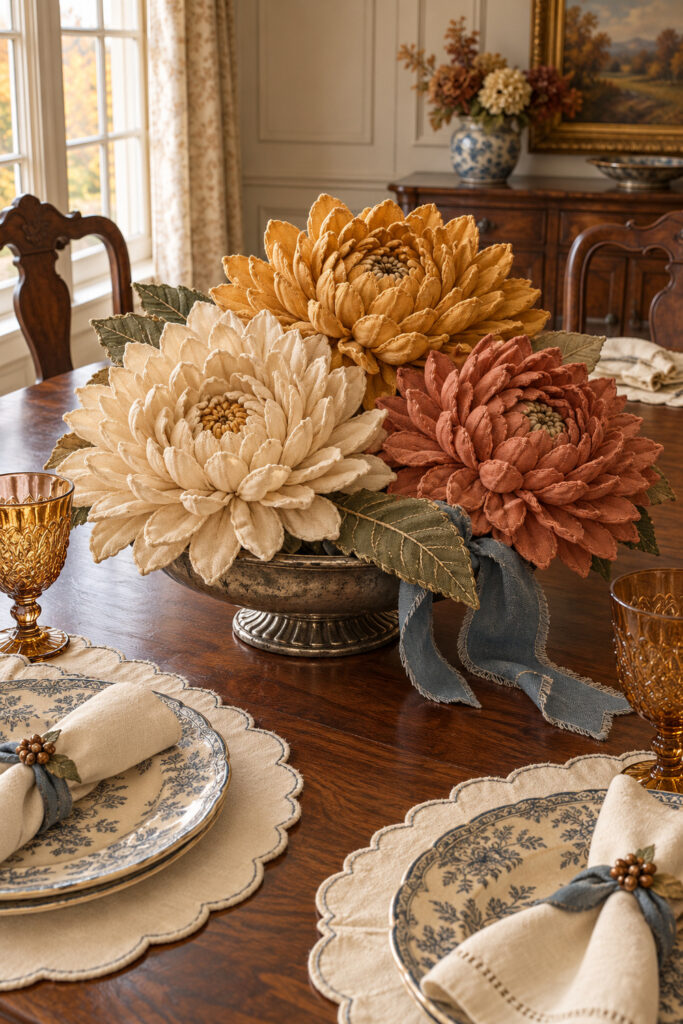
Three large textile chrysanthemums bring ivory, ochre, and terracotta to this Thanksgiving table. Their folded petals and stitched edges are easy to see above a shallow metal bowl. A muted blue ribbon drops over the front, connecting the flowers to blue patterned plates and small napkin ties.
The table feels seasonal because of the colors and materials, not because every surface has a separate holiday motif. That is a helpful idea to borrow when you want a distinctive centerpiece alongside tableware you already use. Similar fabric flowers, a low vessel, and restrained linen details can capture the same overall effect.
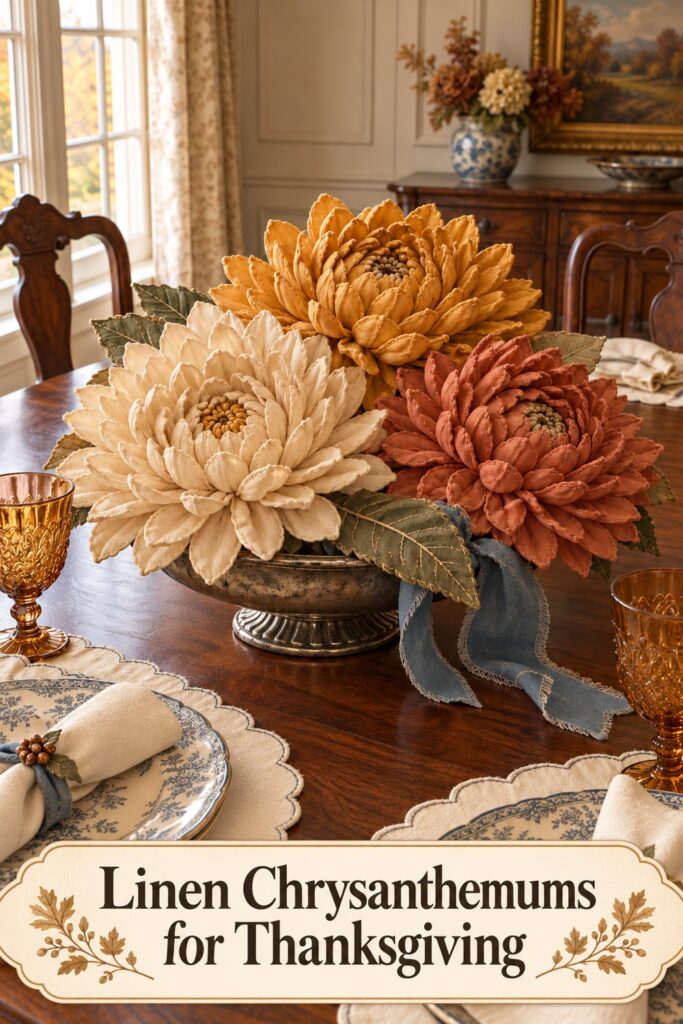
The inspiration image was created with AI. Use it as a styling reference for similar flowers and table pieces rather than an exact arrangement available to purchase.
Why the Linen Flowers Anchor the Table
The chrysanthemum shapes have many narrow petals, but the three larger flower heads remain distinct. Ivory sits toward the front, ochre rises behind it, and terracotta fills the other side. That arrangement gives each color room. If you use substitute flowers, look for full rounded heads with visible layers rather than several small scattered blooms that would change the centerpiece’s scale.
Find Fabric Chrysanthemum Flowers
Browse current Amazon options that can help you recreate this look.
Browse Fabric Chrysanthemum Flowers on Amazon →As an Amazon Associate I earn from qualifying purchases.
The textile surfaces connect to the placemats and napkins. Their visible weave makes the arrangement feel handmade, while the metal bowl and polished table provide smoother contrasts. You can preserve this relationship with woven fabric flowers and plain linen accessories. The important point is to repeat the material quietly, rather than matching every flower color in every place setting.
The vessel stays low beneath the blooms. It gives the arrangement a firm visual base without adding a tall stem section. The inspiration’s flower heads are substantial, so your practical version may need to be smaller for conversation. Check the finished height from a seated position before deciding that a shallow bowl alone makes the arrangement suitable for a dining table.
Key Pieces for This Thanksgiving Centerpiece
Layered Fabric Chrysanthemums
Look for fabric chrysanthemums, linen-style floral stems, or handmade textile flowers with full petal layers. The exact pleated stitched flowers in the image may require a craft approach, so a similar substitute is a sensible option. Focus on rounded flower heads, visible fabric texture, and warm muted colors. A glossy plastic surface would create a different effect.
Choose a small coordinated group in different sizes. The inspiration uses one larger ochre flower behind two forward blooms. You can use that relationship even if your flowers are more modest. Compare head sizes together before placing them in the vessel. One oversized head beside several tiny ones can look unbalanced unless the smaller pieces are grouped to form a clear supporting shape.
A Shallow Metal Bowl or Compote
The aged metal finish suits the softened colors and gives the fabric a useful contrast. A low ceramic bowl is a practical substitute if that’s what you own. Look for a broad stable base and enough depth to hide an arrangement support. Avoid choosing the vessel solely for its decorative foot if it becomes unstable once large flowers are added.
A removable floral support can help position artificial stems, but it should fit securely inside the bowl. Keep the mechanics hidden below the visible petal line. If you prefer to lay loose flower heads in the vessel, check that they won’t slide when the table is bumped. A simple arrangement should still be straightforward to move when serving space is needed.
Muted Blue Fabric Ribbon
The blue ribbon connects the warm centerpiece to the cooler tableware. It appears loose and soft rather than tightly wrapped around the vessel. A small fabric tie or short folded ribbon can suggest that detail. Keep it away from food and drinks, and shorten the tails if they extend into a place setting or across the serving area.
Use the same blue in a smaller way on the napkins if you like. You don’t need several matching ribbons at each seat. One narrow tie can provide the connection while the linen remains the main material. If your dishes have another accent color, choose ribbon that repeats that instead. The relationship matters more than copying the exact shade in the inspiration.
Scalloped Placemats and Plain Linen Napkins
The cream scalloped mats echo the flower petals without using a literal floral shape. If you have plain mats, they can work just as well. Their quieter surface gives the patterned plates somewhere to stand out. Try cream, oatmeal, or another light neutral that contrasts with the wood table and connects to the pale flower.
Keep napkin folds simple. The inspiration uses a soft folded napkin with a small tie and decorative accent, but a plain fold can preserve the textile mood. Avoid adding bulky ornaments where guests need to place cutlery or a drink. A table detail should be easy to move and shouldn’t create a puzzle before someone can begin eating.
Arrange the Flowers Before Setting Every Place
Start with the vessel in the middle of the usable table area. Place the largest flower toward the back of the main viewing side, then angle the other two forward and outward. Leave the individual heads visible. If every bloom points straight up, the layered petal detail may be harder to see from the seats around the table.
Turn the arrangement and check it from several positions. A centerpiece can have a preferred photographic view, but dinner guests will see its sides too. Add a restrained leaf or adjust a flower to cover an exposed support. You don’t need equal detail in every direction, just a tidy arrangement without an obvious unfinished back facing someone’s place.
Set a plate and glass at the nearest seat before adding more flowers. This reveals the actual footprint. Large petals can reach farther than the bowl beneath them, so measure the outer arrangement rather than the vessel alone. If space is tight, use smaller flowers or move the centerpiece to a nearby serving surface during the meal.
Let the Tableware Support the Warm Palette
Blue patterned plates provide a cooler contrast to ochre and terracotta. Existing floral or transfer-style dishes can serve that role without matching the image exactly. Plain cream dishes are another useful option, particularly if your flower heads have dense stitching. Decide which part should carry the most detail, then let the other pieces stay simpler.
Shop Similar Pieces for the Table
Look for Textile Flower Stems
Check whether the petals are fabric, whether the stems can be trimmed or bent, and how large the heads are. A photograph of a single bloom can make it hard to judge the finished group. Use paper circles on your table to estimate the space occupied by three flowers before selecting a substantial centerpiece.
Shop Similar Low Bowls
Prioritize stability and usable interior space. An existing bowl can be reserved for decorative use with a removable liner or support, following the material’s care instructions. Don’t assume a vessel used with floral supplies is ready for direct food service afterward. Keep the centerpiece separate from the dishes used for serving the Thanksgiving meal.
Look for Linen Table Accessories
Choose placemats, napkins, or ribbon that repeat one part of the arrangement. You can keep the color connection subtle. A quiet cream mat and a blue napkin tie leave room for the folded petals to lead, which is the particular feature that makes this table different from an ordinary seasonal floral setting.
Final Styling Tip
Sit down before calling the centerpiece finished. If the flower heads block faces or reach into the nearest place setting, reduce the arrangement. The fabric detail will still make an impression at a more practical scale.