*This post may contain affiliate links for which I earn commissions.*
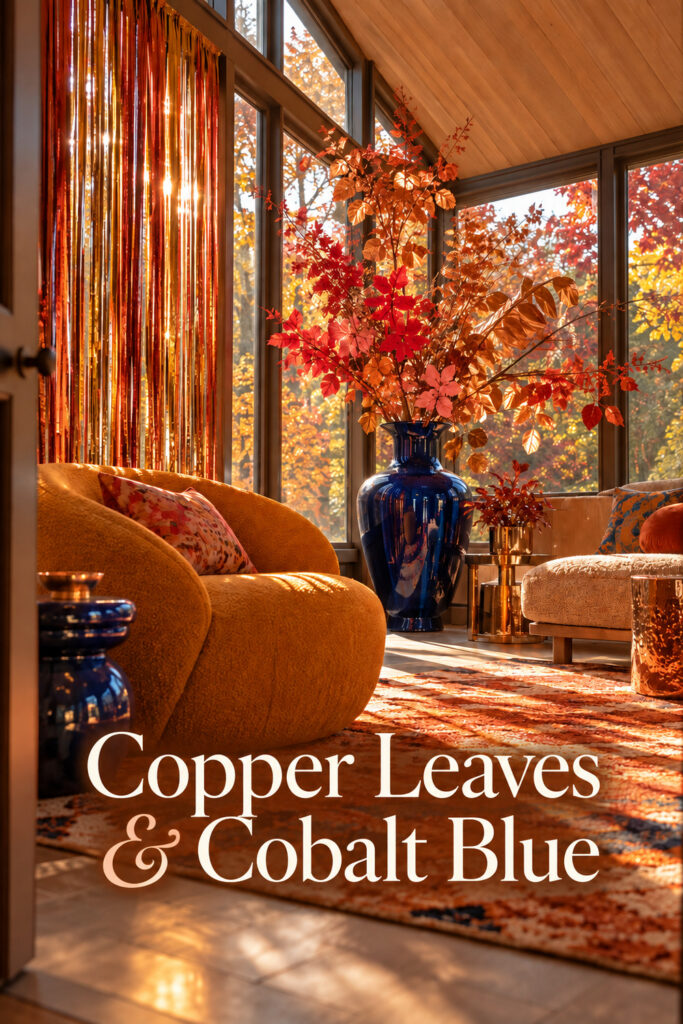
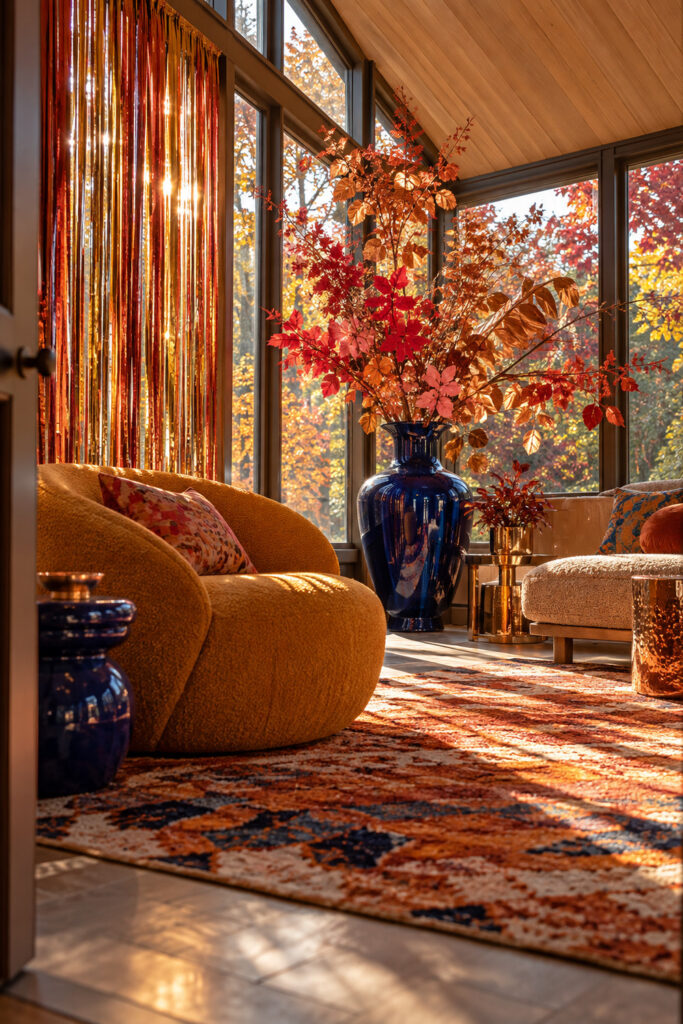
A tall cobalt vase is the quiet anchor in this otherwise glowing sunroom. Copper, coral, and red branches spread upward near the corner windows, while metallic fringe catches the light along the side glazing. Rounded yellow seating and an orange patterned rug repeat the warmth below.
The arrangement is large, but the idea can work at a smaller scale. The important relationship is warm autumn foliage against a solid blue vessel, with enough room around the branches to see their shape.
This inspiration image was created with AI.
Why Copper Leaves and Blue Work Together
The vase provides a dark, smooth shape underneath a loose spread of leaves. Your eye can follow the foliage because its base is clearly defined. In a windowed room with lots of visible branches outside, that solid blue becomes especially useful; it separates the indoor arrangement from the view behind it.
Copper brings in both color and reflection. Some leaves glow more brightly than others, giving the arrangement depth instead of one flat orange outline. Mix reflective foliage with less shiny coral or rust-colored stems if you want a related effect. Every leaf does not need to sparkle equally.
The fringe runs down one side of the room, while the main branch arrangement occupies the corner. They have different jobs. The fringe makes a broad background, and the vase supplies a recognizable focal point. Keeping them separate prevents the leaves from disappearing against a wall of metallic strips.
Blue repeats in smaller details, including the rug and other vessels. That repetition connects the large vase to the rest of the room. If you have one blue bowl or pillow already, move it into the seating area before adding another autumn decoration. It may do more for the arrangement than another handful of leaves.
Find Cobalt Blue Vases
Browse current Amazon options that can help you recreate this look.
Browse Cobalt Blue Vases on Amazon →As an Amazon Associate I earn from qualifying purchases.
Key Pieces for the Autumn Sunroom
A Cobalt Vessel with a Stable Base
Look for a vessel that can hold the intended spread of branches securely. The glossy blue in the inspiration is distinctive, but the shape and stability matter just as much. A smaller blue vase on a low table can provide the same contrast when a floor arrangement would crowd your room.
Check the opening before choosing stems. A very narrow neck limits the number and angle of branches you can use. A broader opening gives more freedom, but may need a suitable arrangement support inside.
Copper and Coral Foliage
Choose foliage with visible leaf shapes rather than a dense block of tiny pieces. Broad metallic leaves catch the window light, while lighter branching stems help the arrangement spread without looking like a solid cone.
For a practical version, use flexible faux stems that can be shaped gently. You can place taller copper pieces toward the back and bring coral foliage forward. If you use gathered natural branches, inspect them first and keep their weight and dryness in mind.
Metallic Fringe for One Window Area
The fringe adds vertical lines beside the loose branch shapes. You can use a short panel in one fixed window bay rather than covering every pane. That gives the metallic material a deliberate location and lets the rest of the view stay open.
Keep window handles, vents, and any emergency exit window fully usable. Choose removable attachments appropriate for the frame or surrounding surface. Do not let strips trail onto a heater or into a seating area where they will be pulled every time someone sits down.
Yellow or Saffron Textiles
The rounded yellow chair carries the warm color down to a comfortable level. You can borrow the color with a throw or cushion instead of changing the furniture. A textured fabric will create a useful contrast with the smooth blue vase and reflective foliage.
If your seating is already warm brown or cream, add only a small yellow detail. The leaves are doing most of the seasonal work. Give the chair enough clear space that people can reach it without brushing branches or moving the vase out of the way.
A Rug with Small Blue Repeats
The rug has warm bands with blue woven into the pattern. It links the floor to the vase without requiring another large blue object. Check what your existing rug already contributes before choosing anything new.
In a plain room, a patterned cushion can make the same connection on a smaller scale. Repeating blue in one or two places is enough. Too many matching blue vessels can make the main vase feel less special, particularly when the room is small.
A Small Reflective Side Accent
The shiny side table and smaller foliage arrangement continue the copper tone near the seating. A tray or small existing vase can play that part. Keep it lower than the principal arrangement so the eye still travels toward the corner.
Use this as a chance to repeat a material rather than introduce another color. A simple metal bowl can be enough if your pillows and rug are patterned. Leave actual table space available for a drink or book; the room should still be pleasant to sit in.
Arrange the Branches for Your Own Windows
Start with the empty vessel in its proposed position. Walk past it and sit in the closest seat before adding stems. A corner that looks perfect in a photograph may be the place you usually step when opening a window. Choose a stable spot outside that routine movement.
Place the tallest branches first, leaning their visual direction into the room rather than pressing them against the glass. Add wider copper leaves around the middle, then use coral and red pieces to fill selected gaps. Keep some open areas so the window light can pass between the stems.
Look at the arrangement from the doorway. If every branch reaches the same height, lower a few and give one side a slightly wider spread. The inspiration is generous and irregular, but its shape still leads upward. Avoid forcing a perfect ball of foliage onto a tall narrow vase.
Now check it against the outside view. If the indoor copper leaves disappear into autumn trees beyond the window, turn a few reflective faces toward the room or move the vessel against a plainer section of frame. You want the shape to remain readable without blocking the whole window.
Add the fringe afterward. Begin with less than you think you need and see how it behaves in the actual light. Morning and afternoon can produce very different reflections. If the room feels visually crowded, shorten the fringe panel or keep it to a side area while leaving the main corner clear.
Strong sun can affect fabrics and decorative materials, so use items suited to their placement and move delicate pieces if needed. You can also place the display beside the glazing rather than directly in it. The blue-and-copper relationship still works without a full afternoon of direct light.
Shop Similar Pieces for the Copper Leaf Display
Shop Similar Cobalt Blue Vases
Compare the base, opening, and overall proportions. Choose a size that suits the stems and your floor or tabletop rather than trying to match the dramatic scale of the inspiration.
Look for Metallic Autumn Foliage
Seek visible copper leaf shapes with workable stems. Include a few softer coral or rust pieces if the reflective foliage alone looks too uniform.
Add a Metallic Fringe Panel
Use a manageable section with a suitable attachment method. Check where it will end and what remains accessible behind it before you decide on the length.
Final Styling Tip
Let the cobalt vase remain clearly visible beneath the foliage. If its blue shape disappears behind branches and side decorations, remove a little rather than adding more. That contrast is the detail that makes this room memorable.