*This post may contain affiliate links for which I earn commissions.*
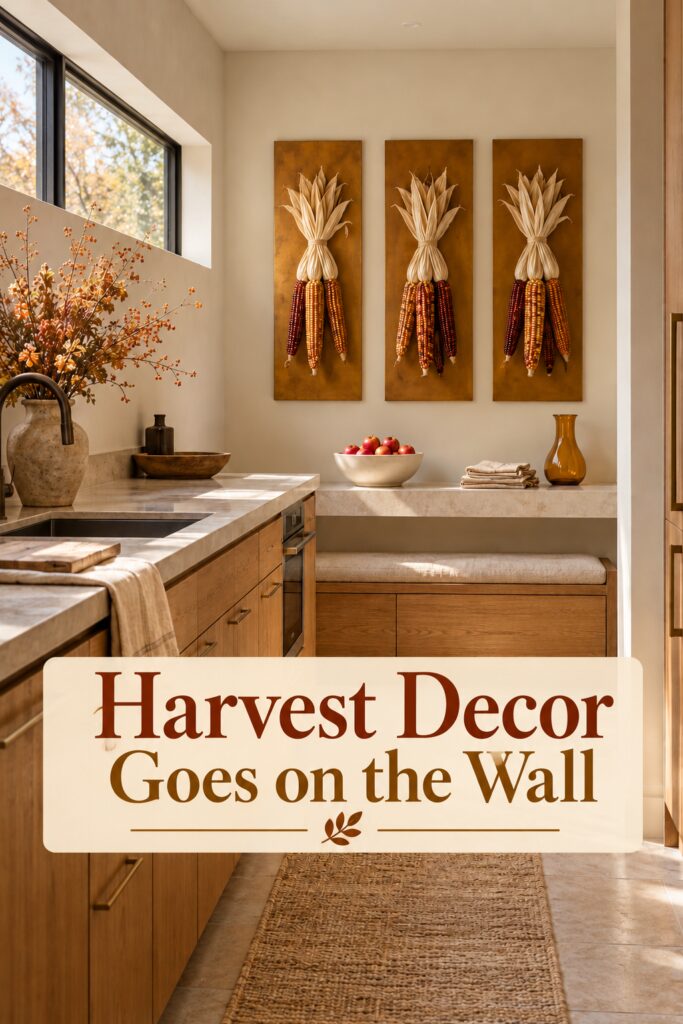
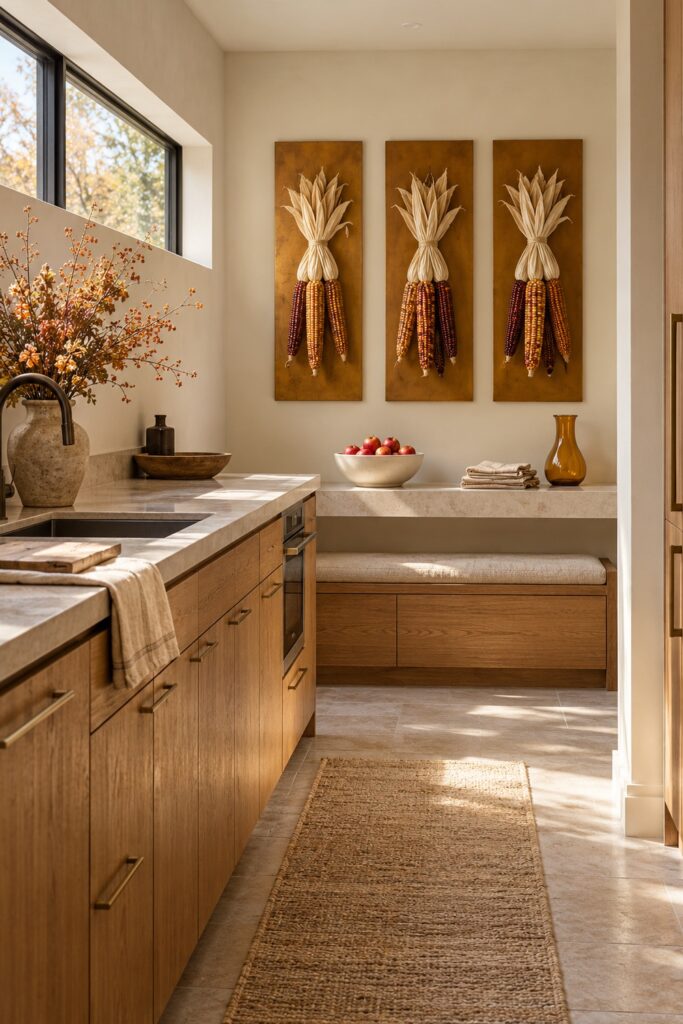
Three corn bundles on amber panels turn the end wall of this kitchen into a Thanksgiving display. Pale husks fan upward, multicolored ears hang below, and the repeated rectangular backing gives each bundle a clear place of its own.
The useful part of this idea is where the decoration goes. Most of it stays on the wall, leaving the counter and bench area available for ordinary kitchen use. A bowl of apples, folded cloths, and a small amber vase finish the scene without demanding another large arrangement on the work surface.
This inspiration image was created with AI and represents a decorating concept rather than a real kitchen or confirmed products.
Why the Three Panels Work Together
The panels repeat the kitchen’s straight cabinet lines, but the corn brings a much softer texture. The pale husks stand out against the amber backing, while the darker kernels connect the display to the wood and brown accessories below. You can see the whole bundle rather than losing it against a busy wall.
Matching panel proportions give the arrangement its order. The corn itself can vary a little in color and shape because the backing keeps the group visually connected. That is helpful with natural materials, which rarely arrive in perfectly identical sets.
There is also a clear division between decoration and useful objects. The harvest display sits above the ledge, while the apples and linens stay within reach. You can borrow that separation in a kitchen that needs every available inch of counter space during holiday cooking.
Find Decorative Corn Bundles
Browse current Amazon options that can help you recreate this look.
Browse Decorative Corn Bundles on Amazon →As an Amazon Associate I earn from qualifying purchases.
Pieces to Recreate the Corn Panel Display
Decorative Corn with Intact Husks
Choose ears with husks still attached and enough length to gather above the kernels. The raised husks are a major part of this look. Corn with short, broken husks can still be attractive, but it won’t create the same tall, pale fan at the top.
Dried decorative corn or realistic faux versions are possible options. Natural ears offer variation in kernel color, while faux pieces may be easier to store and reuse. Check their intended decorative use, and keep either choice away from cooking heat, water splashes, and food preparation surfaces.
Slim Rectangular Backing Panels
The backing in the inspiration appears warm amber with a mottled surface. You could look for simple decorative panels in a similar tone, or use lightweight craft wood finished in a warm ochre brown. This is a component approach rather than a claim that the pictured panels are available as finished items.
Choose the panel size after you know the bundle size. Leave enough visible backing above, below, and beside the corn for the rectangle to register. If the husks extend across most of the panel width, the arrangement will lose some of its narrow vertical character.
Natural Twine or Plain Ties
A quiet tie at the bundle’s waist keeps the husks gathered and the ears facing downward. Natural twine blends with the pale fibers and avoids introducing another prominent color. You can use a neutral ribbon if it holds the bundle securely and doesn’t cover too much of the husk texture.
Decorative tying and structural hanging are separate jobs. The visible tie can make the bundle attractive, but the panel and its attachment still need appropriate support. Select hanging hardware for the actual wall surface and the combined weight of the finished display.
An Ivory Bowl for Apples
A pale bowl repeats the husk color below the panels. The apples add a small amount of red without changing the display into a red themed kitchen. A serving bowl you already own is a sensible starting point, especially if it normally lives on this counter.
Keep the bowl accessible. If these are apples you intend to eat, you should be able to remove one without brushing against the wall decoration or moving other objects. A kitchen display is easier to keep when the everyday pieces remain useful.
Neutral Linens and Amber Glass
Folded oatmeal or beige cloths repeat the softer textures of the husks and bench cushion. Their straight folded edges suit the rectangular panels above. One small stack is plenty; it gives the ledge a practical purpose rather than looking like a storage overflow.
An amber vase finishes the right side of the inspiration’s ledge. It doesn’t need a large bouquet because the wall already carries the main vertical shapes. A small vessel with a rounded body can provide that color repetition without taking much room.
Style the Wall Without Crowding the Kitchen
First, identify a wall away from your stove, sink spray, and frequently opened cabinet doors. The end of a galley kitchen, a breakfast area, or a wall above a serving console may be more suitable than the main cooking zone. Check the surface from the doorway, since that is where a repeated panel arrangement often reads best.
Lay out the panels on the floor before hanging them. Align their top and bottom edges and leave consistent gaps between them. The gaps should be wide enough to separate the bundles clearly, but narrow enough for the three panels to feel like a group.
Use paper shapes to test the overall width on the wall. This also helps you see whether the arrangement belongs above the bench or whether it needs to shift toward the center of the available wall. Don’t automatically center it on the whole room when the usable display area is only one part of that room.
If you are combining corn and panels yourself, position each bundle before making any permanent attachment. Gather the husks above the ears, turn the most interesting kernels forward, and keep the bundle’s narrow middle near the panel’s vertical center. Use a fastening method suited to your panel material and avoid relying on a loose decorative bow alone.
Hang the completed pieces securely, then look at them from several ordinary kitchen positions. The inspiration shows three similar bundles, but they don’t need to match ear for ear. What matters is a comparable overall height and enough amber showing around each one.
On a small wall, one panel may be the better choice. Make it substantial enough to read from the doorway and use the same corn, husk, and backing contrast. You can preserve the distinctive idea without squeezing three narrow pieces between a cupboard and a light switch.
Once the wall is settled, add the bowl and linens below. Keep them to either side of your main work area, with the amber vase as a small finishing accent. If you need the ledge for serving dishes on Thanksgiving, move the bowl temporarily and let the wall carry the seasonal decoration by itself.
The larger autumn stem arrangement beside the sink is an optional supporting detail. Borrow it only if your counter has room and the stems won’t interfere with the faucet or preparation area. The corn panels remain the main idea even when that extra vase is omitted.
Shop Similar Pieces
Look for Decorative Corn Bundles
Compare husk condition, ear length, and the overall bundle weight.
Add Lightweight Panel Components
Simple backing boards and an amber toned finish can make a workable substitute for the imagined wall panels. Check that the boards accept your chosen attachment and hanging hardware before spending time on their decorative finish.
Shop Similar Harvest Counter Accessories
An ivory bowl, neutral kitchen cloths, and a small amber vessel are supporting options. Start with the pieces you already use, then add only what improves the color balance or function of the ledge.
Final Styling Tip
Leave the counter directly below the panels mostly open. The appeal of this kitchen idea is that the harvest decoration has its own wall space, so the kitchen can still be a kitchen when the cooking begins.