*This post may contain affiliate links for which I earn commissions.*
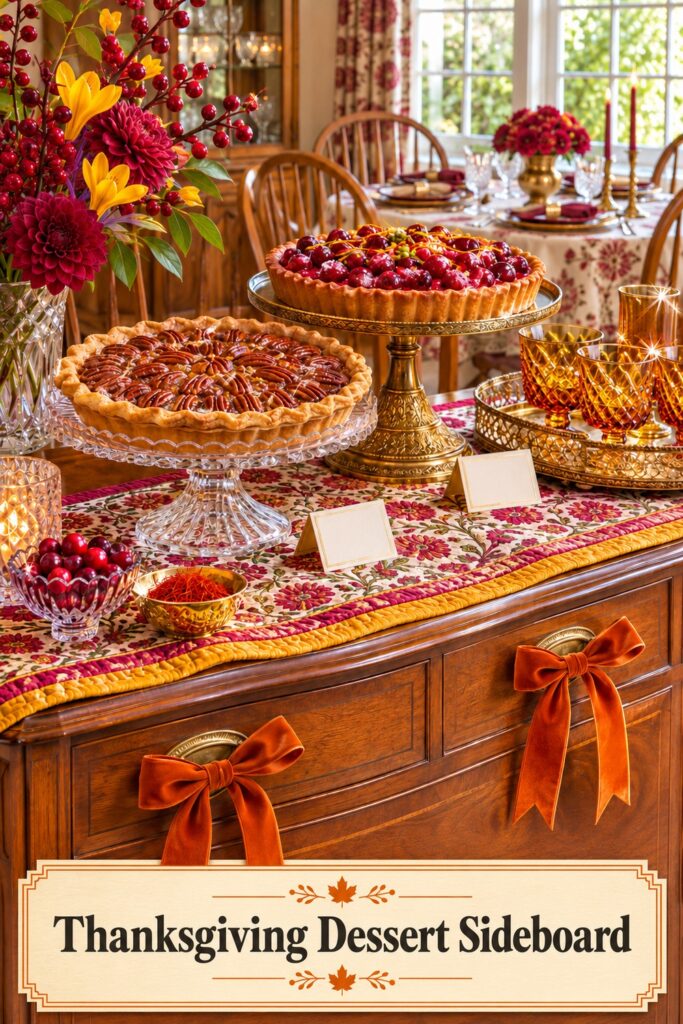
A Thanksgiving dessert sideboard earns its place when the dining table is still full and somebody wants to cut the first slice of pie. Here the cranberry tart and pecan pie sit at different heights on a richly patterned runner. Amber glasses pick up the saffron tones in the fabric and let light reach the far end of the wood.
Begin with the serving path
Decide which end of the sideboard guests will approach. Put the plates there, move the pies to the next stretch, and reserve the far end for forks and napkins. Stand at each spot and mime setting down a plate, cutting a slice, and lifting it out. That little rehearsal reveals a lot about a crowded surface.
A broad, low cake stand can help give one dessert its own silhouette. Press gently near its rim before using it. If it rocks under the pressure of a pie server, set the pie directly on a trivet or a shallow platter. Let a cake stand hold a lighter dessert instead.
Work with two pie colors
The warm pecans and the tart’s red filling give the runner a reason to be there. Look for a fabric that repeats both colors in small areas, with a ground that leaves the pattern readable. A quilted piece brings depth to the arrangement and can sit flat if it is pressed before you lay it out.
A short runner is especially useful here. Stop it well before the floor and keep the busy serving end clear. Put washable trivets under the dessert dishes. A little corner of the fabric can remain visible between them, where there is less chance of a server dragging crumbs across a raised seam.
Put glass where it can catch the light
Group amber glasses on a stable tray instead of arranging them between the pies. The color will be deeper where the bowls overlap. Leave enough room to take one glass by its sides, and keep the tray out of the plate queue. A window at the side can light the edges without needing a lamp on the worktop.
If you already have plain water glasses, try a small amber pitcher or a single pressed glass bowl for wrapped sweets. The display gains interest from the combination of smooth wood, soft fabric, and hard shining glass. A second matching set of glasses would take up a lot of that useful surface.
Fit the little details around the food
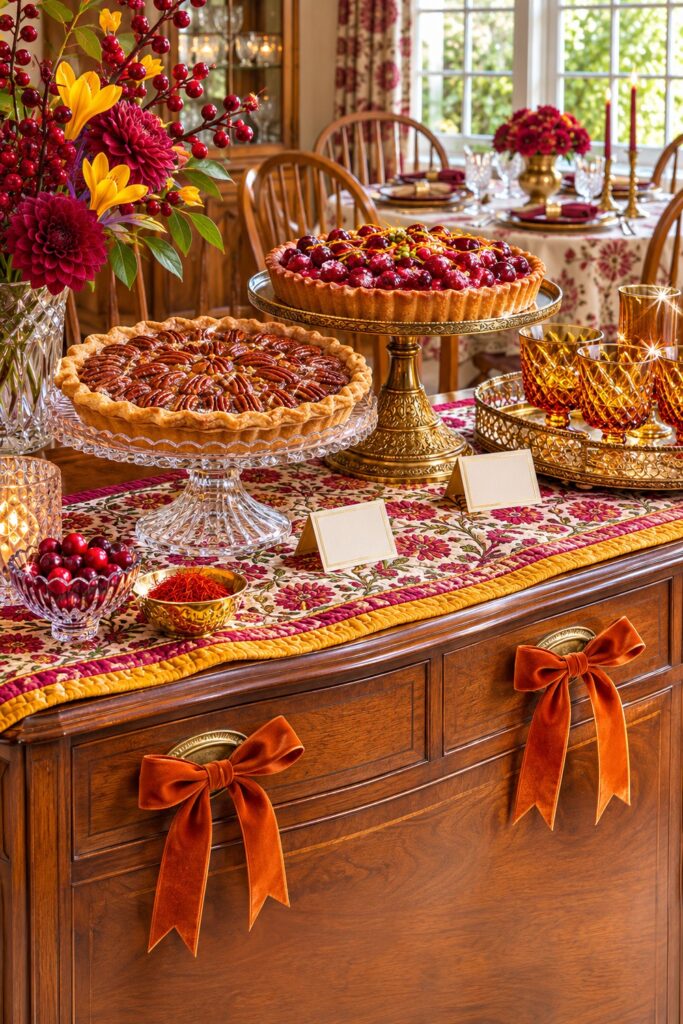
Velvet bows can sit on a drawer pull if that drawer can stay closed through dessert. Tie the tails short enough that they won’t catch on a nearby chair. An empty small bowl can hold spare forks, and simple folded cards can name the desserts where guests can read them from above.
Think about the sideboard after several slices have gone. A small saucer for a used pie server, a clean cloth in a nearby drawer and a spare stack of plates all help. Fillings and toppings can stay off the sideboard until you are ready to bring them out, leaving space to work during dinner.
Adapt it to a narrow cabinet
Set one pie forward with its server and reserve the other dessert for a second round. You can still use the same color combination. A row of amber glasses on a neighboring table or a cranberry cloth folded under a single stand will carry the idea without stretching the cabinet beyond its job.
Layer the sideboard from the wall forward
The back of the sideboard can take more pattern because it does less work. Move the tallest glasses toward that edge, provided a guest can still reach them easily, and keep the front clear for the plates. If the cabinet sits against a mirror, check the reflection at eye level. A group of glasses may look twice as full in the mirror. Give the two pie plates a little more room on either side when that happens.
Look at the runner from the chairs around the table. A plain cream edge can make the cranberry pattern easier to distinguish from the grain of the sideboard. A busy binding may be charming up close but merge with the pie stand from a distance. Fold the runner under at one end if you need to move a patch of pattern into view. Keep that fold away from the feet of the dishes so the surface stays level.
Choose the plates for the way you serve
A plate wide enough for a pie slice and a scoop or spoonful gives guests room to make their own combinations. Stack a manageable number on the cabinet and place the extras nearby. Pick up the top one with both hands as a guest might. If the top plate is awkward to lift, change the angle of the stack or use a shallower stack. Plain ivory plates give a dark pie crust a handsome edge and leave the pattern in the runner easy to see.
When the sideboard has two approaches, use one end for plates and the other for drinks. Consider where people are likely to cross paths when they return to their seats. If a chair sticks out into that route, put the glasses on a different surface or slide the sideboard display toward the more open end. The room will feel as welcoming when dessert is served as it did when you laid out the dishes.
Give each pie a little visual breathing room
Set the pie with the most intricate crust against the quietest part of the textile. Let the tart sit where the amber glass can catch the color along its edge. A small folded card can name each dessert, including a short note about nuts where appropriate. Try reading it from the spot where you would stand with a plate in hand. Turn the card a little if the light from a nearby window or lamp catches its face.
In a room with a very ornate table setting, you can keep the decorations on the sideboard lower and more concentrated. Put the brightest ribbon on a single drawer and use the same napkins in both places. The red and saffron can appear more intensely by the pies, while the dining table gets a smaller repeat.
Look for pieces with good proportions
Low amber cake stand
Measure the base and top before shopping. The plate should sit fully on the stand.
Quilted table runner
A small-scale print will stay visible between plates. Check how the binding lies on the cabinet.
Pie server
A broad, thin end helps slide the first cut slice onto a plate.
Pressed amber tumblers
Choose a shape you can grasp easily even when the tray is full.
Small saucer
Use it as a dedicated resting place for the pie server after the first slice.
Folded place cards
Try a cream paper that stays upright and can be read in the evening light.
Final Styling Tip
Turn the amber tray until its glass edges light up from the dining room doorway. Then pull it back just enough that a guest can set a plate down in front of the pies.