*This post may contain affiliate links for which I earn commissions.*
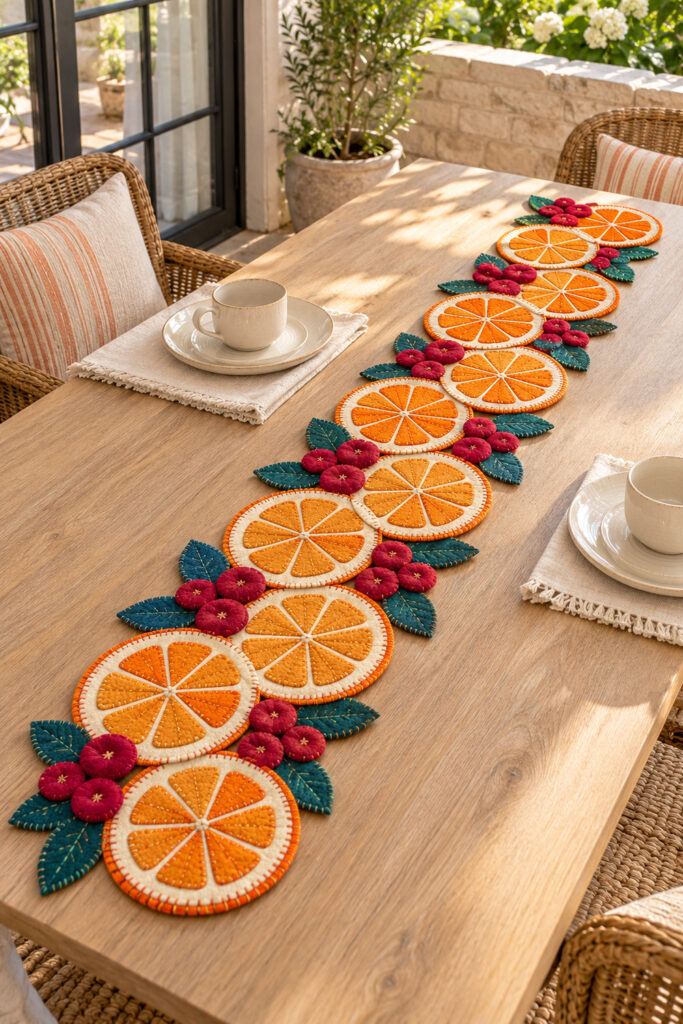
Felt orange slices, cranberry-colored clusters, and deep teal leaves make a lively strip down this pale wood breakfast table. The citrus rounds have cream rings and stitched segments, so their shapes stay clear even where they overlap. It’s a Thanksgiving table idea with a handmade look and an unexpected splash of orange.
What stands out is how little else the table needs. Cream cups and saucers sit to either side, leaving the runner uncovered. You can borrow that balance for brunch, a small holiday breakfast, or a seasonal table that still needs room for people to eat.
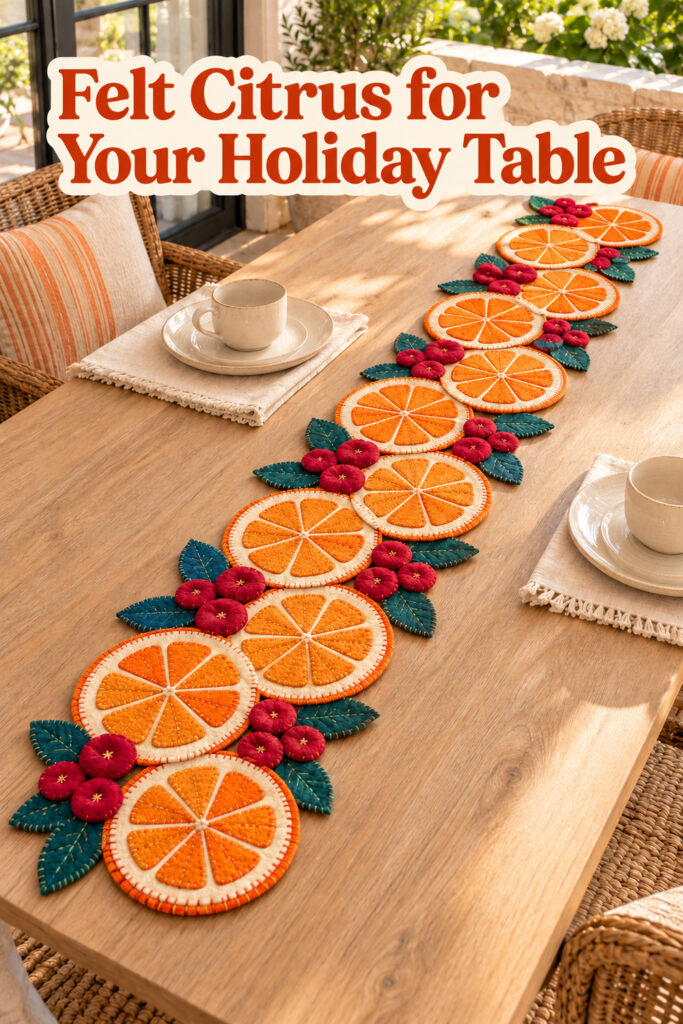
This inspiration image was created with AI and does not show a verified finished textile or an actual table setting.
What Makes This Felt Runner Work
The orange circles repeat along the table, but they shift slightly from side to side. That gives the arrangement movement without making it look scattered. Dark teal leaves and cranberry clusters fill selected gaps, creating an irregular outline that feels more like connected motifs than a rectangular piece of fabric.
Cream rings are a small but useful detail. They separate the orange centers from the pale wood and define each slice where two circles meet. If you choose a similar runner, look for that distinction between the rind and the segmented center. It makes the citrus theme easier to read than plain orange discs would be.
The deep red accents keep the orange from dominating every part of the strip. Teal leaves add a cooler note, while visible stitches connect the whole piece to the soft napkins nearby. The image’s light wood background helps all three colors stand out. A dark table could work too, especially with clearly defined cream edges.
Find Citrus Table Runners
Browse current Amazon options that can help you recreate this look.
Browse Citrus Table Runners on Amazon →As an Amazon Associate I earn from qualifying purchases.
Key Pieces to Recreate the Look
A Felt Citrus Table Runner
Look for a stitched runner with recognizable orange slices and a narrow, continuous arrangement. The pictured design is imagined, so a related felt garland, appliqued runner, or citrus-themed textile may be a more realistic starting point. Compare the overall shape before trying to match every detail.
For a component interpretation, separate felt citrus shapes could be arranged on a suitable fabric runner. Any permanent construction would need an appropriate sewing method, but a temporary arrangement can help you judge the colors first. Keep loose pieces away from place settings, and don’t assume separate decorative motifs will function like a connected, washable table textile.
Cranberry-Colored Felt Accents
The red clusters suggest berries through their rounded shape and gathered centers. They create small punctuation points between the much larger orange slices. A similar effect could come from red felt circles, a stitched berry motif, or a runner that already includes a restrained amount of deep red.
Avoid replacing the little clusters with large floral decorations that sit high above the table. The appeal here is a low strip with soft texture, leaving the place settings unobstructed. If your substitute textile already has enough red, you may not need any additional berry details at all.
Teal Leaf Shapes
Dark aqua or teal leaves separate the warm colors and extend the outline sideways. Their pointed forms contrast with the citrus circles, which helps the whole runner feel more interesting. The visible stitch lines suggest leaf veins without adding another print to the table.
A nearby green shade could work if teal isn’t available. Keep it a little deeper than the orange and cream so it still provides contrast. If you use a finished runner with ordinary green foliage, try plain cream dishes rather than adding teal accessories just to force the original palette into the room.
Plain Cream Tableware and Linen Napkins
The cups and saucers are simple enough to leave the felt as the main subject. The light napkins add another soft texture without a competing motif. This is an excellent place to use everyday cream or white pieces instead of looking for special Thanksgiving dishes.
Check that each setting has enough clear table around it. Cups, saucers, plates, and cutlery should rest on a stable, level surface rather than partly on raised felt berries. A decorative runner is not automatically a heat-resistant mat, so use suitable protection for hot serving pieces according to the textile’s care guidance.
How to Style It at Home
Start with the table completely clear so you can judge the runner’s width. Place it along the middle and leave room at both ends for any serving arrangement you need. The inspiration uses a long, narrow shape rather than covering most of the surface. That proportion is what makes the details feel generous without taking away eating space.
Arrange the main citrus line before considering extra accents. If your piece is flexible, ease it into a slight curve rather than pulling every motif into a perfectly straight row. Check that overlapping circles still read as separate slices. You want a connected pattern, not a pile of felt shapes in the center.
Set out the actual dishes you’ll use next. Don’t judge clearance with just one cup if the meal also needs dinner plates and several serving bowls. A small breakfast table may need a shorter runner or fewer place settings than the inspiration suggests. Keeping the citrus uncovered is more useful than forcing the full length into a crowded table.
On a round table, try a shorter central strip with visible wood around it. On a narrow rectangular table, simplify the supporting pieces and avoid a tall centerpiece. The runner already supplies the visual interest. You can place serving dishes on a nearby counter if that makes the meal easier to manage.
For a sheltered terrace like the one suggested here, consider wind and moisture before using a lightweight felt piece. Bring it indoors after the meal unless the materials are specifically intended for outdoor conditions. Check that leafy points won’t catch when chairs are moved and that no loose decorations are likely to blow into food.
Afterward, follow the finished textile’s cleaning instructions. Some felt items may need gentle spot cleaning rather than a wash with the table linens. Store the runner flat or loosely supported so the citrus rings and berry details aren’t sharply creased. A little care with storage preserves the shapes that make it distinctive.
Shop Similar Pieces
Find Felt Citrus Runners and Orange Slice Appliques
Look for clear segments, cream edging, and a layout that fits your table. A shorter well-proportioned piece can be more useful than a longer one that leaves no space for dishes.
Look for Teal Leaves and Deep Red Felt Motifs
These components are relevant if you’re planning a custom or sewn interpretation. Match their scale to the citrus so they fill the gaps without hiding the orange circles.
Shop Cream Cups and Plain Linen Napkins
These supporting pieces should stay quiet. Start with the tableware you own and add only what helps the runner remain visible and the meal comfortable.
Final Styling Tip
Set one complete place setting beside the runner before arranging the others. That quick test tells you whether the table still works for breakfast as well as for a photograph.