*This post may contain affiliate links for which I earn commissions.*
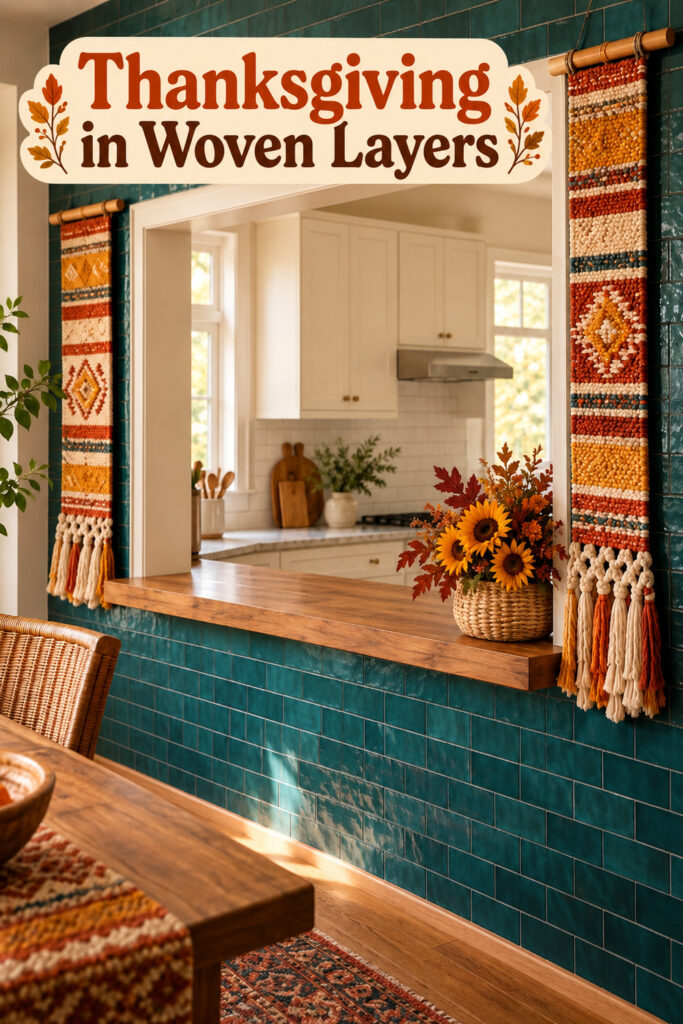
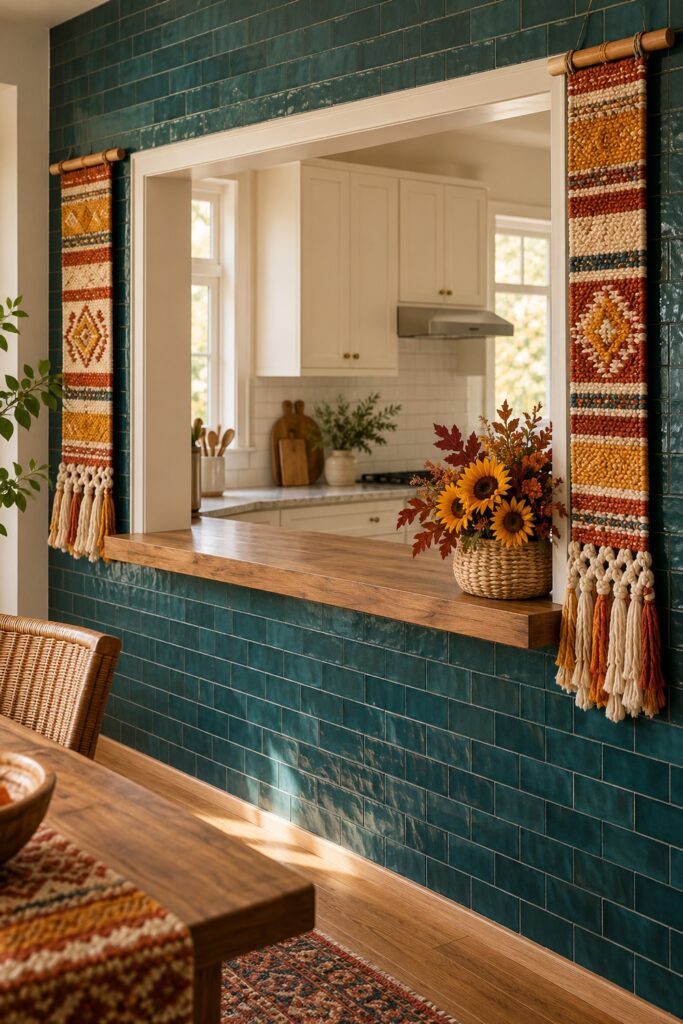
A serving hatch is an interesting place for Thanksgiving decorations because it already frames a view into the kitchen. Here, two narrow woven panels hang beside the opening, with rust, saffron, and cream yarn set against teal tile. A basket of sunflowers and autumn leaves sits at one end of the wooden ledge.
The arrangement leaves most of the opening and serving surface clear. That’s a useful detail if the hatch still earns its keep during a family meal. You can borrow the warm textiles and one small flower arrangement while keeping the spot available for the dishes that need to pass through it.
This inspiration image was created with AI.
What Makes This Harvest Arrangement Work
The long panels follow the vertical sides of the hatch. Their narrow shape emphasizes the opening without behaving like curtains across it. Cream bands echo the pale trim and kitchen cabinets, while the stronger gold and rust colors stand out against the cool tile. The thick fringe gives each panel a soft finish below the more orderly stripes and diamonds.
The wooden sill adds another warm surface. It connects the yarn colors to the woven flower basket, so the arrangement has more than one reason to sit together. The sunflowers also repeat the gold from the panels. Their dark centers and russet leaves add a little depth without requiring a separate collection of small decorations.
The sides aren’t identical in the photograph, and they don’t need to be. Similar width, related colors, and a repeated hanging method are enough to make them feel like a pair. That gives you room to use two textiles you like instead of chasing a perfectly matched set.
Key Pieces to Recreate the Look
Narrow Woven Wall Panels
Find fringed wall hangings
Browse current Amazon options that can help you recreate this look.
Browse fringed wall hangings on Amazon →As an Amazon Associate I earn from qualifying purchases.
Look for slim wall hangings with warm stripes, geometric details, and a visible yarn texture. The scale matters more than an exact pattern. A broad tapestry would take up too much tile and make the opening seem smaller, while a very tiny hanging could get lost beside substantial trim.
Hold a paper strip beside your hatch before choosing a panel size. This is a simple way to check the width and length without making holes. Let the bottom end where it looks deliberate rather than trying to line it up with every nearby surface. In this inspiration, the yarn hangs below the ledge and remains outside the opening.
Short Wooden Hanging Rods
The pale rods are a small but noticeable part of the design. They tie the panels back to the wooden sill and keep the tops straight. A simple dowel or a finished wall hanging with its own rod could achieve that effect. Use a mounting method suitable for the wall material and the weight of the textile.
Tile requires a little more thought than a painted wall. Choose a compatible removable hanging option only when its instructions support the surface and load, or have an appropriate permanent fitting installed. Don’t assume a hook will hold simply because a panel feels light in your hand. Test the arrangement before placing breakable dishes beneath it.
A Low Woven Flower Basket
The basket fits on the right end of the sill and keeps its base below the flowers. That leaves the stems and petals visible while giving the arrangement a stable footprint. Choose a basket narrow enough to sit fully on your ledge. A handle isn’t necessary and could get in the way of the hatch opening.
Use a separate watertight container inside if you’re arranging fresh stems. The basket itself shouldn’t have to hold water. For faux stems, an inner pot or suitable floral support can help keep the arrangement together. Either version lets you lift the flowers away when you need the full serving surface.
Sunflowers and Russet Leaves
The flower color connects directly to the saffron yarn. Start with the sunflowers, then add a few darker leaf stems to break up the round flower faces. The image has a gathered shape with a little movement around the edges. A tight, perfectly spherical bouquet would feel different from these loosely arranged harvest stems.
If your ledge is shallow, reduce the number of flowers rather than allowing the basket to project into the room. Angle a few stems toward the wall and keep the ones facing the opening short. The goal is a readable sunflower cluster that doesn’t brush every plate passed through the hatch.
Existing Cream and Wood Kitchen Details
The pale cabinetry beyond the opening gives the strong colors a quiet background. You can use that relationship even if your kitchen looks different. Keep the immediate view into the kitchen reasonably simple, especially the counter directly behind the seasonal flowers. One practical utensil container is easier to look past than several unrelated decorative pieces.
If the room beyond is colorful, narrow the panel palette. Rust and cream alone could relate to the same harvest idea without adding another large color combination. The image is inspiration for framing an opening, so changing the textile colors to fit your existing kitchen is a sensible adjustment.
How to Style the Hatch for Thanksgiving
Begin with the opening empty and decide which side is least useful for passing dishes. Put the flower basket there, then pretend to carry a platter through the hatch. If you have to turn it awkwardly or lift it over the leaves, move or shorten the arrangement. A pretty ledge is much more enjoyable when it still works as a ledge.
Next, position the panels outside the trim. Allow a little wall space between each hanging and the opening so the pale frame stays visible. Check the top rods with a level or by measuring from a consistent reference point. Related placement helps two different woven patterns look intentional.
Keep the fabric away from the cooking area on the other side. The panels belong on the room-facing wall, where they’re clear of heat, splashes, and the work of passing food. If your hatch is directly beside a stove or another source of heat, use a different location for the textiles and keep the seasonal idea to a removable arrangement elsewhere.
Finish by looking at the whole wall from the usual approach to the room. The foreground textiles on the nearby table echo the wall colors in this image, but that repeat can be much smaller in your home. A folded rust napkin or a cream runner would connect the spaces without introducing another large pattern.
Shop Similar Pieces
Shop Similar Fringed Wall Hangings
Use the panel dimensions and warm color combination as your main filters. Look closely at photographs showing the hem and rod attachment. The thick fringe is an important part of this effect, but a tidy shorter fringe can be easier to fit beside a compact hatch.
Look for Woven Baskets and Inner Containers
Check the basket’s actual base dimensions against the sill. A slightly tapered basket may look narrow at the bottom yet spread much farther near the rim. Choose the inner container at the same time so the flowers can be moved as one arrangement.
Shop Similar Sunflower and Autumn Leaf Stems
Choose stems with sizes that suit a low basket. A few distinct flower heads and darker leaves will carry the harvest connection. You can mix similar stems with pieces you already have, then adjust their height after seeing them beside the panels.
Final Styling Tip
Leave the middle of the hatch open. The two fringed sides and one sunflower basket already frame the view, and the clear center keeps the decoration useful when Thanksgiving dinner is ready to serve.