*This post may contain affiliate links for which I earn commissions.*
A long charcoal trough holds amber leaves, pale gourds, and apples down the center of this Thanksgiving table. Ivory plates and folded neutral napkins repeat at each setting, while amber drinking glasses carry the autumn color beyond the centerpiece.
The arrangement makes good use of length. It gives the table a clear middle without relying on one tall bouquet, and the wooden surface remains visible beside the runner.
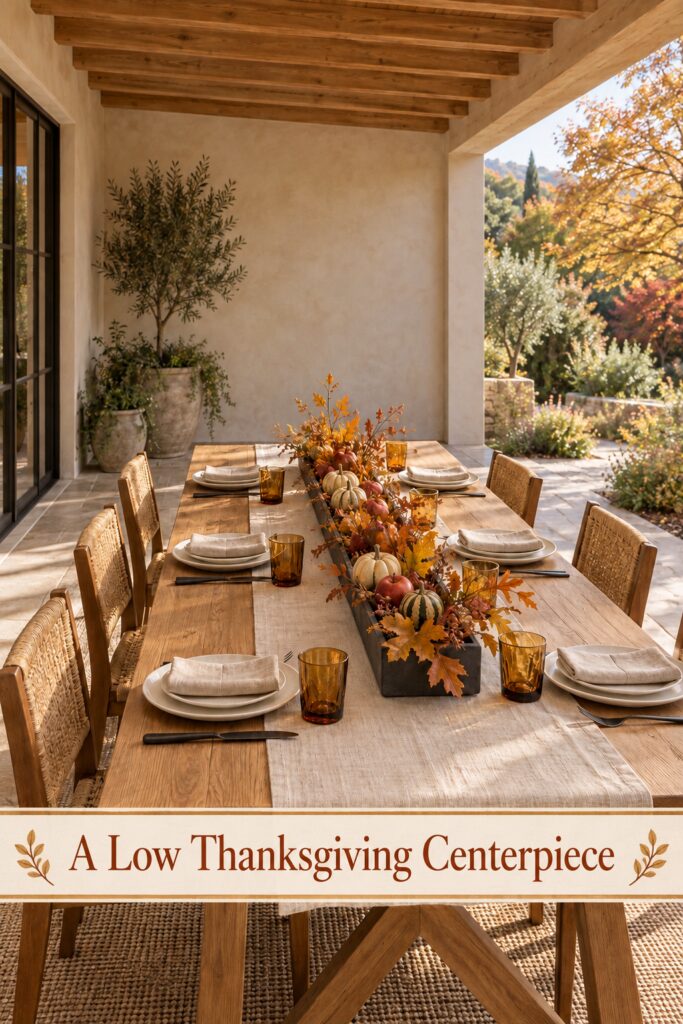
The inspiration image was created with AI and shows a table styling concept rather than a photographed gathering or verified products.
Why the Long Centerpiece Works
The narrow container follows the table’s longest line, which connects the separate place settings. Instead of several unrelated decorations, the fruit, gourds, and foliage read as one arrangement. The dark base also makes the cream gourds stand out clearly against the natural wood.
Amber foliage supplies most of the seasonal color, with red apples adding smaller points of contrast. Some leaves reach beyond the trough, but the larger objects remain contained. That keeps the center interesting while giving the arrangement a defined footprint.
The runner softens the wood without hiding the entire table. Its pale color connects the centerpiece with the plates and napkins, while the repeated amber glasses make the warm color feel distributed. Those glasses help the foliage belong to the whole table rather than just to its middle.
Find Low Rectangular Centerpiece Trays
Browse current Amazon options that can help you recreate this look.
Browse Low Rectangular Centerpiece Trays on Amazon →As an Amazon Associate I earn from qualifying purchases.
Pieces for the Harvest Table
A Long Low Trough or Tray
Look for a shallow rectangular container that fits comfortably between opposite place settings. Charcoal is a close visual match, but dark brown or a quiet aged wood finish can create a similar boundary. Check the usable interior width as well as the overall dimensions.
The container should rest steadily and protect the table beneath it. If you plan to use fresh materials, add an appropriate liner or choose a vessel intended for that use. For a dry decorative arrangement, a tray may be simpler than a planter with unnecessary drainage features.
Amber Autumn Foliage
Choose leaves in a related range of ochre, amber, and muted orange. A mix of sizes can make the arrangement feel natural, provided the palette remains fairly narrow. Flexible faux stems are useful because you can bend them along the container and reuse them later.
Look for foliage that shows some branch structure instead of a solid mass of leaves. The inspiration has small sprigs rising above the gourds and others reaching outward. You can create that difference with a few well chosen pieces rather than filling the entire trough densely.
Small Pale Gourds
Cream gourds make the clearest contrast inside the centerpiece. Their curved surfaces are easy to see among the leaves, and their modest size suits a low table arrangement. A few green striped gourds add variation without changing the main palette.
Use real or faux decorative pieces according to your plans. Check fresh gourds for soft spots and keep them off surfaces they could stain. Faux versions make a reusable display, but choose shapes that fit the container rather than forcing oversized pumpkins into a narrow tray.
Apples or Decorative Fruit
The red apples bring a useful change from the amber and cream. They appear in small groups along the center instead of becoming a separate bowl arrangement. This keeps the color moving down the table and helps break up repeated pale gourds.
If you use edible apples, keep them clean and separate from craft materials or anything not intended for food contact. Decorative apples can provide the same color without becoming part of the meal. Either way, place them securely so they won’t roll out when the table is bumped.
An Oatmeal Runner and Napkins
The runner follows the trough and leaves a band of wood visible on both sides. A plain weave or linen look texture suits this image better than a strong printed pattern. Choose a width that still leaves enough room for the place settings to sit naturally.
Fold the napkins simply on the plates. Their pale color connects the settings to the runner without requiring elaborate folds or rings. You can use your everyday neutral linens, including ones that aren’t a perfect match, if their tones work together on the table.
Amber Drinking Glasses
Amber glasses repeat the foliage color at each setting. Their rounded shape gives the table another simple repeated element beside the pale plates.
If you already have clear glasses, keep them and repeat amber with a smaller decorative accent elsewhere. The centerpiece still carries the main idea. Matching every detail is less useful than setting a comfortable table with pieces you enjoy using.
Arrange the Center Before Setting the Table
Place the runner first, smoothing it enough that the trough sits steadily. Set a plate and glass on each side as a practical test before filling the container. This shows you how much width remains for foliage and whether the centerpiece is already too large.
Position the largest gourds along the trough with gaps between them. Vary their orientation so the stems and ridges are visible from both sides. Don’t put all the tallest pieces together; distribute them so one end doesn’t become much heavier than the other.
Add apples in the open spaces, using their red color as small accents. Check that each piece rests securely on the container or appropriate support. A narrow trough can look full without balancing fruit on top of other fruit.
Work the foliage around the larger objects. Tuck some stems low along the length and let a few lighter sprigs rise between the gourds. Keep leaves clear of plates and glasses, especially where guests will reach across to pass dishes.
Sit down before adding more height. The arrangement should allow comfortable conversation across the table. If a branch blocks a face, shorten or reposition it; a lower spray can still provide the same amber color and leaf shape.
Check how serving dishes will reach the table. If the centerpiece takes most of the middle, plan a sideboard or reduce its length. The inspiration is useful for styling, but your Thanksgiving meal may need space for platters, bowls, and the practical business of passing food.
For a shorter table, use one modest tray rather than extending the display from end to end. Leave clear space near the ends for serving or additional settings. A compact line of foliage and pale gourds can preserve the look without making dinner feel squeezed.
On a covered terrace, consider the actual weather rather than the image’s calm conditions. Use stable pieces and avoid delicate loose foliage in wind. Bring linens and decorations inside when their materials or the forecast make outdoor use unsuitable.
Finish the place settings with pale plates, simple napkins, and the glasses you intend to use. The inspiration includes dark flatware, which supplies another small contrast. Existing silver colored utensils can work just as well because the centerpiece remains the strongest seasonal element.
Shop Similar Pieces
Look for Low Rectangular Centerpiece Containers
Compare width and height against your place settings. A narrow container with a stable base is more useful than an oversized trough that leaves no room for the meal.
Add Autumn Leaves and Small Gourds
Choose modest gourds and flexible foliage that fit together without stacking. Cream, green stripes, and amber give you the image’s main color relationship, with apples supplying a little red.
Shop Similar Neutral Linens and Amber Glasses
Use existing plates and napkins wherever possible. Amber drinking glasses are a supporting option if you want to repeat the centerpiece color around the table.
Final Styling Tip
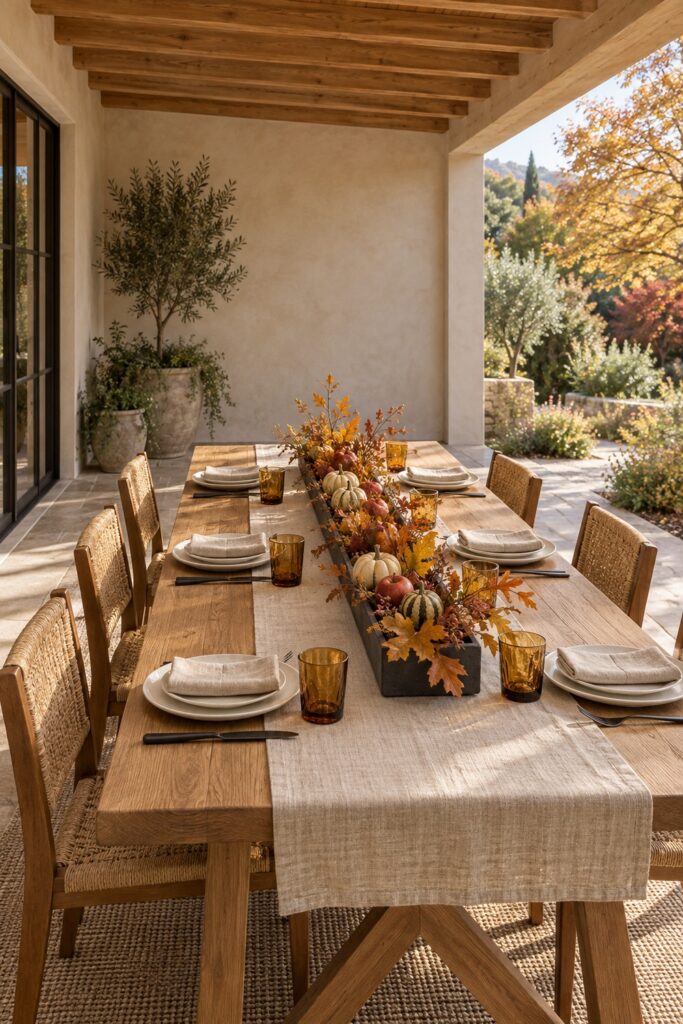
Build the arrangement with one place setting already in position on each side. It is much easier to keep the centerpiece useful when the dinner plates get their space first.