*This post may contain affiliate links for which I earn commissions.*
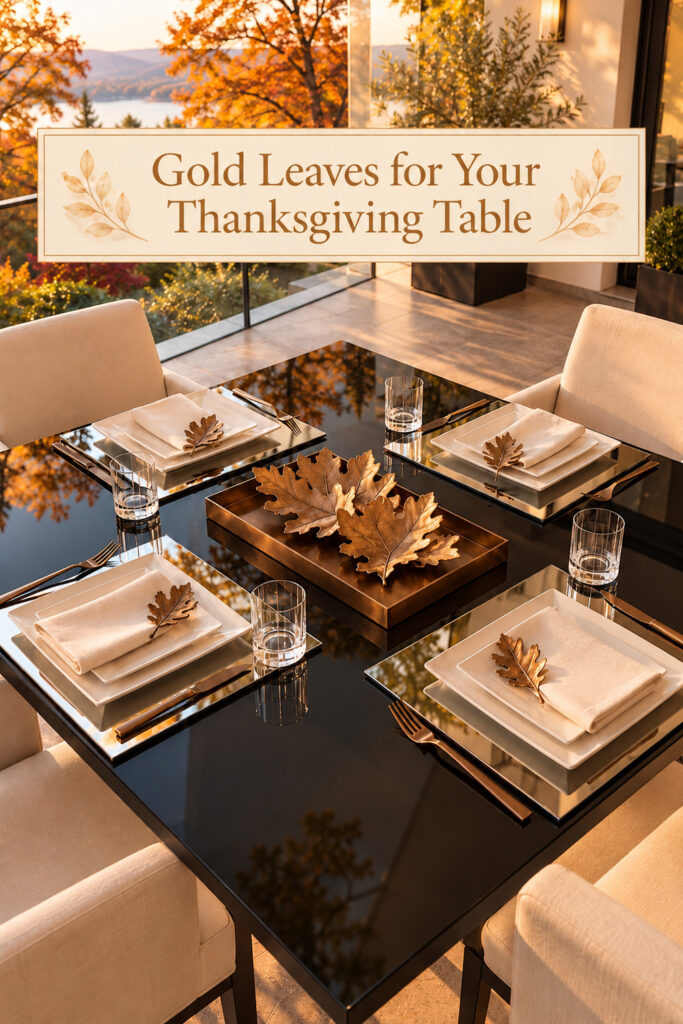
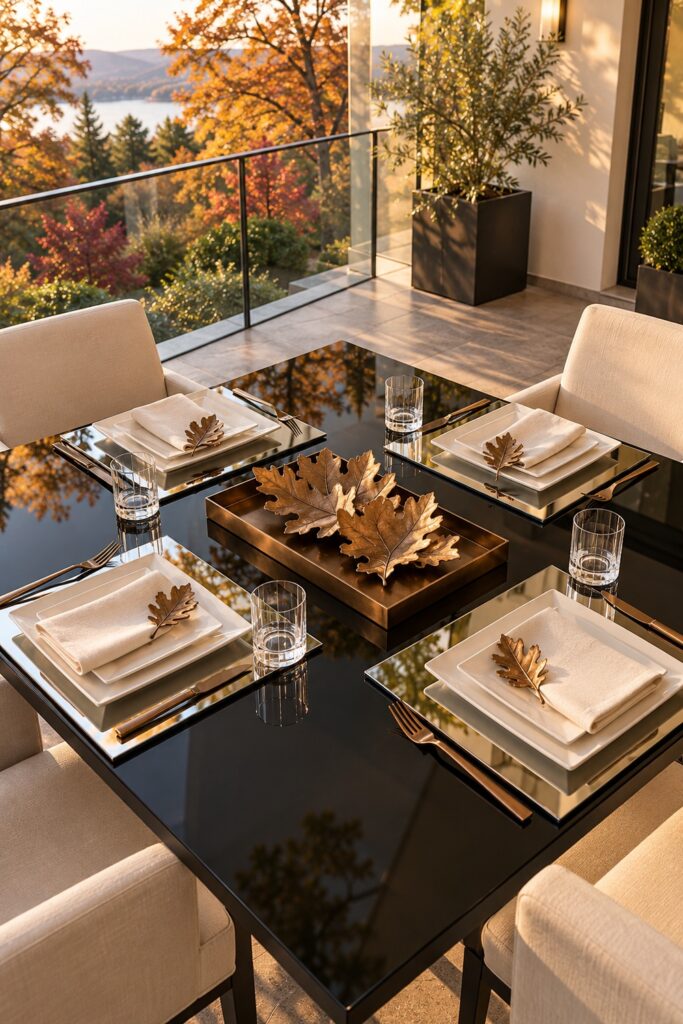
Square ivory plates, pale napkins, and metallic oak leaves give this Thanksgiving table a clear, orderly shape. Mirrored placemats sit beneath the place settings, while a low bronze tray holds a small leaf arrangement at the center. The glossy black tabletop reflects the warm colors of the autumn setting around it.
It’s a useful direction if you like a holiday table with a few strong details. You can recreate the repeated leaves and simple layers with your own dishes instead of matching every object in the inspiration.
This inspiration image was created with AI.
Why the Leaf Table Setting Works
The square shapes repeat from the placemats to the plates and central tray. That repetition gives the table structure before any seasonal decoration is added. It also creates a calm background for the oak leaves, whose irregular edges provide most of the decorative detail.
A small metallic leaf rests on each folded napkin. The same motif appears in larger pieces at the center, linking the individual settings to the shared arrangement. You can follow that idea with only a handful of leaves because their placement makes the repetition obvious.
Ivory keeps the gold and bronze from becoming too heavy. The plates, linens, and chairs occupy plenty of space, so the metal finishes appear as accents rather than covering every surface. Clear glasses let the tabletop and reflections remain visible through them.
The centerpiece stays low. Its leaves have some lift and shape, but they don’t form a tall barrier between seats.
Find Metallic Oak Leaf Accents
Browse current Amazon options that can help you recreate this look.
Browse Metallic Oak Leaf Accents on Amazon →As an Amazon Associate I earn from qualifying purchases.
Key Pieces for the Thanksgiving Table
Metallic Oak Leaf Decorations
Look for decorative leaves with a recognizable oak outline and a warm gold or bronze finish. Small individual pieces suit the napkins, while larger leaves can make the centerpiece. The title refers to leaf-shaped decorations, not to sheets of gilding material.
Choose pieces with smooth edges and a finish that won’t shed onto the linens. These accents are decorative, so keep them separate from food and remove them before eating. A lightweight faux leaf can carry the same motif if a sculpted metal piece isn’t practical.
Mirrored Placemats or Reflective Chargers
The mirrored squares create a bright border around the ivory plates. They also repeat the reflection of the dark table. Use products intended for tabletop use, with finished edges and a suitable backing that protects your furniture.
Reflective chargers or metallic placemats can provide a similar border if mirrored pieces are hard to find. You don’t need a perfect mirror to preserve the idea. The important feature is a defined light-catching layer beneath the pale dishes.
Simple Ivory Plates
Square plates reinforce the geometry in the inspiration, but round dishes can work if you repeat their shape consistently. Choose your existing dinnerware first and let the other layers support it.
Check the plate’s footprint against the placemat or charger. Leave enough visible border for the reflective layer to matter. If the dish covers nearly the whole base, the added layer may contribute little while making the setting more cumbersome.
Cream Napkins
A simple rectangular fold gives each leaf a quiet place to rest. The inspiration uses pale napkins without elaborate shaping, which lets the metallic accents do the decorative work. Soft cream or ivory also connects the table to the upholstered chairs.
Use a fabric that folds neatly and is pleasant to use. You can press the napkins before setting the table if they need it, but don’t make the fold so complicated that guests struggle to open it. The leaf should lift off easily before the meal.
A Low Bronze Tray
The central tray contains several larger oak leaves and repeats the warm metal finish. A shallow vessel works well because it lets the shapes show while keeping the arrangement low. Use a tray you already own if its size suits the table.
Keep the decorative leaves stable inside it. They shouldn’t balance on sharp tips or project into the space where dishes will sit. If the leaves need support, choose a discreet method suited to their material rather than forcing a folded shape that could damage them.
Clear Glasses and Warm Metallic Flatware
Clear drinking glasses give the table a lighter layer and allow reflections to pass through. Warm metallic flatware repeats the leaf finish in a useful object, but ordinary silver-colored utensils are a perfectly workable substitute if that’s what you own.
Set the flatware for the meal you’re actually serving. Adding extra pieces just to fill space can make a small table feel crowded. Keep enough distance between the utensils and the placemat edges that guests can pick them up comfortably.
How to Build the Settings Around Your Meal
Start with the placemats or chargers and center each one in front of its chair. Leave room for elbows and for pulling the chair in. The arrangement needs to work at seated height, not just from the elevated view shown in the inspiration.
Add the plates, then place each folded napkin in the same general position. Set one small leaf on top and check that it stays in place without adhesive. Guests should be able to remove it easily and set it aside before using their napkins.
Put the centerpiece tray in the middle and arrange the larger leaves in a low overlapping group. Turn them slightly so the veins and outlines show. Leave some tray visible around the edges, giving the arrangement a boundary instead of filling it to the rim.
Now add the glasses and utensils. This is where you’ll discover whether the reflective bases are too large for the usable space. If a glass sits awkwardly near the edge, reduce a layer or use smaller placemats rather than pushing the entire setting outward.
Plan where serving bowls will go before finishing the decor. A square table with four complete settings may have little space left for shared dishes. You can put food on a nearby serving surface and keep the low leaf tray at the center, or lift it away when dinner begins.
For an outdoor Thanksgiving meal, use this as styling inspiration and adjust for the weather. The pictured terrace is sheltered, but loose leaves and napkins can still move in wind. Choose stable pieces, keep the table clear of fragile exposed edges, and move the meal indoors if conditions make the arrangement impractical.
If your table is wood rather than black, the same ivory and bronze palette will look softer. You can retain the reflective border without adding a dark tablecloth. The repeated oak leaves are enough to keep the seasonal idea recognizable.
Shop Similar Pieces for the Leaf Table
Shop Similar Metallic Oak Leaf Accents
Compare small napkin-sized decorations with larger centerpiece pieces. Look for finished edges and a coating suited to handling. Keep them decorative unless their maker explicitly states a food-contact use, and remove them from plates before serving.
Look for Reflective Tabletop Chargers
Choose pieces with protective backs and an appropriate size for your dishes. A metallic substitute can give the same light border with less reflection. Check how a complete place setting fits before buying enough for the entire table.
Add Pale Linens and a Shallow Bronze Tray
Plain napkins allow the leaf silhouette to show clearly. A low tray gathers the central decorations and makes them easy to lift away for serving. Match the tray to the available center space rather than choosing it only for its finish.
Final Styling Tip
Set one complete place setting before doing the whole table. If the plate, napkin, leaf, glass, and utensils fit comfortably, repeat that arrangement. A usable setting will feel more welcoming than an extra decorative layer squeezed beside the chair.