*This post may contain affiliate links for which I earn commissions.*
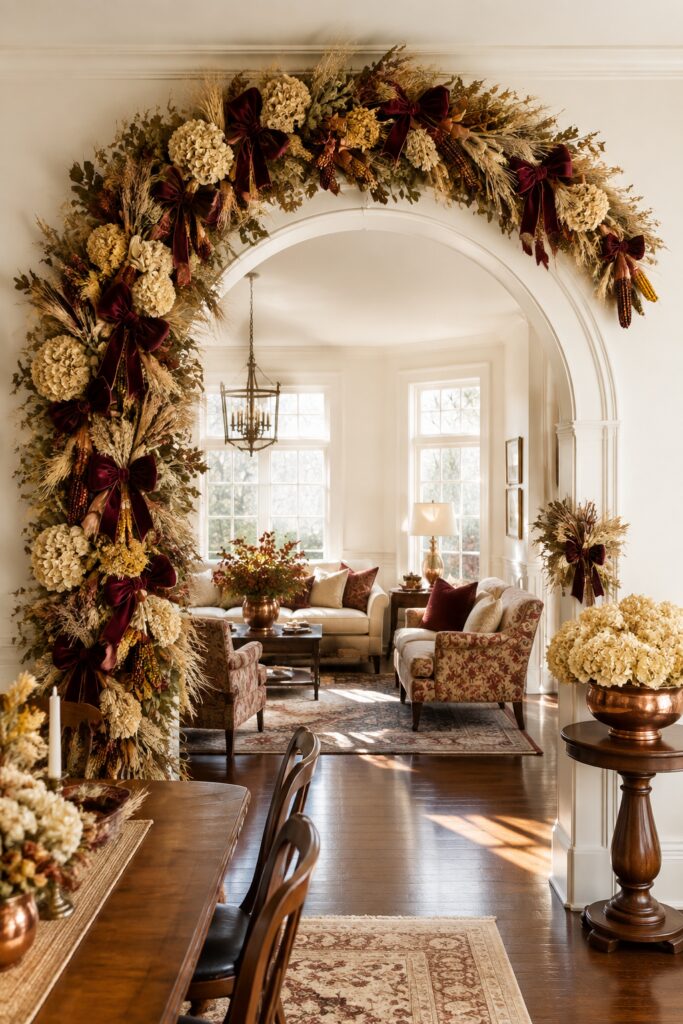
A wide interior archway offers enough space to make Thanksgiving decorations feel architectural rather than simply added to a tabletop. In this light-filled home, an abundant harvest swag follows the left side of a rounded ivory opening and curves across the top, framing the view from the dining room into a comfortable sitting room.
The arrangement combines wheat, cream hydrangeas, muted olive foliage, ornamental corn, burgundy velvet bows, and copper ribbon. Most of the decoration is concentrated on the left and upper portions of the arch. A much smaller matching bundle appears on the right jamb, preserving the openness of the passage while giving the design a finished ending point.
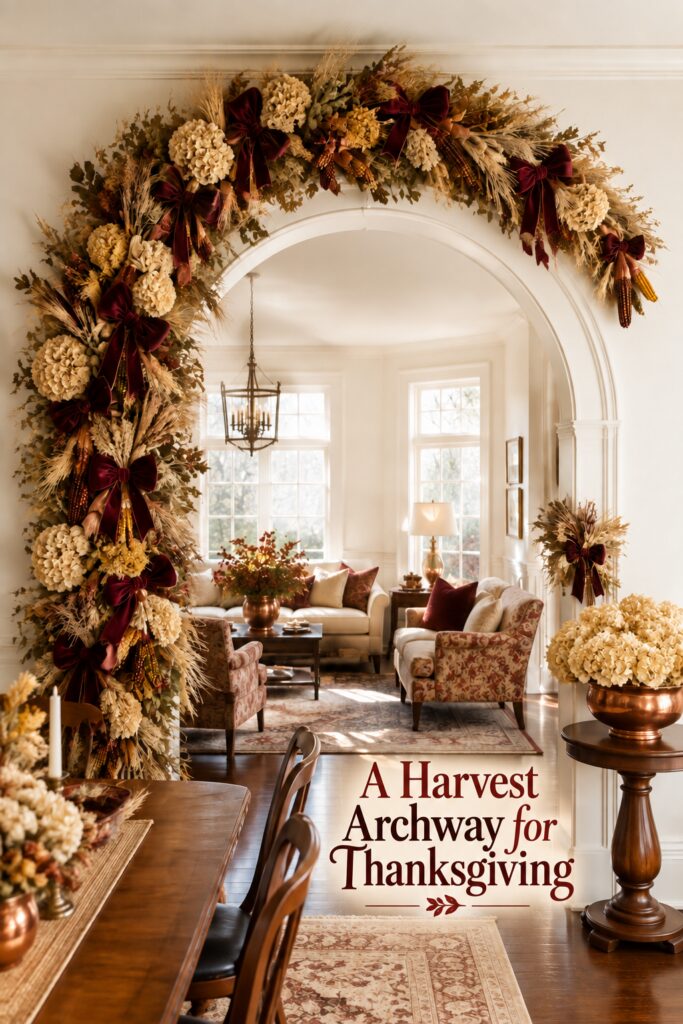
This inspiration image was created with AI and is intended to offer ideas for recreating a similar seasonal effect with related materials.
Why the Asymmetrical Shape Works
A symmetrical arch would create a formal frame, but it could also make this broad passage feel visually heavy. The asymmetrical design allows the display to remain full and dramatic without surrounding the entire opening.
The greatest density appears along the left jamb. From there, the materials curve across the top and gradually become lighter as they approach the right side. This change in volume creates movement and encourages the eye to follow the rounded architecture.
The small bundle on the right jamb provides balance without matching the larger swag. It repeats the wheat, muted foliage, and burgundy ribbon, making it clear that the two sections belong together.
To adapt the approach, identify the side of the doorway that can support more visual weight. Consider nearby furniture, traffic patterns, wall space, and the direction from which the arch is usually seen. The fuller side should enhance the view rather than block the passage.
Wheat Gives the Display Its Harvest Structure
Wheat is used throughout the swag in both upright sprays and outward-facing bundles. Its pale golden color adds warmth without making the ivory archway appear dark.
Find Bundles of Wheat Stems
Browse current Amazon options that can help you recreate this look.
Browse Wheat Bundles on Amazon →As an Amazon Associate I earn from qualifying purchases.
The straight stalks also create a useful structural contrast. Rounded hydrangeas provide dense clusters, while the wheat extends beyond them and gives the arrangement a loose, feathery edge.
A mixture of dried and artificial wheat could be used. Natural wheat offers subtle variation and a traditional harvest texture. Faux stems may be easier to bend around the curve of an arch and can be stored for future seasons.
Instead of spreading individual stalks evenly through the arrangement, group them into visible sprays. Let some point upward along the left side and others follow the horizontal curve across the top. Varying their direction helps the swag appear to grow around the architecture.
Cream Hydrangeas Break Up the Long Garland
Large cream hydrangea heads punctuate the swag at irregular intervals. Their rounded shapes keep the long arrangement from becoming a continuous band of fine stems and leaves.
The pale flowers also connect the decoration to the ivory walls and trim. This prevents the dark burgundy bows and brown corn from feeling too heavy against the light interior.
When placing similar flowers, begin with the largest heads. Space them along the full section of the swag, but avoid measuring perfectly equal intervals. Add a few smaller flower clusters between them to keep the arrangement relaxed.
Faux hydrangeas will be easiest to wire securely. Dried hydrangeas can provide especially interesting texture, but the petals may shed when the installation is assembled, adjusted, or removed.
Ornamental Corn Makes the Theme Unmistakably Thanksgiving
Small bundles of ornamental corn appear between the wheat, flowers, and bows. Their kernels introduce deep burgundy, bronze, amber, and muted gold without relying on pumpkins.
This is an effective way to make the archway specifically about Thanksgiving rather than general fall decorating. Corn has a clear harvest association and contributes a different texture from flowers or leaves.
Use small lightweight ears rather than large heavy bundles. Group two or three together and position them where the colors can be seen. Some can hang vertically along the jamb, while others can angle outward from the upper curve.
If real dried corn is too heavy or difficult to secure, decorative faux corn can provide a similar effect. Individual stems can also be combined with dried husks, wheat, or ribbon to make smaller clusters.
Burgundy Velvet Bows Establish the Color Rhythm
The burgundy bows are the most saturated elements in the display. They appear repeatedly from the lower left side to the top-right end, guiding the eye around the arch.
Velvet is particularly effective here because its deep pile absorbs and reflects light differently as the loops turn. That variation makes one ribbon color appear richer and more dimensional.
The bows are full but not identical. Some face forward, while others turn slightly with the curve of the arrangement. This prevents the repetition from looking rigid.
Choose wide wired velvet ribbon for substantial loops that can be reshaped after installation. Form the bows separately, then attach them to the finished greenery and dried-material base. This makes their spacing easier to evaluate.
Use one bow near the transition from the vertical jamb to the top curve. That placement can visually connect the two sections of the swag.
Copper Ribbon Adds Controlled Shine
Short copper ribbon loops are tucked among the wheat, corn, and flowers. They are much smaller than the burgundy bows, so they contribute warmth without creating a second competing ribbon theme.
Copper works well with the golden wheat and multicolored corn. It also relates to the copper bowl of cream flowers on the pedestal table, carrying the metallic accent into the adjoining room.
Use the copper ribbon as a finishing material. Add it only after the large flowers, corn bundles, wheat sprays, and velvet bows are in place. Small loops can fill visually quiet gaps or draw attention to a cluster that needs greater definition.
A matte or softly metallic copper will blend more naturally with dried materials than a highly reflective foil finish.
Muted Olive Leaves Form a Soft Background
The olive-toned foliage sits behind the more recognizable harvest elements. It fills gaps, softens the edges, and prevents the attachment structure from remaining visible.
Its subdued green-gray color is important. A vivid green garland could feel too fresh or springlike beside dried wheat and ornamental corn. Muted olive, eucalyptus, preserved-looking leaves, or faded fall foliage will better support the aged harvest palette.
Begin with a flexible leafy garland or wired branches as the foundation. Build the foliage around the curve before adding the heavier decorative elements. Allow a few leafy tips to extend beyond the wheat so the outline remains irregular.
Carry the Materials into the Adjoining Rooms
The copper bowl filled with cream hydrangeas repeats two of the archway’s most important elements without duplicating the entire installation. Burgundy pillows in the sitting room continue the bow color beyond the opening.
This subtle repetition makes the decorated arch feel connected to both rooms. The entry becomes a transition between seasonal spaces rather than a stand-alone display.
One coordinating arrangement is enough. A copper vase, cream floral grouping, wheat bundle, or burgundy textile can echo the archway without competing with it.
The dining table also includes pale flowers and warm metal, allowing the arch to visually connect the rooms on both sides.
Plan for Safe and Secure Installation
A display of this size requires a stable foundation. Use attachment methods appropriate for the wall and trim materials, and distribute the weight across several anchor points rather than relying on one central hook.
Assemble the arrangement in sections when possible. A long vertical section and a separate curved upper section may be easier to install and remove than one enormous piece.
Keep decorative material clear of electrical fixtures, air vents, door hardware, and frequently touched surfaces. Confirm that guests can pass comfortably through the opening without brushing against the wheat or ribbons.
If using dried natural materials, keep them away from candles, fireplaces, and other heat sources.
Similar Pieces to Consider
Shop Similar Burgundy Velvet Ribbon
Look for wide wired velvet ribbon that can form substantial loops and hold its shape around the curve of the arch.
Look for Dried or Faux Wheat Bundles
Choose a generous quantity so wheat can appear in grouped sprays instead of isolated stems.
Add Cream Hydrangea Stems
Large hydrangea heads create pale focal points and visually connect the harvest display to the ivory architecture.
Shop Decorative Ornamental Corn
Small lightweight ears in burgundy, wheat, bronze, and muted gold can add a clear Thanksgiving harvest cue.
Look for Muted Olive Foliage
Flexible leafy garland or wired stems will provide the base needed to secure flowers, wheat, corn, and ribbon.
Add Copper Ribbon and Floral Fasteners
Short copper loops introduce subtle shine, while floral wire and reusable ties help assemble the decorative components securely.
A Final Styling Thought
The impact of this Thanksgiving archway comes from abundance placed with restraint. The left side is intentionally full, but the passage remains open. Burgundy bows repeat around the curve, while varied wheat, flowers, corn, and foliage prevent the arrangement from becoming predictable. By concentrating the decoration where it will have the greatest visual effect, you can recreate the same sense of occasion without covering every inch of the architecture.