*This post may contain affiliate links for which I earn commissions.*
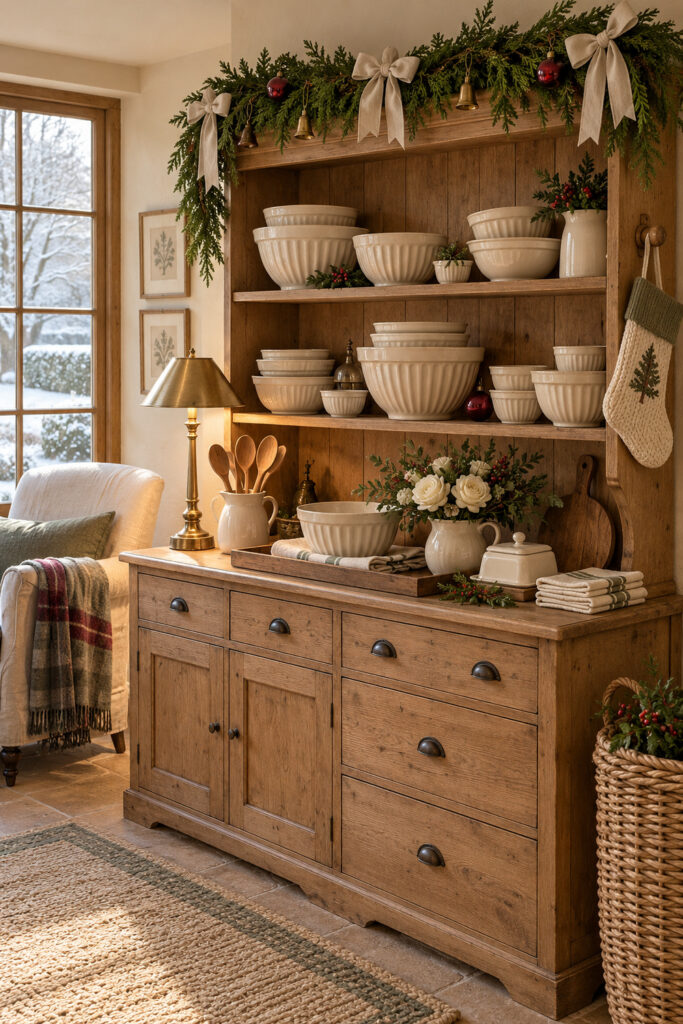
Those ribbed cream bowls are the reason to pause over this Christmas hutch. Nested in generous groups against dark honey colored wood, they turn everyday baking shapes into a collection worth displaying. A garland across the top adds cream bows, little bells, and a few dark red ornaments without taking over the shelves.
The look has a comfortable connection to the kitchen. Wooden spoons, folded towels, and a covered butter dish sit below the bowls, so the display feels related to things people use. You can borrow that idea even if your own collection consists of mixing bowls and serving dishes rather than traditional pudding basins.
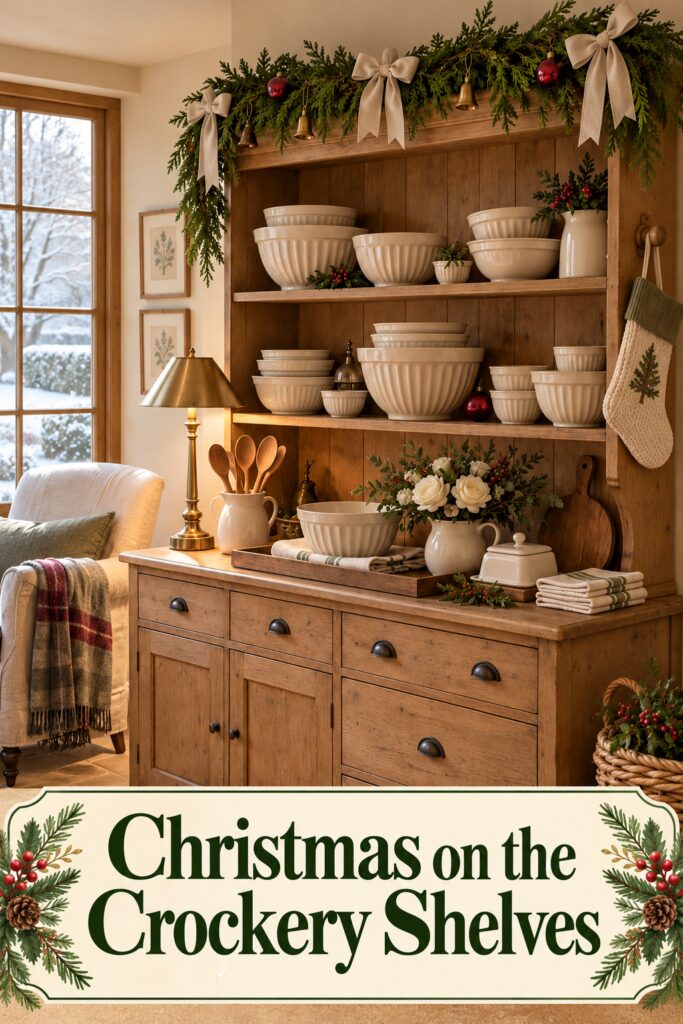
This inspiration image was created with AI and is intended as a decorating reference for similar pieces.
What Makes This Hutch Look Work
The repeating ribbed shapes create most of the interest. Larger bowls anchor the shelves, while smaller ones fill the spaces without introducing a different color or pattern. Because the collection is mostly cream, you notice the curves and ridges more than you would in a mixed group of patterned dishes.
Wood provides the contrast. The open shelving makes a dark background for the pale ceramics, and its thick edges give the collection a sturdy setting. A cream hutch would create a softer version, but you could still bring in contrast with a wooden tray or a few cutting boards below.
This looks very much like the hutch my mother has in her dining room. It’s the same shade and style and she also groups ceramic pieces. It’s very relaxed and charming.
The Christmas decorations are concentrated at the top and around a handful of gaps. That leaves the crockery readable as the main subject. The warm brass lamp on the counter repeats the bells above, and the greenery in the flower pitcher links the lower display to the garland. Little connections like these keep the shelves from feeling separate from the surface underneath.
Key Pieces to Recreate the Look
Ribbed Bowls and Pudding Basins
Gather the bowls you already own before deciding what else would help. A broad range of sizes can be useful, but you don’t need an exact matching set. Similar cream tones and rounded profiles are enough to establish the collection. Traditional ribbed basins are especially effective because their texture stays visible from across the room.
Check the bases and rims before nesting anything. Bowls should rest comfortably without rocking or catching on fragile edges. Keep stacks low enough to remove a piece safely, and put heavy ceramics on shelves rated to support them. The aim is a display you can live with, rather than one that has to be held together while you take out a dish.
Find Ribbed Cream Bowls
Browse current Amazon options that can help you recreate this look.
Browse Ribbed Cream Bowls on Amazon →As an Amazon Associate I earn from qualifying purchases.
A Wooden Hutch or Open Shelf
An existing dresser, cabinet, or pair of open kitchen shelves can provide the setting. Choose an area with enough depth that the bowls sit fully supported. If a rim projects far beyond the shelf edge, move that piece to the counter instead of trying to make it work overhead.
Use the shelf spacing to guide the arrangement. A tall bowl needs some clear space above it, while a small group can sit under a lower shelf. Secure tall furniture appropriately for your home and its manufacturer instructions. Decorations should never interfere with a cabinet’s stable placement or normal use.
Cedar Garland with Cream Bows
The garland follows the hutch’s top edge, with loose tips extending down at the sides. It forms a seasonal frame rather than a curtain across the collection. A narrower cabinet will usually need less greenery to achieve the same effect.
Tie bows where the rail can support their visual weight, leaving the tails clear of the bowls. Small burgundy ornaments introduce just a little depth among the branches. Keep their scale modest so a dark ornament doesn’t become more noticeable than the pale collection below it.
A Brass Table Lamp
The shaded lamp on the left brings a warm pool of light to the lower surface. Its narrow stem and simple shade allow the bowls to remain visible nearby. A smaller lamp can work on a shallow dresser, provided its base is stable and its shade has room around it.
Place lamps where their cords can be managed without crossing serving areas. Keep foliage and fabric away from the bulb and any warm surfaces. If you already have good lighting nearby, you can repeat the warm metal with a small bell or another existing accent instead.
White Flowers and Folded Towels
A cream pitcher of white flowers gives the lower surface a softer outline than the stacked bowls. The green stems pick up the garland, while a few red berries repeat the ornaments above. Keep the bouquet to one side so it doesn’t conceal the largest basin.
Folded striped towels add another kind of texture and make the display feel useful. In the inspiration, they sit both beneath a bowl in a tray and in a separate neat stack. You could use one folded cloth if the counter is small. Too many stacks can make it harder to find a clear surface for an actual serving dish.
How to Style It at Home
Empty the shelves and sort the bowls by size. Start by placing the largest pieces, leaving a little room beside each one. Try one large group toward the middle and smaller groups to either side rather than spreading every piece evenly. The image works because the collection has distinct clusters.
Next, add smaller basins where they help connect those groups. Some can sit in front of larger bowls, but avoid hiding all the ribbing. Stand back after every few additions. If the shelves look like a solid wall of cream, remove a small stack and let the wood show through.
Build the counter separately. A tray gives the large bowl and folded cloth a defined place; the flower pitcher balances that group without needing another equally large object. Keep the butter dish and remaining towels together at the opposite side. Their lower height preserves a view of the shelving above.
Add greenery last so you can see where it will fit. Small clipped sections placed between ceramic groups should have their stems concealed without wedging them under unstable bowls. Faux foliage makes this easier to maintain. If you use fresh greenery, protect the wood and check for dropped needles near dishes.
You can adapt this for a working kitchen shelf by keeping the most frequently used bowls at a comfortable height. Put the decorative sprigs where they won’t be disturbed whenever you bake. A display will last much longer in your home if using it doesn’t require rebuilding it every evening.
Keep the tallest stacks away from the outer shelf edges. That makes the display feel more settled and gives you a little extra room when reaching past smaller bowls to remove a larger one.
Shop Similar Pieces
Look for Ribbed Cream Mixing Bowls
Compare usable dimensions and weight with the shelves you have. A similar silhouette matters more here than finding a bowl described by exactly the same name.
Shop Similar Cedar Garland and Small Brass Bells
Choose decorations that sit comfortably along the cabinet’s top edge. Look for secure hanging loops and manageable branch depth so the trim stays out of the collection.
Look for Pottery Pitchers and Kitchen Linens
Cream pottery and simple striped cloths continue the baking theme below the shelves. Choose pieces you’d enjoy using after the Christmas garland comes down.
Final Styling Tip
Leave one visible patch of wood between each major bowl group. That breathing room lets you appreciate the ribbed shapes and makes the collection feel arranged rather than packed away on open shelves.